 how-to
DIY Wine Stain Remover for Light Carpets
Table of Contents
- Act Fast: Immediate Steps After a Wine Spill
- How to Get Red Wine Out of Carpet
- Homemade Red Wine Stain Remover for Carpet
- How to Remove Dried Red Wine from Carpet
- Hydrogen Peroxide on Carpet Wine Stain
- Common Mistakes to Avoid
- When to Call a Professional
- Frequently Asked Questions
Last Updated: October 10, 2026
Act Fast: Immediate Steps After a Wine Spill
A red wine spill on light-colored carpet feels like a disaster, but a good wine stain remover light carpet strategy and speed matter more than panic.
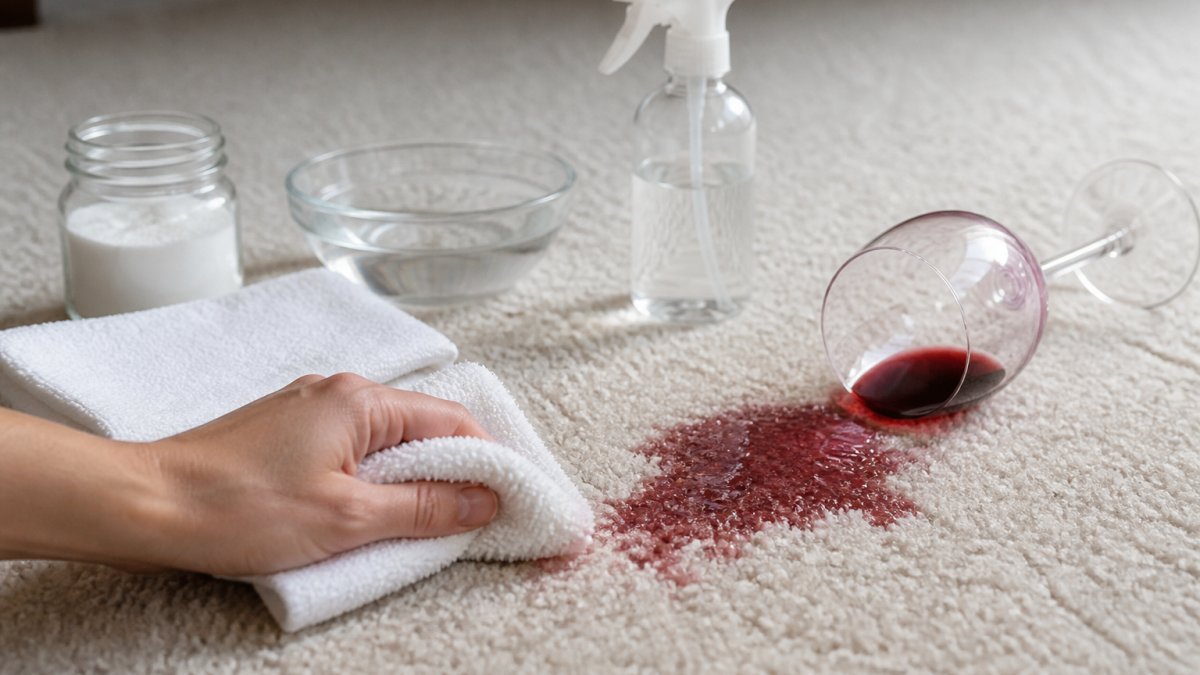
Stop what you're doing and grab clean cloths or paper towels. Your first job is to remove as much wine as possible before it sets into the fibers.
Blot the spill right away by pressing down firmly with a clean, dry cloth. Don't rub or scrub, rubbing spreads the wine deeper into the carpet.
Work quickly but calmly. Take 30 seconds to blot properly, this single step prevents many stains from becoming permanent.
How to Get Red Wine Out of Carpet
The best approach for fresh red wine stains combines cold water with gentle blotting. Cold water dilutes the wine without setting the stain the way hot water does.
Pour a small amount of cold water directly onto the stain, just enough to dampen the area. Cold water dilutes the wine molecules before they bond permanently to the carpet fibers.
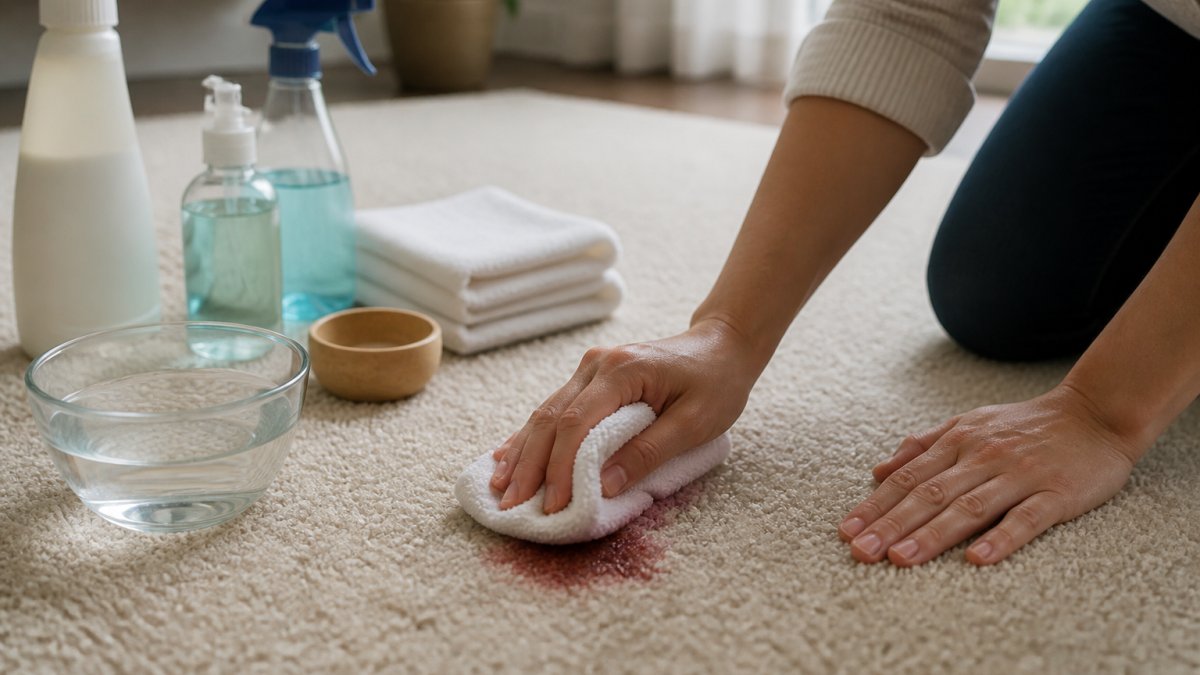
Blotting from Outside In
This technique prevents the stain from spreading outward by pushing wine inward rather than into clean carpet.
Place your cloth at the outer edge of the stain and blot inward, overlapping slightly with each movement until you reach the center. This contains the stain instead of expanding it.
Starting in the middle pushes wine outward into clean carpet. Outside-in blotting keeps the problem contained.
Diluting with Cold Water
Cold water weakens the wine before it sets. Apply sparingly, too much water creates a wet carpet that takes hours to dry and risks mold growth.
Spray or pour just enough cold water to dampen the stain and let it sit for 30 seconds. Then blot with fresh cloths. Repeat this cycle two to three times.
You should see visible improvement after the first application. If the stain remains dark after three cycles, move to a cleaning solution.
Homemade Red Wine Stain Remover for Carpet
A homemade cleaning solution works as well as expensive commercial products for most wine stains.
The most effective homemade solution combines white vinegar, dish soap, and water to break down wine without damaging light-colored carpet fibers.
White Vinegar and Dish Soap Solution
Mix one tablespoon of white vinegar with one tablespoon of dishwashing liquid and two cups of cold water. This solution is mild enough for delicate carpet fibers but strong enough to lift wine stains.
The vinegar acts as a natural stain remover while the dish soap lifts wine particles from the carpet, without harsh chemicals.
This solution works best on fresh to moderately aged stains, though older stains may require multiple applications.
Application and Blotting Technique
Pour a small amount of the solution onto the stain, a light application works better than soaking the area.
Let the solution sit for two to three minutes, then blot with clean cloths using the outside-in technique.
Blot until the cloth comes away mostly clean. Rinse with cold water and blot again to remove soap residue, which can attract dirt and cause re-staining.
Repeat the application and blotting cycle if the stain remains. Most fresh stains disappear after one or two applications.
How to Remove Dried Red Wine from Carpet
Dried wine stains are harder to remove because the wine has bonded to the carpet fibers, but they aren't impossible, you just need more aggressive treatment.
Apply the white vinegar and dish soap mixture and let it sit for five to ten minutes instead of two to three.
Blot repeatedly. Dried stains often require two to three full treatment cycles.
For stains that resist the homemade solution, hydrogen peroxide offers another option, it's stronger than vinegar but still safe for most light-colored carpets when used carefully.
Hydrogen Peroxide on Carpet Wine Stain
Hydrogen peroxide is a mild oxidizing agent that can lift stubborn wine stains, but it carries real risks for light-colored carpet. It works by breaking down stain molecules through oxidation, but the same chemical action can lighten or yellow carpet fibers if misapplied.
Three percent hydrogen peroxide (standard drugstore strength) is the only safe concentration for carpet. Higher concentrations can bleach fibers permanently or cause yellowing within hours. Even 3% peroxide can lighten carpet if left too long or applied too heavily.
Patch Testing for Light-Colored Carpets
Always test hydrogen peroxide on a hidden area of carpet first. Apply a small amount (about one teaspoon) and wait 15 minutes. Check for:
- Color lightening or bleaching, The fibers appear noticeably paler than surrounding carpet
- Yellowing, A faint yellow or beige tint appears, especially common on cream or off-white carpets
- Fiber damage, The fibers feel brittle, rough, or weakened
- Dye transfer, Color from the carpet transfers to your white cloth when you blot the test area
If you see any of these signs, do not use hydrogen peroxide on the visible stain. Move to a different method instead.
Natural fiber carpets (wool, sisal, jute) and delicate synthetic dyes are highest risk. Testing is essential because dye formulations vary widely by manufacturer.
Safe Application Steps
Pour 3% hydrogen peroxide directly onto the dried stain, just enough to dampen the area. Oversaturation increases the risk of yellowing or bleaching.
Let it sit for no more than 5 minutes on light carpet. Set a timer, waiting longer causes yellowing.
Blot with clean white cloths. The hydrogen peroxide will foam slightly as it lifts wine particles. Keep blotting until the foam stops.
Rinse the area thoroughly with cold water and blot again.
If the stain persists after two full cycles, hydrogen peroxide is unlikely to work.
When Hydrogen Peroxide Is Not Safe
Do not use hydrogen peroxide if:
- Your patch test showed any color change, yellowing, or fiber damage
- Your carpet is wool, natural fiber, or has a delicate or vintage dye
- The stain is on a high-traffic area where any lightening will be visible
- Your carpet manufacturer's care label warns against oxidizing agents or bleach
- The stain is very old (more than 2 weeks) and has already set deeply, hydrogen peroxide won't lift it, but it will bleach the surrounding fibers
In these cases, stick with the white vinegar and dish soap solution, or contact a professional cleaner who can assess your specific carpet type and dye before treating.
Common Mistakes to Avoid
Rubbing or scrubbing spreads the stain by pushing wine deeper into the carpet fibers. Always blot straight down and lift straight up.
Using hot water is another common mistake, heat sets wine stains permanently by bonding wine molecules to the fibers.
Oversaturating the carpet causes problems, too much liquid takes hours to dry and can lead to mold growth.
Waiting too long before treating the stain makes removal harder.
Using colored cloths can transfer dye to your light carpet. White cloths let you see the stain lifting without adding new colors.
When to Call a Professional
Knowing when to stop DIY treatment and call a professional is as important as knowing how to start. Continuing after certain warning signs can cause permanent damage.
Objective Stopping Points
Color transfer or fiber damage during treatment:
- The cloth you're blotting with picks up color from the carpet itself (not the wine)
- The carpet fibers feel rough, sticky, or weakened after treatment
- A lightened or bleached spot appears around the stain, even if the wine stain itself is lifting
- A yellow or beige halo forms around the treated area
These signs mean your cleaning solution or method is damaging the dye or fibers. Continuing will make the damage permanent.
Stain persistence after three full treatment cycles:
- You've applied the white vinegar and dish soap solution three times, letting it sit and blotting each time, with no visible improvement
- The stain has not lightened at all after the first application
- The stain is older than 48 hours and shows no response to cold water or mild solutions
After three cycles, the stain has likely bonded too deeply for home treatment. Professional extraction equipment can reach fibers that hand-blotting cannot.
Stain size or location concerns:
- The stain covers an area larger than 12 inches in diameter
- The stain is on a high-traffic area where any residual discoloration will be visible daily
- The stain is near seams, edges, or areas where moisture can spread into the carpet backing or padding
Uncertainty about your carpet:
- You don't know your carpet's fiber type (wool, nylon, polyester, natural fiber)
- You can't find or read the manufacturer's care label
- Your carpet is vintage, antique, or has a delicate or unknown dye
- The carpet is less than 2 years old and still under warranty
Applying untested solutions to unknown carpet types can void warranties or cause irreversible damage.
Why Professional Cleaning Matters for Light-Colored Carpet
Light-colored carpets show damage faster than dark ones. A bleached spot or yellowing is immediately obvious on cream, beige, or white carpet, making professional intervention more valuable.
Professional carpet cleaners use hot-water extraction, which reaches deep into the carpet pile where hand-blotting cannot. They also have access to stronger enzyme-based and oxidizing cleaners.
Professionals can assess whether the stain has caused permanent dye loss. If the dye is bleached out, the only options are spot dyeing or carpet replacement.
When to Call: Red Flags for Immediate Professional Service
- The stain is on expensive or specialty carpet (natural fiber, wool, silk blend, designer carpet)
- The stain is on carpet still under manufacturer warranty
- You've already tried one treatment and noticed any color change or fiber damage
- The stain is on a rental property and you're concerned about deposit loss
- The stain is very large or in a visible, high-traffic area
Professional Cleaning in High-Humidity Climates
In warm, humid regions, professional cleaning is more valuable for drying time and mold prevention. Wet carpet padding creates an ideal environment for mold and mildew growth.
Professional cleaners use high-powered extraction equipment that removes 70-80% of the moisture immediately, reducing drying time to 2-4 hours. This is especially important for older stains that require multiple treatment cycles and heavy liquid application. If you've treated a stain multiple times and the carpet still feels damp after 6 hours, call a professional to extract the excess moisture before mold develops.
Frequently Asked Questions
What's the best way to blot a fresh red wine stain from light carpet?
Blot immediately with a clean, white cloth or paper towel using gentle pressure, never rub or scrub, which pushes the wine deeper into carpet fibers. Work from the outside edge of the stain toward the center to avoid spreading it. Replace the cloth frequently as it absorbs the wine. The faster you blot, the more wine you'll remove before it sets into the fibers.
Will hydrogen peroxide bleach light-colored carpet?
Hydrogen peroxide can potentially bleach or discolor light carpets, especially if left too long or applied in high concentrations. Always patch test on a hidden area first, dilute the solution with water, and limit contact time to 5-10 minutes. Watch for any color change during the test. If your carpet shows sensitivity, use milder solutions like vinegar and dish soap instead.
How long should a homemade wine stain remover sit on the carpet?
Most homemade solutions work best when applied for 10-15 minutes, though some sources suggest up to 30 minutes for stubborn stains. Don't exceed the recommended time, as extended contact can damage carpet fibers or leave cleaning residue. Set a timer to remind yourself, then blot thoroughly with cold water to rinse away all solution before the carpet dries.
Can you remove a dried red wine stain from carpet with DIY methods?
Dried stains are harder to lift but DIY methods can still work, especially on light-colored carpet where the stain is visible. Rehydrate the stain with a small amount of cold water, let it sit for 5-10 minutes, then apply your chosen cleaning solution. You may need to repeat the process several times. If the stain has set for weeks or months, professional carpet cleaning may be more effective.