 how-to
Remove Red Wine from Silk: A Step-by-Step Guide
Table of Contents
- Act Immediately: The First 5 Minutes After a Red Wine Spill
- How to Blot a Red Wine Stain Without Damaging Silk
- Does Vinegar Remove Red Wine Stains from Silk?
- Does Dawn Dish Soap Remove Red Wine Stains from Silk?
- How to Remove Old Red Wine Stains from Clothes
- When to Skip DIY Treatment and Call a Professional
- Aftercare: Protecting Your Silk After Stain Removal
- Frequently Asked Questions
Last Updated: October 4, 2026
Act Immediately: The First 5 Minutes After a Red Wine Spill
Learning how to remove red wine silk stains is critical because a spill on silk fabric is a time-sensitive situation. The first five minutes determine whether you'll remove the stain completely or set it permanently into the delicate fibers.
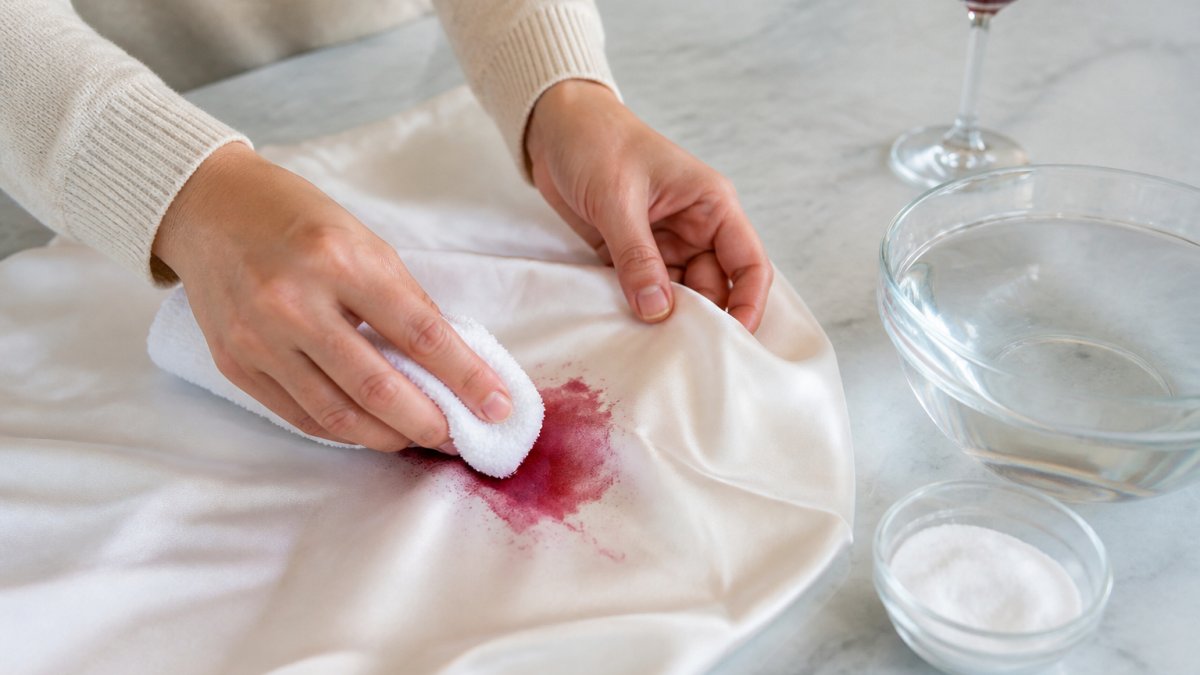
The moment wine touches silk, the liquid begins to penetrate the fibers. Cold water is your first defense. Grab a clean white cloth and blot the stain from the edges toward the center.
Here's what most people get wrong: they panic and rub. Rubbing pushes the wine deeper into the silk and damages the delicate fibers. Your goal is absorption, not friction.
If the spill is fresh, rinse with cold water immediately. Use a bowl or sink, not hot water. Hot water sets red wine stains permanently. Cold water opens the conversation. It gives you time to work.
Key steps for the first five minutes:
- Blot with a white cloth (colored cloth can transfer dye)
- Work from the stain's edges inward
- Rinse with cold water only
- Continue blotting until the cloth stops picking up wine
- Do not let the fabric dry yet, keep it wet
This window is critical. Once the stain dries, removal becomes exponentially harder.
How to Blot a Red Wine Stain Without Damaging Silk
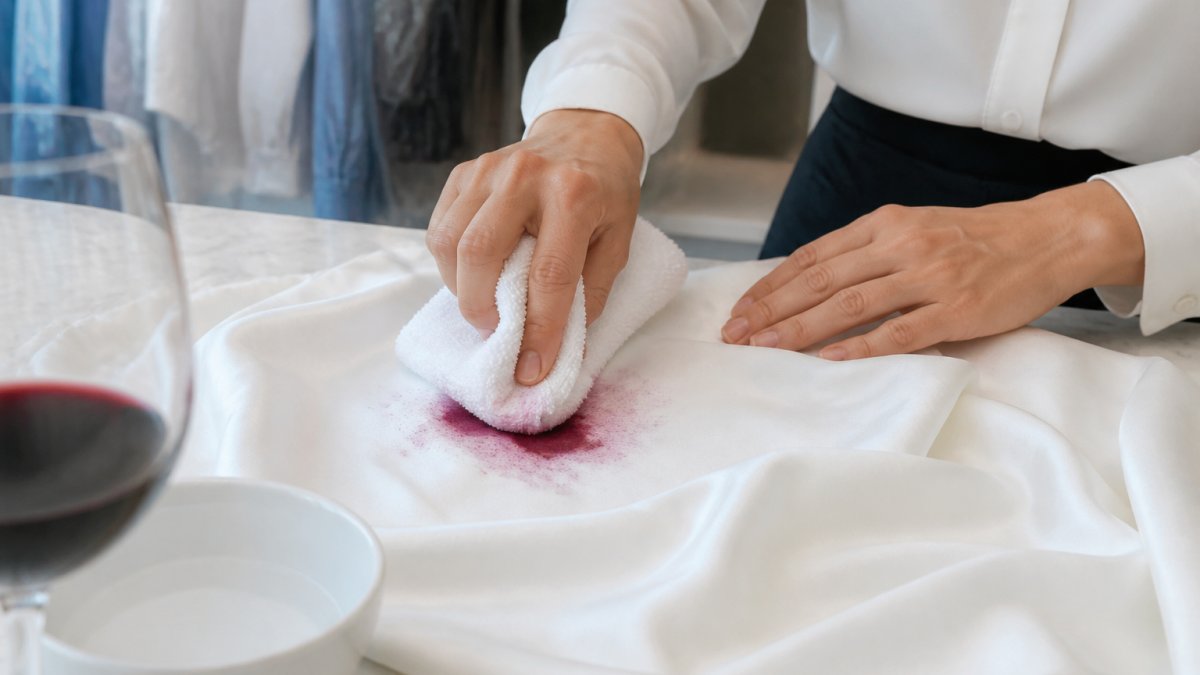
Blotting is the foundation of silk stain removal. The technique matters more than the product you use. Silk fibers are fragile, they break under pressure and rough handling. Your hands must be gentle and deliberate.
Start with a white cloth. Use white because colored cloth can bleed dye onto the silk. Cotton or linen works best. Avoid paper towels, they shred and leave fibers on the fabric.
Press the cloth onto the stain. Do not scrub or rub in circles. Press straight down for three to five seconds. Lift the cloth. You'll see wine transfer to the cloth. Repeat with a clean section of the cloth.
Work from the outside edge of the stain toward the center. This prevents the wine from spreading. If you work from the center outward, you push the stain into clean fabric.
After blotting, rinse the area with cold water. Pour cold water through the stain, do not pour on top of it. Let the water flow through the fabric. This dilutes remaining wine and prevents it from setting. Blot again with a fresh cloth.
The blotting process takes patience:
- Use only white cloth
- Press, do not rub
- Work edge to center
- Blot every 30 seconds
- Rinse between blotting rounds
- Change to clean cloth frequently
When you remove red wine silk stains, remember that silk dyes are sensitive to friction. The more you rub, the more you risk damaging the color or the fibers themselves.
Does Vinegar Remove Red Wine Stains from Silk?
Vinegar is a popular home remedy for red wine stains. The theory is sound: vinegar's acidity breaks down the wine pigment. In practice, vinegar works on some fabrics but carries real risks on silk.
White vinegar can help lift fresh stains from cotton or linen. On silk, it's unpredictable. Vinegar can set certain dyes or cause color bleeding. Before using vinegar on any silk garment, test it on an inconspicuous area first, the inside seam, a hidden hem, or the back of a collar.
Spot-test by applying diluted vinegar to a small hidden area. Wait 10 minutes. Rinse with cold water. Check for color change or bleeding. If the silk shows any discoloration, do not use vinegar on the stain.
If the spot-test passes, dilute white vinegar with equal parts cold water. Apply the solution to the stain with a cloth. Blot every 20 minutes. Do not soak the fabric. Vinegar works slowly on silk, and extended contact increases the risk of damage.
When vinegar is safe:
- You've tested it on hidden silk first
- The stain is fresh, not dried
- You dilute it 50/50 with water
- You blot, never soak
- You rinse thoroughly with cold water afterward
Many silk fabrics are dyed with acid dyes. These dyes can react unpredictably with vinegar. Even if vinegar removes the wine stain, it might lighten or alter the silk's original color. This is why professional cleaners often avoid vinegar on delicate silk. The risk outweighs the benefit.
Does Dawn Dish Soap Remove Red Wine Stains from Silk?
Dish soap is gentler than vinegar and works on fresh red wine stains. Dawn and similar detergents break down the oil in wine, which helps separate the pigment from the fibers.
Mix one teaspoon of dish soap with one cup of cold water. The solution should be mostly water with just a hint of soap. Too much soap leaves residue on the silk and attracts dirt.
Apply the diluted soap solution to the stain with a cloth. Blot gently. Do not rub. Work for 10 to 15 minutes, blotting every few minutes. The stain should gradually transfer to your cloth.
Rinse thoroughly with cold water. This step is critical. Soap left on silk stiffens the fabric and creates a dull appearance. Rinse until the water runs clear and you no longer smell soap.
Dish soap method:
- Mix 1 teaspoon soap with 1 cup cold water
- Apply with cloth, blot only
- Work for 10-15 minutes
- Rinse multiple times with cold water
- Air-dry flat
Dish soap works best on fresh stains caught within the first hour. Once a stain has dried, soap becomes less effective. The wine has already bonded with the silk fibers, and soap alone cannot break that bond.
If you're treating a fresh spill, dish soap is a reasonable first step before calling a professional. If the stain persists after treatment, do not repeat the process. Multiple soap applications can damage the silk's finish.
How to Remove Old Red Wine Stains from Clothes
Old stains are dried stains. The wine has set into the fiber structure. Household remedies become less reliable. Hydrogen peroxide is the strongest option that's still safe for silk.
Hydrogen peroxide works by oxidizing the stain. This breaks down the wine pigment at the molecular level. For silk, use 3% hydrogen peroxide, the standard drugstore strength. Never use higher concentrations, which can bleach or damage delicate fabrics.
Before applying hydrogen peroxide, spot-test on a hidden area. Hydrogen peroxide can lighten some silk dyes. If the test area shows color change, skip this method and call a professional.
If the spot-test passes, apply 3% hydrogen peroxide directly to the stain. Let it sit for 5 to 10 minutes. You'll see the stain lighten as the peroxide works. Blot with a white cloth. Rinse thoroughly with cold water.
Hydrogen peroxide for old stains:
- Use 3% solution only
- Spot-test first on hidden area
- Apply directly to stain
- Wait 5-10 minutes
- Blot, do not rub
- Rinse completely with cold water
- Repeat maximum three times
Dried stains often require professional treatment. The longer a stain sits, the more it bonds with the fibers. After two weeks, a stain is considered set. Home remedies have minimal success on set stains.
For old stains on valuable silk garments, professional dry cleaning is the safer choice. Dry cleaners use specialized solvents and techniques that won't damage the fabric. LaundrPro offers professional dry cleaning with fast turnaround for residents who need their silk garments restored.
When to Skip DIY Treatment and Call a Professional
Not every red wine stain should be treated at home. Knowing when to stop and call a professional saves your garment and your time.
Skip DIY treatment if the silk is antique, designer, or irreplaceable. Rare silks deserve professional care. A single mistake can destroy a garment worth hundreds or thousands of dollars.
Skip DIY treatment if the stain has dried completely. Dried stains have penetrated deep into the fiber structure. Home remedies rarely work on set stains, and repeated treatments damage the silk.
Skip DIY treatment if you've already tried one or two methods without success. Each treatment stresses the silk. A third or fourth attempt increases the risk of color bleeding, fiber damage, or weakening.
Skip DIY treatment if the garment is labeled "dry-clean-only." This label exists for a reason. The silk may be specially dyed, heavily weighted, or constructed in a way that requires professional handling. Water-based treatments can cause shrinkage or color loss.
Call a professional if:
- The garment is expensive or irreplaceable
- The stain has dried (older than 2 hours)
- You've already tried two treatments
- The label says "dry-clean-only"
- The stain covers a large area
- You're uncertain about the silk's dye stability
Professional cleaners have access to specialized solvents and equipment. They can assess whether a stain is removable. They know which fabrics respond to which treatments. LaundrPro provides dry cleaning for silk garments. Our team handles delicate fabrics with care and expertise.
The cost of professional cleaning is often far less than replacing a damaged garment.
Aftercare: Protecting Your Silk After Stain Removal
After you've treated the stain, proper drying and care prevent damage and ensure the treatment works completely.
Air-dry the garment flat. Never hang wet silk. The weight of water stretches the fibers and can cause permanent sagging. Lay the garment on a clean, dry towel.
Do not use heat. No hair dryer, no iron, no direct sunlight. Heat can set any remaining wine pigment and damage the silk fibers. Air drying takes longer but protects the fabric.
Once dry, inspect the stain. If color remains, you have options. You can attempt another treatment if you caught the stain early. Or you can accept the faint mark and move forward.
Store the garment properly after treatment. Silk should be stored in a cool, dry place away from direct light. Use a breathable garment bag, not plastic.
Aftercare steps:
- Air-dry flat on a towel
- Never hang while wet
- Avoid heat and direct sunlight
- Inspect when fully dry
- Store in breathable bag
- Keep away from direct light
Silk is an investment. These garments last decades with proper care. A single red wine stain doesn't mean the end of a favorite blouse or scarf.
If you're treating a stain and feel uncertain at any point, stop and consult a professional. Place your order for professional dry cleaning and let us restore your silk to its original beauty.
Red wine stains on silk are recoverable if you act quickly and treat the fabric with care.
Frequently Asked Questions
What should you do immediately after spilling red wine on silk?
Act within the first 5 minutes. Blot the stain gently with a clean white cloth, never rub, as this pushes the wine deeper into silk fibers and damages the delicate fabric. Remove excess liquid by pressing the cloth against the stain repeatedly. Then rinse the affected area with cold water from the back of the fabric to push the stain out rather than deeper in. Keep the stain wet while you prepare a treatment solution; dried stains are significantly harder to remove.
Does vinegar remove red wine stains from silk?
White vinegar can help, but it requires caution with silk. Mix equal parts white vinegar and cold water, then test this solution on an inconspicuous area of the garment first to ensure it doesn't affect the dye. If the fabric passes the spot-test, apply the diluted vinegar solution to the stain using a cloth, blot gently, and rinse thoroughly with cold water. Vinegar works best on fresh stains; for dried stains, combine it with other methods or consider professional cleaning to avoid color bleeding or fiber damage.
Does Dawn dish soap remove red wine stains from silk?
Yes, Dawn dish soap can be effective on silk when diluted properly. Mix one teaspoon of Dawn with one cup of cold water, spot-test on a hidden area first, then apply the solution to the stain with a cloth. Blot gently and rinse repeatedly with cold water until no soap residue remains, soap left in silk can cause yellowing and stiffness. This method works well for fresh stains.
When should you take a wine-stained silk garment to a professional cleaner?
Professional cleaning is the safest choice if the stain is on expensive silk, if it's been dried for more than a few days, or if home treatments haven't worked after one or two attempts. Professionals have commercial-grade stain removers and can assess whether the silk's dye is colorfast before treating. For silk items like work blazers or formal wear, professional cleaning protects your investment and ensures the fabric isn't damaged by DIY methods. LaundrPro's dry-cleaning service handles delicate silk items and can often remove set-in stains that home remedies cannot.