 how-to
How to Fluff a Flat Comforter After Washing
Table of Contents
- Why Your Comforter Becomes Flat After Washing
- What You'll Need Before You Start
- How to Dry a Comforter Without Clumping
- How Long to Dry a Comforter for Best Results
- Using Dryer Balls for Comforters
- How to Fluff a Down Comforter Safely
- Hand-Fluffing and Air-Drying Methods
- Confirming Your Comforter Is Completely Dry
- Frequently Asked Questions
Last Updated: October 18, 2026
Why Your Comforter Becomes Flat After Washing
Understanding how to fluff a flat comforter after washing starts with knowing why it happens: water and agitation compress the fill. Down, feathers, and down alternative all clump when wet, and those clumps stay put as it dries.
Improper drying makes it worse: hanging a wet comforter traps moisture and lets gravity pull the fill downward.
Heat and movement are the keys to recovery: gentle tumbling with dryer balls breaks up clumps and restores loft.
What You'll Need Before You Start
Gather these before you begin:
- Dryer balls (wool or plastic with nubs), these break up clumps as the comforter tumbles
- Clean tennis balls, a budget alternative to dryer balls; tie them in clean socks so they don't leave marks
- A dryer large enough to fit your comforter, most home dryers struggle with queen or king comforters; you may need a commercial dryer
- Low or gentle heat setting, high heat damages fill and can melt synthetic fibers
- Clothesline or outdoor space, for air-drying on sunny days
- A large, flat surface, for hand-fluffing and checking dryness
Check the care label first: it states the maximum heat setting and fill type, and different fills need slightly different approaches.
How to Dry a Comforter Without Clumping
The drying method determines whether your comforter comes out fluffy or flat. Machine drying is fastest but requires the right settings and tools.
If your comforter fits in your home dryer:
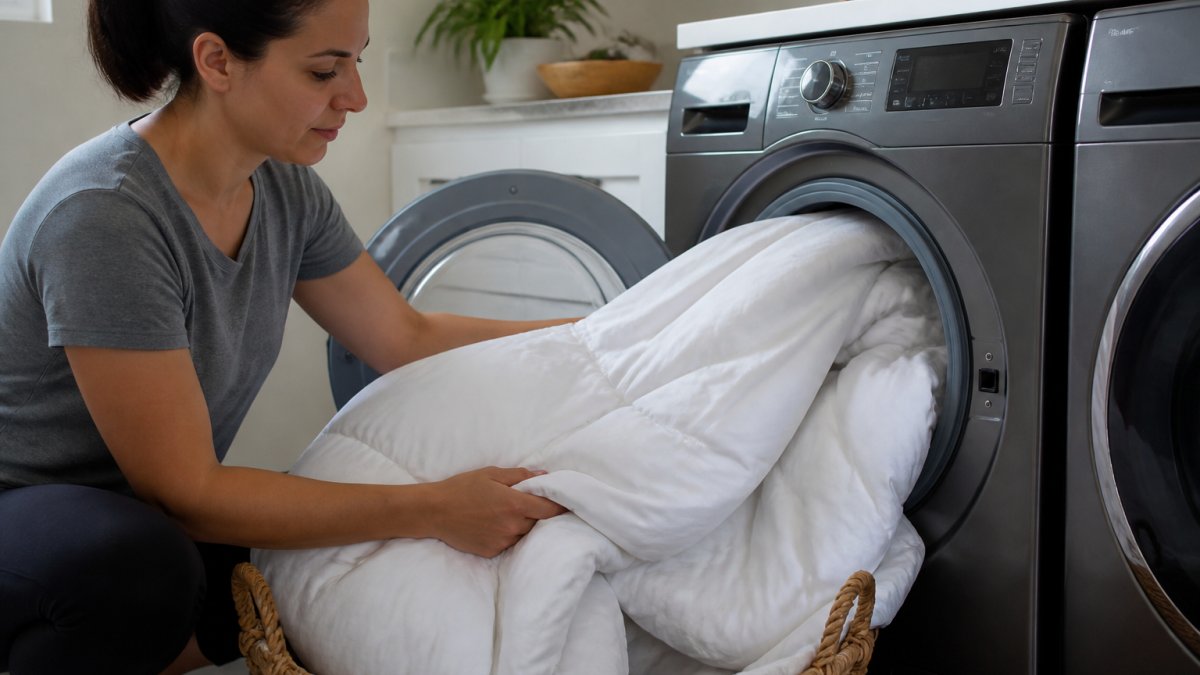
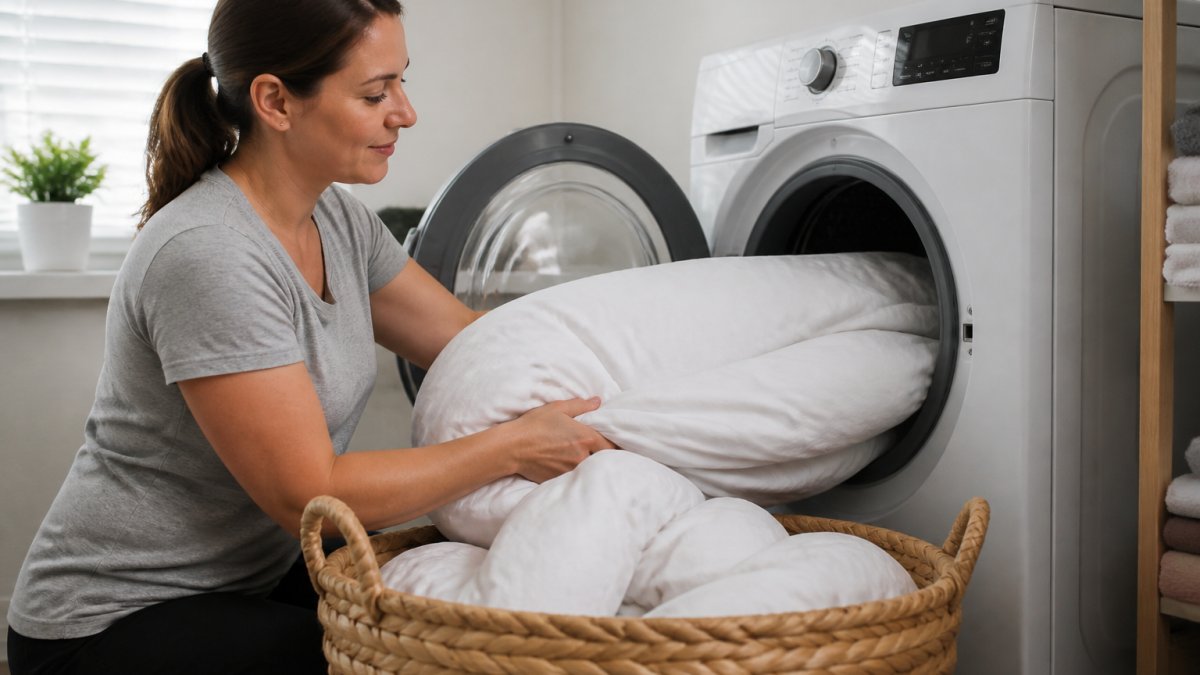
- Place the damp comforter in the dryer
- Add 3-4 wool dryer balls or clean tennis balls in socks
- Set the heat to low or gentle
- Run for 20-30 minutes
- Stop and shake the comforter by hand
- Return to the dryer for another 20-30 minutes
- Repeat until completely dry
The balls break up clumps as it tumbles, and stopping to hand-fluff redistributes fill that's starting to bunch.
If your comforter doesn't fit in your home dryer:
Take it to a laundromat with commercial dryers, which fit king-size comforters. Bring your own dryer balls or tennis balls; laundromats don't always provide them.
The larger drum means better air circulation, so it dries faster and more evenly than a home dryer.
How Long to Dry a Comforter for Best Results
Drying time depends on size, fill type, and dryer capacity. A queen-size down comforter typically needs 60-90 minutes on low heat; a king-size synthetic, 90-120 minutes. Timing alone is unreliable, confirm dryness at the seams and in the fill.
Start with a capacity check. The comforter should fill no more than about two-thirds of the drum. If it's packed tight, air can't circulate, the shell dries while the center stays damp, and clumping returns. For queen and king comforters, a commercial dryer is often safer.
General timing by size (low heat, periodic hand-fluffing):
- Twin: 45-60 minutes
- Full/queen: 60-90 minutes
- King: 90-120 minutes
These ranges assume low heat and a stop-and-fluff every 20-30 minutes. High heat halves the time but damages down clusters and melts synthetic fibers.
Fill-specific adjustments:
- Down and feather: Use low heat and wool dryer balls. Down deteriorates above roughly 140°F, and overheated clusters break apart permanently. Expect the longer end of the range and check seams carefully.
- Down alternative (synthetic): Low or gentle heat only. Synthetic fibers can melt or fuse at high temperatures. Plastic nubbed dryer balls create more tumbling action and work well here.
- Cotton: More tolerant of heat but prone to packing into dense clumps when wet. Break up clumps by hand between cycles and dry fully to prevent mildew in the cotton batting.
- Wool: Follow the care label closely. Wool can felt or shrink with heat and agitation; many wool comforters are dry-clean only. If the label permits home drying, use no-heat or air-fluff cycles and check often.
Always read the care label first; it overrides any general timing guidance here.
How to confirm the comforter is completely dry:
- Touch test: Press into the center and all four corners. There should be no cold spots or damp areas; the fill should feel warm and dry throughout.
- Seam check: Run your fingers along the seams and inside the corners. These areas dry last. Any moisture beads or discoloration mean more drying time.
- Weight test: A dry comforter feels noticeably lighter than a damp one.
- Smell test: A dry comforter smells fresh. Any musty odor means trapped moisture.
If any test fails, keep drying. A comforter that is 95% dry will develop odors and mildew within days.
Using Dryer Balls for Comforters
Dryer balls are the most effective tool for restoring a flat comforter: they create friction and movement in the drum, breaking up clumped fill.
Wool dryer balls are gentler on delicate fabrics, quieter, and absorb moisture to speed drying. Use 3-4 per standard dryer.
Plastic dryer balls with nubs are cheaper, more durable, and create aggressive tumbling that suits synthetic down-alternative comforters, though they don't absorb moisture.
Tennis balls work in a pinch: put each in a clean white sock and tie it closed to prevent lint transfer and protect the comforter from the felt. Use 2-3 per load.
Add the balls to the dryer with the damp comforter, tumble 20-30 minutes, then pause and shake it by hand. Return everything for another cycle.
How to Fluff a Down Comforter Safely
Down and feather comforters need gentler handling than synthetics; the fill is delicate and breaks down under high heat or rough treatment.
Temperature matters most. Never exceed low or gentle heat. Down deteriorates above 140°F, and overheated clusters break apart permanently, so the comforter loses loft for good.
Use dryer balls, not high agitation. Wool dryer balls break clumps without damaging down. Avoid vigorous wringing or aggressive shaking.
Check the care label. Some down comforters are labeled "dry clean only." If yours says this, take it to a professional dry cleaner instead. Attempting to wash and dry it at home may void any warranty.
Hand-fluff between dryer cycles. Gently shake and massage the fill from outside the cover to redistribute clustering down. Avoid squeezing, which can permanently damage the fill.
Air-dry the final 10-20% if you're concerned about heat damage. Once mostly dry, hang it in a warm, breezy spot to finish naturally, eliminating heat risk.
Hand-Fluffing and Air-Drying Methods
Learning how to fluff a flat comforter after washing through hand-fluffing is the gentlest approach, especially for delicate comforters.
Basic hand-fluffing technique:
- Lay the damp comforter on a clean, flat surface (bed, large table, or floor)
- Starting at one corner, gently shake and massage the comforter for 2-3 minutes
- Move to the next section, working your way across the entire comforter
- Repeat this process every 15-20 minutes as the comforter dries
The goal is to break up clumps and redistribute fill evenly, not wring out water.

Air-drying in the sun:
Hang the damp comforter on a clothesline on a warm, sunny day; the sun and breeze speed drying while you hand-fluff periodically.
Flip the comforter every 30 minutes so both sides get sun, and check the underside for damp spots.
Air-drying indoors:
Lay the comforter flat on a clean bed or across two chairs in a warm room with good air circulation, and hand-fluff every 15-20 minutes. Slower, but it works year-round.
Air-drying takes 24-48 hours depending on humidity and temperature, the safest option for delicate down comforters.
When the comforter cannot fit in a dryer:
Do not force a king-size comforter into a small home dryer; a packed drum traps moisture and makes clumping worse. Instead:
- Extend air-drying time and turn the comforter every few hours so moisture does not settle on one side.
- Use a fan or open windows to keep air moving across both surfaces.
- Hand-fluff and massage the fill each time you turn it.
- If the comforter is down or wool and the label says dry clean only, take it to a professional cleaner rather than improvising.
Fill-specific handling:
- Down and feather: Shake gently and massage from outside the cover; avoid squeezing. Air-dry the final 10-20% to eliminate heat risk.
- Down alternative (synthetic): More tolerant of handling; break up clumps by hand and air-dry fully to prevent trapped moisture.
- Cotton: Prone to dense packing when wet; massage clumps apart frequently and dry completely to avoid mildew in the batting.
- Wool: Follow the care label. Wool can felt with agitation; many wool comforters are dry-clean only.
Preventing fill from shifting or clumping:
Baffle-box construction, a grid of stitched compartments inside the cover, limits how far fill can migrate.
When fluffing will not fix the problem:
If the comforter stays flat after thorough drying and hand-fluffing, the cause may be permanent.
Confirming Your Comforter Is Completely Dry
A comforter that looks dry on the outside can still hold moisture deep inside the fill, which leads to mildew, odor, and mold.
The touch test: Feel the center and all corners of the comforter. Press gently into the fill. There should be zero cold spots or damp areas.
The weight test: A dry comforter feels noticeably lighter than a damp one. If it still feels heavy, moisture remains inside.
The smell test: A dry comforter smells fresh. If you detect any musty or damp odor, return it to the dryer or hang it to air-dry longer.
The visual check: Look inside the cover's seams and corners. These areas dry last. If you see any discoloration or moisture beads, the comforter isn't ready.
If any section fails these tests, continue drying. Never put a damp comforter away, even a small amount of trapped moisture will cause mildew within days.
For Miami residents using a professional service like LaundrPro, our team confirms complete dryness before delivery.
Flat comforters after washing are frustrating, but recovery is straightforward.
For busy families and professionals in Miami, professional laundry services handle this work for you. Our flat-rate pricing means no surprises, you know exactly what you're paying for premium care. Place Your Order with LaundrPro and reclaim the time you'd spend troubleshooting laundry.
Frequently Asked Questions
Why is my comforter flat after washing?
Moisture from washing compresses the fill material, whether down, feathers, or down alternative. Agitation in the washer and dryer can also shift fill toward seams and edges. The fill needs air circulation and movement to regain its loft and fullness. Without proper drying and fluffing, the comforter may stay compressed, reducing warmth and comfort.
How long should I dry a comforter to make it fluffy?
Most comforters need 45 minutes to 2 hours on low or medium heat, depending on size and fill type. Larger comforters and those with down or feather fill typically require longer drying times. Check the care label for specific guidance. Add dryer balls or clean tennis balls to speed up fluffing. Pause halfway through to shake and redistribute the fill manually.
Can dryer balls help fluff a comforter?
Yes. Dryer balls bounce and tumble inside the dryer, breaking up clumps and redistributing fill more effectively than tumbling alone. Use 3-6 wool dryer balls or clean tennis balls per load. They reduce drying time and help restore fullness without damaging stitching or baffle box construction. Remove balls before removing the comforter to avoid snagging.
How do I fluff a down comforter safely?
Use low heat in the dryer with dryer balls, and pause every 15-20 minutes to gently shake and massage the comforter by hand. Down is delicate and can shift if dried too aggressively. Air-drying in sunlight is also effective for down comforters. Avoid high heat, which can damage down clusters and reduce loft. Always check the care label before drying.