 how-to
How to Get Wine Out of a Wool Rug: Step-by-Step
Table of Contents
- Act Immediately: Your First 5 Minutes Matter
- How to Remove Red Wine from Wool: The Blotting Method
- Does Vinegar Remove Red Wine Stains? Testing Your Solution
- How to Remove Red Wine from Wool with Gentle Cleaning Solutions
- Handling Dried or Old Wine Stains on Wool
- Red Wine Stain Remover for Wool Rug: When to Call a Professional
- Professional Wool Rug Cleaning for Wine Stains
- Frequently Asked Questions
Last Updated: October 8, 2026
Act Immediately: Your First 5 Minutes Matter
A fresh red wine spill on your wool rug is a crisis, and knowing how to get wine out of a wool rug in the first few minutes determines whether you save the fibers or set the stain permanently. Speed, not panic, is your best tool, red wine's tannins bond to wool quickly.
What you need to do first
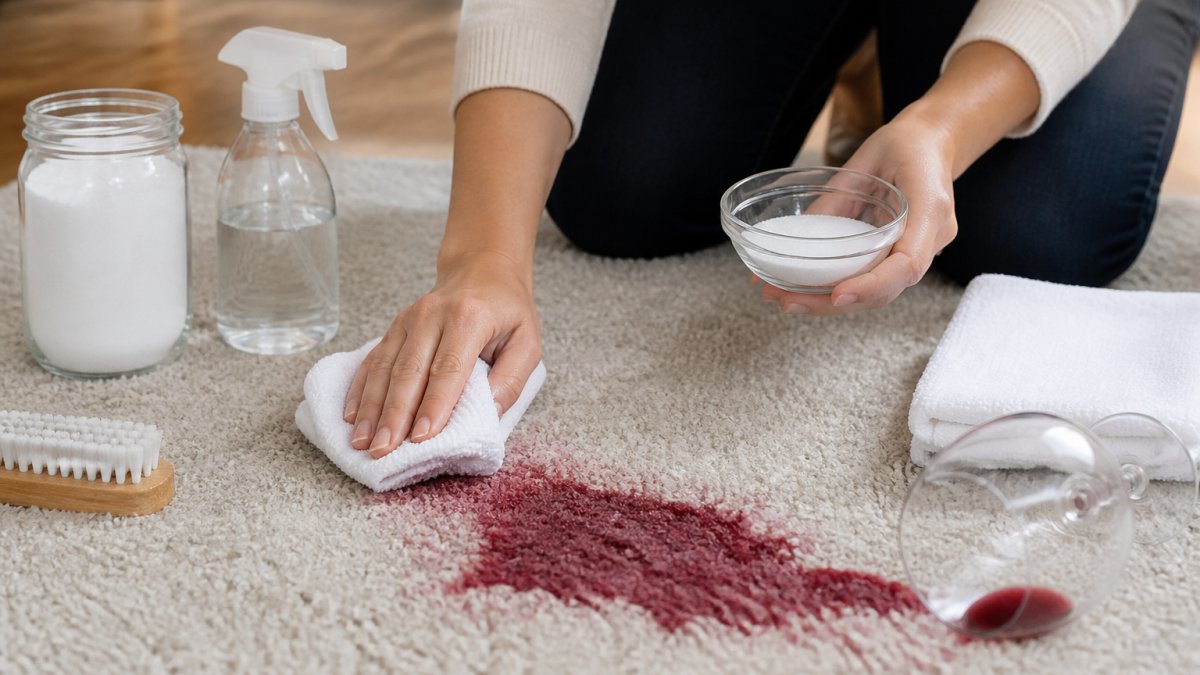
Grab these items:
- Clean white cotton towels or paper towels
- Cold water (not warm, not hot)
- A bowl or spray bottle
Skip fancy cleaners and heat. Cold water and blotting are your only moves for the next 60 seconds.
How to Remove Red Wine from Wool: The Blotting Method
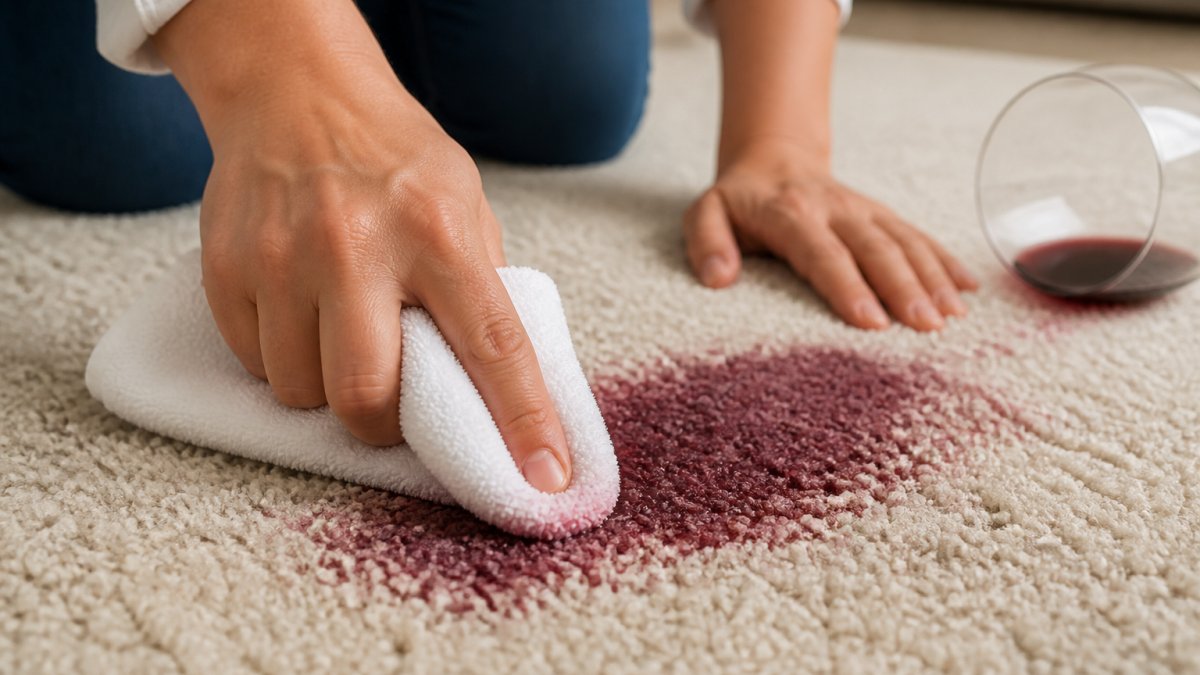
Blotting is not optional. Rubbing spreads the stain into the wool backing; blotting lifts it out.
Why blotting beats rubbing
Rubbing works wine deeper into the fibers; blotting does the opposite. Press the towel down firmly and lift, each press absorbs wine, each rub spreads it. Use a fresh section of towel for each blot; a saturated towel just moves the problem around.
Cold water as your first line of defense
Warm water opens the fibers; cold water closes them and slows the tannins from bonding. Dampen your towel with cold water and blot the stain five to ten times, you're not removing it completely yet, just stopping it from setting.
Does Vinegar Remove Red Wine Stains? Testing Your Solution
White vinegar can work on wool, but it can also damage the dyes if you use it wrong. Vinegar breaks down tannins, but it's acidic and wool dyes are acid-sensitive, a test prevents you from bleaching one section while cleaning another.
The spot test on an inconspicuous area
Find a corner of the rug nobody sees, under furniture, behind a door. Mix one part white vinegar with three parts cold water, dab it on the hidden spot, wait five minutes, and blot with a clean towel. If the wool looks the same, vinegar is safe; if it looks lighter or changed, skip vinegar and use dish soap instead.
Mild dish soap versus vinegar solutions
Both work: vinegar is stronger on tannins, dish soap is gentler on dyes. Your test tells you which to use.
White vinegar solution: One part vinegar to three parts cold water. Only use this if your test shows no color change.
Apply with a spray bottle or damp towel, spray lightly without oversaturating, and blot until the towel comes away clean.
How to Remove Red Wine from Wool with Gentle Cleaning Solutions
Once you've tested and chosen your solution, the process is methodical. Spray the stain lightly and let it sit two minutes, then blot with a clean towel. Repeat until the towel shows no color, it might take five passes or fifteen. Patience removes stains; aggression spreads them.
Club soda and hydrogen peroxide options
Club soda is gentler than vinegar: the carbonation lifts the stain without the acidity risk.
Hydrogen peroxide is stronger but riskier. It can bleach wool. Only use it if vinegar and soap have failed and the stain is old.
Never mix hydrogen peroxide with vinegar or dish soap. The chemical reaction can damage the wool.
Rinsing and drying without oversaturation
Now comes the critical part: drying. No heat, no hair dryer, heater, or direct sunlight.
Place clean, dry towels over the wet area, press down to absorb moisture, and change them as they soak.
In Miami's humidity this can take 24 to 48 hours. Rushing the drying process can set any remaining stain.
Handling Dried or Old Wine Stains on Wool
A dried wine stain is a different problem than a fresh spill. Once oxidized, the tannins and anthocyanin pigments that color red wine bond with the wool's keratin proteins, which is why an old stain looks purple-brown and cold water alone won't lift it. The good news: wool's scaly cuticle holds dye at the surface rather than absorbing it deep into the core the way cotton does.
Before you treat anything, run this three-question check:
- How old is the stain? Under 24 hours is still "recent" and responds to the fresh-spill method. Over 72 hours, or anything heat-set by a steam mop, iron, or direct sun, is dried.
- Has it been treated before? A prior store-bought spotter, vinegar, or peroxide may have locked in pigment or shifted dye, tell the cleaner, because it changes the treatment.
- Is the rug hand-knotted, tufted, or flat-weave? Hand-knotted Persian, Turkish, and Indian rugs use natural or chrome dyes that bleed more readily; machine-tufted wool with synthetic dyes is more colorfast. Flat-weaves (kilims) have no pile to trap liquid, so stains lift more easily.
The dried-stain protocol
Work in this order, and stop at the first sign of dye transfer onto your white towel:
- Rehydrate first. Mix 1 teaspoon of mild, dye-free dish soap (Dawn Ultra Free & Clear or Seventh Generation Dish Liquid) in 2 cups of cool tap water. Dampen a white cotton towel, lay it over the stain, and let it sit 10 minutes to soften the residue without flooding the backing.
- Blot, do not scrub. Press straight down with a dry white towel, rotating to a clean section each time. Expect the first three or four passes to lift almost nothing, normal on a set stain.
- Apply a vinegar solution only if the spot test passed. Mix 1 part plain white vinegar (5% acetic acid) to 3 parts cool water. Mist, do not soak, and let it dwell 5 to 10 minutes. The acetic acid breaks the tannin bond but can dull natural dyes, which is why the inconspicuous-area test is non-negotiable.
When a dried stain is beyond DIY
A dried stain is a candidate for professional cleaning if any of these are true:
- The stain has been there more than two weeks.
- It covers an area larger than a dinner plate.
- You see color wicking into the surrounding wool (a halo effect), which means dye migration has already started.
A wool-safe professional can use a reducing agent or tannin-specific spotter not sold at retail, plus controlled extraction that pulls moisture out of the foundation. That's the difference between a stain that fades over two visits and a permanent shadow.
Red Wine Stain Remover for Wool Rug: When to Call a Professional
Most wine stains on wool come out with patient home treatment. The ones that do not share recognizable warning signs. Knowing them saves you from turning a $200 cleaning job into a $2,000 rug replacement.
The five stop signs
Stop DIY treatment and call a wool-rug specialist if you see any of these:
- Dye transfer onto your white towel that is not wine-colored. If the towel picks up beige, red, or blue that doesn't match the wine, the rug's own dye is moving, and every blot spreads the bleed.
- A spreading halo. A faint ring growing outward means the wine has wicked into the foundation and is pulling dye with it, the point of no return for most home methods.
- Persistent odor after 48 hours. A sour or musty smell means moisture is trapped in the backing; in Miami's humidity, a damp wool foundation can support mold growth within 24 to 72 hours.
- A spill larger than a dinner plate, or one that reached the backing. You cannot blot out what has soaked through the pile, extraction equipment is required.
- A rug you cannot afford to lose. Antique Persian, Turkish Hereke, silk-blend, or any rug with natural dyes should go straight to a professional.
What "professional" actually means for wool
Not every carpet cleaner is qualified to touch a wool rug. Truck-mounted steam extraction, standard for wall-to-wall synthetic carpet, uses heat and pressure that can shrink wool, distort the weave, and set protein-based stains. A wool-rug specialist typically uses:
- Low-moisture or full-immersion washing with pH-balanced, wool-safe detergents (pH between 5.5 and 7, close to wool's natural isoelectric point).
- Controlled drying rooms with dehumidifiers and air movers, so the rug dries in 24 to 48 hours rather than sitting damp for a week.
- Tannin-specific spotters and reducing agents for wine, coffee, and tea, chemistry that is not sold at retail.
Ask any cleaner three questions before handing over the rug: Do you wash wool rugs in-house or send them out? What is your drying method and how long does it take? Are you insured for rug damage? A cleaner who can't answer all three clearly is not the right call.
Finding a qualified cleaner in Miami
Miami's climate creates two problems for wool rugs that cleaners in drier markets don't face:
- Humidity slows drying. A rug that dries in 24 hours in Phoenix can take 48 to 72 hours in Miami without mechanical dehumidification. Ask whether the cleaner uses a drying room.
- Water quality varies. Miami-Dade tap water is generally hard with elevated calcium and magnesium, and minerals from repeated wet cleaning can dull wool's luster. A specialist will use filtered or softened water for the final rinse.
Look for cleaners who belong to a trade association such as the Textile Care Allied Trades Association (TCATA) or hold a WoolSafe-approved cleaning designation. These aren't guarantees, but they signal training in wool-specific chemistry rather than treating your rug like wall-to-wall carpet.
Professional Wool Rug Cleaning for Wine Stains
Professional cleaners use methods home treatments cannot match: truck-mounted extraction systems, specialized solvents, and trained technicians.
Why wool requires specialized care
Wool is a protein fiber, unlike synthetics, and heat, harsh chemicals, and aggressive scrubbing damage it.
They use pH-balanced solutions that won't shift dyes, apply heat carefully if at all, and extract moisture without oversaturating the backing.
Wool rugs also have delicate jute, cotton, or synthetic backings that hold the fibers together, and aggressive cleaning can separate them, professionals know how to avoid this.
Aftercare in a humid climate
Miami humidity is your enemy after cleaning: moisture lingers, and mold can grow in the rug backing if it isn't dried properly.
Learning how to get wine out of a wool rug makes the process manageable, even when it's stressful. Fast action, gentle methods, and patience remove most stains. For stubborn or large stains, professional care protects your investment.
If you need help with wine-stained clothing or linens alongside your rug, LaundrPro offers professional dry cleaning and laundry services in Miami with fast turnaround and transparent, flat-rate pricing. The American Cleaning Institute provides guidance on textile care and emphasizes that professional treatment is often the safest choice for delicate fibers. We handle everything from formal wear to household items with the same care and attention. The Textile Care Allied Trades Association offers resources on fiber-specific cleaning.
| Step | Action | Time |
|---|---|---|
| 1 | Blot fresh spill with cold water | 1-2 minutes |
| 2 | Spot test cleaning solution | 5 minutes |
| 3 | Apply chosen solution and blot | 10-15 minutes |
| 4 | Rinse with cold water | 2-3 minutes |
| 5 | Air-dry with towel absorption | 24-48 hours |
| 6 | Call professional if stain remains | varies |
Frequently Asked Questions
Should you use cold or warm water on a red wine stain?
Always use cold water on a fresh red wine stain. Cold water prevents the tannins in the wine from setting into the wool fibers, while warm water can actually help the stain penetrate deeper. Start by blotting with cold water and a clean cloth, then proceed with your chosen cleaning solution. Never apply heat to a fresh spill.
Does vinegar remove red wine stains from a wool rug?
White vinegar can help remove red wine stains, but test it on an inconspicuous area first to check for color bleeding. Mix one part white vinegar with three parts water, apply to the stain, and blot thoroughly. Some wool dyes react poorly to vinegar, so the spot test is essential before treating the visible stain.
When should you call a professional rug cleaner for a wine stain?
Contact a professional if the stain covers a large area, has dried for more than 24 hours, or if your DIY attempts haven't worked. Wool rugs have delicate backing and dyes that can be damaged by harsh chemicals or aggressive scrubbing. Professional wool rug cleaning preserves the fiber integrity and color, especially important in humid climates where improper drying can cause mildew.
Can baking soda remove red wine from a wool rug?
Baking soda works best on dried stains as a final step, not on fresh wine spills. After blotting and treating with a cleaning solution, sprinkle baking soda on the damp area, let it sit for several hours, then vacuum. Avoid using baking soda directly on a wet stain, as it can absorb the liquid and make removal harder. Always test it on a hidden section first.