 listicle
Best Natural Wine Stain Removers for Upholstery
Table of Contents
- Best Natural Wine Stain Removers: Quick Comparison
- How to Remove Red Wine from Couch Fabric
- Natural DIY Upholstery Stain Remover Recipes
- Commercial Natural Products Worth Buying
- Fresh vs. Dried Wine Stains: Different Approaches
- Professional Upholstery Cleaning Services in Miami
- When to DIY vs. When to Call a Professional
- Common Mistakes That Set Wine Stains Permanently
- Frequently Asked Questions
Last Updated: October 3, 2026
Best Natural Wine Stain Removers: Quick Comparison
Red wine spills on upholstery happen fast. Your response in the first five minutes determines whether you're dealing with a quick cleanup or a permanent stain. The best natural wine stain removers work because they target the pigment itself rather than just masking the damage.
You don't need harsh chemicals. Natural ingredients like hydrogen peroxide, baking soda, and white vinegar break down wine pigments effectively. Fresh versus dried stains require completely different approaches, and fabric type matters enormously.
Quick Picks:
- Best Overall Natural Option: Hydrogen peroxide and baking soda solution, proven effective on most upholstery fabrics
- Best for Immediate Action: Club soda on fresh spills, works within minutes with zero preparation
- Best Commercial Natural Product: Wine Away Red Wine Stain Remover, citrus-based formula designed specifically for wine pigments
- Best for Dried Stains: OxiClean Versatile Stain Remover, sodium percarbonate releases oxygen to lift set-in stains
How to Remove Red Wine from Couch Fabric
The window to prevent permanent staining is remarkably short. What you do in the first five minutes shapes whether the stain sets into the fiber or lifts away cleanly.
Immediate Action: The First 5 Minutes
Speed matters most. Wine begins bonding with fabric immediately, so remove as much liquid as possible before it penetrates deeper.
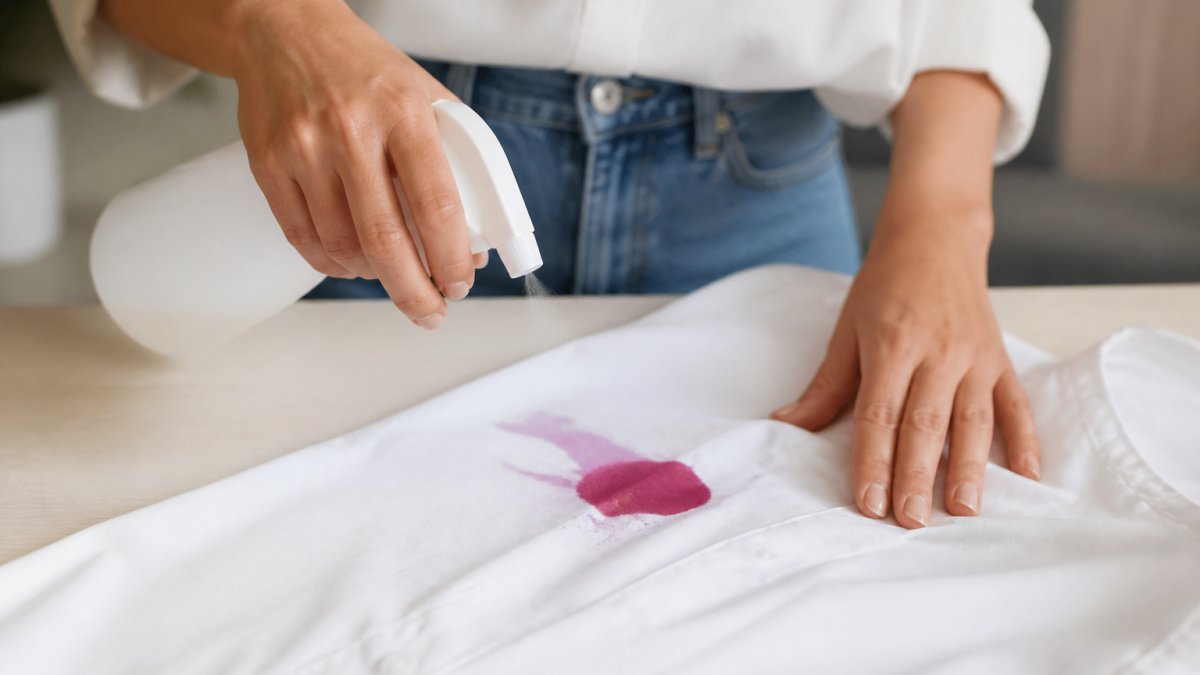
Blot, don't rub. Rubbing pushes wine deeper and spreads the stain. Use a clean white cloth, press firmly for 3-5 seconds, then lift. Repeat with fresh cloth sections until no more wine transfers.
Work from the outside edge inward to prevent spreading. If you have club soda, pour a small amount on the stain, the carbonation helps lift pigment. Blot immediately.
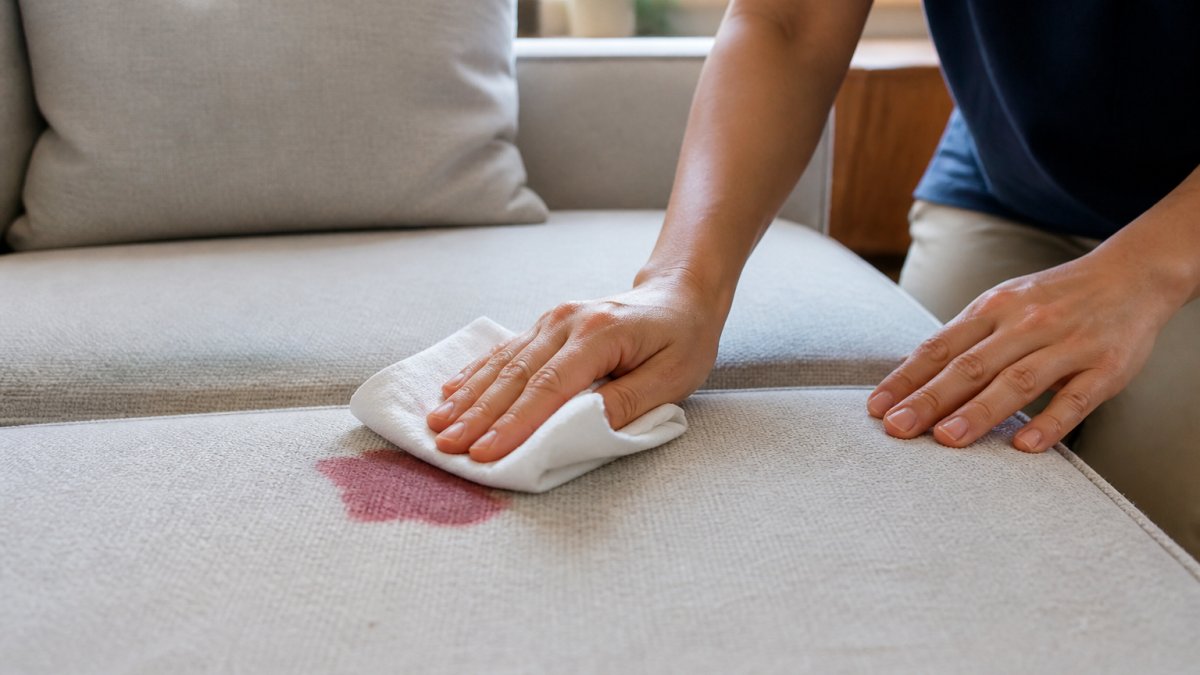
Avoid water initially, it dilutes wine and spreads it deeper. Use water only for rinsing after treatment.
Testing for Colorfastness Before Treatment
Test any solution on a hidden area first. Wine stain removers can decolorize certain fabrics, especially delicate natural fibers.
Test on a cushion underside or seam. Apply solution, wait 2-3 minutes, then blot. If color transfers or fabric lightens, stop and try a gentler approach or call a professional.
The Blotting Technique That Works
Proper blotting technique prevents setting stains permanently or damaging fibers.
Use light to medium pressure, firm enough to transfer liquid, not hard enough to agitate fibers. Press and hold 3-5 seconds, then lift straight up. Move to fresh cloth for each blot.
Work in concentric circles from center outward to prevent spreading. Large stains may need 10-15 blots before treatment.
For dried stains, pre-wet with cold water to rehydrate the pigment, making it more responsive to lifting agents.
Natural DIY Upholstery Stain Remover Recipes
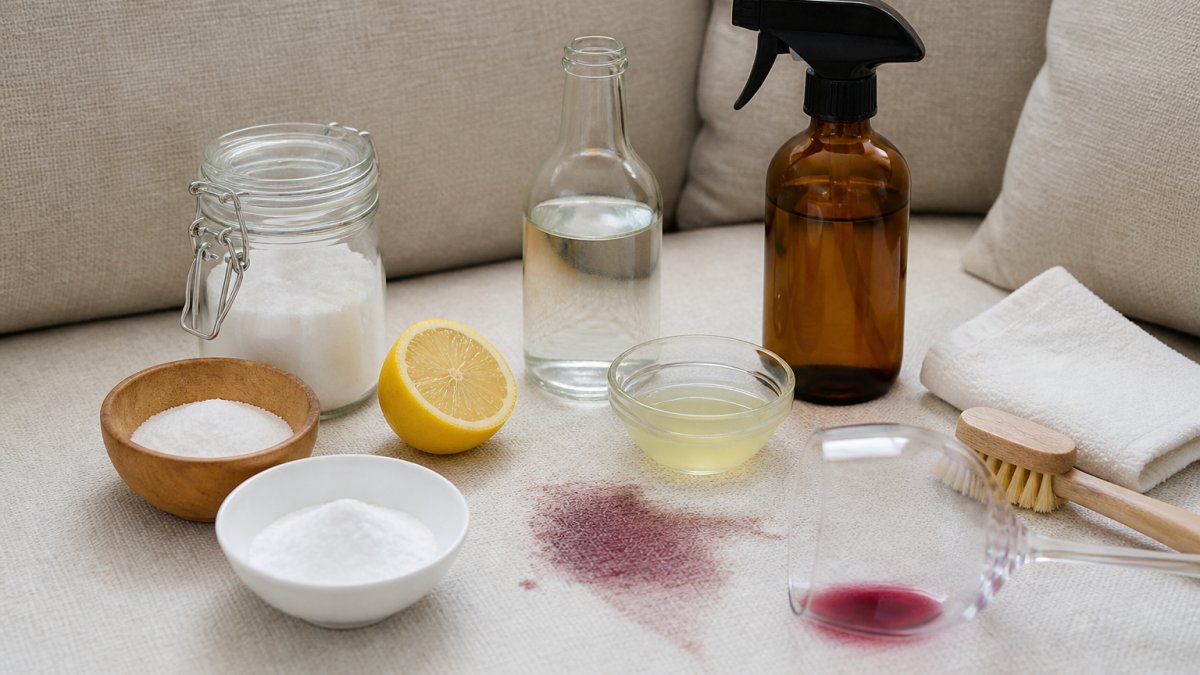
The most effective natural wine stain removers combine ingredients that address the chemistry of wine pigment. These recipes work because they either break down the pigment structure or lift it away from the fiber.
Baking Soda and Hydrogen Peroxide Solution
This combination is highly effective. Hydrogen peroxide breaks down wine pigment through oxidation, while baking soda provides gentle abrasion and odor control.
Mix three parts hydrogen peroxide (3% drugstore strength) with one part baking soda. Apply to the stain, let sit 5-10 minutes, then gently work in with a soft brush. Blot with a damp cloth.
Rinse thoroughly with cold water to remove baking soda residue. Works well on light-colored and synthetic upholstery. On delicate fibers, test first and reduce sitting time to 3-5 minutes.
White Vinegar and Dish Detergent Blend
Vinegar's acidity breaks down wine pigment, while dish detergent lifts it from the fiber. This is gentler than hydrogen peroxide for delicate fabrics.
Mix one part white vinegar, one part dish soap, and two parts cold water. Apply with a spray bottle, let sit 3-5 minutes, then blot. Rinse until no soapy residue remains.
Effective on fresh spills and most fabrics. The vinegar smell fades as upholstery dries.
Club Soda for Fresh Spills
Club soda is the fastest response to fresh spills. Carbonation lifts wine pigment before it bonds.
Pour club soda directly onto the fresh stain. Blot within 30 seconds before carbonation dissipates. Works best within the first two minutes.
Club soda alone won't remove a dried stain, but it's invaluable in the immediate aftermath. Keep a bottle nearby if you regularly entertain or have young children who are prone to spills.
Commercial Natural Products Worth Buying
When DIY solutions aren't enough or you need something faster, commercial natural products offer targeted formulations designed specifically for wine pigment removal.
Wine Away Red Wine Stain Remover uses a citrus-based formula that breaks down anthocyanins, the pigment compounds in red wine. Spray it directly on the stain, let it sit for 5-10 minutes, and blot with a damp cloth.
OxiClean Versatile Stain Remover relies on sodium percarbonate, which releases oxygen when mixed with water (Release Kinetics and In Vitro Characterization of Sodium Percarbonate and Calcium...). This oxygen-based action lifts organic stains like wine effectively.
Folex Instant Carpet Spot Remover is a water-based surfactant cleaner that requires no rinsing. Spray it on, let it dry, and the stain lifts as the liquid evaporates.
Chemical Guys Lightning Fast Carpet & Upholstery Stain Extractor uses enzyme-based cleaning action. Enzymes break down the protein bonds in organic stains, making wine pigment easier to remove.
Fresh vs. Dried Wine Stains: Different Approaches
Fresh and dried wine stains require fundamentally different treatment strategies. The wine pigment behaves differently depending on how long it's been bonded to the fiber.
Fresh stains (under 24 hours): The wine hasn't fully bonded to the fiber yet. Your goal is speed and blotting. Use club soda or the vinegar-detergent solution immediately. Avoid hot water, which can set the stain by causing the pigment to bond more firmly. Fresh stains typically respond to gentle treatment within the first few hours.
Dried stains (over 24 hours): The pigment has bonded chemically to the fiber. You need stronger lifting power. Pre-wet the area with cold water to rehydrate the stain, then apply hydrogen peroxide and baking soda or OxiClean. Let these solutions sit longer, 10-15 minutes, to give the active ingredients time to break down the bond.
Very old stains (weeks or months) may have become permanent, especially on natural fibers. This is the point where professional upholstery cleaning becomes worth the investment.
Professional Upholstery Cleaning Services in Miami
For valuable upholstery, persistent stains, or delicate fabrics, professional cleaning offers results that DIY methods can't match. Professional cleaners have access to commercial-grade equipment and specialized solutions that penetrate deeper than household products.
Professional services in Miami typically use either hot water extraction (steam cleaning) or dry solvent methods. Hot water extraction is more aggressive and works well on synthetic fabrics and heavily soiled pieces. Dry solvent cleaning is gentler and better for delicate natural fibers like silk or wool.
The advantage of professional service extends beyond stain removal. Professionals understand fabric composition and can identify whether a stain is actually wine or something else that requires different treatment.
For those who prefer to avoid the hassle entirely, LaundrPro offers a professional and convenient door-to-door laundry and dry cleaning service. Our team handles delicate items with the same attention to detail we bring to your finest garments, using premium products and fast turnaround to get your pieces back in condition.
When to DIY vs. When to Call a Professional
The decision comes down to three factors: fabric type, stain age, and item value.
DIY is appropriate when: The stain is fresh (under 24 hours), the upholstery is synthetic or sturdy natural fiber, and you've tested your solution on a hidden area first. Most wine spills on modern couches fall into this category. The cost of DIY treatment is minimal, and you control the process.
Call a professional when: The stain is dried and set, the upholstery is delicate (silk, wool, vintage tapestry), the item has significant monetary or sentimental value, or your DIY attempts haven't worked after 2-3 treatments. Professional equipment and expertise prevent damage that could cost far more to repair than the cleaning service itself.
A $300 work blazer stained with wine deserves professional attention. A $3,000 sofa with a wine stain definitely does. A $50 throw pillow with a fresh wine spill can safely be handled at home if you follow proper technique.
Common Mistakes That Set Wine Stains Permanently
Knowing what NOT to do is sometimes more valuable than knowing what to do. These mistakes turn removable stains into permanent damage.
Using hot water: Heat sets wine stains by accelerating the bonding process between pigment and fiber. Always use cold water.
Rubbing instead of blotting: Rubbing spreads the stain, drives it deeper, and can damage the fiber structure. Blotting lifts; rubbing sets.
Waiting too long to treat: Every hour that passes makes removal harder. Wine pigment bonds progressively to the fiber.
Over-saturating with solution: Too much liquid drives the stain deeper into the upholstery padding. Use just enough solution to treat the stain, then blot immediately.
Skipping the colorfastness test: Testing takes two minutes and prevents decolorization. Skipping this step has destroyed countless upholstered pieces.
Using bleach or ammonia: These chemicals can damage upholstery fibers and create permanent discoloration or weakening. Stick to natural solutions or products specifically formulated for upholstery.
Wine stains on upholstery don't have to mean replacement.
For valuable upholstered pieces, delicate fabrics, or stains that resist home treatment, professional cleaning in Miami ensures results without risk of damage. We handle your investment with the same premium care we bring to your finest garments, with fast turnaround so your home is back to perfect condition quickly. Place Your Order and discover the difference professional care makes.
| Method | Best For | Time to Work | Fabric Safety | Cost |
|---|---|---|---|---|
| Club soda | Fresh spills (first 2 minutes) | 30 seconds | All fabrics | Low |
| Vinegar & dish detergent | Fresh to 24-hour stains | 3-5 minutes | Most fabrics | Low |
| Hydrogen peroxide & baking soda | Fresh to dried stains | 5-10 minutes | Synthetic, test delicate | Low |
| OxiClean paste | Dried, stubborn stains | 10-15 minutes | Light colors, test first | Low |
| Professional extraction | Very old or valuable pieces | Same-day service | All fabrics | Higher |
Frequently Asked Questions
What should you do immediately after spilling wine on upholstery?
Act within the first 5 minutes. Blot the stain with a clean, absorbent cloth or paper towel, never rub, as rubbing drives the wine deeper into the fibers. Work from the outer edges toward the center to prevent spreading. Once you've removed excess liquid, apply a blotting solution like club soda or a mixture of cold water and dish detergent. Continue blotting until the stain transfers to your cloth, then rinse with cold water and blot dry. Speed matters: fresh wine stains respond much faster to natural stain removers than dried ones.
Can vinegar and dish soap remove wine stains from fabric?
Yes. Mix equal parts white vinegar and cold water, then add a few drops of dish detergent. This solution breaks down the wine's pigment through the detergent's surface tension and the vinegar's acidity. Apply it to the stain, let it sit for 10-15 minutes, then blot repeatedly with an absorbent cloth. Rinse with cold water and air dry. This method works best on fresh stains and light-colored upholstery. For synthetic fabrics, test a hidden corner first to ensure the vinegar doesn't affect the dye.
Is hydrogen peroxide safe for all upholstery fabrics?
Hydrogen peroxide is generally safe for light-colored upholstery but can cause decolorization on dark or dyed fabrics. Always test on a hidden area first. For best results, mix 3% hydrogen peroxide with baking soda to form a paste, apply it to the stain, let it sit for 5-10 minutes, then blot and rinse. The oxygen-based action lifts organic stains like wine effectively. Avoid using hydrogen peroxide on delicate natural fibers like silk or wool without professional guidance, as it may damage fiber integrity.
What is the best natural way to get red wine out of a couch?
The best approach depends on whether the stain is fresh or dried. For fresh spills, blot immediately with cold water or club soda, then use a natural solution like baking soda paste, vinegar and detergent blend, or a commercial product like Wine Away. For dried stains, create a paste with baking soda and hydrogen peroxide, apply it, and let it sit longer before blotting. Always test for colorfastness first. If the stain persists after multiple attempts, professional cleaning services have extraction equipment and enzymatic cleaners that reach deeper into the padding without damaging the fabric.