 how-to
How to Remove Moth Holes From Wool Sweaters
Table of Contents
- Identify Moth Damage vs. Other Causes of Holes
- Stop Active Moth Infestation Before Repairing
- Choose Your Repair Method by Hole Size and Visibility
- How to Darn a Hole in a Wool Sweater
- Moth Hole Sweater Repair Using Needle Felting
- How to Prevent Clothes Moths in Wool
- How to Wash and Store Wool Sweaters Properly
- When to Seek Professional Repair
- Frequently Asked Questions
Last Updated: October 20, 2026
Identify Moth Damage vs. Other Causes of Holes
Moth holes look distinct from other damage, and knowing the difference helps you treat the problem correctly.
Signs of Moth Damage
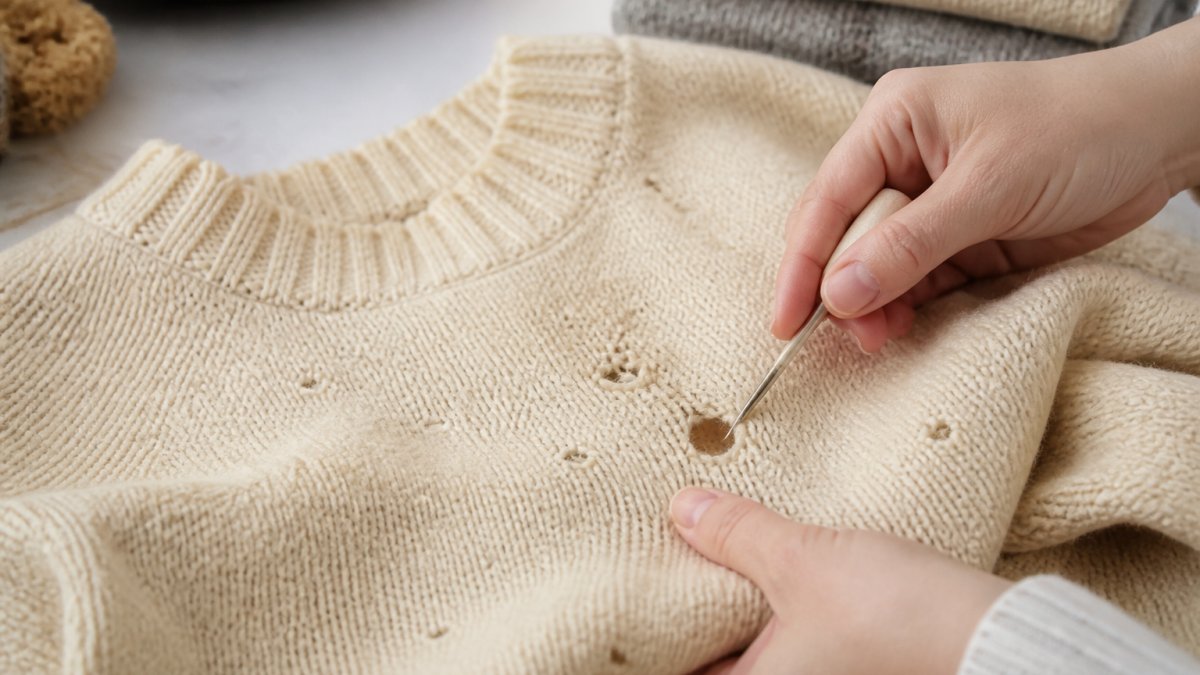
Moth damage means small, round, smooth holes, usually clustered in one area, with edges that don't fray or pull, clean holes left behind when larvae ate the fibers.
Look for these telltale signs:
- Small holes (1-3mm diameter) that appear suddenly
- Multiple holes grouped in one spot
- Holes only in wool, cashmere, or other natural fibers
- No visible tears or pulls around the hole edges
- Damage often hidden in seams, cuffs, or underarms where the sweater sits against your body
You might also notice a musty smell near the damaged area. This indicates active or recent moth activity.
Other Causes of Holes in Wool Sweaters
Not every hole comes from moths. Pilling, snagging, and wear can create similar-looking holes.
Snag holes have pulled fibers around the edge.
Washing damage also causes holes: harsh detergents, hot water, or aggressive agitation weaken fibers into thin spots that tear easily, appearing randomly rather than clustered.
Stop Active Moth Infestation Before Repairing
Repairing moth holes is pointless while moths are still active, you'll fix the sweater only to find new holes weeks later. Address the infestation first.
Check for Active Infestation
Look for these signs of active moths:
- Small tan or brown moths flying around your wool items
- Tiny cocoons or webbing on sweaters, blankets, or in corners
- A musty, unpleasant smell in your storage space
- Fresh holes appearing on multiple garments over a few weeks
Check inside folded sweaters and along seams, where larvae hide. Webbing or cocoons mean an active infestation.
Treating Infested Sweaters
Once you confirm active moths, isolate the sweater in a sealed plastic bag. Your next step depends on the sweater's value and fiber content:
- Freezing: Place the bagged sweater in your freezer at 0°F for 2-3 weeks (Publication : USDA ARS). This kills moth larvae at all life stages. Thaw slowly to prevent damage to wool fibers.
- Heat treatment: Wash in hot water (if the label allows) or tumble on high heat for 30-45 minutes. Heat kills moths but risks shrinking wool.
- Professional dry cleaning: Professional dry cleaning services can offer moth treatment. They use specialized methods that kill insects without damaging delicate wool.
After treatment, store the sweater in a sealed container with cedar blocks or lavender sachets to prevent reinfestation.
Choose Your Repair Method by Hole Size and Visibility
The best method depends on hole size, visibility, and skill level.
Needle Felting for Tiny Holes
Needle felting works best for holes smaller than 2mm. Barbed needles tangle loose fibers into a dense mat, filling the hole without visible stitches.
Best for:
- Visible areas (front of sweater, sleeves)
- Delicate or expensive wool pieces
- Sweaters where you want zero visible repair
- Situations where the hole is very small
The downside: it's labor-intensive and requires matching wool fibers to your sweater's exact color and texture.
Darning for Medium Holes
Darning works well for holes 2-5mm across. This traditional method weaves new fibers across the hole, creating a tight weave nearly as strong as the original fabric. It's faster than needle felting and easier to learn.
Best for:
- Medium-sized holes in everyday sweaters
- Areas less visible (underarms, back seams)
- Sweaters you plan to wear regularly
- Situations where you want durability over invisibility
Patching and Visible Mending for Large Holes
For holes larger than 5mm, patching is your most practical option. Patches are visible but functional, preventing further unraveling and extending the sweater's life. Use matching wool fabric or a contrasting appliqué that looks intentional.
Best for:
- Large holes or damaged areas
- Sweaters with sentimental value you want to preserve
- Situations where durability matters more than invisibility
- Creating a unique, customized look
How to Darn a Hole in a Wool Sweater
Darning is the most popular method for how to remove moth holes from wool sweaters. It's accessible to beginners and produces professional results. Here's exactly how to do it.
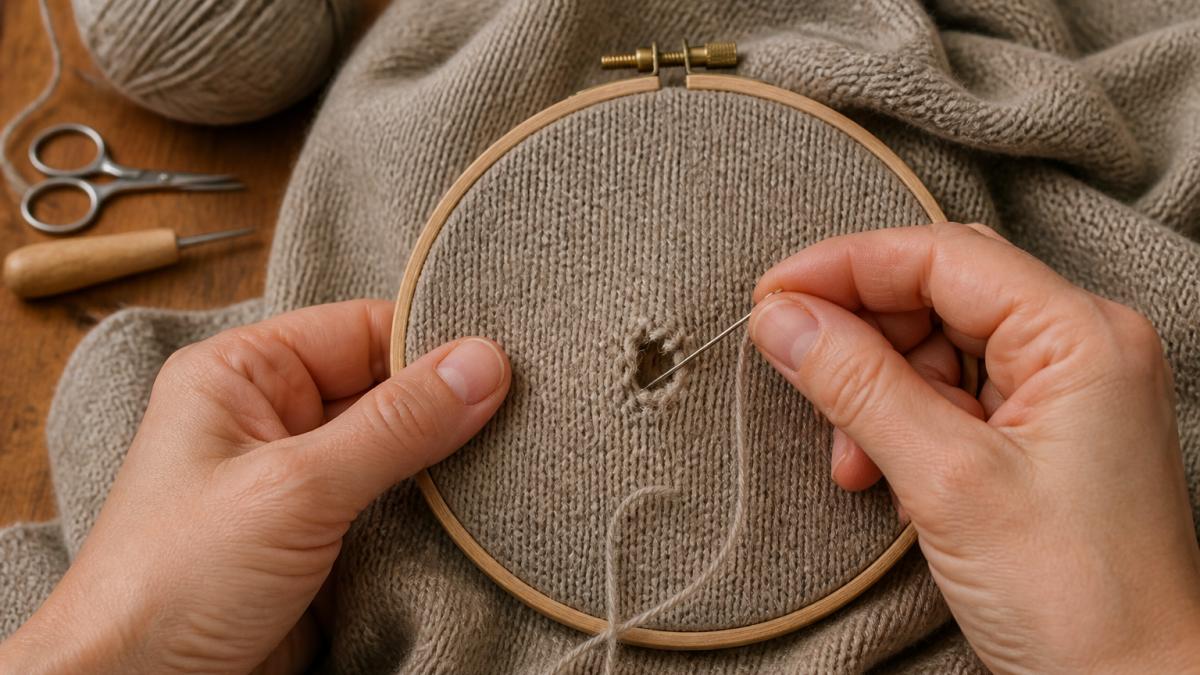
What You'll Need
Gather these materials before you start:
- Darning needle (size 7-9, depending on yarn weight)
- Matching yarn or thread (see matching section below)
- Embroidery hoop or small frame to stabilize the fabric
- Small scissors
- Optional: thimble to protect your finger
Choose a needle that fits comfortably: too thick damages delicate wool, too thin bends under pressure.
Step-by-Step Darning Instructions
Step 1: Prepare the sweater (5 minutes)
Lay the sweater flat with the hole visible. Trim loose fibers gently with scissors, don't pull them out.
Step 2: Stabilize the fabric (2 minutes)
Place an embroidery hoop around the hole and tighten so the fabric is taut but not stretched. This prevents puckering and keeps stitches even.
Step 3: Thread your needle (1 minute)
Cut about 24 inches of yarn, thread the needle, and tie a small knot at the end, too long tangles, too short means constant rethreading.
Step 4: Create the base weave (10-15 minutes)
This is the foundation of your repair: horizontal lines across the hole.
Step 5: Weave the vertical threads (10-15 minutes)
Now weave vertical threads through your horizontal base.
Step 6: Finish and secure (2 minutes)
Matching Yarn to Your Sweater
Getting the yarn color and texture right makes the difference between a repair that blends in and one that stands out.
Color matching:
Bring your sweater to a yarn store if possible and hold potential yarns up to it in natural daylight, indoor lighting changes how colors look.
Texture matching:
Feel the sweater's yarn, smooth, fuzzy, or textured, and match it as closely as you can; a smooth repair on a fuzzy sweater will stand out.
Testing before committing:
Moth Hole Sweater Repair Using Needle Felting
Needle felting creates nearly invisible repairs for tiny moth holes. It works best on less delicate sweaters and takes practice to master.
Materials and Setup
You'll need:
- Felting needles (size 38 or 40 for fine work)
- Matching wool roving or yarn fibers
- Foam pad or thick towel to work on
- Small scissors
- Optional: needle felting mat (protects your work surface)
Felting needles have tiny barbs that catch and tangle fibers, they're different from regular sewing needles and available at craft stores or online.
Needle Felting Process
Place the sweater on your foam pad with the hole facing up and position matching wool roving over it, covering the hole completely with a slight overlap. Hold the felting needle perpendicular and push it straight down through the wool and into the hole, then pull it straight back out. Repeat rapidly, the barbs catch the wool fibers and tangle them together. After 20-30 strokes, check your progress; keep going until the hole is filled and the repair blends with the surrounding sweater.
How to Prevent Clothes Moths in Wool
Prevention is far easier than repair. Stop moths before they damage your wool sweaters and other garments.
Storage and Environmental Control
Clothes moths thrive in warm, humid conditions, so in Miami's climate creating an unfavorable environment is critical.
Temperature and humidity:
Moths prefer temperatures above 60°F and humidity above 50 percent. Keep your closet cool and dry. Use a dehumidifier if your storage area tends to be damp.
Storage containers:
Store wool sweaters in sealed plastic bins or garment bags, airtight containers prevent moths from reaching your clothes.
Natural deterrents:
Cedar blocks, lavender sachets, and mothballs repel moths. Replace cedar blocks every 6-12 months as their scent fades.
Regular Inspection and Maintenance
Check your wool sweaters every 2-3 months for early signs of moth damage, tiny holes, webbing, or musty smells. Wash or dry clean wool items before long-term storage; larvae are attracted to body oils and food residue, so clean garments are less likely to attract moths.
How to Wash and Store Wool Sweaters Properly
Proper care prevents moth damage and extends your sweater's life, especially important in Miami's warm, humid climate.
Laundering Wool Safely
Wool requires gentle care, harsh washing damages fibers and makes the fabric more vulnerable to moths.
Hand washing:
Fill a basin with lukewarm water (around 65-75°F). Add a small amount of wool-specific detergent. Submerge the sweater and gently agitate for 3-5 minutes.
Machine washing:
Use a wool-specific or delicate cycle with cold water. Use minimal detergent. Place the sweater in a mesh laundry bag to reduce agitation.
Drying:
Never put wool in the dryer. Lay the sweater flat on a clean towel to dry, reshaping gently as it dries to prevent stretching.
Storage Best Practices for Moth Prevention
After washing, store wool sweaters properly to prevent moth problems.
Fold, don't hang:
Hanging stretches wool over time. Fold sweaters and store them flat to maintain shape and make inspection easier.
Use breathable storage:
Cotton garment bags or sealed plastic bins work well. Avoid plastic that traps moisture. In Miami's humid climate, ensure your storage area has good air circulation.
Organize by fiber type:
Store all wool items together in one sealed container. This makes inspection easier and concentrates your moth prevention efforts.
Rotate storage seasonally:
Don't store sweaters in the same location year-round. Moving them periodically disrupts any developing moth colonies.
When to Seek Professional Repair
Some moth damage is beyond DIY repair. Professional dry cleaners and tailors have specialized equipment and expertise that produce superior results.
Consider professional repair when:
- The hole is in a highly visible area and you want an invisible repair
- The sweater is expensive, vintage, or has sentimental value
- You've attempted DIY repair and aren't satisfied with results
- The damage is extensive or affects multiple areas
- The sweater is made of delicate fibers like cashmere or merino
Professional repairers can handle moth damage using advanced techniques. Some may offer moth treatment services that kill any remaining insects while repairing damage.
If you're unsure whether to repair or replace, a professional can assess the damage and recommend the best approach.
Learning how to remove moth holes from wool sweaters doesn't require professional help, small holes are fixable with patience and the right technique.
At LaundrPro, we help busy professionals and families in Miami protect their clothing investment through proper care and professional cleaning services. Our door-to-door laundry and dry cleaning service handles delicate wool items with premium care. Place Your Order with LaundrPro and let our team handle your wool sweaters with the attention they deserve, with fast turnaround and transparent, flat-rate pricing that protects your budget.
Frequently Asked Questions
Can moth holes in a wool sweater be repaired?
Yes, moth holes can be repaired depending on size and location. Small holes under 1/4 inch respond well to needle felting, while medium holes (1/4 to 1/2 inch) are best darned with matching yarn. Larger holes may require patching or professional reweaving. Repair success depends on hole size, knit structure, and whether the damage is still active. Act quickly to prevent the infestation from spreading to other garments.
How do you fix a small moth hole in a wool sweater?
Small moth holes under 1/4 inch respond best to needle felting. Gather loose fibers around the hole, use a barbed felting needle to repeatedly poke and compress them inward, and continue until the hole closes. This method works because it tangles wool fibers without requiring thread or stitching. For the most invisible repair on visible areas, match the sweater's color as closely as possible and work gently to avoid damaging surrounding knit stitches.
How do you prevent clothes moths from damaging wool sweaters?
Store wool in sealed cedar boxes or airtight containers with cedar blocks, lavender sachets, or mothballs to deter moths. Wash wool sweaters inside out before storage to remove moth eggs and larvae. Keep storage areas cool and dry, as moths thrive in warm, humid conditions. Inspect sweaters every few weeks during storage season, and vacuum closets regularly to remove debris where moths hide. Clean wool jackets and knitwear promptly after wearing to eliminate food sources.
Is it better to darn or use needle felting to repair a moth hole?
Needle felting is faster and more invisible for holes under 1/4 inch, especially on visible areas of the sweater. Darning is better for medium holes (1/4 to 1/2 inch) and provides more structural reinforcement for high-stress areas like elbows or cuffs. Darning with matching yarn creates a more durable repair on larger holes but is more visible up close. Choose based on hole size, location, and whether durability or invisibility matters most for that garment.