 how-to
Does Hydrogen Peroxide Ruin Colored Clothing?
Table of Contents
- Does Hydrogen Peroxide Ruin Colored Clothing?
- How Hydrogen Peroxide Works as an Oxygen Bleach
- Hydrogen Peroxide vs Bleach for Laundry: Key Differences
- The Safe Way to Perform a Hydrogen Peroxide Fabric Spot Test
- How to Remove Stains from Colored Clothes Safely
- Using Hydrogen Peroxide on Clothes for Blood Stains
- What to Do If Hydrogen Peroxide Causes Fading or Discoloration
- Frequently Asked Questions
Last Updated: October 6, 2026
Does Hydrogen Peroxide Ruin Colored Clothing?
Whether or not does hydrogen peroxide ruin colored clothing depends on concentration, exposure time, and the specific dye, it's a powerful stain fighter that can also bleach colored fabric.
Hydrogen peroxide can discolor colored clothing under certain conditions, but used correctly it's one of the safest bleaching options for colored fabrics.
The difference comes down to concentration, exposure time, and testing.
How Hydrogen Peroxide Works as an Oxygen Bleach
Hydrogen peroxide (H2O2) is an oxidizing agent.
The reaction is temperature- and time-dependent: heat and longer contact accelerate it. A 5-minute dwell on a cold, diluted solution behaves very differently from a 30-minute soak in full-strength peroxide on a warm garment.
Concentration is the single biggest variable. The bottle sold at CVS, Walgreens, or Target is almost always 3% hydrogen peroxide (sometimes labeled "10 volume"), the strength this article assumes. Other products you may encounter:
- 6% to 8% "40 volume" developer, sold in beauty supply stores for hair bleaching. Too strong for direct use on colored garments.
- 10% to 12% "clarifying" peroxide, sometimes sold for household cleaning. Not formulated for fabric.
- 35% "food-grade" peroxide, sold online and in some pool-supply contexts. This is a hazardous material that requires gloves and eye protection and should never touch clothing.
- Color-safe oxygen bleach powders (OxiClean, Clorox 2 for Colors, Seventh Generation), these are typically sodium percarbonate, which releases hydrogen peroxide when dissolved in water. The effective peroxide concentration in a normal wash load is usually well under 1%, which is why they are marketed as color-safe.
So when someone says "hydrogen peroxide ruined my shirt," ask which peroxide. A splash of 3% from the medicine cabinet is very different from a soak in 12% cleaning peroxide.
That's why the same bottle can be safe on one colored T-shirt and destructive on another. There is no universal answer, only a test on the specific garment.
Hydrogen Peroxide vs Bleach for Laundry: Key Differences
Chlorine bleach is harsher and faster, reacting chemically with fibers and dyes. It's excellent on whites, but on colored fabric it often creates permanent bleach stains and weakens fibers over time.
Hydrogen peroxide is gentler, targeting stains without attacking dyes as aggressively. For colored clothing, it's the safer choice.
Here's the practical difference:
| Feature | Hydrogen Peroxide | Chlorine Bleach |
|---|---|---|
| Safe for colored fabric | Yes (with caution) | No |
| Speed of action | Moderate | Very fast |
| Risk of color fading | Low to moderate | Very high |
| Fabric damage risk | Low | High |
| Odor | Mild | Strong |
| Cost | Low | Low |
Oxygen bleach products (color-safe bleach) are hydrogen peroxide-based and formulated to clean without damaging colored garments; store-brand hydrogen peroxide is cheaper and works similarly for spot treatment.
The Safe Way to Perform a Hydrogen Peroxide Fabric Spot Test
Before treating any colored garment, test the solution on a hidden area. This is the most important step, it tells you whether hydrogen peroxide will damage that specific fabric.
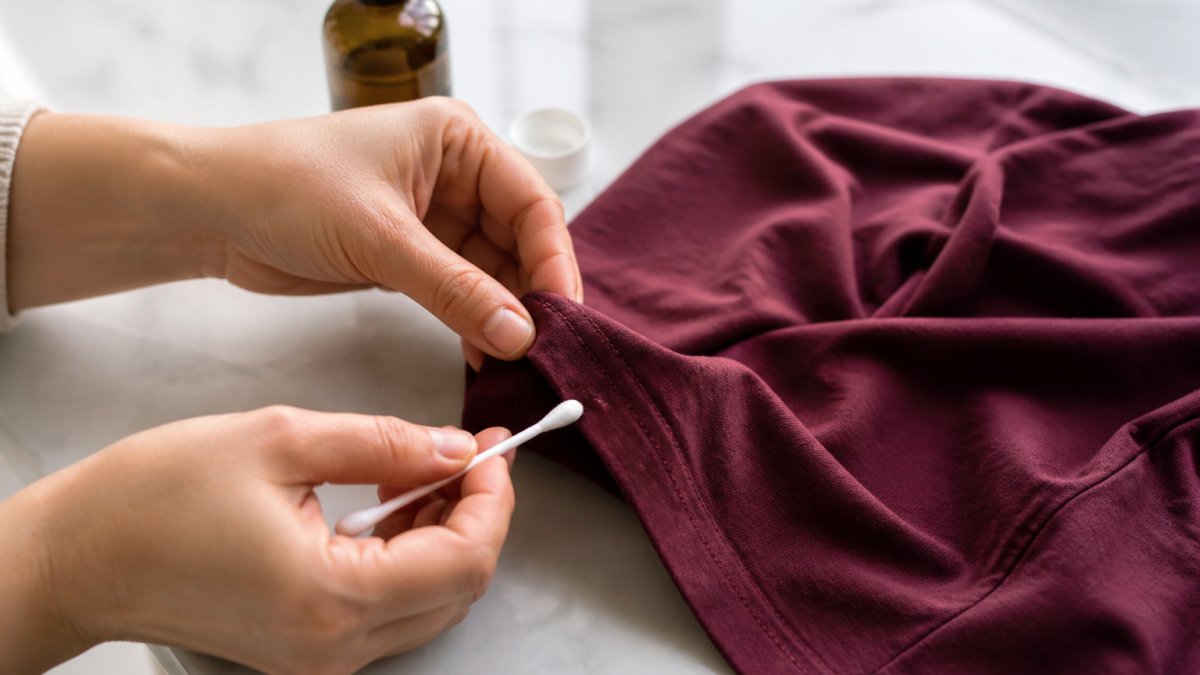
Here's how to do it:
-
Find a hidden seam. Look for an inside hem, pocket lining, or back seam. Pick a spot you won't see if discoloration occurs.
-
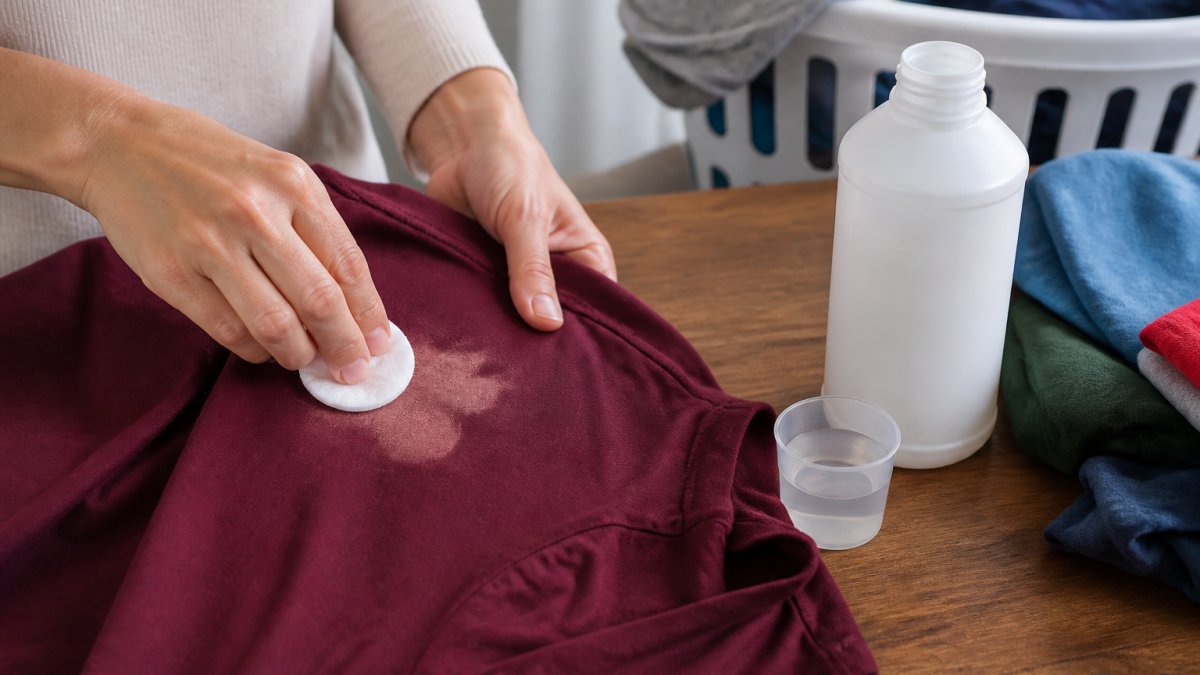
Dampen a white cotton swab with 3% hydrogen peroxide. Don't oversaturate it.
-
Dab the solution onto the hidden area. Leave it for 5-10 minutes.
-
Check for color change. Look at both the fabric and the swab. If the swab picks up color, the dye is bleeding. If the fabric lightens, it's reacting to the peroxide.
-
Rinse immediately with cool water if you see any change.
-
Let it dry completely. Some color changes only show after drying.
If the test shows no change, the garment is safe to treat. If you see any fading or color transfer, skip hydrogen peroxide and try a different stain removal method.
Skipping this 30-second test is how expensive clothes get ruined.
How to Remove Stains from Colored Clothes Safely
Peroxide is excellent for some stains, useless for others, and actively harmful for a few. Use this guide before reaching for the bottle.
Stains where diluted 3% peroxide is a strong first choice:
- Blood, peroxide breaks down the hemoglobin protein. Fresh blood foams on contact; that foaming is the reaction working. Cold-water rinse first, then diluted peroxide, 5-10 minutes, blot, wash cool.
- Sweat and deodorant buildup, yellowing from oxidized protein and aluminum salts. A 1:2 peroxide-to-water soak for 15-20 minutes on the underarm area, then a cool wash, often lifts it. Not for silk or wool.
- Self-tanner, the active ingredient (DHA) reacts with skin proteins and can stain fabric brown-orange. Peroxide is one of the few household options that fades it. Dilute 1:2, apply, wait 10 minutes, rinse. Expect partial, not perfect, removal.
- Fruit juice, wine, and berry stains, these are anthocyanin pigments, which oxidize readily. Peroxide works, but it will also oxidize anthocyanin-based dyes, so a spot test is non-negotiable on red, purple, or blue garments.
- Mildew and musty discoloration, peroxide kills the mildew organism and lightens the staining. Best on white or very light colors.
Stains where peroxide is the wrong tool:
- Grease, oil, and makeup, these are nonpolar and need a surfactant or solvent, not an oxidizer. Use dish soap or a dedicated pre-treater.
- Ink (ballpoint, gel, permanent marker), alcohol or a commercial ink remover is far more effective. Peroxide may set the ink or spread it.
- Rust, peroxide can make rust stains worse by accelerating oxidation. Use a commercial rust remover or lemon juice and salt.
- Coffee and tea on colored fabric, peroxide can work, but it is more likely to leave a light halo on dyed cotton than on white. Test first.
- Protein stains on wool or silk, the fiber itself is protein. Peroxide will damage it along with the stain.
The general method (once the stain and fabric pass the spot test):
- Blot, do not rub. Use a clean white cloth or paper towel; rubbing pushes the stain into the fiber and abrades the dye.
- Dilute. Mix one part 3% hydrogen peroxide with two parts cool water, roughly 1%, the same range as color-safe oxygen bleach in a wash load.
- Apply to the stain only. Use a cotton swab or cloth corner; never pour peroxide over the whole garment.
- Dwell 5-10 minutes. Set a timer, longer is riskier, not better.
- Rinse thoroughly with cool water. Residual peroxide keeps oxidizing after you walk away.
- Wash normally in cool water with regular detergent. Skip the dryer until the stain and color are stable; heat sets both stains and damage.
Chemical cautions, do not mix:
- Peroxide + chlorine bleach, releases oxygen gas and irritating vapors. Never combine in the same load or bucket.
- Peroxide + vinegar, forms peracetic acid, a stronger oxidizer more likely to damage dye and fiber. Use them in separate steps with a rinse between.
- Peroxide + ammonia, can produce a violent reaction. Keep them apart.
- Peroxide + heat, heat accelerates oxidation. Hot water, a hot iron, or a hot dryer after treatment can turn a mild fade permanent.
Fabric-specific notes:
- Cotton and linen, generally the most tolerant of diluted peroxide. Still test.
- Polyester and nylon, peroxide itself is usually fine, but heat is the bigger risk. Keep water cool.
- Rayon and modal, weaker wet strength; handle gently and avoid prolonged soaking.
- Spandex blends, peroxide can degrade elastane over repeated exposure. Spot-treat only.
- Wool and silk, do not use. The fibers are protein-based and peroxide will dull, yellow, or weaken them.
If a stain doesn't respond to diluted peroxide after two attempts, stop. Repeated rounds increase cumulative oxidation on the dye, and the risk of a visible light patch grows with each pass.
Using Hydrogen Peroxide on Clothes for Blood Stains
Blood stains respond well to hydrogen peroxide, which breaks down the protein in blood. This is one of the safest uses for colored clothing.
For fresh blood:
-
Rinse with cold water first. Warm or hot water sets blood stains. Cold water helps rinse out loose blood.
-
Apply hydrogen peroxide directly. Pour 3% solution onto the stain. You'll see it foam and bubble. This bubbling action lifts blood particles from the fabric.
-
Let it sit for 5-10 minutes. The foaming stops when the peroxide finishes reacting.
-
Blot with a clean cloth. The stain should fade or disappear.
-
Rinse and wash. Rinse the area with cool water, then wash the garment normally.
For dried blood, soak the area 15-30 minutes before applying peroxide to soften the stain.
Blood stains on colored clothing usually lift without visible fading, the stain responds faster than the peroxide can damage the dye. Always spot test first.
What to Do If Hydrogen Peroxide Causes Fading or Discoloration
Sometimes hydrogen peroxide causes unwanted color changes, lightening, yellowing, or streaks. Here's what to do.
If you catch it immediately:
-
Rinse with cool water right away. This stops the oxidation process. Running water dilutes remaining peroxide.
-
Soak in cool water for 15 minutes. This helps remove residual peroxide.
-
Wash in cool water. Use regular detergent. Avoid hot water, which can set the damage.
If fading is minor, washing may help the color recover slightly as the fabric dries.
If the damage is already set:
Hydrogen peroxide damage to dyes is usually permanent, oxidized dyes don't return to their original color. Your options:
- Dye the garment. Fabric dye can restore or change the color. This works best on natural fibers like cotton.
- Use color-correction fabric markers. These temporary fixes work for small spots.
- Accept the change. Lightened or faded areas sometimes blend in after washing several times.
Prevention is better than repair. Always test on hidden seams, use diluted solutions, set a timer, and rinse thoroughly.
Hydrogen peroxide doesn't have to ruin colored clothing. Test first, dilute properly, and rinse thoroughly, and it's one of the safest bleaching options for colored fabrics, protecting your wardrobe investment.
If you're dealing with stubborn stains on delicate garments or colored pieces you want to preserve, LaundrPro's professional cleaning service handles the stain removal for you. We use premium products and proven techniques to deliver spotless results while protecting your garments. Place Your Order with LaundrPro today and let us handle the chemistry, you focus on what matters.
Frequently Asked Questions
Does hydrogen peroxide bleach colored clothes?
Hydrogen peroxide can fade or discolor colored clothing if used in high concentrations or left on fabric for too long. Because it's an oxygen bleach, not a chlorine bleach, it's gentler on colored garments than traditional bleach. However, the risk of color loss increases with darker dyes and extended exposure time. Always spot-test on an inconspicuous area first, and use a diluted solution (3% concentration or lower) on colored fabric to minimize discoloration risk.
How do you spot-test hydrogen peroxide on colored clothing?
Find a hidden area of the garment, such as an inside seam, hem, or back corner. Apply a small amount of diluted hydrogen peroxide (3% concentration) with a cotton swab or cloth and let it sit for 5-10 minutes. Check the area for any color change, fading, or bleach-like marks. If no discoloration appears, the fabric is likely safe for treatment. If you see fading or lightening, do not use hydrogen peroxide on that garment and consider professional dry cleaning instead.
Can hydrogen peroxide remove stains from colored clothes without damaging them?
Yes, hydrogen peroxide can remove many stains from colored clothing when used correctly. It works well on blood, sweat, and organic stains because it breaks down stain molecules through oxidation. Use a low concentration (3% or less), apply it directly to the stain, and rinse thoroughly within 5-10 minutes. The key is quick action and proper rinsing to prevent the peroxide from weakening fabric fibers or causing discoloration. Always test on a hidden area first, especially with delicate or dark-colored fabrics.
Is hydrogen peroxide safer for colored clothes than chlorine bleach?
Hydrogen peroxide is generally safer for colored clothing than chlorine bleach because it's a milder oxidizing agent. Chlorine bleach strips color and can leave permanent bleach stains on nonwhite garments, while hydrogen peroxide breaks down into water and oxygen, making it less likely to cause lasting damage. However, hydrogen peroxide still carries a risk of fading if misused. For maximum safety on colored fabric, use a diluted hydrogen peroxide solution (3% or lower), spot-test first, and rinse immediately after treatment.