 how-to
Tips for Managing Family Laundry Loads: A 2026 Guide
Table of Contents
- Why Managing Family Laundry Loads Matters
- Establish a Laundry Routine That Works for Your Household
- Master Sorting Strategies for Large Families
- Create a Laundry Schedule for Large Families
- How to Reduce Laundry Loads Without Sacrificing Cleanliness
- Teach Kids to Do Their Own Laundry
- Simplify Folding and Storage for Efficiency
- When Professional Services Make Sense for Busy Families
Last Updated: August 7, 2026
Why Managing Family Laundry Loads Matters
Managing family laundry reclaims time and reduces the mental burden of endless washing cycles. For busy families, laundry can consume 8-10 hours per week when done inefficiently. Without a system, you rewash loads left in the washer, buy duplicates you can't find, and spend evenings folding instead of resting. The real cost is the constant mental load of tracking who needs what and when.
This guide from LaundrPro covers practical strategies for managing family laundry loads that work for households of any size. The principles remain the same: establish a rhythm, reduce decision-making, and build systems that scale without burning you out.
Establish a Laundry Routine That Works for Your Household
A laundry routine is the foundation of everything else. Without one, you're reacting to crises instead of preventing them. When your household knows laundry happens on specific days at specific times, everyone adjusts their behavior accordingly.
Choose Your Laundry Cycle Frequency
How often you wash depends on your household's actual needs. A family of five with active kids needs a different cadence than a couple working from home.
Daily washing works for families with babies, high activity levels, or limited storage space. You run one load per day, keeping the pile manageable but requiring consistent attention. Twice-weekly washing suits families with moderate laundry volume and decent storage, giving you enough clean clothes to rotate through the week. Weekly washing works only if you have significant storage space and low daily laundry volume.
Pick a frequency and stick with it for two weeks. If you're running emergency loads mid-cycle, your frequency is too sparse. If you're doing half-full loads, it's too frequent.
Set Designated Laundry Days
Consistency matters more than the specific day. Designated days create a rhythm that reduces decision fatigue and helps family members plan around the routine.
Pick days that align with your schedule. If you work long hours Thursday through Saturday, don't pick Thursday as laundry day. Communicate the schedule clearly, post it on the fridge, in a family calendar, or in a group chat. When kids know Tuesday is laundry day, they stop asking where their favorite shirt is on Wednesday morning.
Master Sorting Strategies for Large Families
Sorting is where most families lose efficiency. A color-coded sorting system reduces this friction dramatically.
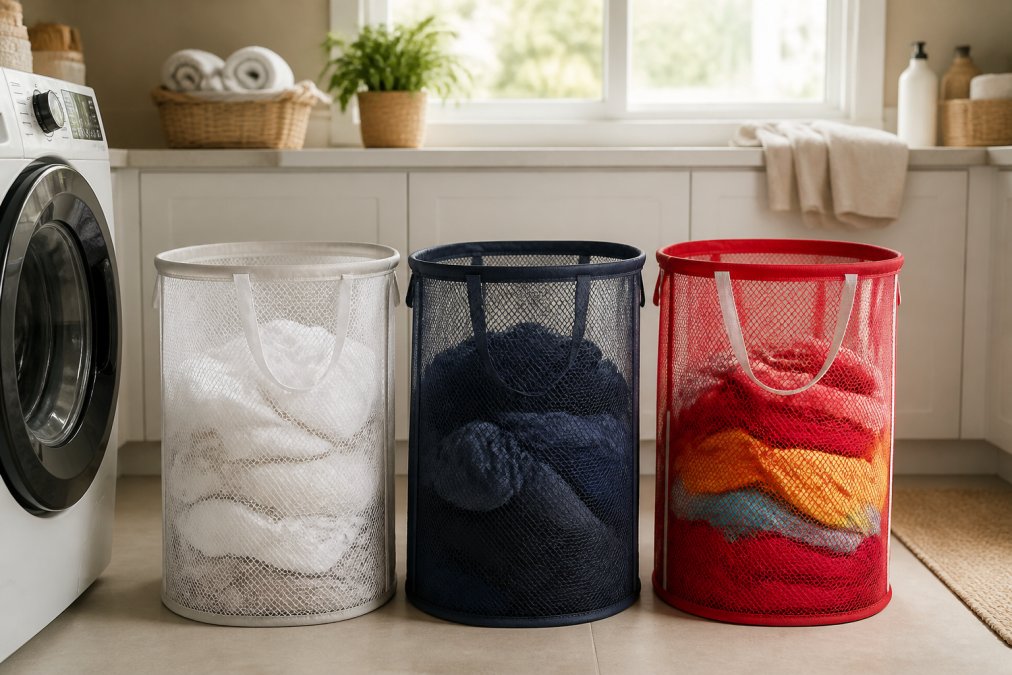
Color-Coded Sorting Systems
The simplest approach uses three categories: whites, darks, and colors. Each family member gets a designated hamper or bin for their laundry. When they put dirty clothes away, they sort immediately.
Assign each person a color. One family member uses the blue hamper, another the red one, another the yellow one. This adds a second layer of organization. When someone needs a specific item quickly, you know exactly where to look.
For families with special needs, a toddler with frequent accidents, or a teenager with gym clothes, add a fourth hamper for special items. Label everything clearly with permanent markers or printed labels visible from across the room.
Fabric Care and Special Items
Sports gear, delicates, and heavily soiled items need different treatment. Create a separate small hamper for delicate items, bras, silk blouses, anything with elastic or embellishment. Wash this load separately to protect expensive items.
Designate a mesh hamper specifically for gym clothes and sports uniforms. Mesh allows air circulation, reducing odor buildup. Wash this load separately on a warm cycle.
Heavily stained items need pre-treatment before washing. Stained clothes go in a separate small container with cold water and stain treatment. By the time you're ready to wash, the stain has already loosened.
Create a Laundry Schedule for Large Families
A laundry schedule removes guesswork from load distribution. Instead of washing whatever pile looks largest, you follow a predetermined sequence.
Weekly Planning and Load Distribution
Map out your week on Sunday evening. Decide which loads run on which days. A typical five-day schedule for a family of four might be: Monday is whites and towels, Tuesday is darks, Wednesday is colors, Thursday is delicates and gym clothes, Friday is sheets and remaining items.
Write this down and post it. Assign specific people to specific steps. One person might run the washing machine in the morning and move loads to the dryer at lunch. Another might fold and sort in the evening. A third might put items away. When everyone knows their role, the process moves faster.
Batching Loads by Load Capacity
Your washing machine has a maximum load capacity, usually 4-5 pounds for standard machines. Overloading reduces cleaning effectiveness and increases drying time. Most families find they can fit one person's weekly clothing in a single load, but two people's clothes require two loads.
Batch similar items together. Towels wash well with sheets. Workout clothes wash separately from dress clothes. Delicates need their own cycle. This batching approach reduces decision-making.
How to Reduce Laundry Loads Without Sacrificing Cleanliness
The most efficient laundry system generates fewer loads. This doesn't mean wearing dirty clothes, it means being intentional about what you wash and how often.
Strategic Decluttering and Wardrobe Rotation
A common mistake is keeping too many clothes. The more items you own, the more loads you generate. A strategic wardrobe reduction cuts laundry volume by 20-30% without affecting daily outfit options.
Audit your closets. Remove anything you haven't worn in a year, anything that doesn't fit, and anything that requires special care you're not actually providing. For a family of four, this typically means removing 100-150 items.
After decluttering, establish a rotation. Keep one season's clothing accessible and store the rest. Rotating seasonally reduces the volume of clean clothes you need to store and fold.
Extending Wear Between Washes
Not every garment needs washing after one wear. Jeans, sweaters, and jackets can be worn multiple times before washing. Undergarments and socks require daily changes.
Create a simple rule: outerwear worn for under 4 hours can be worn again before washing. Items worn for full days need washing. Clothes with visible stains or odor need immediate washing. A "worn but not dirty" rack in each bedroom gives clothes a designated space between wearing and washing.
Teach Kids to Do Their Own Laundry
Teaching children to manage their own laundry reduces your workload significantly while building responsibility.

Age-Appropriate Tasks and Delegation
Start early. A five-year-old can sort clothes by color. An eight-year-old can load a washing machine and add detergent with supervision. A twelve-year-old can run a complete laundry cycle independently. A teenager can manage their own laundry completely.
For younger children, make the task physical and visible. Sorting into color-coded hampers is concrete and satisfying. For older children, teach the complete process. Walk through it together several times, then let them lead while you observe.
Create a simple checklist they can follow: sort clothes, check pockets, treat stains, load washer, add detergent, select temperature, start cycle, move to dryer after 35 minutes.
Building Responsibility Through Household Chores
Laundry teaches practical life skills and reinforces responsibility. When a child's favorite shirt is dirty because they didn't wash it on schedule, they learn the consequence of procrastination. Frame it as "your laundry system" rather than "your chore."
Expect mistakes. Clothes will shrink. Colors will bleed. These are learning moments. Rather than taking over, help them problem-solve. How can they prevent this next time?
Simplify Folding and Storage for Efficiency
Folding consumes more time than any other laundry step. Simplifying this process cuts total laundry time by 30-40%.
Many families fold less than they think necessary. Underwear, socks, and t-shirts don't require folding. Only items that wrinkle easily require careful folding. Create a folding assembly line when you have multiple people. One person removes items from the dryer, another folds, a third sorts by person and puts items away.
Invest in drawer dividers or bins that hold folded items vertically rather than stacking them horizontally. Vertical storage lets you see all items without digging through a stack. For items that don't need folding, use hangers immediately. Dress clothes, jackets, and anything that wrinkles easily should go on hangers straight from the dryer.
When Professional Services Make Sense for Busy Families
Some families reach a point where DIY laundry management isn't realistic. When both parents work long hours, when there are health issues preventing physical laundry work, or when the household volume is genuinely overwhelming, professional laundry services become practical.
Professional services work best for families who need consistency and reliability. For Miami families managing high laundry volumes, services like LaundrPro offer door-to-door pickup and delivery with fast turnaround, typically 24-48 hours for regular loads.
The decision to outsource isn't failure. It's recognizing that your time is better spent on work, family, or rest. For families with young children, elderly parents, or demanding careers, professional laundry services free up valuable time each week.
Managing family laundry loads doesn't require perfection, it requires a system that fits your household's reality. When everyone knows the routine, when sorting happens automatically, and when loads are batched logically, laundry becomes a background process instead of a constant crisis.
For families in Miami's busy professional corridors, LaundrPro provides an alternative when managing laundry internally becomes unsustainable. With transparent, flat-rate pricing and no hidden fees, professional laundry service offers spotless results and fast turnaround without subscription commitments. Whether you manage laundry at home or partner with a professional service, the goal remains the same: reclaim your time and reduce the mental load that comes with endless washing cycles. Place Your Order with LaundrPro today and experience how premium care transforms your household routine.
Frequently Asked Questions
How do you manage laundry for a large family?
Break the workload into a structured routine: establish a laundry schedule that spreads loads across the week rather than cramming everything into one or two days. Use color-coded sorting hampers in each bedroom to simplify the sorting process. Batch loads by fabric type and load capacity to maximize efficiency. Involve children in age-appropriate tasks like sorting or folding to distribute the workload. Many busy families also find that professional laundry services handle bulk items like sheets and comforters more effectively, freeing time for other responsibilities.
What is the most efficient way to do laundry for a family of 5?
Create a laundry schedule that assigns specific days to specific family members or clothing types. For example, designate Monday for towels and linens, Wednesday for everyday clothes, and Friday for sports gear and delicates. Use hampers in every room to reduce the sorting step. Batch loads by similar fabric care requirements and load capacity to minimize handling time. Pre-sort items into whites, colors, and delicates before washing day. Set up a folding station near the dryer to streamline the process and involve family members in the final steps.
How can I reduce the amount of laundry my family produces?
Start with a wardrobe audit: remove items no one wears and keep only versatile pieces that mix and match. Encourage family members to wear items more than once between washes when appropriate (jeans, sweaters, and outerwear can often be worn 2-3 times). Establish a rule that lightly worn items go back in the closet rather than the hamper. Reduce the number of clothes each family member owns so there's less total volume. Use hampers strategically to prevent overflow, and set clear expectations about wash frequency. These strategies directly lower the overall workload without compromising cleanliness or hygiene.
Should I do laundry every day or once a week?
The answer depends on family size and lifestyle. Most families with 4+ members find a rhythm of 2-3 loads per week works best, spreading the work prevents overwhelming buildup while staying manageable. Families with young children or high activity levels (sports, outdoor play) may need more frequent cycles. Batching loads on designated days creates a predictable schedule that family members can rely on. Daily small loads can work for very large families or those with specific schedules, but many find it exhausting. Experiment to find what maintains your household's rhythm without creating stress or excessive wear on clothing.
This article was written using GrandRanker