 how-to
How to Clean Delicate Fabrics Safely: A Step-by-Step Guide
Table of Contents
- Understanding Delicate Fabrics and Why They Need Special Care
- Preparation and Sorting: The Foundation for Safe Cleaning
- Choosing the Best Detergent for Delicate Fabrics
- How to Hand Wash Silk and Other Delicate Materials
- Machine Washing Delicate Fabrics: Tips and Settings
- How to Dry Delicate Clothes Without Stretching
- Emergency Stain Removal for Delicate Fabrics
- Common Mistakes to Avoid When Cleaning Delicate Items
Last Updated: August 5, 2026
Understanding Delicate Fabrics and Why They Need Special Care
Delicate fabrics require specialized cleaning because their fibers are more susceptible to damage than everyday cotton or synthetic blends. Silk, lace, cashmere, and wool have structural vulnerabilities: silk threads are naturally fragile, lace features open weaves that snag easily, and wool fibers can felt or shrink under heat and agitation. Standard laundry practices expose delicate items to excessive agitation, heat, and harsh chemicals that accelerate fiber degradation. A single careless wash cycle can undo years of careful ownership.
At LaundrPro, we understand that premium fabrics deserve premium care. The difference between spotless results and ruined clothes comes down to knowing the rules for your specific material and following them consistently.
Preparation and Sorting: The Foundation for Safe Cleaning
Before washing, examine every garment under good lighting. Check pockets, zippers, and closures, loose change or forgotten tissue can damage delicate fibers. Look for existing stains, loose seams, or fragile areas needing extra attention.
Never mix delicate fabrics with regular laundry. Group items by fabric type: silks together, woolens together, lace items together. This allows appropriate water temperatures and cycle settings for each category.
Color separation matters more with delicates because these fabrics often use dyes that bleed readily. Wash new or brightly colored delicate items separately for the first two to three washes. Dark silks, in particular, can transfer dye onto lighter items even in cold water if colors haven't fully set.
Check care labels on every piece. Manufacturers provide specific guidance about water temperature, cycle type, and whether hand washing is mandatory. Respect these instructions; they're based on how that specific fabric will respond to water, heat, and mechanical action.
Choosing the Best Detergent for Delicate Fabrics
Standard laundry detergents contain surfactants, enzymes, and alkaline builders too harsh for silk, lace, cashmere, and other fine materials. They strip natural oils from fibers, cause color fading, and weaken fiber integrity.
For delicate fabrics, use a pH-neutral detergent specifically formulated for fine materials. Look for detergents labeled "delicate," "wool," "silk," or "fine fabrics." Avoid products containing bleach, optical brighteners, or heavy enzymes.
Liquid detergents work better than powders for delicate items. Powdered detergents sometimes leave residue on fine fabrics, especially in cold water. Liquid formulas dissolve instantly and rinse out more thoroughly.
With delicate-specific detergents, use less than you'd use for regular laundry. These products are more concentrated and efficient at cleaning. Using too much detergent makes rinsing harder and can leave buildup on delicate fibers. Follow the manufacturer's recommendation, and when in doubt, use less rather than more.
How to Hand Wash Silk and Other Delicate Materials
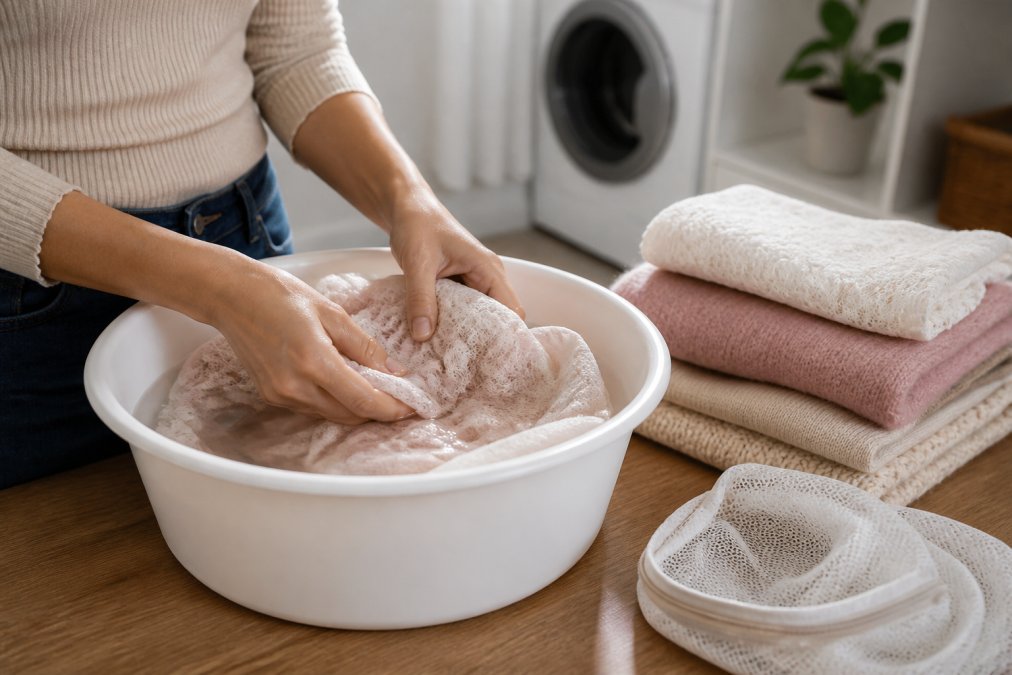
Hand washing remains the safest method for truly delicate fabrics like silk, fine lace, and vintage items. It gives you complete control over water temperature, agitation level, and handling.
Step-by-Step Hand Washing Process
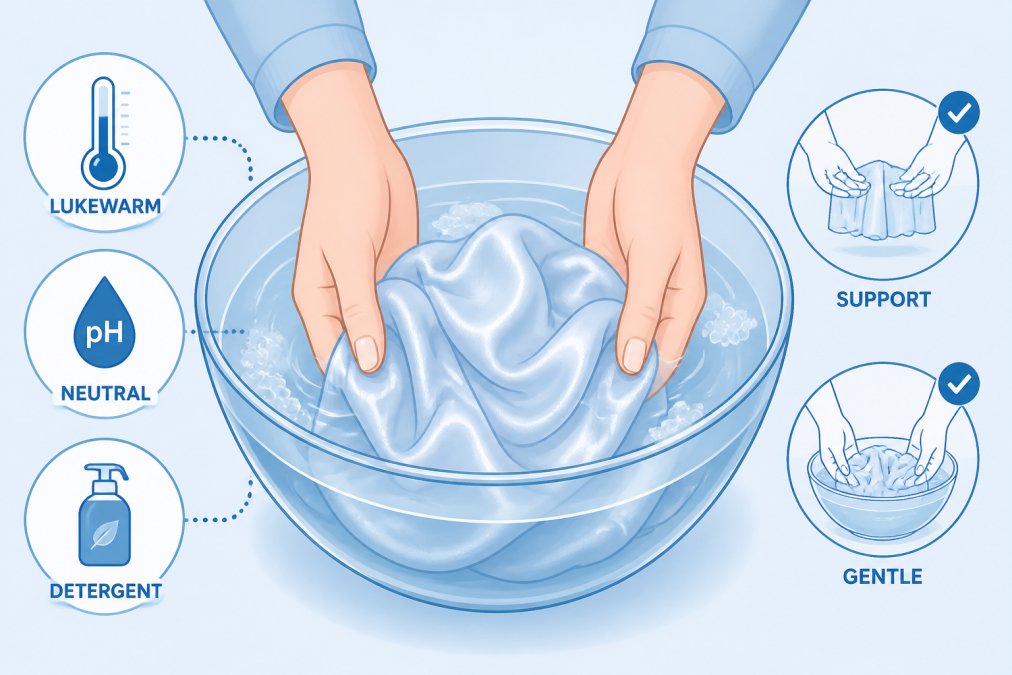
Fill a basin with lukewarm water between 60-70°F. Cold water doesn't dissolve detergent effectively, while warm water can damage some delicate fibers and set stains permanently. Add roughly one-quarter teaspoon of pH-neutral detergent and stir gently.
Submerge the garment completely and let it soak for 10-15 minutes. This allows detergent to penetrate fibers and loosen surface dirt without requiring aggressive scrubbing.
Gently squeeze the soapy water through the fabric. Never twist, wring, or scrub delicate materials. Work from the top downward, supporting the full weight of the wet fabric. Pay special attention to underarms, necklines, and cuffs, but use only gentle squeezing motions.
For stubborn stains, apply undiluted pH-neutral detergent directly to the affected area and let it sit for 5-10 minutes before gentle squeezing. Never rub or scrub. Patience and repeated gentle applications work better than aggressive treatment.
Rinsing and Wringing Without Damage
Thorough rinsing is essential. Detergent residue left on delicate fabrics can cause yellowing, stiffness, and accelerated fiber breakdown. After the initial wash, drain the basin and refill with clean lukewarm water. Repeat the gentle squeezing motion. You'll need at least two to three rinse cycles until the water runs clear and you feel no slickness on the fabric.
The final rinse should use cool water, which helps close the cuticle of delicate fibers and enhances color vibrancy.
Never twist or wring delicate fabrics. Lay the garment flat on a clean, dry towel and gently press the fabric against the towel to absorb excess water. If the item is large or heavily saturated, roll it loosely in the towel and press gently. The goal is to remove water without forcing the fabric through compression or twisting motions.
Machine Washing Delicate Fabrics: Tips and Settings
For items labeled as machine-washable, modern washing machines offer delicate cycles specifically designed for fine materials.
Selecting the Right Cycle and Water Temperature
Use the delicate or gentle cycle on your machine. These cycles typically run for 20-30 minutes with minimal agitation and slower spin speed, protecting fiber integrity while providing adequate cleaning.
Water temperature should be cold or lukewarm, never hot. Cold water minimizes fiber swelling and color bleeding while allowing pH-neutral detergent to work effectively. Select the shortest wash time available, extended cycles increase total time fibers spend under mechanical stress.
Using a Mesh Laundry Bag for Extra Protection
A mesh laundry bag provides critical protection during machine washing. Place delicate items inside the bag before loading the machine. The mesh allows water and detergent to reach the fabric while preventing direct contact with the machine's drum and other garments.
This is especially important for items with embellishments, buttons, beads, lace trim, or decorative stitching. Load the mesh bag loosely rather than stuffing it full. Overcrowding prevents proper water circulation and reduces cleaning effectiveness.
How to Dry Delicate Clothes Without Stretching
How you dry delicate fabrics determines whether they maintain their original shape and appearance. Machine dryers, even on low heat settings, are incompatible with most delicate materials.
Air Drying and Flat Drying Methods
Flat drying is the gold standard for delicate fabrics. After removing excess water with a towel, lay the garment flat on a clean, dry surface. Smooth the garment gently into its proper shape, straighten sleeves, align seams, and ensure the neckline sits correctly. This shaping while damp allows the fabric to dry in the correct form.
Ensure adequate air circulation around the garment. A fan pointed in the general direction (but not directly on the fabric) helps speed drying. Avoid direct sunlight on delicate fabrics, especially silks and dyed materials, because UV exposure causes color fading.
Drying time varies by fabric weight and humidity. Lightweight silks might dry in 4-8 hours, while heavier woolens can take 24 hours or more.
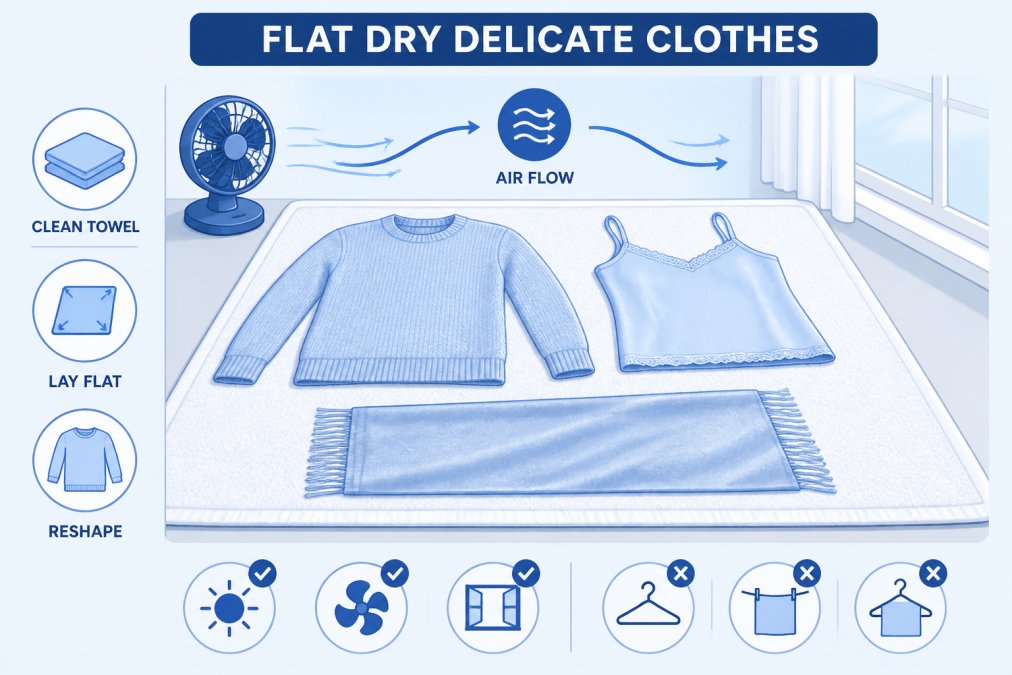
For items that must dry more quickly, consider a drying rack or hanging method as a secondary option. Hang lightweight items like silk scarves from a padded hanger in a well-ventilated area. The hanging position should support the full weight of the garment without stretching the neckline or shoulders.
Why You Should Avoid the Dryer
Machine dryers generate heat that shrinks and weakens delicate fibers. Even "low heat" settings reach temperatures that damage silk, wool, and synthetic blends. The mechanical tumbling action causes pilling, snagging, and permanent stretching. The only exception is items specifically labeled as machine-dryable on their care tags.
Emergency Stain Removal for Delicate Fabrics
Stains on delicate fabrics require immediate action but careful technique. The longer a stain sits, the more it sets into fibers. However, aggressive stain treatment can damage delicate materials more severely than the stain itself.
For fresh stains, blot immediately with a clean white cloth. Never rub or scrub. Work from the outside edges of the stain toward the center to prevent spreading.
For protein-based stains (blood, egg, dairy), rinse with cold water immediately. Hot water sets protein stains permanently. Soak the area in cold water for 15-30 minutes, then gently work a small amount of pH-neutral detergent into the stain using only your fingertips.
For oil-based stains (grease, makeup, butter), apply undiluted pH-neutral detergent directly to the stain and let it sit for 10-15 minutes before rinsing.
For wine, juice, or other colored stains, blot immediately and rinse with cold water. For persistent stains, soak in cold water with a small amount of detergent for 30 minutes, then rinse. Repeat if necessary rather than attempting aggressive treatment.
Never use bleach on delicate fabrics. Oxygen-based stain removers are safer for delicates, but test on an inconspicuous area first. When in doubt about stubborn stains, professional dry cleaning is safer than home remedies. LaundrPro handles delicate stain removal with specialized techniques designed specifically for fine fabrics.
Common Mistakes to Avoid When Cleaning Delicate Items
Using standard detergent on delicate fabrics is the most frequent mistake. Regular laundry detergent is too harsh, it strips natural oils, causes color fading, and weakens fibers.
Washing delicate items with regular laundry is another common error. Even one cycle with heavy work clothes can stretch, snag, or damage fine materials.
Hot water causes shrinking, color bleeding, and fiber weakening. Cold or lukewarm water is always correct for silk, wool, lace, and other fine materials.
Wringing and twisting permanently damage delicate fibers. Towel pressing and flat drying are the only safe moisture-removal methods.
Skipping thorough rinsing allows detergent residue to cause yellowing, stiffness, and accelerated breakdown. At least two to three rinse cycles are non-negotiable.
Using fabric softener is counterproductive. Fabric softeners coat fibers with waxy substances that reduce breathability and can cause yellowing. Delicate fabrics need gentle handling and proper drying, not softening.
Storing delicate items while damp invites mildew and fiber damage. Always ensure items are completely dry before folding and storing.
Finally, ignoring care labels is the mistake that ties everything together. Manufacturers provide specific guidance because they've tested how that fabric responds to water, heat, and mechanical stress. Following care label instructions is the single best way to preserve delicate clothing.
Keeping delicate fabrics in pristine condition requires attention to detail at every step, from choosing the right detergent to selecting proper drying methods. For busy professionals and families in Miami, this level of care is time-consuming and requires expertise that many don't have. That's where LaundrPro makes a difference. We handle delicate items with specialized care, using pH-neutral detergents, proper water temperatures, and flat-drying techniques that preserve fiber integrity and maintain garment shape. With our door-to-door service and fast 24-48 hour turnaround, you reclaim time while your premium fabrics receive the expert care they deserve. Place Your Order and experience the difference professional delicate fabric care makes.
Frequently Asked Questions
Can you use regular detergent on delicate fabrics?
No. Regular detergent contains harsh chemicals and enzymes that can damage delicate fibers like silk, lace, and cashmere. Use a pH-neutral, bleach-free detergent specifically formulated for delicate fabrics. These gentler formulas clean effectively without compromising fiber integrity. If you're unsure about your detergent, check the label for "delicate" or "gentle" designations.
Is vinegar safe for delicate fabrics?
Yes, white vinegar is generally safe for delicate fabrics and can be used as a natural rinse aid. Add 1/4 cup to the rinse cycle to remove detergent residue and restore shine. However, test on a hidden area first, especially with colored delicates, as vinegar can affect some dyes. Never use vinegar as a stain treatment on silk or wool without diluting it significantly.
What's the best way to hand wash silk without damaging it?
Fill a basin with lukewarm water (60-70°F) and add pH-neutral detergent. Submerge the silk garment and gently agitate for 3-5 minutes without twisting or wringing. Rinse in cool water until soap is gone. To remove excess water, gently press the fabric between your palms or roll it in a clean towel. Never wring or twist silk, as this causes permanent damage to the fibers.
How do I know if my delicate fabrics need professional cleaning?
Consider professional dry cleaning for expensive items like silk blazers, vintage lace, or garments with complex construction. If a delicate item costs over $100, has sentimental value, or shows signs of wear, professional care protects your investment. Professional services have specialized equipment and expertise for challenging stains and fabrics that might not survive home washing.
This article was written using GrandRanker