 how-to
How to Find Reliable Dry Cleaners in Miami
Last Updated: November 1, 2026
Quick Summary
To find reliable dry cleaners in Miami, call or message the business and ask how they handle pickup, delivery, and stains, looking for clear written pricing, stated turnaround times, and posted policies on damaged or lost items. Run the same six questions on each shortlisted cleaner and score the answers. Clear, written answers usually signal a safer choice.
- Ask how the cleaner handles silk, wool, and embellished pieces, and whether they inspect stains at drop-off.
- Get a written policy for damaged or lost garments before you hand anything over.
- Compare quotes on the same basket of items, including delivery fees and rush surcharges.
- Ask for a specific turnaround time for standard and rush service, not a general promise.
- Keep an itemized receipt listing each garment and any stains noted at drop-off.
Table of Contents
- What Makes a Dry Cleaner Reliable in Miami
- Questions to Ask a Dry Cleaner Before You Hand Over Clothes
- How to Check Garment Care and Stain Handling Standards
- Understanding Miami Dry Cleaning Prices and Quotes
- Dry Cleaner Turnaround Time and Pickup Reliability
- Dry Cleaning Delicate Garments Without Damage
- Booking Your First Pickup With LaundrPro
- Frequently Asked Questions
What Makes a Dry Cleaner Reliable in Miami
Finding reliable dry cleaners in Miami takes more than picking the first result on a search page.
Start with a simple test. Call or message the business and ask how they handle pickup, delivery, and stains. A reliable cleaner answers clearly and without pressure.
Look for these signs:
- Clear, written pricing you can understand without a phone call
- Stated turnaround times for regular and rush service
- Consistent contact through phone, text, or an online booking system
Online rankings help, but they are only a starting point. A high review count does not prove good garment care.
Questions to Ask a Dry Cleaner Before You Hand Over Clothes
Most guides tell you to ask a few questions. Few tell you how to score the answers. This section gives you a short, repeatable vetting process you can run on any Miami cleaner before you trust them with a suit or a silk dress.
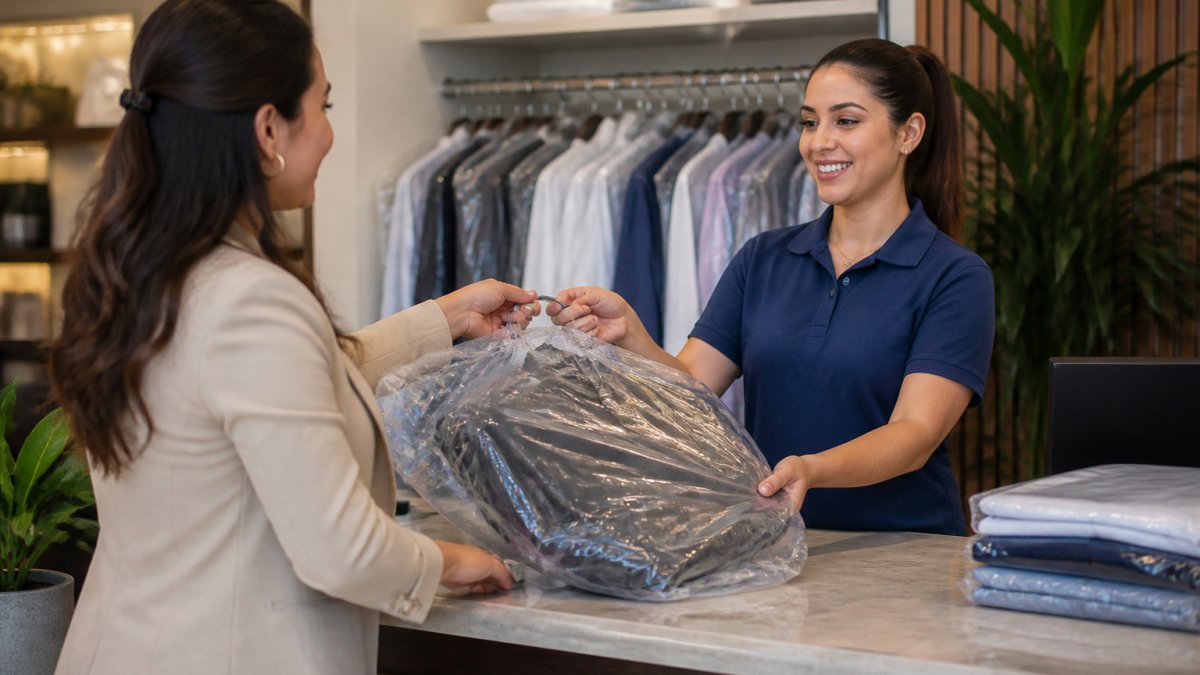
The five-minute phone or counter test
Call or visit during normal business hours and ask these questions in order. The answers, and how quickly staff give them, tell you more than any review score.
- "How do you handle silk, wool, and embellished pieces?" A reliable cleaner names a process (for example, solvent cleaning versus hand finishing) and asks about the care label. A vague "we handle everything" is a warning.
- "Do you inspect and tag stains at drop-off?" The right answer is yes, with the stain noted on your ticket. If they do not inspect at drop-off, you have no record if a stain is still there at pickup.
- "What is your policy if a garment is damaged or lost?" Look for a written policy, a stated remedy, and a claims window. "We are careful" is not a policy.
- "What is your turnaround for standard and rush service, and what does rush cost?" You want specific times and a specific surcharge, not "a few days."
- "What is your policy on unclaimed garments?" Ask how long they hold items and what happens after that window.
- "Can I get an itemized receipt listing each garment?" A cleaner that tracks items individually is easier to hold accountable.
Score the answers
Use a simple three-column check for each cleaner you are considering:
- Clear and in writing, the answer is specific and appears on the ticket, website, or booking confirmation.
- Clear but verbal, the answer is specific but only spoken. Acceptable, but ask them to note it on the ticket.
- Vague or evasive, the answer is general, deflected, or changes when you press. Treat this as a red flag.
Two or more vague answers is a reason to keep looking, even if the reviews are strong.
Red flags at the counter
- No written ticket, or a ticket that lists only a total and not the garments.
- Staff who cannot explain how a delicate fabric will be cleaned.
- No stated policy for damage, loss, or unclaimed items.
Green flags worth trusting
- Staff who ask about the care label and point out risks before cleaning.
- A ticket that lists each garment, the noted stains, the promised date, and the price.
- A written damage and loss policy you can read before you drop off.
How to Check Garment Care and Stain Handling Standards
Good garment care comes down to the details. Ask how the business treats fabrics that need special handling, such as silk, leather, or heavily embellished pieces.
Stain handling deserves the same attention. Some stains need pre-treatment before cleaning, and some should be left for a specialist.
Before you commit, check the business's stain-handling approach:
- Do they inspect and mark stains at drop-off?
- Do they pre-treat stains before the main cleaning cycle? See how a common stain is handled in this guide to removing red wine from white clothes.
- Do they tell you when a stain may not come out fully?
If a cleaner promises to remove every stain, be cautious. Honest businesses explain the limits of stain removal.
Understanding Miami Dry Cleaning Prices and Quotes
Dry cleaners rarely publish identical price lists, which makes price comparison harder than it looks. That makes price comparison harder than it looks. The goal is not to find the cheapest quote; it is to find the quote that covers the same work at the same speed with no surprise add-ons.
What actually drives the price
Dry cleaning prices are set by a handful of variables that can change the total for an order:
- Garment type and construction. A pressed cotton shirt is the cheapest common item. A two-piece suit, a lined wool coat, a silk dress, or a beaded gown takes more labor, more solvent time, and more pressing, so it costs more.
- Fabric and trim. Leather, suede, fur, down, and heavily embellished pieces often carry a specialty surcharge because they need a different process or a specialist.
- Soil level. Heavily soiled items, smoke or odor treatment, and stain work that requires pre-treatment can add a charge.
Build a like-for-like quote
The only reliable way to compare Miami cleaners is to price the same basket of items at each one. Pick a realistic sample from your own closet, for example:
- Two cotton dress shirts
- One two-piece suit
- One silk blouse or dress
- One pair of trousers
Ask every cleaner for the total on that exact basket, standard turnaround, with pickup and delivery if you plan to use it. Then ask the follow-up questions that separate a real quote from a teaser:
- Is the quoted price per item or per order?
- Is there a minimum order for delivery?
- Is there a delivery fee, and is it waived above a certain order size?
Write the answers down next to each cleaner. A cleaner that answers all six in writing is easier to trust than one that quotes a single number and moves on.
Read the quote for hidden costs
A low per-item price can hide the real cost. Watch for these patterns:
- A low item price plus a delivery fee that pushes the total above a competitor with a higher item price and free delivery.
- A minimum order that forces you to add items you did not plan to clean.
- Rush pricing that is quoted as a percentage rather than a flat fee, which can climb quickly on a large order.
Compare the total, not the headline
Once you have like-for-like quotes, compare the all-in total for your basket, including delivery and any rush charge you would realistically use. The cheapest headline price is often not the cheapest order.
For current rates, check LaundrPro's pricing page and request a quote for the same basket of items so you can compare it against the other quotes you collect.
The article lays out the main price drivers and the rush and delivery costs that most affect the total, so the table below sets them side by side.
| Factor | Effect on price | Note |
|---|---|---|
| Garment type | Suits, silk and gowns cost more | More labor and solvent time |
| Fabric and trim | Specialty surcharge possible | Leather, suede, fur, down |
| Soil level | Extra charge possible | Smoke, odor or heavy stains |
| Turnaround speed | Rush costs more | Most sticker shock comes from rush |
| Order minimums | Can raise per-item cost | Affects small orders |
| Pickup and delivery | Fee or threshold waiver | Varies by business |
Dry Cleaner Turnaround Time and Pickup Reliability
Turnaround time matters most when you need work clothes by a certain morning. Standard service often takes a few days, while express service can return items in a day or less.
Pickup reliability matters just as much. A missed pickup can leave you without clothes when you need them. Ask whether the business confirms pickup windows, how it handles schedule changes, and whether you receive a notice when your order is ready.
Use this checklist when you compare cleaners:
- Confirms a specific pickup window
- Sends a reminder or confirmation
- States standard and rush turnaround times
Dry Cleaning Delicate Garments Without Damage
Delicate garments need extra care. Silk blouses, fine knits, and lined jackets can shrink, fade, or lose their shape with the wrong method. You can also review how bedding and comforters are cleaned and priced.
Many people assume every dry cleaner handles delicates the same way. They do not. Ask the cleaner whether they use gentler processes for fragile fabrics and whether they will tell you before cleaning if an item looks risky.
Keep these habits in mind:
- Point out delicate items when you drop them off
- Remove small items from pockets and check for loose buttons
- Ask for a written note on any garment that needs special handling
Booking Your First Pickup With LaundrPro
When you are ready to try a new cleaner, booking a first pickup is a low-risk way to test the service.
LaundrPro offers door-to-door pickup and delivery, so you do not need to be home for every step. You can schedule Miami pickup and delivery and check address eligibility when booking.
When you book, confirm these details:
- Your pickup window and delivery date
- The price for your items, including any fees
- How you will receive updates on your order
A good first order tells you whether a cleaner is worth using again. If the experience is smooth, you have found a dependable option for the long term.
Frequently Asked Questions
How can I tell if a dry cleaner is reliable?
Start with how the business handles your specific garments. Ask how they clean suits, silk and leather, and whether they inspect each item for stains, loose buttons and fabric weakness before processing. Confirm how they log your items, what happens if a piece is lost or damaged, and how they handle claims. Check recent online reviews for patterns in pickup timing, missing items and damage rather than only the overall star rating. A reliable cleaner will answer these questions plainly and put its policies in writing.
What should I ask a dry cleaner before leaving my clothes?
Ask how long the service takes, whether pickup and delivery are included, and what the cost depends on, such as garment type, quantity and rush requests. Ask how they treat delicate fabrics and whether they will tell you before proceeding with a stain that may not come out. Ask what their damage policy covers and how they process a claim. Get the answers in writing or on a receipt so there is no confusion at pickup.
How long does dry cleaning usually take?
Turnaround time varies by provider, service level and how busy the shop is, so confirm the timeline when you drop off or book pickup. Some services offer express options, while standard service may take several days. Ask whether the stated time begins at pickup or drop-off, and whether weekend or holiday periods change the schedule. For work clothes you need by a specific morning, confirm the exact return window before you commit.
How do I find a dry cleaner that can handle delicate garments?
Look for a cleaner that describes its handling of delicate fabrics such as silk, wool, lace and beaded pieces. Ask whether they use gentler processes for these items and whether they separate delicates from heavier loads. Bring care labels with you, and point out any embellishments or prior repairs. A cleaner that asks questions about your garment before processing is usually more careful than one that accepts every item the same way.