 how-to
How to Get Smell Out of Winter Coats in 5 Steps
Last Updated: November 3, 2026
Quick Summary
To get smell out of winter coats, first identify the source, then air the coat outdoors and spray the lining with diluted vinegar. Wash only when needed, using a method that suits the fabric and fill. Dry it completely to prevent musty smells from returning.
- Identify the source: sweat and body oil, mildew, or absorbed smoke and cooking odors.
- Air the coat hanging outside in cool, fresh air for at least two to three hours.
- Mist the lining with one part white vinegar to three parts water, then air dry completely.
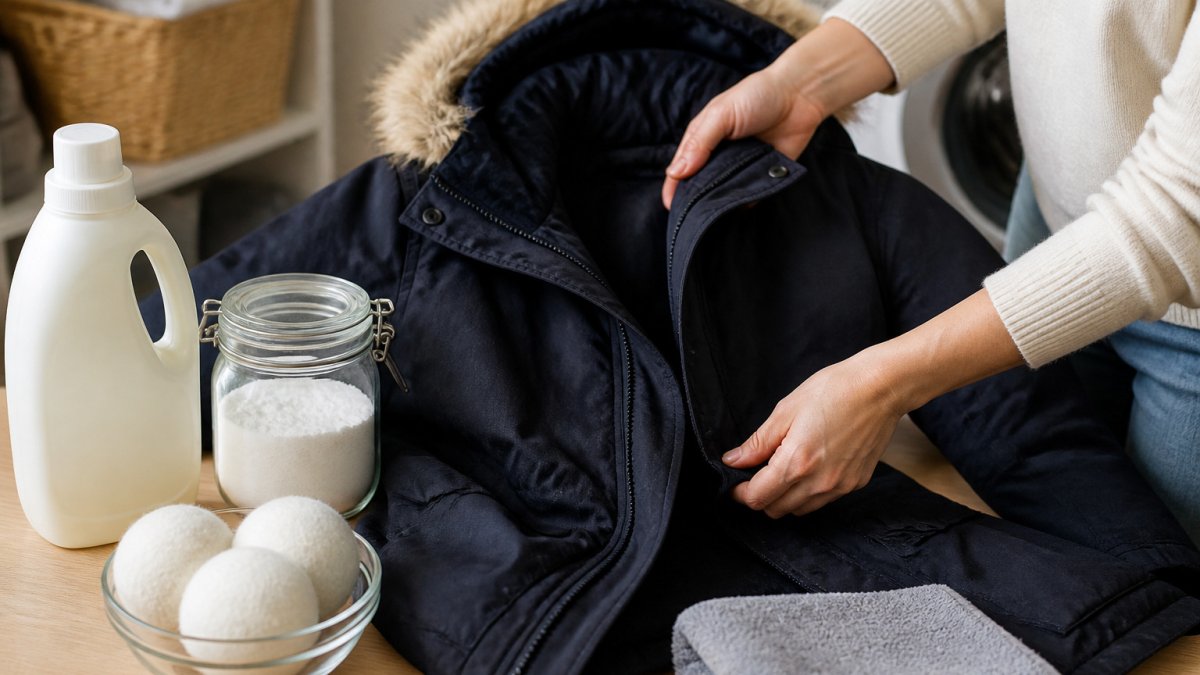
- Use a down-safe detergent and skip fabric softener, since it flattens down's loft.
- Confirm the coat is fully dry inside before storing it, since trapped moisture causes mildew.
Table of Contents
- Diagnose the Source of the Smell First
- How to Get Smell Out of Winter Coats Without Washing
- Washing a Winter Coat Safely by Fabric and Fill
- Removing Persistent Musty or Damp Odors
- When to Use Professional Dry Cleaning for Winter Coats in Miami
- How to Store Winter Coats to Prevent Musty Smells
- Book Your Winter Coat Cleaning With LaundrPro
- Frequently Asked Questions
Diagnose the Source of the Smell First
Before you pick a method, figure out what is causing the smell. Most winter coat odors come from one of three sources: body oils and sweat soaking into the lining, trapped moisture that breeds mildew, or stale smoke, food, or pet odors absorbed into the insulation. Each one needs a slightly different fix.
Start with a simple test. Hold the coat near your face and sniff the collar and underarms. A sour, sweaty smell points to body odor. A damp, earthy smell points to mildew. A general staleness across the whole coat usually means it has been stored too long without airing out.
- Sweat and body oil: Collar, cuffs, underarms, and the inside lining
- Mildew or musty smell: Damp spots, zippers, seams, and folds
- Absorbed odors: Smoke, cooking smells, or pets, usually throughout the coat
Knowing the source saves time. A coat with a light sweaty smell often needs only airing and a spray. A coat with mildew needs more work, and that is covered later in this guide.
How to Get Smell Out of Winter Coats Without Washing
Most winter coats do not need a full wash after every wear. A few simple steps can freshen the coat in an afternoon, and learning how to get smell out of winter coats gently starts with these options. Since you may be tempted to clean the whole coat right away, try these gentler options first.
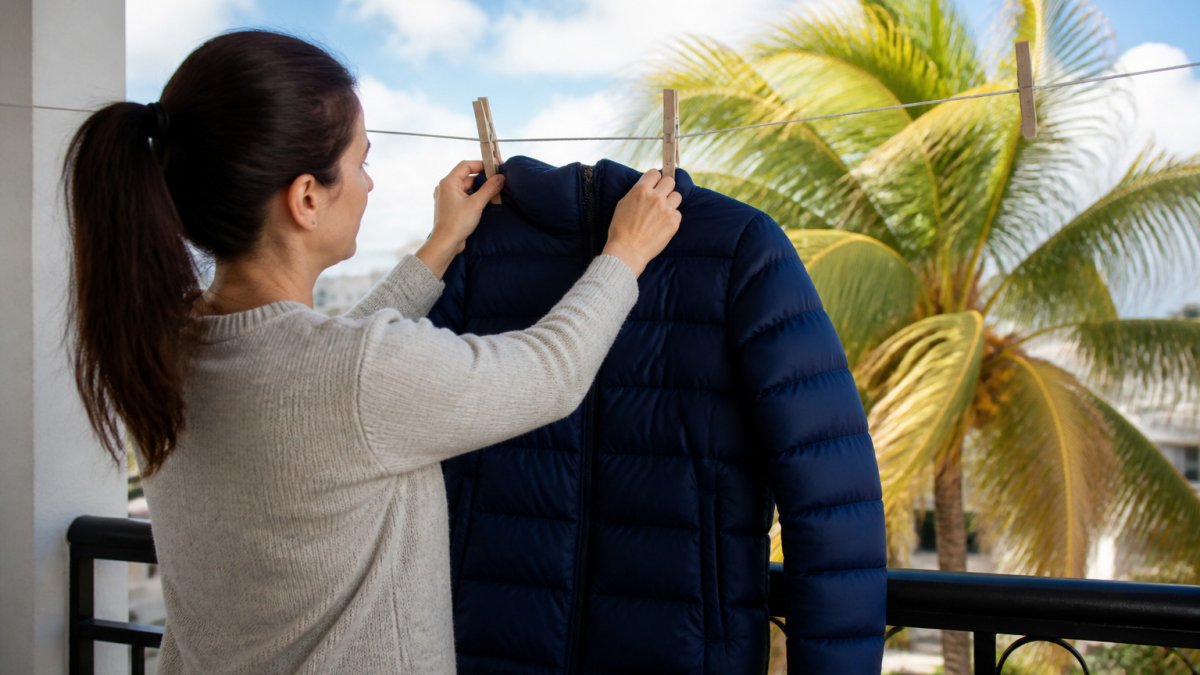
Think of this as the first line of defense. Use it for light odors between washes.
Airing Out in Cool, Fresh Air
Fresh air is the cheapest deodorizer you have. Hang the coat outside on a balcony or clothesline in the shade on a dry, breezy day. Leave it there for at least two to three hours.
Hang it by the hanger, not folded. Cool air moves through the fabric and carries odors away. Avoid direct hot sun on down or synthetic fills, since heat can damage some insulation.
Baking Soda and Vinegar Spray Method
Baking soda absorbs odors. White vinegar neutralizes them as the scent fades. Use them in two steps, not mixed together.
- Sprinkle a light layer of baking soda on the inside lining and collar. Let it sit overnight in a closed bag or closet.
- Shake or brush out the powder in the morning.
- Mix one part white vinegar with three parts water in a spray bottle. Mist a light coat onto the lining, not the outer fabric.
- Hang the coat to air dry completely before wearing it.
Test the spray on a hidden spot first. Some dyes can shift in vinegar.
Washing a Winter Coat Safely by Fabric and Fill
When a coat truly needs washing, the fabric and insulation decide how you do it. Check the care label first, then match the coat to one of the groups below. The wrong cycle can clump down, shrink wool, crack leather, or warp a delicate lining.
| Coat Type | Washing Approach | Drying Approach | Watch Out For |
|---|---|---|---|
| Down-filled | Gentle cycle, warm water, down-safe detergent | Tumble on low with dryer balls, check every 30 minutes | Fabric softener flattens loft; clumps mean it is still damp inside |
| Synthetic-filled | Gentle cycle, cold or warm water | Low heat, check often | High heat can melt or distort synthetic fill |
| Wool or wool blend | Hand wash in cool water with wool detergent, or dry clean | Air dry flat on a towel, reshape while damp | Agitation and hot water cause shrinkage and felting |
| Leather or suede | Do not machine wash; wipe with a damp cloth and use a leather cleaner | Air dry away from heat and sun | Water and heat can stiffen, crack, or stain the surface |
| Delicate lining (silk, rayon, acetate) | Spot clean or hand wash only if the label allows | Air dry flat | Machine agitation can tear seams and distort the lining |
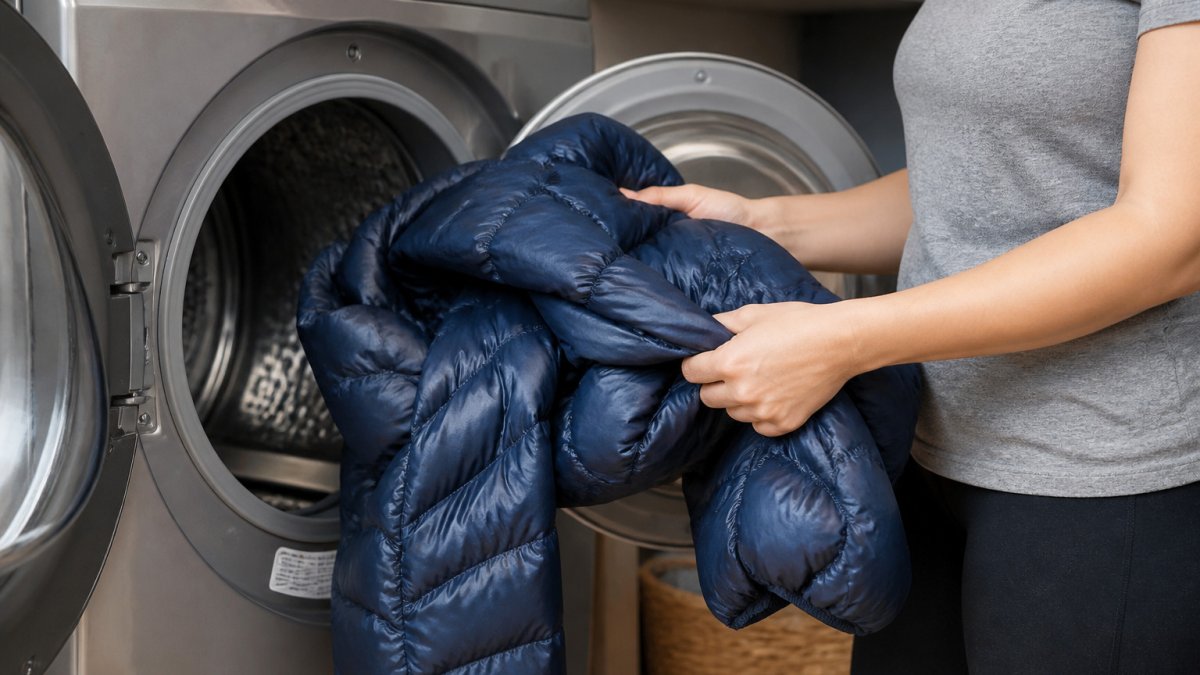
Always use a front-loading machine if you have one, since top-loaders with agitators can tear lightweight shells. For down-filled coats, learn how to fluff a down jacket after washing so the loft returns evenly. Skip fabric softener, which coats down and reduces its loft. Add an extra rinse to remove all detergent. Wash the coat alone or with a couple of towels to balance the load.
For down, use a detergent labeled for down rather than a standard detergent, and run a second rinse cycle. Tumble with two or three dryer balls on low, stopping every 30 minutes to break up clumps by hand. The coat is dry when it feels light and the seams are completely dry to the touch.
For wool, fill a basin with cool water and a wool-specific detergent, submerge the coat, and press gently rather than wringing. Rinse in cool water, roll in a towel to remove excess water, and dry flat, reshaping the shoulders and sleeves while damp.
For leather and suede, avoid water-based sprays and machine washing. Wipe surface dirt with a barely damp cloth, let it air dry away from heat, and follow with a leather cleaner or conditioner made for the material.
Watch out: never mix vinegar and baking soda in the same container before applying them, and never combine bleach with vinegar or ammonia, since the resulting fumes are hazardous. Test any spray on a hidden inside seam before using it on the outer fabric.
Removing Persistent Musty or Damp Odors
If the smell comes back after airing and spraying, moisture is probably trapped deep in the coat. Mildew is harder to remove than body odor because it grows in the fill and seams, and it can return within days if any dampness remains.
Work through this sequence in order, stopping when the smell is gone:
- Confirm the coat is fully dry. Press the inside seams and the underarm lining against your cheek. If they feel cool or damp, the coat is not dry yet. Dry it further before treating the smell.
- Wash using the method for your fabric type, following the table in the washing section above. Use the extra rinse cycle.
- Dry completely, then dry again. For down and synthetic fills, tumble on low with dryer balls and check every 30 minutes. For wool, air dry flat in a ventilated room. A coat can feel dry on the outside while the fill is still damp.
- Air the coat in moving air for 24 hours after drying, ideally near an open window or a fan, not in a closed closet.
- Recheck the seams and collar. If the musty smell persists in those spots, spot-treat with the vinegar-and-water spray described earlier and air dry again.
Recognize possible mold. Look for gray, green, or black speckling along seams, zippers, pocket linings, and the inside of the collar. A musty smell that returns within a day or two of drying, or a chalky film on the lining, points to mold rather than simple dampness. Do not brush dry mold in a closed room, since that spreads spores. Take the coat outdoors or to a ventilated area, and for visible mold or a smell that survives two full wash-and-dry cycles, have a professional cleaner assess it.
Humid climates make this step more important than dry ones. A coat that dries fine in winter can stay damp in a closet during a rainy season, so run a dehumidifier or a fan in the drying area and avoid drying coats in a closed bathroom after a shower.
Watch out: never store a coat that still feels cool or damp inside, and never seal a damp coat in a plastic bag, since trapped moisture keeps mildew growing even after the smell seems gone.
When to Use Professional Dry Cleaning for Winter Coats in Miami
Some coats are better left to professionals. Wool, cashmere, leather, suede, and heavily embellished coats usually need dry cleaning. Coats with a strong, stubborn odor or visible mildew may also need professional treatment.
Humidity can make musty smells more likely, especially in closets and garages.
If you would rather hand off the work, LaundrPro offers door-to-door pickup and delivery. Check pickup and delivery coverage in Downtown Miami to see whether your neighborhood is served. Pricing depends on quantity, timing, and delivery, so check the LaundrPro website for current rates and a quote.
When you compare cleaners, look for clear pricing, a stated turnaround time, and policies for damage. Find out how to choose a reliable dry cleaner in Miami before you hand over a winter coat.
How to Store Winter Coats to Prevent Musty Smells
Good storage prevents most odor problems before they start. The biggest mistake is putting a coat away while it is still slightly damp or dirty.
Follow these simple habits:
- Let the coat air out for a day after wearing it in humid weather
- Store it on a wide hanger to keep the shoulders from sagging
- Use a breathable cotton garment bag, not plastic
- Add a sachet of cedar or dried lavender to keep moths and odors away
- Keep the closet dry, and run a dehumidifier if needed
Avoid sealing a coat in plastic for long periods. Plastic traps moisture and can cause musty smells.
Book Your Winter Coat Cleaning With LaundrPro
If your coat has a smell you cannot fix at home, LaundrPro can take care of it. Our door-to-door service picks up and delivers your garments, with transparent flat-rate pricing and no hidden fees or subscriptions. Pricing depends on quantity, timing, and delivery, so check our pricing page for the latest details.
Ready to get your coat fresh again? Place Your Order with LaundrPro and let us handle the hard part.
Frequently Asked Questions
How do I get bad smell out of a winter coat without washing it?
Start by airing the coat outside in cool, fresh air for several hours, turning it inside out so moisture escapes from the lining. For lingering odors, lightly mist the outer fabric and lining with a solution of equal parts white vinegar and water, let it dry completely, then hang it in a ventilated closet. Baking soda sprinkled into a sealed garment bag overnight can also absorb odors. Avoid soaking the fabric, since down and insulation need to stay dry to keep their loft and prevent mildew.
Can I use vinegar to remove odors from a winter coat?
Yes, white vinegar is one of the most common non-chemical options for neutralizing odors in winter outerwear. Mix one part white vinegar with several parts water in a spray bottle, mist lightly rather than saturating the fabric, and let the coat air dry fully away from direct heat. Test on a hidden seam first, since some dyes and coatings can react. The vinegar smell fades within a few hours once the garment dries.
Is it safe to dry clean a winter coat to remove odors?
Professional dry cleaning can remove many odors, but it does not always eliminate deep-seated musty or vintage smells in wool and heavy outerwear. Check the care label first, and tell the cleaner exactly what the problem is so they can pre-treat accordingly. For down or puffer jackets, confirm the cleaner uses methods that protect the fill. For current LaundrPro pricing, which depends on quantity, timing, and delivery, visit the LaundrPro website for a quote.
How do I remove a damp or musty smell from a puffer jacket?
A musty smell usually means moisture got trapped inside the insulation or lining. Remove the jacket from storage, hang it in a dry, ventilated area with good airflow, and let it dry fully for at least 24 hours before wearing or storing it. Sprinkle baking soda into a bag with the jacket overnight to draw out moisture and odor. If the smell persists, it may point to mildew, and professional cleaning is the safer next step.