 how-to
How to Clean Comforters Without Shrinking: Miami Guide
Table of Contents
- Why Miami Humidity Makes Comforter Care Different
- Read the Care Label Before You Clean Comforters
- How to Spot Clean a Comforter Without Wetting the Whole Thing
- Choosing the Right Cycle, Water Temperature, and Load Capacity
- How to Dry a Comforter Without Clumping
- When to Use Professional Comforter Cleaning Services in Miami
- How Often to Wash Comforters and Seasonal Storage Tips
- Frequently Asked Questions
Last Updated: September 28, 2026
Why Miami Humidity Makes Comforter Care Different
Learning how to clean comforters without shrinking starts with one hard truth: Miami's climate is working against your bedding. Average humidity here often sits above 70%, and that trapped moisture is the number one cause of fiber damage during washing and drying.
How Moisture Retention Affects Fabric Shrinkage
Moisture retention is a fabric's tendency to hold water after washing. The longer a comforter stays damp, the more its fibers tighten and warp.
Read the Care Label Before You Clean Comforters
The care label is the single most useful tool you own. It tells you the fiber content, the safe water temperature, and whether tumble drying is allowed at all.
- Fiber content (down, polyester, cotton blend)
- Wash temperature (cold is almost always safest)
- Drying method (tumble dry low vs. air dry)
- Bleach rules (non-chlorine bleach only, if any)
Down vs. Synthetic Fill: What Changes
Down comforter fill comes from goose or duck feathers. It clumps badly when wet and needs slow, low-heat drying with dryer balls to break up clusters.
How to Spot Clean a Comforter Without Wetting the Whole Thing
How to spot clean a comforter: treat only the soiled area with a mild detergent solution, blot with a clean cloth, and air dry the patch before it spreads. This avoids a full wash for one small spill.
Follow these steps:
- Mix a few drops of mild detergent with cool water
- Dab the stain with a white cloth, working from the outside in
- Rinse the cloth and blot again with plain water
- Press a dry towel over the spot to pull out moisture
- Let the area air dry completely before use
Choosing the Right Cycle, Water Temperature, and Load Capacity
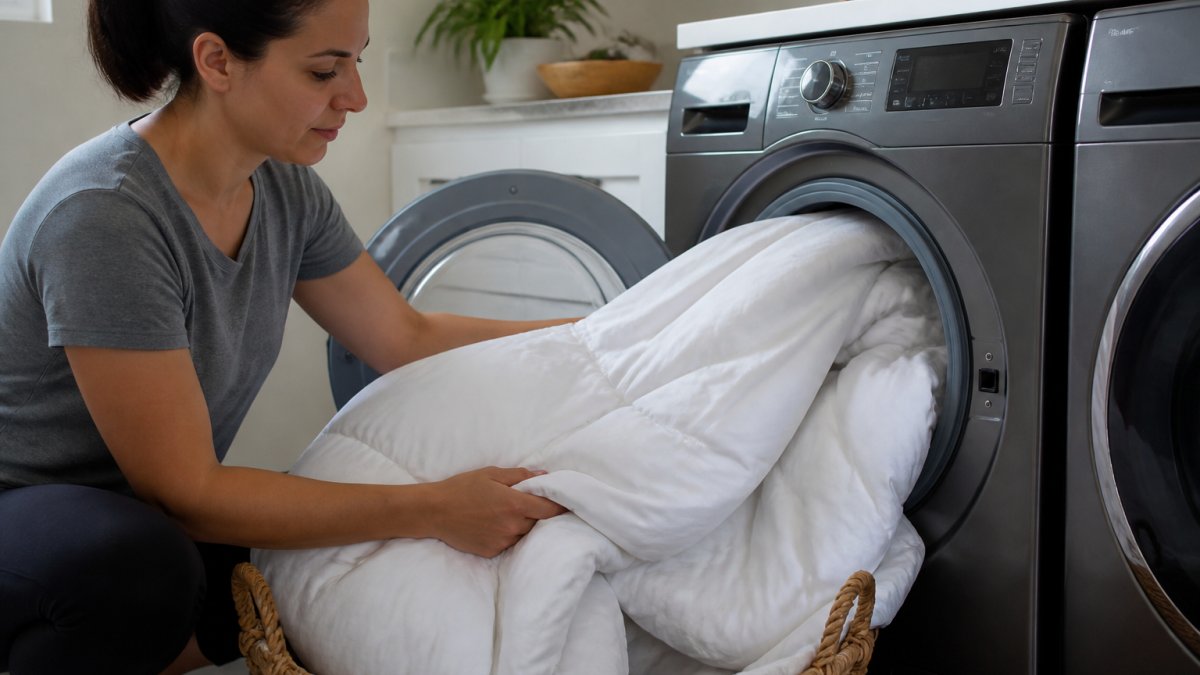
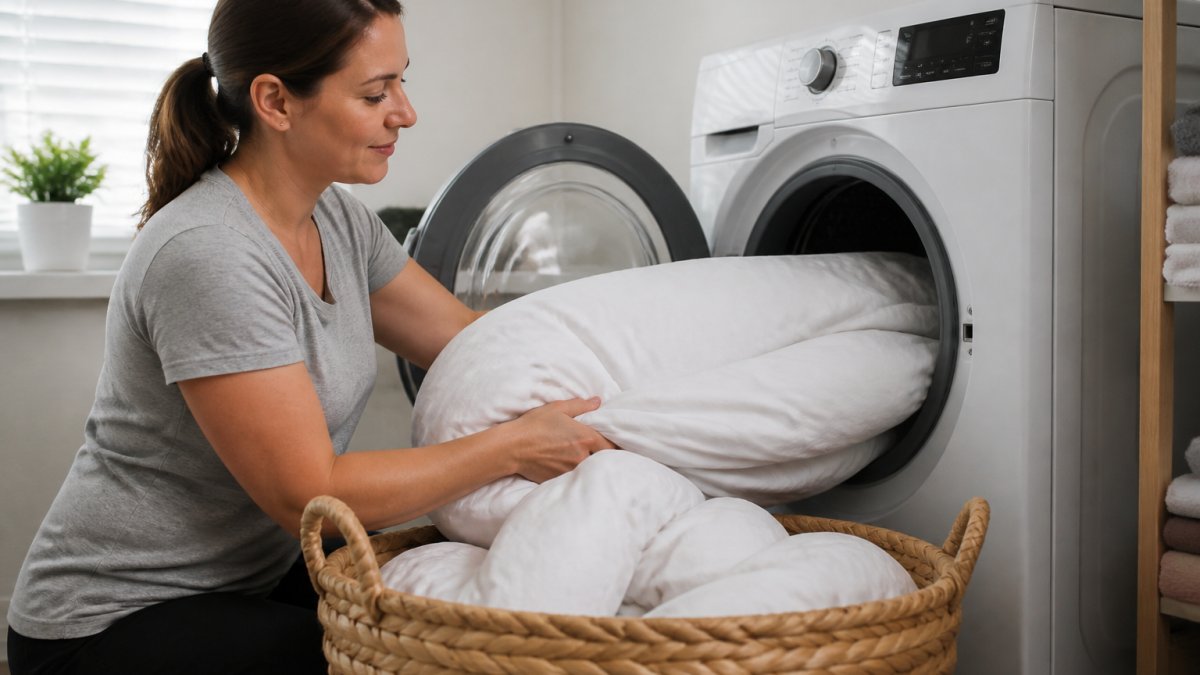
Use a gentle cycle with cold water and a commercial washing machine if your home unit is too small. A king comforter needs room to move, and cramming it into a standard top-loader causes uneven cleaning and stress on the seams.
Match your settings to the fill:
| Fill Type | Water Temp | Cycle | Drying Method |
|---|---|---|---|
| Down | Cold | Gentle, extra rinse | Low heat with dryer balls |
| Polyester | Cold | Gentle | Low heat or air dry |
| Cotton blend | Cold | Gentle | Low heat, remove damp |
| Wool | Cold | Delicate, no agitation | Air dry flat |
How to Dry a Comforter Without Clumping
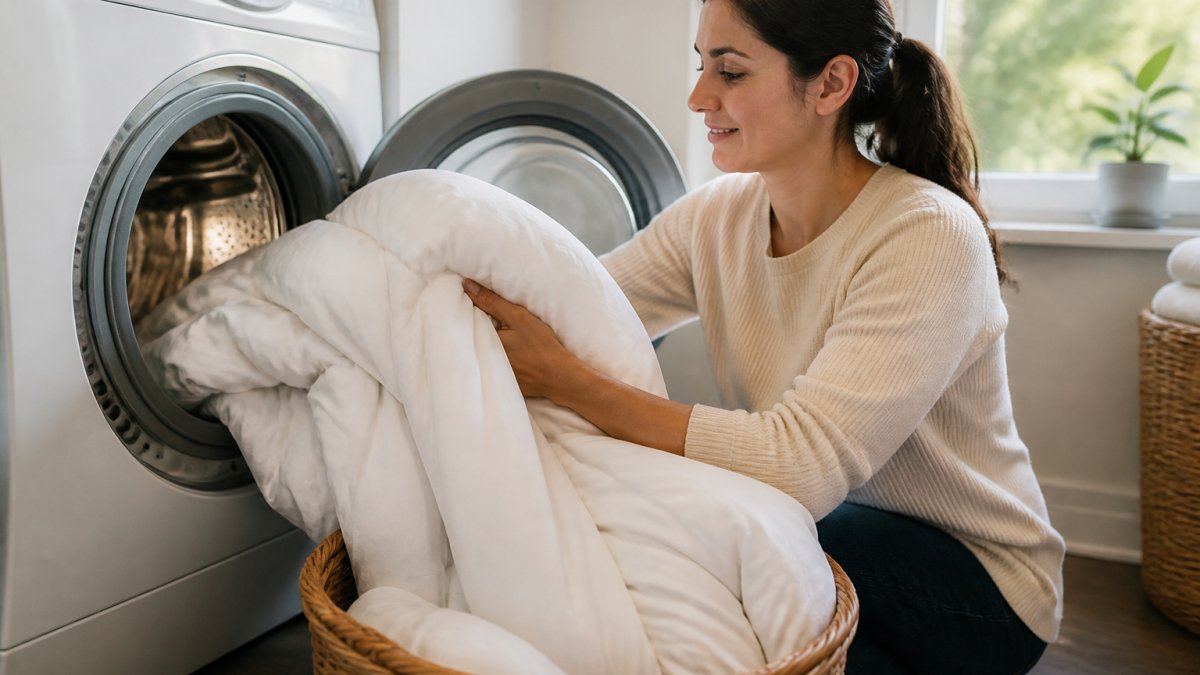
The best way to dry a comforter without clumping is to match the dryer temperature to the fill, add dryer balls, and interrupt the cycle every 20 minutes to shake the fill loose. High heat traps moisture inside and mats the filling into hard lumps, and on natural fills, it also shrinks the shell.
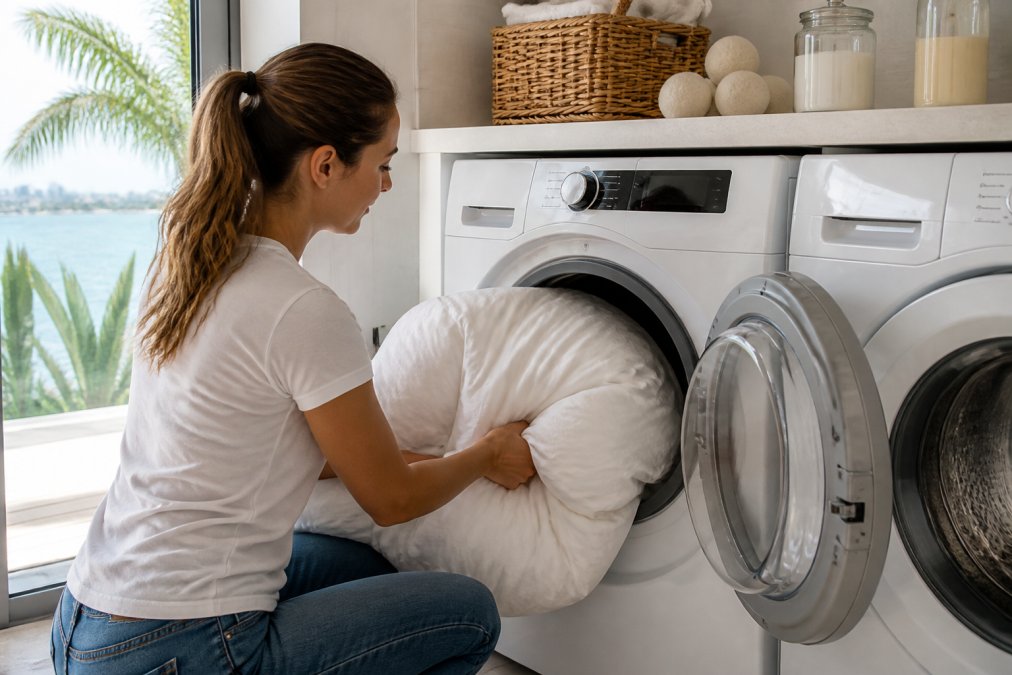
Heat Tolerances by Fill Type
Most guides say "low heat" and stop there. That is not specific enough, because down, polyester, silk, and bamboo all shrink at different temperatures. Here is how to set the dial:
| Fill Type | Safe Dryer Temp | Shrink Trigger | Best Method |
|---|---|---|---|
| Down / feather | Low (below 130°F) | Shell fabric tightens above ~140°F | Tumble low with 3-4 wool dryer balls, 2-3 cycles |
| Polyester / synthetic | Low to medium-low | Fiber crimp collapses and fill mats above ~150°F | Tumble low, remove while slightly damp |
| Silk | No heat, air dry only | Protein fibers shrink and yellow with any dryer heat | Lay flat on a towel, reshape by hand |
| Bamboo / viscose | No heat, air dry only | Viscose fibers shrink fast and lose drape | Lay flat, away from direct sun |
| Cotton / cotton blend | Low | Cotton shell can shrink 1-3% on first hot dry | Tumble low, remove damp, stretch seams |
Dryer Ball Techniques for Even Fluffing
Wool dryer balls bounce against the comforter and break up wet clusters as it tumbles. Use three or four for a queen or king-size comforter, and two for a twin. Tennis balls work in a pinch, but wool balls absorb moisture and cut drying time. Skip dryer sheets, which coat the fabric and reduce absorbency.
The Miami Humidity Factor
In most of the country, "air dry" means a few hours on a line. In Miami, average humidity often sits above 70%, and a comforter laid flat on a balcony can stay damp for a full day, long enough for mildew to start. If you air dry here, do it indoors with a fan or dehumidifier running, or finish the job in the dryer on low.
When to Use Professional Comforter Cleaning Services in Miami
Professional comforter cleaning services in Miami make sense when your comforter is down-filled, oversized, or showing mildew, but the real deciding factor in South Florida is logistics, not just fabric. Home washers in most Miami apartments and condos top out at 3.5 to 4.5 cubic feet, which is not enough drum space for a king comforter to agitate freely. Cramming one in causes uneven cleaning, seam stress, and the exact matting you are trying to avoid.
Choose professional cleaning when:
- The comforter is down or wool-filled
- You spot a musty smell that won't fade after a wash
- The care label says "dry clean only"
- Your home washer is smaller than about 4.5 cubic feet
- You live in a building without in-unit laundry or with shared machines that run hot
Miami-Specific Logistics to Know Before You Decide
If you would rather not pay for service, Miami has options most national guides ignore:
- High-capacity laundromats. Look for machines rated 40 lb or larger, usually labeled "triple load" or "jumbo." These are the only home-accessible machines that give a king comforter the room it needs. Bring your own mild detergent; many laundromats dispense harsh commercial formulas that strip down fill.
- Mobile laundry pickup. Several South Florida services offer door-to-door pickup and delivery for bulky bedding, which matters if you do not have a car big enough to haul a wet king comforter.
- Same-day wash-and-fold. Useful in a pinch, but confirm the service uses cold water and low heat, some default to hot for speed, which is exactly how comforters shrink.
Mildew Remediation in a Humid Climate
Miami's humidity makes mildew prevention harder than in drier cities. A comforter that stays damp for two days will start to smell, and once mildew sets into down or polyester fill, a standard home wash often will not remove it. Signs you need professional help rather than another home cycle:
- A musty odor that returns within a day of drying
- Gray or black speckling on the shell or along seams
- A persistent damp feel in the center of the comforter even after a full dry cycle
How Often to Wash Comforters and Seasonal Storage Tips
Wash your comforter every two to three months, or more often if you sleep without a top sheet. In Miami, the humid months push that toward every six to eight weeks.
For seasonal storage:
- Wash and dry the comforter fully before storing
- Use a breathable cotton bag, not plastic
- Store in a cool, dry closet away from direct sun
- Add a moisture absorber to fight humidity
Frequently Asked Questions
How do I wash a comforter without it bunching up?
Use a large-capacity commercial washing machine or laundromat unit. Add two or three dryer balls during the rinse cycle to keep fill distributed. Wash on a gentle cycle with cold water and avoid overloading. If your home machine is too small, take it to a laundromat or use a professional service that handles bulky bedding.
How often should I wash my comforter?
Wash every two to three months if you use a duvet cover and wash that cover weekly. Without a cover, aim for every four to six weeks. In Miami's humid climate, moisture retention and mildew prevention make more frequent washing important, especially during summer. Spot clean stains immediately between full washes.
Can I put a down comforter in the dryer without shrinking it?
Yes, if you use low heat. High heat damages down fibers and causes fabric shrinkage. Set the dryer to low or air-dry mode and add dryer balls to prevent clumping. Check the comforter every 20 minutes and remove it while slightly damp, then air dry flat. Never use high heat on down or delicate fabrics.
What temperature setting prevents comforter shrinkage?
Cold water wash and low heat tumble dry are the safest settings. Hot water and high heat cause fiber damage and fabric shrinkage, especially on cotton and down comforters. Check the care label instructions first. If the label says cold, follow it. For synthetic fill, cold water and low heat work well too.
Miami's humidity makes comforter care harder than it needs to be. If you'd rather skip the laundromat trip and the shrink risk, LaundrPro handles bulky bedding with door-to-door pickup, flat-rate pricing, and a fast turnaround. No subscriptions, no hidden fees, just spotless results. Place your order with LaundrPro and get your comforters back soft, full, and the right size.