 how-to
Remove Stains from Silk Blouses: Step-by-Step Guide
Table of Contents
- Why Silk Requires Special Stain Treatment
- Essential Tools and Materials for Stain Removal
- Step-by-Step Process to Remove Stains from Silk Blouses
- How to Wash Silk Blouses at Home
- Removing Sweat Stains from Silk
- When to Seek Professional Dry Cleaning Services
- Common Mistakes to Avoid
- Conclusion
- Frequently Asked Questions
Last Updated: August 20, 2026
Why Silk Requires Special Stain Treatment
Silk's delicate protein fibers break down under harsh chemicals, heat, and aggressive scrubbing in ways cotton and synthetics don't. Vigorous circular motions that work fine on cotton can permanently damage silk, creating dull patches or holes. Silk protein absorbs stains deeply and quickly. Water-based stains like sweat or juice penetrate the fiber structure rapidly, while oil-based stains (makeup, cooking oil, sunscreen) bond chemically to the protein. This is why timing matters enormously, a fresh stain is exponentially easier to remove than one that's sat for hours or days.
Essential Tools and Materials for Stain Removal
Gather the right supplies before treating any stain. Using the wrong tools causes more damage than the stain itself.
Absorbent materials: Use white paper towels, white cotton cloths, or lint-free white napkins, avoid colored fabrics that might bleed dye. Tissues fall apart when wet and leave pulp residue.
Lukewarm water (85-95°F) is essential. Hot water opens protein fibers and sets stains permanently; cold water doesn't dissolve many stains effectively.
pH neutral detergent is non-negotiable. Regular laundry detergent is too alkaline for silk protein. Alkaline solutions break down the fiber structure over time, leaving the fabric weak and discolored.
White vinegar: A 1-to-1 ratio with lukewarm water creates a gentle cleaning solution that works on many stains without damaging silk.
Lemon juice: Its mild acidity and slight bleaching properties help lift discoloration without the harshness of chlorine bleach. Fresh juice works better than bottled versions.
Baking soda: A paste made from baking soda and water lifts talcum powder, makeup, or dried sweat without scratching the silk surface.
Talcum powder: Sprinkle on fresh oil-based stains immediately, let sit 10-15 minutes, then gently brush away to prevent the oil from penetrating deeper.
| Material | Primary Use | When to Use | Caution |
|---|---|---|---|
| White cloth/towels | Blotting and drying | All stains, immediately | Ensure color-fast; avoid synthetics |
| Lukewarm water | Rinsing and diluting solutions | After treatment | Never use hot water |
| pH neutral detergent | Gentle cleaning solution | Water-based stains | Test on hidden area first |
| White vinegar | Acid-based stain removal | Organic stains, discoloration | Dilute 1:1 with water |
| Lemon juice | Natural bleaching agent | Sweat, tannin stains | Use fresh juice; test first |
| Baking soda | Dry stain absorption | Makeup, powder, sweat | Use as paste only; minimal water |
| Talcum powder | Oil absorption | Fresh grease stains | Brush away gently; don't rub |
Step-by-Step Process to Remove Stains from Silk Blouses
The process matters more than the specific cleaning agent. Even the gentlest solution applied with the wrong technique will damage silk.
Step 1: Blot, Don't Rub
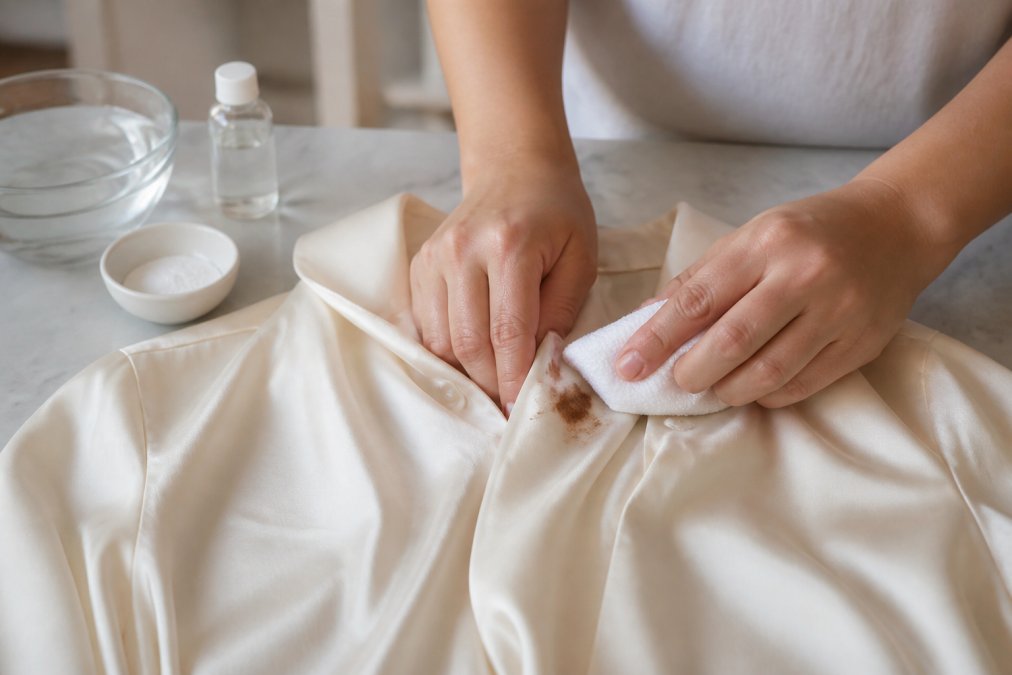
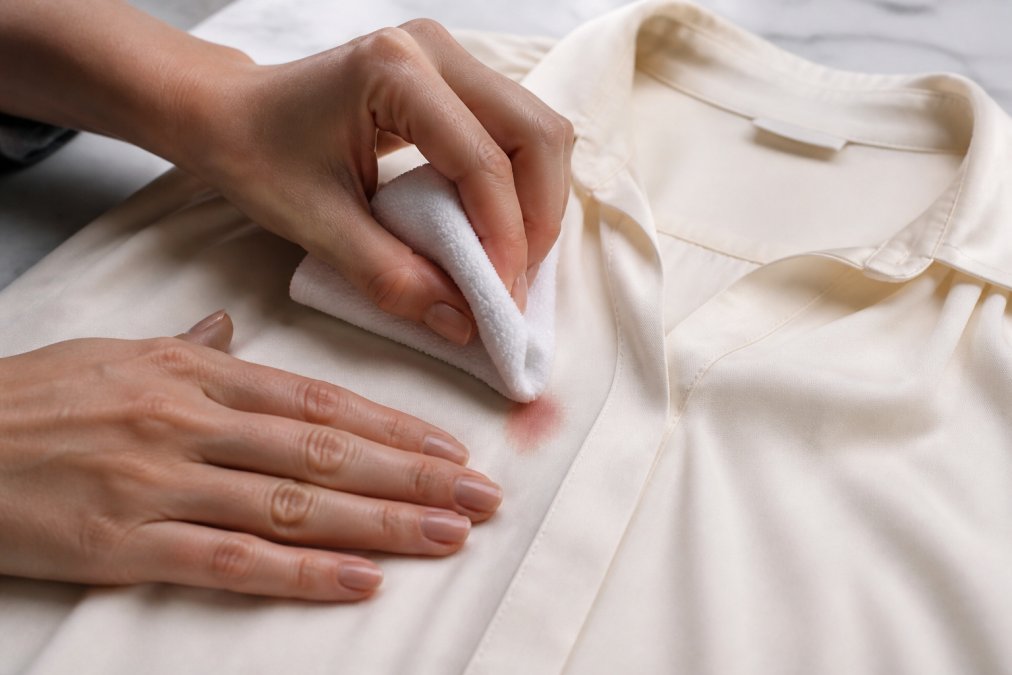
The moment a stain appears, blot immediately with a clean, dry, white absorbent cloth. Press gently, you're transferring the stain from the blouse to the cloth, not working it in. Use a fresh section of cloth for each blot. For liquid stains, blot from the outside edges toward the center to prevent spreading. Work from the back of the blouse when possible.
Step 2: Spot Test for Colorfastness
Before applying any cleaning solution, test it on a hidden area like a seam allowance, inside hem, or underarm. Some silk dyes are not colorfast and bleed or fade when exposed to water, vinegar, lemon juice, or other treatments. Allow the test area to air dry completely before proceeding, wet silk looks darker, so you need to see the true color after drying.
Step 3: Apply the Right Cleaning Solution
For water-based stains (sweat, juice, coffee, tea): Mix one part pH neutral detergent with four parts lukewarm water. Apply with a clean white cloth using gentle blotting, not rubbing. Work from the outside edges inward.
For stubborn organic stains: Mix equal parts white vinegar and lukewarm water. Dab onto the stain and let sit for 5-10 minutes. Change to a fresh cloth section frequently to avoid redepositing dissolved stain material.
Step 4: Rinse with Lukewarm Water
After the cleaning solution has worked, rinse thoroughly with clean lukewarm water. Use a clean cloth dampened with plain lukewarm water and blot the treated area repeatedly with fresh cloth sections. This step often requires 5-10 blots to ensure no soap or vinegar remains.
Step 5: Air Dry Away from Direct Sunlight
Never use heat on a stain-treated silk blouse. A clothes dryer, iron, or hair dryer can set any remaining stain permanently. Lay the blouse flat on a clean, dry, white towel in a shaded area indoors. Allow complete air drying before wearing or storing.
How to Wash Silk Blouses at Home
Hand washing is the safest method. Fill a basin with lukewarm water and add a small amount of pH neutral detergent, just a teaspoon for a single blouse. Submerge the blouse and gently agitate the water with your hands for 2-3 minutes. Avoid twisting, wringing, or rubbing.
Rinse thoroughly in clean lukewarm water, changing the water 3-4 times until no soap remains. Some machines have a "delicate silk" cycle that works if you use a mesh laundry bag. Never use regular detergent, hot water, or chlorine bleach.
After washing, lay the blouse flat to dry. Gently squeeze water out by hand or roll the blouse in a dry towel to absorb moisture, then lay it flat to complete drying.
Removing Sweat Stains from Silk
Fresh sweat stains respond to lukewarm water and gentle agitation. Blot immediately with a damp cloth, then rinse thoroughly. The salt in fresh sweat dissolves easily before it sets.
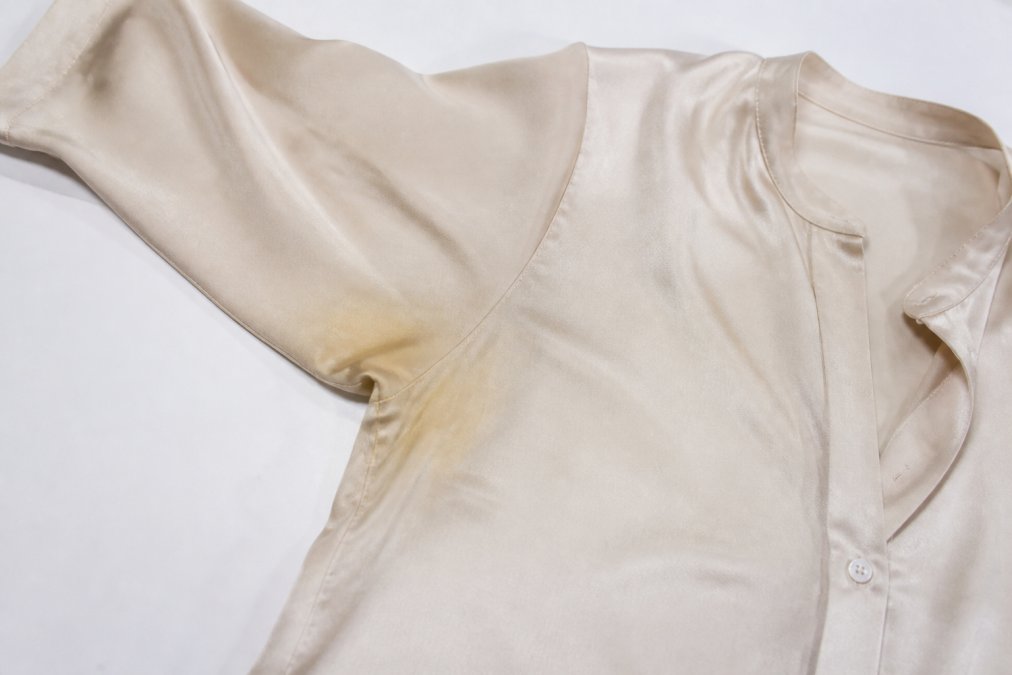
Dried sweat stains require a mixture of equal parts white vinegar and lukewarm water. Apply this solution and let it sit for 10-15 minutes before blotting and rinsing.
For stubborn stains, a paste of baking soda and water can help. Mix baking soda with just enough water to create a thick paste, apply to the stain, and let it dry completely (30 minutes to an hour). Once dry, gently brush away the powder.
For yellowing, lemon juice has mild bleaching properties. Mix fresh lemon juice with lukewarm water in a 1:1 ratio, apply to the yellowed area, and let it sit in indirect sunlight for 1-2 hours. Test this on a hidden area first, as lemon juice can fade some silk dyes.
When to Seek Professional Dry Cleaning Services
Large stains covering more than 2-3 inches should go to a professional. Unknown stains, set stains that have dried for days or weeks, and combination stains (multiple stain types) all demand professional help. Valuable or irreplaceable blouses should always go to a professional, even for small stains.
Professional dry cleaning services in Miami like LaundrPro provide peace of mind. Our team handles silk blouses with the expertise these garments demand, using specialized techniques and equipment designed specifically for delicate fabrics. We remove stains from silk while preserving the color, texture, and fit you paid for. Place Your Order with LaundrPro and let us handle the stain removal, fast turnaround, premium care, no hidden fees.
Common Mistakes to Avoid
Using hot water opens silk protein fibers, allowing stains to penetrate deeper and causing some dyes to bleed. Always use lukewarm water.
Rubbing or scrubbing drives stains deeper and damages the delicate structure. Blotting is the correct technique.
Applying heat before the stain is gone sets it permanently. Never use a dryer, iron, or heat gun on a stained blouse.
Using regular laundry detergent is too harsh for silk. Always use pH neutral detergent labeled for delicate or silk fabrics.
Skipping the spot test leads to unexpected color loss. Always test cleaning solutions on a hidden area first.
Leaving the stain to dry makes removal exponentially harder. Treat stains immediately when possible.
Mixing cleaning solutions can create chemical reactions that damage silk. Use one solution at a time, rinse thoroughly between treatments.
Wringing or twisting wet silk stretches the fibers permanently. Gently squeeze excess water or roll the blouse in a towel instead.
Conclusion
Silk blouses deserve care that respects their delicate nature. The techniques in this guide, blotting instead of rubbing, using lukewarm water and pH neutral detergent, testing before treating, and air drying away from heat, work because they align with how silk fibers actually behave. A stain removed gently today prevents the need for expensive professional restoration later.
For stains beyond your comfort level or valuable blouses you can't risk, professional dry cleaning services in Miami like LaundrPro provide peace of mind. Our team handles silk blouses with the expertise these garments demand, using specialized techniques and equipment designed specifically for delicate fabrics. We remove stains from silk while preserving the color, texture, and fit you paid for. Place Your Order with LaundrPro and let us handle the stain removal, fast turnaround, premium care, no hidden fees.
Frequently Asked Questions
Can old stains be removed from silk?
Old stains on silk are more challenging but often removable if treated promptly. Fresh stains respond best to blotting and immediate treatment. For set-in stains, a pH neutral detergent solution or white vinegar rinse may help lift residue. However, if a stain has been heat-set or has caused fiber damage, professional dry cleaning services offer specialized restoration techniques that home treatment cannot match. The longer a stain sits, the harder it becomes to remove completely.
How do I remove sweat stains from silk blouses?
Perspiration stains on silk require immediate attention. Mix equal parts white vinegar and lukewarm water, then apply to the stained area using an absorbent material. Gently blot without rubbing to avoid spreading the stain deeper into the delicate fabric. For stubborn sweat stains, create a paste with baking soda and water, apply it to the affected area, and let it sit for 15 minutes before rinsing with cold water. Always air dry away from direct sunlight to prevent yellowing and preserve the silk protein fibers.
Is it safe to use white vinegar or hydrogen peroxide on silk?
White vinegar is safe for silk when diluted with equal parts lukewarm water and tested on an inconspicuous area first. It effectively removes many stains without damaging delicate fibers. Hydrogen peroxide, however, can bleach or weaken silk fabric, especially on darker colors. Always perform a spot test on the fabric care label's recommended area before applying any solution. If you're uncertain about a cleaning agent, professional dry cleaning services use specialized products formulated for delicate fabrics like silk.
When should I take a silk blouse to professional dry cleaning services?
Seek professional cleaning for set-in stains, large stains covering significant fabric area, stains from unknown sources, or delicate silk blouses with special finishes or embellishments. Professional restoration services handle tannin-based stains, oil-based stains, and makeup residue more effectively than home treatment. If home blotting and spot testing don't resolve the stain within one attempt, professional services prevent further fiber damage and preserve your garment's longevity.
This article was written using GrandRanker