 comparison
Dry Cleaning vs Wash and Fold: Which Service Do You Need?
Table of Contents
- Dry Cleaning vs Wash and Fold: What's the Difference?
- Quick Comparison: Wash and Fold vs Dry Cleaning
- How to Read Laundry Care Labels
- When Wash and Fold Makes Sense
- When Dry Cleaning Is the Right Call
- Cost of Wash and Fold Per Pound vs Dry Cleaning Per Item
- Laundry Pickup and Delivery in Miami: Making It Work
- How to Decide: A Simple Checklist
- Frequently Asked Questions
Last Updated: September 5, 2026
Every week, the same question comes up in our Miami service area: should this load go to the dry cleaner, or does it just need a solid wash and fold? It is the most common decision our customers face, and getting it wrong either wastes money on unnecessary dry cleaning or ruins a garment you actually cared about. The short answer is that dry cleaning vs wash and fold service comes down to fabric construction, not how dirty the item is. This guide from LaundrPro breaks down the difference so you can sort your laundry with confidence and avoid costly mistakes.
Wash and fold is a water-based cleaning method where a professional service launders, dries, and folds your everyday clothing. Dry cleaning, by contrast, uses a chemical solvent instead of water to clean garments that would shrink, warp, or lose color in a standard wash cycle. Understanding which process your clothes require protects your investment and saves you time. Below, we will show you exactly how to read care labels, weigh the costs, and decide what goes in which pile, with practical guidance tailored to busy households in Miami, Florida.
Dry Cleaning vs Wash and Fold: What's the Difference?
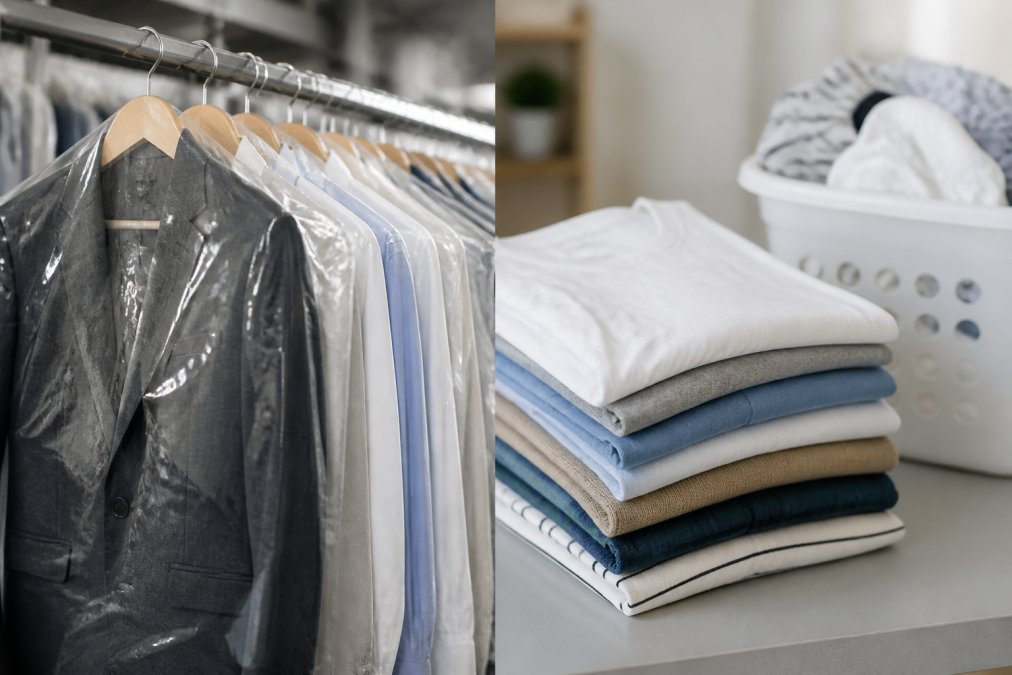
Dry cleaning vs wash and fold are two distinct garment care processes. Wash and fold uses water, detergent, and heat to clean everyday laundry, while dry cleaning uses a chemical solvent to remove stains and odors without water.
The core distinction is moisture. Wash and fold is essentially a professional version of what you do at home: sorting, washing, drying, and folding. It is ideal for t-shirts, jeans, socks, underwear, sheets, and towels. These items are durable, can handle agitation, and benefit from the water-based process that lifts ground-in dirt and sweat.
Dry cleaning serves a different purpose entirely. Structured garments like suits, blazers, and wool coats rely on internal canvassing and padding to hold their shape. Water causes the natural fibers to swell and shrink unevenly, which disturbs that structure. Delicate fabrics such as silk, rayon, and acetate can also bleed color or lose their finish when exposed to water. The chemical solvent used in dry cleaning, which historically included perchloroethylene, cleans these items without the destructive swelling that water causes (the EPA).
Quick Comparison: Wash and Fold vs Dry Cleaning
The fastest way to sort your laundry is to ask one question: would you trust this garment in your home washing machine? If the answer is no, it likely needs dry cleaning.
| Feature | Wash and Fold | Dry Cleaning |
|---|---|---|
| Cleaning Agent | Water and detergent | Chemical solvent |
| Best For | T-shirts, jeans, linens | Suits, silk, wool, structured wear |
| Pricing Model | Per pound | Per item |
| Turnaround | Typically 24-48 hours | Often 2-5 days |
| Effect on Fabric | Can shrink or fade delicate items | Preserves structure and dye |
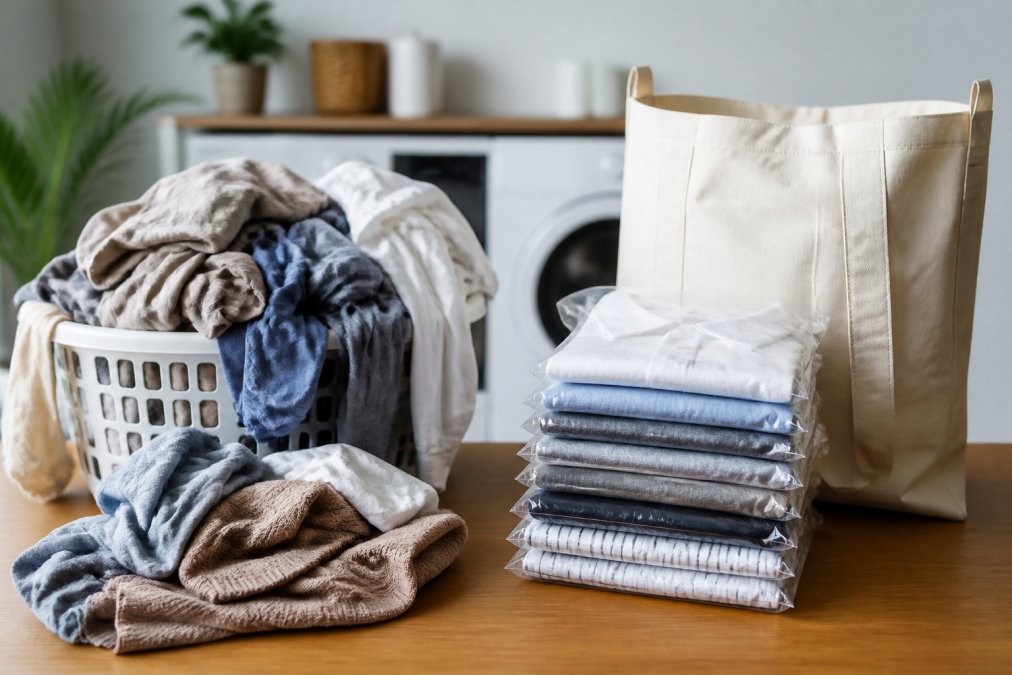
The pricing model alone tells you a lot about the intended use. Wash and fold is priced per pound because you are sending volume: a week of family laundry, gym clothes, and household linens. Dry cleaning is priced per item because each piece requires individual inspection, stain treatment, and pressing. A common mistake is sending a load of casual t-shirts to the dry cleaner because they have a few stains. Professional wash and fold services are equipped to handle stain treatment on everyday fabrics at a fraction of the cost.
How to Read Laundry Care Labels
The care label is the single most reliable guide for deciding between these two services. It is not a suggestion; it is the manufacturer's specification for how to preserve the garment.
Look for the circle symbol. A plain circle means "dry clean only." A circle with a "P" inside indicates the cleaner may use any solvent except perchloroethylene, while a circle with an "F" restricts cleaning to petroleum-based solvents only (the FTC). If you see a circle with an "X" through it, the garment cannot be dry cleaned at all. The Federal Trade Commission requires these labels on all clothing sold in the United States, so they are a legally backed source of truth for garment care labeling requirements.
The washtub symbol matters equally. A tub with a single line underneath calls for a gentle cycle, while two lines mean very gentle handling. The dots inside the tub indicate water temperature: one dot for cold, three for hot. A hand reaching into the tub means hand wash only. When you see a triangle symbol, that relates to bleaching; an empty triangle allows any bleach, while a triangle with lines means only non-chlorine bleach is safe.
When Wash and Fold Makes Sense
Wash and fold is the right choice for the majority of your household's clothing volume. If you are sending everyday items like t-shirts, activewear, pajamas, and denim, water-based cleaning is both more effective and far more economical than dry cleaning.
Families in Miami with high volumes of laundry find this service particularly valuable. The humidity means towels and sheets get rotated frequently, and kids generate a seemingly endless supply of soiled play clothes. A professional wash and fold service handles these items with commercial-grade machines that clean more thoroughly than residential units. The time savings are substantial: you skip the sorting, washing, drying, and folding entirely.
Bulky household items also belong in this category. Comforters, duvets, and bed sheets are often too large for home machines and dry unevenly, leading to musty odors. Professional laundry services have the capacity to wash and dry these items properly without shrinkage. If you have ever ruined a comforter in a cramped apartment washer, you understand the value of handing this task to a service that does it daily.
When Dry Cleaning Is the Right Call
Dry cleaning is non-negotiable for structured and delicate garments. Suits, blazers, dress pants with creases, and wool overcoats all require solvent-based cleaning to maintain their tailored shape. Dry cleaning is also the correct choice for silk blouses, cashmere sweaters, and any garment with beading, sequins, or intricate embroidery.
The reason comes down to fiber integrity. Water causes natural fibers to swell, and as they dry, they contract unevenly. This leads to shrinkage, color bleeding, and distortion of the garment's internal structure. A suit jacket has layers of canvas and padding that give it its shape; a water wash will cause those layers to pucker and shift. The chemical solvent used in dry cleaning dissolves oils and stains without triggering this fiber swelling.
Garment longevity is another factor. A suit dry cleaned professionally will last for years, while the same suit washed in water may lose its shape after a single cycle. For investment pieces like a $300 work blazer, the per-item cost of dry cleaning is a small price to protect that asset. When you are evaluating a dry cleaning vs wash and fold decision, ask yourself how much the item cost and how long you expect it to last.
Cost of Wash and Fold Per Pound vs Dry Cleaning Per Item
The cost of wash and fold per pound is fundamentally different from the per-item pricing of dry cleaning, and understanding that difference prevents sticker shock.
Wash and fold pricing is volume-based. You pay a rate per pound, which makes it highly cost-effective for large loads of everyday laundry. Dry cleaning, in contrast, is priced per garment because each piece requires individual stain treatment, pressing, and inspection. A single dress shirt sent to the dry cleaner can cost several times more than an entire pound of wash and fold laundry.
The cost-effectiveness of wash and fold becomes obvious when you consider a full week of family laundry. The same budget that covers dry cleaning a few shirts will handle dozens of pounds of wash and fold items. However, the cost comparison flips when you consider the replacement value of the garments. Ruining a wool suit in a washing machine costs far more than the dry cleaning bill would have been. For most households, a hybrid approach makes the most financial sense: wash and fold for the bulk, dry cleaning for the investment pieces.
Laundry Pickup and Delivery in Miami: Making It Work
Laundry pickup and delivery Miami residents rely on transforms the dry cleaning vs wash and fold decision from a chore into a scheduling convenience. When a service comes to your door, the question is no longer about finding time to drop off and pick up; it is purely about sorting your garments correctly.
Miami's climate adds a layer of complexity that other cities do not face. The persistent humidity means clothes left in a car or a laundry bag can develop mildew odors within a day. A reliable pickup and delivery service with a fast turnaround prevents this problem entirely. For busy professionals working in the urban core, having a driver arrive at your door and return clean garments within 24 to 48 hours is a significant time-saving advantage.
The key to making door-to-door service work is finding a provider that offers transparent flat-rate pricing with no hidden fees and no subscription requirements. Many national apps lure customers with low introductory rates, then add fees for rush service, delicate items, or schedule changes. A local service with straightforward per-pound pricing for wash and fold and clear per-item rates for dry cleaning is easier to budget for and more predictable week to week.
How to Decide: A Simple Checklist
If you are still unsure which service you need, work through this checklist before you book your pickup.
- Check the care label: Does it show a dry cleaning circle symbol?
- Consider the fabric: Is it silk, wool, rayon, or a structured garment like a blazer?
- Assess the value: Would you be upset if this item shrank or lost its shape?
- Count the volume: Do you have more than a few pounds of casual, everyday clothing?
- Evaluate the stains: Are they water-based (coffee, sweat) or oil-based (grease, makeup)?
If you answered yes to any of the first three questions, the item belongs in the dry cleaning pile. If you answered yes to the last two questions, or if the majority of your load is casual wear and household linens, wash and fold is the right call. Structured garments that hold a crease, like dress pants and suit jackets, should always be dry cleaned. Casual items that you would be comfortable throwing in a home washer are perfect candidates for wash and fold.
A professional service will also handle the sorting for you, but knowing the difference helps you communicate your needs clearly. If you have a mix of both, most full-service providers, including LaundrPro, handle both processes in a single pickup, which simplifies the entire routine. The right answer is rarely one service or the other; it is a combination that protects your wardrobe and frees your schedule.
Choosing between these two services does not have to be a gamble. The real challenge is finding a provider you can trust to pick up on time, treat your garments with care, and return everything spotless within your schedule. LaundrPro offers door-to-door pickup and delivery across Miami with flat-rate pricing, no hidden fees, and no subscription requirements, so you only pay for the cleaning you actually need. Our fast 24-48 hour turnaround and premium product care keep your workwear and family laundry ready when you are. Place your order and reclaim the hours you currently spend on laundry.
Frequently Asked Questions
What's the difference between wash and fold and dry cleaning?
Wash and fold uses water and detergent to clean everyday items like t-shirts, jeans, and sheets, then dries and folds them. Dry cleaning uses a chemical solvent instead of water to clean delicate or structured garments like suits, blazers, and silk dresses. The method you choose depends on the fabric and the care label instructions.
Is wash and fold service worth it?
For busy professionals and families, wash and fold is worth the cost because it saves hours each week. You skip sorting, washing, drying, and folding. LaundrPro offers flat-rate pricing with no hidden fees, so you know your cost upfront. Check the LaundrPro website for current rates and a free trial.
How do I know if my garment requires dry cleaning?
Check the care label inside the garment. If the label shows a circle symbol, that means dry cleaning is required. Structured garments like suits, wool coats, and items made from silk or acetate usually need dry cleaning. When in doubt, choose dry cleaning to avoid shrinkage or color bleeding.
Does wash and fold include ironing or pressing services?
Standard wash and fold services launder, dry, and fold your clothes, which handles most everyday items. Pressing or steaming is typically a separate service for dress shirts and other wrinkle-prone garments. If you need pressed work shirts, confirm that service is available when you place your order.
This article was written using GrandRanker
Frequently Asked Questions
Q: What's the difference between wash and fold and dry cleaning?
A: Wash and fold uses water and detergent to clean everyday items like t-shirts, jeans, and sheets, then dries and folds them. Dry cleaning uses a chemical solvent instead of water to clean delicate or structured garments like suits, blazers, and silk dresses. The method you choose depends on the fabric and the care label instructions.
Q: Is wash and fold service worth it?
A: For busy professionals and families, wash and fold is worth the cost because it saves hours each week. You skip sorting, washing, drying, and folding. LaundrPro offers flat-rate pricing with no hidden fees, so you know your cost upfront. Check the LaundrPro website for current rates and a free trial.
Q: How do I know if my garment requires dry cleaning?
A: Check the care label inside the garment. If the label shows a circle symbol, that means dry cleaning is required. Structured garments like suits, wool coats, and items made from silk or acetate usually need dry cleaning. When in doubt, choose dry cleaning to avoid shrinkage or color bleeding.
Q: Does wash and fold include ironing or pressing services?
A: Standard wash and fold services launder, dry, and fold your clothes, which handles most everyday items. Pressing or steaming is typically a separate service for dress shirts and other wrinkle-prone garments. If you need pressed work shirts, confirm that service is available when you place your order.