 how-to
How to Get Red Wine Out of White Clothes Fast
Table of Contents
- Act Fast: Immediate Steps to Remove a Red Wine Stain
- How to Get Red Wine Out of a White Shirt: Step-by-Step
- How to Remove Dried Red Wine Stains from Clothing
- Red Wine Stain Removal from White Linen
- How to Remove Red Wine Stains Without Bleach
- When Home Remedies Fail: Professional Laundry in Miami
- Conclusion
- Frequently Asked Questions
Last Updated: October 18, 2026
Act Fast: Immediate Steps to Remove a Red Wine Stain
Knowing how to get red wine out of white clothes means a red wine spill on a white shirt is not the end of that shirt. The single most important factor is time: the faster you act, the better your odds of a full recovery. This guide from LaundrPro covers exactly how to get red wine out of white clothes, step by step, including what to do when the stain has already dried.
Red wine stains are tough because of two things: pigment and tannins. Both bind to fabric fibers quickly. In Miami's humidity, that bond sets faster than most people expect. So treat speed as your first tool, not your last.
Here's what to do in the first five minutes:
- Blot the excess. Press a clean cloth or paper towel onto the spill. Do not wipe.
- Move away from heat. Keep the garment out of direct sun and away from dryers.
- Do not add white wine. It dilutes the color but adds sugar that feeds a new stain.
- Keep the fabric damp. A dry stain is a set stain.
How to Get Red Wine Out of a White Shirt: Step-by-Step
The best method for how to get red wine out of a white shirt combines cold water, a gentle detergent, and patience. Most stains lift in 15 to 30 minutes if you follow the order below. The instructions below are written for a standard white cotton shirt; fabric-specific adjustments for linen, synthetics, and delicate fabrics follow the main steps.
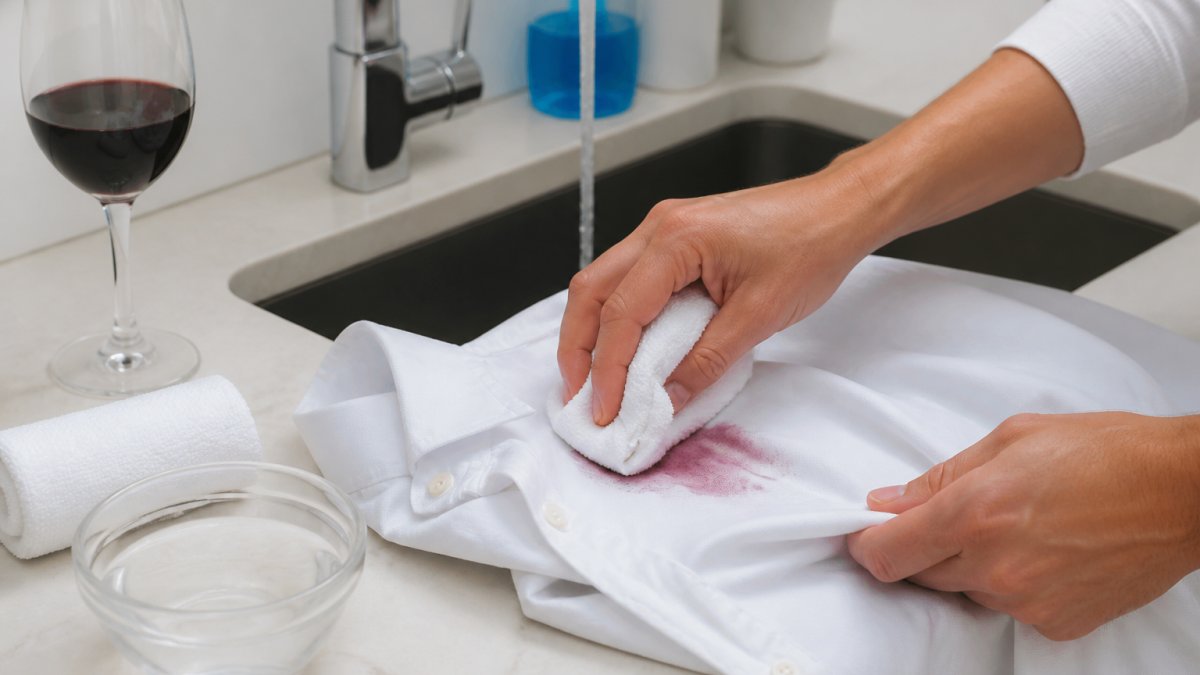
- Blot, don't rub. Press a clean white cloth onto the stain from the outside in. Replace the cloth as it absorbs color. Use a fresh section of cloth for each press so you are not redistributing pigment.
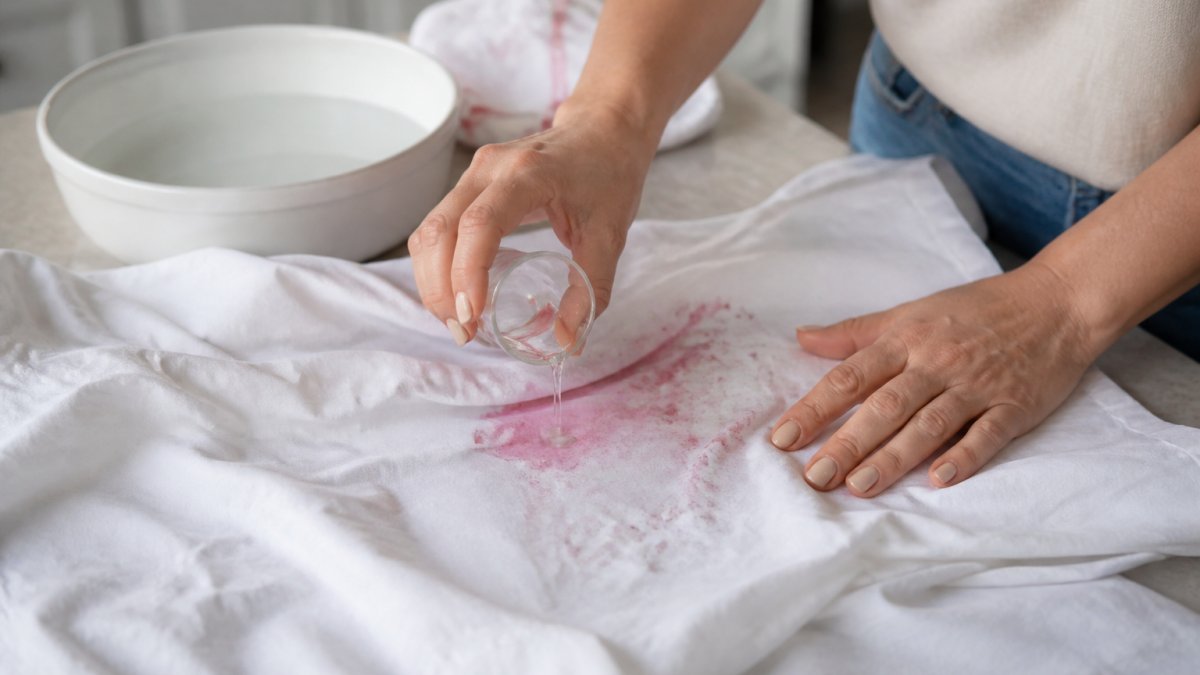
- Rinse with cold water. Hold the back of the stain under cold running water (below 80°F / 27°C) for 1 to 2 minutes. This pushes pigment out the way it came in. Do not use hot water; heat opens fibers and sets pigment.
- Apply liquid detergent. Put a small drop (about the size of a pea, roughly 1/4 teaspoon) of liquid laundry detergent directly on the stain. Let it sit 10 minutes. Do not let it dry on the fabric.
- Soak for 20 minutes. Submerge the shirt in 1 gallon of cold water with 1 tablespoon of liquid detergent. Keep the stained area submerged and agitate gently with your fingers every 5 minutes.
- Rinse and check. Rinse in cold water until no suds remain. Check the stain under good light. If color remains, repeat steps 3 and 4 before drying.
- Air-dry only. Heat sets any leftover stain permanently. Hang or lay flat away from direct sun and heat.
Blot, Don't Rub
Blotting lifts liquid out of the fabric. Rubbing grinds it in. Use a white cloth, never a colored one, because dye can transfer onto wet white fabric.
Work from the edge of the stain toward the center. This stops the stain from growing. Press firmly, hold for a few seconds, then move to a clean spot on the cloth. A common pattern is that people press too lightly and too briefly; a firm 3- to 5-second press moves more liquid than a quick dab.
Cold Water First, Always
Cold water is the most underrated tool in stain removal. Hot water opens fabric fibers and locks pigment in place. Cold water keeps fibers tight and flushes pigment out.
Use cold water for rinsing and soaking. Save warm water for the wash cycle, and only after the stain is gone. If your tap water runs warm in summer, add ice or let the water run until it feels cool to the touch.
Fabric-Specific Adjustments
White clothes are not all the same. Adjust the main steps as follows:
- Cotton: Follow the steps as written. Cotton tolerates the 20-minute soak and a pea-sized drop of detergent.
- Linen: Use a mild liquid detergent, not powder, and soak no longer than 30 minutes total. Do not wring; press between two towels to remove water. Air-dry flat.
- Synthetics (polyester, nylon, blends): Use the same steps but reduce the detergent drop to about 1/8 teaspoon and rinse thoroughly, because synthetic fibers hold residue. Avoid hot water entirely.
- Delicate fabrics (silk, wool, rayon): Do not soak. Blot, rinse briefly in cold water, and apply a small amount of mild detergent for no more than 5 minutes. If the stain remains, stop and consult a professional cleaner rather than repeating treatment.
How to Remove Dried Red Wine Stains from Clothing
Dried stains take longer but usually still come out. The key is rehydrating the stain before you treat it. A set-in stain needs a longer soak, not more scrubbing.
Follow these steps for how to remove dried red wine stains from clothing:
- Soak in cold water for 30 minutes. This softens the dried pigment.
- Make a paste. Mix baking soda with a little cold water.
- Apply the paste. Cover the stain and let it sit 30 minutes.
- Add liquid detergent. Work a drop into the paste and let it sit another 15 minutes.
- Rinse and repeat. Old stains often need two rounds. That is normal.
- Air-dry and inspect. Check in daylight before you call it done.
If the stain has been there for weeks, expect two or three rounds. Do not reach for bleach as a shortcut. More on that below.
Red Wine Stain Removal from White Linen
White linen is more delicate than cotton, so red wine stain removal from white linen needs a gentler hand. Linen fibers weaken when wet, so skip hard scrubbing entirely.
Treat linen like this:
- Blot immediately with a white cloth.
- Rinse in cold water within minutes of the spill.
- Use a mild liquid detergent, not a powder. Powders can leave residue in the weave.
- Soak no longer than 30 minutes. Long soaks stress linen fibers.
- Skip the dryer. Air-dry linen flat and away from direct heat.
A common mistake is wringing linen to remove water. Twist it and you can stretch the weave permanently. Press it between two towels instead.
How to Remove Red Wine Stains Without Bleach
You can remove red wine stains without bleach, and for most white clothes you should. Bleach can yellow whites, weaken fibers, and react badly with other stain treatments. It also fails on tannin stains, which is what wine leaves behind.
| Method | Best For | Dwell Time | How to Use | Watch Out For |
|---|---|---|---|---|
| White vinegar | Fresh stains, color lift | 10-15 minutes | Mix 1 part white vinegar with 2 parts cold water; apply; rinse well | Do not mix with bleach; test on delicate fabrics first |
| Baking soda paste | Dried and set-in stains | 30 minutes | Mix 3 parts baking soda with 1 part cold water; cover stain; rinse fully | Rinse completely before washing to avoid residue |
| Liquid laundry detergent | Most fabrics, fresh stains | 10 minutes | Apply a pea-sized drop directly; work in gently | Do not let it dry on the fabric |
| Oxygen-based cleaner | Whites, stubborn stains | 30-60 minutes | Follow label for water temperature and dose | Follow label; not all fabrics are labeled safe |
| White wine | Not recommended | , | , | Adds sugar and can create a new stain; skip it |
White vinegar is a mild acid that helps lift pigment. Mix one part white vinegar with two parts cold water, apply, and let it sit for 10 to 15 minutes. Rinse well.
Baking soda works as a gentle abrasive and odor absorber. A paste of three parts baking soda to one part cold water is best for dried stains. Cover the stain, let it sit 30 minutes, then rinse fully before washing.
Liquid laundry detergent is the workhorse for fresh stains on most fabrics. Apply a pea-sized drop, let it sit 10 minutes, then rinse. Do not let detergent dry on the fabric.
Oxygen-based cleaners are the strongest bleach-free option for whites. They release oxygen to break down pigment without the risks of chlorine bleach. Follow the label for water temperature and dwell time, and confirm the garment care label allows oxygen bleach.
White wine is a popular folk remedy, but it is not recommended. It dilutes the color but adds sugar that can feed a new stain, and it does not address the tannins in red wine.
American Cleaning Institute stain removal guidance recommends testing any treatment on a hidden seam first and checking care labels before you start.
When Home Remedies Fail: Professional Laundry in Miami
Some stains do not come out at home. Silk, wool, tailored blazers, and old set-in stains are the usual culprits. When home remedies fail, professional laundry in Miami is the safer route, especially for garments that cost real money to replace.
At LaundrPro, we handle door-to-door pickup and delivery across Miami. Our team treats stains with fabric-appropriate methods and a fast 24-48 hour turnaround. Flat-rate pricing means no subscriptions and no hidden fees.
Here is how to decide:
- Try at home first for cotton, linen, and everyday whites.
- Go professional for silk, wool, structured blazers, and tablecloths with old stains.
- Never bleach a garment you cannot replace easily.
If you are searching for laundry pickup near me in Miami, check that the service offers flat-rate pricing and clear turnaround times before you book.
Conclusion
A red wine spill is stressful, but it is rarely permanent. Act fast, blot instead of rub, use cold water first, and give dried stains the extra soak they need. Skip bleach on whites unless the label clearly allows it.
When a stain will not budge, or the garment is one you cannot risk, let a professional handle it. LaundrPro offers door-to-door pickup and delivery, flat-rate pricing with no hidden fees, and a fast 24-48 hour turnaround. Place your order and get your whites back spotless.
Frequently Asked Questions
Are red wine stains permanent on white clothes?
Most red wine stains are not permanent if you treat them promptly. Fresh stains lift easily with cold water, liquid detergent, and blotting. Dried or set-in stains need longer soaking and an oxygen-based cleaner. Only stains that have been heat-set through a hot dryer cycle become very difficult to remove. Acting within the first few hours gives you the best chance of full removal.
Is hot or cold water better for red wine stains?
Cold water is always better for red wine stains on white clothes. Hot water can set the tannins and pigment deeper into the fabric fibers, making the stain harder to lift. Use cold water for rinsing, soaking, and the initial wash cycle. Only after the stain is fully gone should you wash the garment at the temperature on its care label.
Can you put a white shirt with a red wine stain in the washing machine?
Yes, but pre-treat first. Blot the excess wine, rinse with cold water, and apply liquid laundry detergent directly to the stain. Let it sit for 10 to 15 minutes before washing. Use the coldest wash cycle your fabric allows, and check the stain before drying. Heat from the dryer will set any remaining pigment permanently.
Should you use salt or baking soda on a red wine stain?
Both can help, but they work differently. Salt absorbs fresh wine before it soaks in, making it useful in the first minute after a spill. Baking soda works better as a paste on dampened stains, lifting pigment from the fibers. Neither replaces detergent and cold water. Use salt immediately, then follow with a detergent pre-treat and cold rinse for the best result.