 how-to
How to Store Silk Blouses Properly
Table of Contents
- Prepare Your Silk Blouses Before Storage
- How to Hang Silk Blouses for Long-Term Storage
- How to Fold a Silk Shirt for Storage
- Hanging vs. Folding: Which Method Works Best
- Best Garment Bags for Silk Storage
- How to Prevent Moths in Clothes During Storage
- Managing Humidity and Climate for Silk Blouse Storage
- Seasonal Storage Checklist and Retrieval Tips
- Frequently Asked Questions
Last Updated: October 10, 2026
Prepare Your Silk Blouses Before Storage
The first step to store silk blouses properly is getting them clean and dry. Silk is delicate, and storing dirty garments invites stains, odors, and mildew.
Inspect each blouse for stains before washing. Fresh stains are easier to remove than set-in ones. Treat visible marks with a stain remover made for silk, then let it sit for 15 minutes before washing.
After washing, lay your blouses flat on a clean towel to air dry. Never wring or twist the fabric. Direct sunlight can fade silk, so dry them indoors away from windows. This process takes 24-48 hours depending on humidity.
Once completely dry, inspect the garments one final time. Any remaining dampness will cause mold or mildew when sealed away. Your blouses must be bone-dry before moving to the next step.
How to Hang Silk Blouses for Long-Term Storage
Hanging is an excellent option for storing silk blouses, especially if you have closet space. Hanging prevents deep creases and allows air to circulate around the garment.
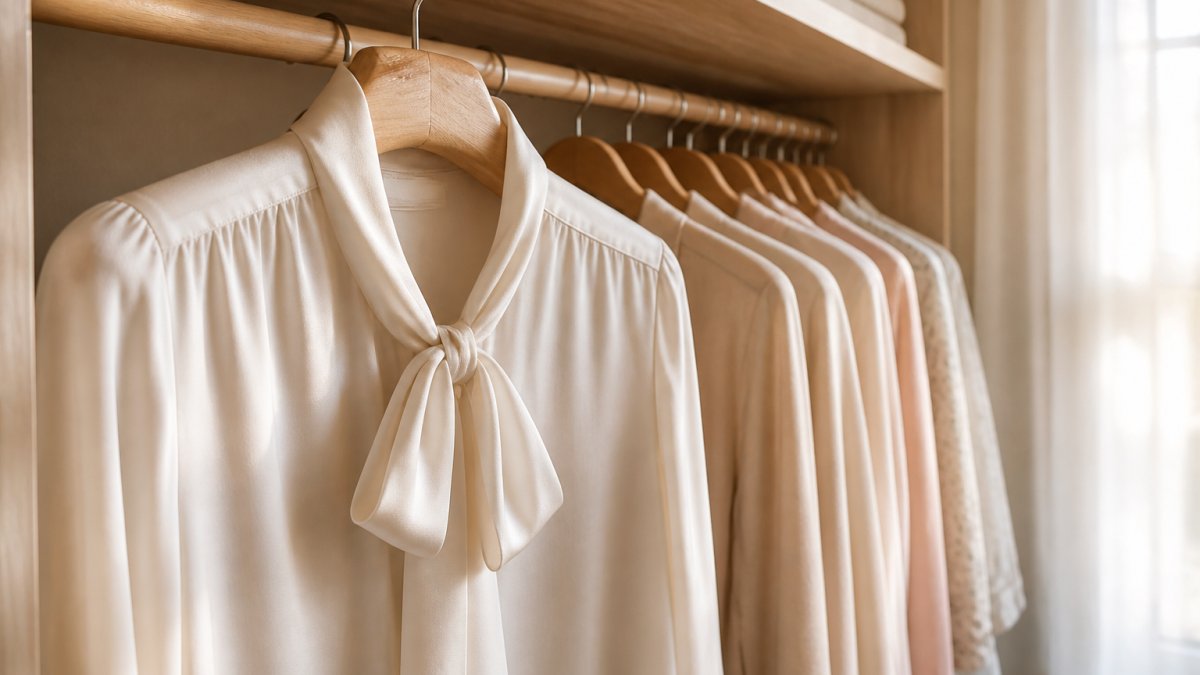
The key is using the right hanger. Padded hangers protect silk from creasing and prevent shoulder marks that wire or plastic hangers leave behind. Wooden hangers with padding work well.
Space your blouses properly on the hanger rod. Crowding garments together traps moisture and encourages wrinkles. Leave at least 2-3 inches between each blouse so air flows freely.
Ensure your closet has good ventilation. Open the closet door regularly to allow fresh air in. If your closet is in a humid area, consider placing a small dehumidifier nearby to control moisture levels.
How to Fold a Silk Shirt for Storage
Folding works well when closet space is limited. The goal is creating clean folds without deep creases that damage the fabric.
Start by laying the blouse flat on a clean surface. Fold one shoulder inward, bringing the sleeve across the front. Fold the other shoulder the same way, so both sleeves overlap in the center.
Fold the blouse in half horizontally, bringing the hem up toward the neckline. Then fold it in half again lengthwise. You now have a compact square that takes up minimal space.
Place acid-free tissue paper between folds to prevent creasing. Tissue paper creates a buffer that lets the fabric relax without sharp fold lines.
Store folded blouses in a breathable cotton or linen bag, never plastic. Plastic traps moisture and causes mildew. A breathable bag allows air to circulate while protecting from dust.
Hanging vs. Folding: Which Method Works Best
The choice between hanging and folding depends on your closet space, storage duration, and the specific construction of your silk blouses. Unlike general silk garments, blouses have structural elements, collars, buttons, and fitted sleeves, that respond differently to each storage method.
Hanging is best if:
- You have adequate closet space and can maintain 2-3 inches between garments
- Your blouse has a structured collar that you want to preserve (pointed, spread, or button-down collars hold their shape better on hangers)
- The blouse has delicate buttons or embellishments that could snag or crack under the weight of folding
- You live in a humid environment like Miami and need maximum air circulation to prevent mildew
- You plan to wear the blouse within 2-3 months (hanging prevents long-term creasing)
- The blouse is lightweight silk charmeuse or crepe that drapes easily without wrinkling
Folding is best if:
- Closet space is severely limited or you're storing multiple blouses in a drawer or shelf
- Your blouse is made from heavier silk (silk twill, silk satin, or silk with linen blends) that holds folds without permanent creasing
- You're storing the blouse for an entire season (3+ months) and can use acid-free tissue to prevent sharp fold lines
- Your storage area maintains consistent, cool, dry conditions (below 50% humidity)
- The blouse has a soft, unstructured collar or no collar, which doesn't require shape preservation
- The blouse is oversized or has loose, flowing sleeves that don't crease easily
A practical decision framework: If your blouse feels lightweight when you hold it and the collar is structured, hang it. If it feels substantial, the collar is soft, and you have limited space, fold it with tissue. Many people use both methods: hang blouses worn regularly and fold seasonal pieces you won't access for months. The key is maintaining proper air circulation and moisture control regardless of which method you choose. In Miami's humid climate, hanging with adequate spacing is generally safer for long-term storage because it allows moisture to escape more readily than folding.
Best Garment Bags for Silk Storage
Choosing the right storage bag protects your silk blouses from dust, light, and moisture damage.
Breathable cotton and linen bags are ideal for silk garment storage. These natural fabrics allow air to flow through while blocking dust and light. Cotton bags are affordable and widely available.
Unbleached cotton is preferable to bleached versions. Bleached fabrics sometimes contain chemicals that can transfer to delicate silk over time. Look for bags labeled "unbleached" or "natural" cotton.
Plastic bags trap moisture and create an environment where mold and mildew thrive. Never store silk blouses in plastic dry cleaning bags or plastic storage containers.
Garment bags with zippers work well as long as they're made from breathable fabric. The zipper keeps dust out while the fabric allows moisture to escape. Avoid vacuum-seal bags, which compress garments and create permanent creases.
How to Prevent Moths in Clothes During Storage
Moths are a serious threat to silk blouses during storage. These insects eat protein fibers in natural fabrics like silk, wool, and cotton.
Natural moth prevention methods work well without harsh chemicals. Cedar blocks and cedar chips repel moths effectively. Place cedar products inside your garment bag or storage container.
Lavender sachets also deter moths. The strong scent repels insects while adding a pleasant aroma to stored garments. Place sachets inside garment bags or between folded blouses.
Regular inspection is essential. Check stored blouses every 2-3 months for signs of moth damage. Look for small holes, webbing, or larvae.
Ensure garments are completely clean before storage. Moths are attracted to body oils, food particles, and sweat. A thorough wash removes these attractants.
Store blouses in sealed, breathable bags. Zipped garment bags keep moths out while allowing air circulation. This combination protects against insect damage while preventing moisture buildup.
Managing Humidity and Climate for Silk Blouse Storage
Humidity is the biggest enemy of stored silk blouses. Excess moisture causes mildew, mold, and musty odors.
Ideal storage conditions are 45-55% relative humidity and temperatures between 60-70°F. Most homes don't maintain these exact conditions, but getting close helps.
A small dehumidifier in your closet or storage area keeps moisture levels in check. Dehumidifiers are affordable and effective, especially in humid climates.
Desiccant packets absorb excess moisture inside sealed storage bags. Silica gel packets work well and can be recharged by heating them in an oven.
Avoid storing blouses near heat sources like radiators or vents. Heat and humidity fluctuations damage silk and encourage mold growth. Choose a cool, stable location away from temperature extremes.
Air out stored blouses periodically. Remove them from storage every 3-4 months and let them breathe in a well-ventilated room for a few hours.
Seasonal Storage Checklist and Retrieval Tips
Preparing silk blouses for seasonal storage requires a systematic approach, and retrieving them properly ensures they're ready to wear immediately. Use this checklist to protect your garments and restore them after storage.
Before Storage:
- Wash and completely dry all blouses (24-48 hours air drying)
- Inspect for stains and treat with silk-safe stain remover before washing
- Check for damage, loose seams, or missing buttons
- Ensure closet or storage area is clean, dry, and free of dust
- Gather breathable cotton or linen storage bags and cedar blocks
- Place 2-3 desiccant packets (silica gel) in each storage bag
- Verify storage area humidity is below 55% using an inexpensive humidity meter
During Storage:
- Inspect blouses every 2-3 months for moth damage (small holes, webbing, larvae)
- Replace cedar blocks every 6-12 months as their scent fades
- Check humidity levels; if above 60%, run a small dehumidifier nearby
- Air out garments if you detect musty odors (remove from bag and hang in a ventilated room for 2-4 hours)
When Retrieving:
- Remove blouses from storage 24-48 hours before wearing to allow wrinkles to relax naturally
- Hang retrieved blouses on padded hangers in a well-ventilated, temperature-stable room
- If musty odors persist after airing, hang the blouse in a bathroom while you shower; steam and humidity will freshen the fabric without water damage
- For stubborn creases that don't relax, use a silk-safe steamer on low heat, holding it 6-8 inches from the fabric and moving it slowly; never press silk directly with an iron, which can scorch or flatten the natural sheen
- If the blouse still smells stale, lightly mist it with a fabric refresher spray (like Febreze Fabric or a homemade solution of water and a few drops of white vinegar) and hang it to dry in fresh air
- Inspect seams, buttons, and the collar for any damage before wearing
- If the silk appears dull after storage, a gentle hand wash in cool water with a silk-specific conditioner will restore sheen; do not use fabric softener, which can leave residue
Preventing Musty Odors During Long-Term Storage: Musty smells develop when moisture and stale air are trapped in sealed bags. To prevent this, place a small sachet of dried lavender or a cedar block inside each garment bag before sealing.
Restoring Silk Sheen: Silk naturally loses some luster during storage, especially if humidity fluctuated. To restore it, hand wash the blouse in cool water with a silk-specific detergent and rinse thoroughly.
Proper storage extends the life of your silk blouses significantly. Silk that's stored correctly maintains its color, sheen, and shape for years. Taking time to prepare, monitor, and properly retrieve stored garments prevents costly damage and keeps your wardrobe looking fresh and ready to wear.
Frequently Asked Questions
Is it better to hang or fold a silk blouse?
Hanging works best for silk blouses if you have closet space and use padded hangers to prevent creasing. Folding is ideal for long-term storage when space is limited, provided you fold carefully to avoid permanent wrinkles. In humid climates, hanging allows better air circulation and reduces mold risk. Choose based on your storage space and climate conditions.
How do you keep silk blouses from getting creased in storage?
Use padded hangers when hanging to distribute weight evenly and prevent shoulder marks. If folding, fold along natural seams and use acid-free tissue paper between folds to cushion the fabric. Store garments in breathable cotton or linen bags rather than plastic. Allow adequate space in your closet or storage box so fabrics aren't compressed, which causes permanent creasing.
Should silk blouses be stored in garment bags?
Yes, but only breathable garment bags made from cotton or linen. These allow air circulation while protecting from dust and light exposure. Avoid plastic garment bags, which trap moisture and can cause mildew and mold on delicate silk fabric. Breathable storage also helps prevent humidity buildup that damages the fabric over time.
How do you protect silk clothing from moths?
Store silk blouses in sealed containers or breathable bags with natural moth repellents like cedar blocks or lavender sachets. Ensure garments are completely clean before storage, as moths are attracted to food residue and sweat. Inspect stored items every 2-3 months and air them out in sunlight, which kills moth eggs. Keep your storage area dry and well-ventilated to discourage infestation.