 how-to
How to Choose Eco-Friendly Dry Cleaning Services
Table of Contents
- What Makes a Dry Cleaner Truly Eco-Friendly?
- Wet Cleaning vs Dry Cleaning: Key Differences
- Benefits of Green Dry Cleaning for Formal Wear
- How to Find Non-Toxic Dry Cleaners in Miami
- Red Flags: Questions to Ask Before You Commit
- Comparing Your Eco-Friendly Options
- Your Next Step Toward Sustainable Garment Care
- Frequently Asked Questions
Last Updated: September 9, 2026
Choosing a truly eco-friendly dry cleaning service in Miami means looking past green labels and asking what chemicals actually touch your clothes. Traditional dry cleaning relies on perchloroethylene (perc), a solvent the EPA has been working to phase out. We help busy Miami residents understand that the real distinction comes down to the cleaning technology itself, not the marketing.
What Makes a Dry Cleaner Truly Eco-Friendly?
An eco-friendly dry cleaner is one that eliminates the use of toxic chemicals, specifically perchloroethylene, in favor of water-based or non-toxic solvent systems. The most common alternatives fall into three categories: professional wet cleaning, hydrocarbon solvents, and silicone-based systems like GreenEarth Cleaning. Each method avoids the health risks associated with perc exposure, which the Environmental Protection Agency's perc phase-out initiative has flagged as a concern for both worker safety and community air quality.
What separates a genuinely green operation from a greenwashed one is the equipment and process. Wet cleaning uses computer-controlled washers and dryers with specialized detergents for delicate fabrics. Hydrocarbon solvents are petroleum-based but less toxic than perc, though they require careful handling and solvent recovery. Silicone-based cleaning uses a chemically inert solvent that breaks down into sand and water, making it biodegradable and gentle on delicate trims.
Wet Cleaning vs Dry Cleaning: Key Differences
Professional wet cleaning is the most environmentally responsible method available because it uses water as the primary solvent, eliminating chemical processing altogether. Unlike traditional dry cleaning, it relies on computer-controlled machines that manage water temperature, agitation, and drying cycles to prevent shrinkage.
For the consumer, the practical difference shows up in how your clothes feel and smell. Wet cleaning leaves no chemical residue on fabrics, which means no lingering solvent odor and less irritation for sensitive skin. Traditional perc cleaning requires aeration to remove chemical traces, and even then, residual odors can persist. Research on wet cleaning efficacy from the University of California demonstrates that professional wet cleaning matches or exceeds traditional methods on stain removal while significantly reducing the environmental footprint.
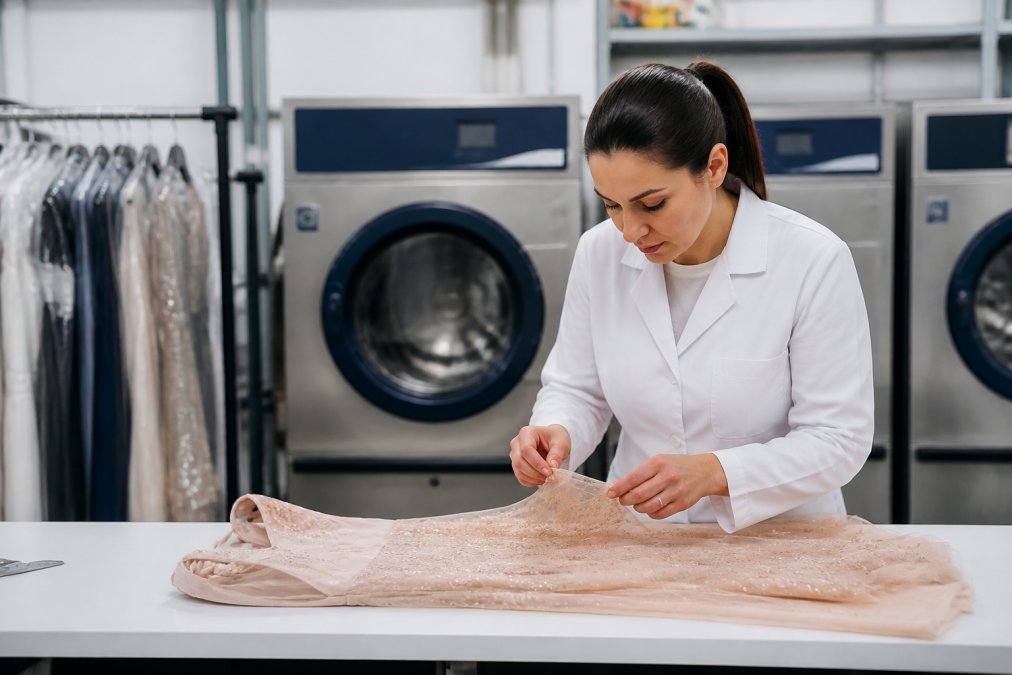
The trade-off is that true wet cleaning requires skilled operators and expensive equipment. A cleaner that claims to use wet cleaning but runs standard home washers is not delivering the same result.
Benefits of Green Dry Cleaning for Formal Wear
Green dry cleaning methods extend the life of formal wear because they avoid the harsh chemical exposure that breaks down fibers, fades colors, and weakens seams. Perc cleaning can strip natural oils from wool and cause sequins to dull or dissolve, whereas wet cleaning and silicone-based systems clean gently without attacking the garment's construction.
The financial angle is worth considering. A quality suit or formal gown represents a significant investment, and the cost per cleaning is small compared to the cost of replacement. Care guidance from the American Cleaning Institute notes that proper cleaning methods directly affect fabric longevity, meaning a greener process that is gentler on fibers can actually save you money over the lifespan of the garment. This is the cost-benefit analysis most consumers miss: the cheapest cleaning is not the one with the lowest price tag, but the one that keeps your wardrobe wearable for years.
The Real Cost-Benefit Math for Your Wardrobe
A typical men's wool suit costs $300 to $800. A silk cocktail dress or formal gown runs $200 to $1,500. Traditional perc cleaning might cost $15 to $25 per garment, while professional wet cleaning in Miami runs $18 to $30. That $3 to $5 difference per visit seems trivial until you consider replacement cost.
A suit cleaned with perc every 10 wears might last 30 to 50 cleanings before showing noticeable wear. The same suit cleaned with wet cleaning or silicone-based methods can withstand more cleanings because the gentler process does not strip wool's natural lanolin.
For a $500 suit, green cleaning can lead to savings over the garment's lifetime, even accounting for a potentially higher per-visit cost.
When Professional Eco-Cleaning Is Non-Negotiable
Not every garment needs professional cleaning. Understanding what you can handle at home versus what requires a professional eco-cleaner saves money and reduces your environmental footprint.
Safe to clean at home with eco-friendly methods:
- Cotton and linen shirts (use cold water and a gentle, plant-based detergent)
- Polyester blends (machine wash on delicate with a mild detergent)
- Cashmere sweaters (hand wash with a wool-specific eco-detergent, then lay flat to dry)
- Silk scarves (hand wash with a pH-neutral soap and cold water)
Always take to a professional eco-cleaner:
- Structured garments with shoulder pads, interfacing, or canvas construction (suits, blazers, tailored coats)
- Beaded, sequined, or embellished formal wear
- Garments with leather or suede trim
- Wedding dresses with multiple layers, boning, or delicate lace
- Any item labeled "dry clean only" that you are not willing to risk shrinking or distorting
Miami residents often over-dry-clean items that could be hand-washed, spending unnecessarily. By reserving professional eco-cleaning for garments that truly need it, you can reduce your annual cleaning bill.
The Hidden Cost of Improper Home Cleaning
Attempting to clean a structured garment at home can destroy it. A wool blazer in a home washer, even on delicate, will likely shrink or lose its shape. When in doubt, ask the cleaner, most reputable eco-friendly services will tell you honestly.
For delicate items like beaded gowns or structured jackets, the cleaner's expertise matters as much as the solvent. Ask whether the facility has experience with wedding dresses and tuxedos. A facility with wet cleaning equipment and trained staff may charge a premium, but that premium can contribute to the longevity of a garment.
How to Ask About Garment Lifespan Before You Commit
When you call a potential eco-friendly cleaner, ask these questions to gauge whether they understand fabric preservation:
- "How many cleanings do you typically see a wool suit withstand before it shows wear?" A knowledgeable cleaner will give you a range, not a vague answer.
- "Do you use any additives or finishing agents that could affect delicate trims?" Some green cleaners still use harsh finishing chemicals.
- "Can you show me examples of formal wear you have cleaned successfully?" A portfolio of wedding dresses or tuxedos demonstrates real experience.
- "What is your policy if a garment is damaged during cleaning?" Professional cleaners carry insurance and will compensate you for damage.
These questions separate a cleaner who simply swapped solvents from one who genuinely understands textile care.
How to Find Non-Toxic Dry Cleaners in Miami
Finding non-toxic dry cleaners in Miami starts with asking the right questions over the phone. Ask directly, "Do you use perchloroethylene or perc in your cleaning process?" A facility that has invested in green technology will answer confidently and explain their method.
Look for specific certifications and process details rather than generic "green" claims. In Miami's humid climate, proper drying and finishing matter even more, since moisture left in garments can lead to mildew and fabric damage. A reputable cleaner should be able to explain their solvent recovery process and how they manage waste, since responsible disposal is what keeps toxic chemicals out of local waterways. The Florida Department of Environmental Protection guidance on dry cleaning solvent use outlines the state's regulatory framework, and a compliant cleaner should be familiar with these requirements.
Red Flags: Questions to Ask Before You Commit
The most reliable way to spot greenwashing is to ask questions a genuinely sustainable cleaner can answer with specifics. If a facility cannot name their solvent, describe waste handling, or explain their process, their "eco-friendly" label is likely a marketing decision.
- "What solvent do you use, and how do you dispose of it?" A real green cleaner uses water, silicone, or a certified hydrocarbon system with documented solvent recovery. Vague answers signal perc use.
- "Can I see your equipment?" Transparent facilities welcome inspection. Wet cleaning requires industrial machines, not residential washers.
- "How do you handle garment covers and hangers?" Sustainable operations use recycled or reusable covers and participate in hanger recycling programs, reducing plastic waste.
- "What happens to my clothes if the cleaning damages them?" Professional cleaners stand behind their work. Ask about their policy on stains or damage before you leave your garments.
- "Do you offer pickup and delivery?" Local delivery reduces the carbon footprint of your cleaning, since you are not driving to the shop and back.
Comparing Your Eco-Friendly Options
When you narrow down your choices, the comparison comes down to cleaning method, convenience, and how the service handles your specific garments.
| Cleaning Method | Solvent Used | Best For | Key Trade-off |
|---|---|---|---|
| Professional Wet Cleaning | Water + specialized detergents | Delicates, formal wear, everyday items | Requires skilled operators and industrial equipment |
| Silicone-Based (GreenEarth) | Silicone (biodegradable) | Beaded items, silk, sensitive skin | Availability depends on the cleaner's adoption |
| Hydrocarbon Solvent | Petroleum-based but less toxic than perc | General dry cleaning | Still a chemical process, not fully solvent-free |
| Traditional Perc | Perchloroethylene | No one, ideally | Toxic, being phased out by regulators |
Your Interactive Vetting Checklist for Miami Cleaners
Before you hand over a single garment, use this checklist to vet any cleaner. It cuts through greenwashing and tells you whether a cleaner has made a real investment in sustainable technology.
Step 1: The Phone Call (5 minutes)
- "Do you use perchloroethylene or perc in your cleaning process?" A direct "no" is required. Any hedging means they still use it.
- "What solvent or cleaning method do you use instead?" They should name wet cleaning, GreenEarth, or a specific hydrocarbon system, not just say "green."
- "How do you dispose of your solvent or wastewater?" A compliant cleaner will mention licensed waste haulers or on-site recovery systems. In Florida, the Florida Department of Environmental Protection dry cleaning solvent regulations requires specific handling and disposal procedures.
- "Do you have perc-free equipment on site, or do you send garments to another facility?" If they outsource, you need to verify the actual processing facility.
Step 2: The Facility Visit (15 minutes)
- Ask to see the cleaning equipment. Professional wet cleaning machines are large, computer-controlled units, not residential washers.
- Look for solvent recovery systems or closed-loop equipment if they use any solvent-based method.
- Check whether they offer recycled or reusable garment bags and participate in hanger recycling. Ask where their hangers go.
- Notice the smell. A perc facility has a distinct chemical odor. A wet cleaning facility should smell like laundry, not solvent.
Step 3: The Garment Drop-Off (10 minutes)
- Ask how they handle stains on delicate fabrics. A professional will explain their pre-treatment process.
- Ask about their damage policy in writing. Reputable cleaners will compensate for damage caused by their process.
- Ask how they handle beaded, sequined, or structured garments. They should describe specific techniques, not generic "we clean everything."
- Request a timeline. Wet cleaning can take slightly longer than perc cleaning because of the drying process, 24 to 48 hours is standard for quality results.
What Miami-Specific Compliance Looks Like
Miami's heat and humidity create unique challenges for garment care. The Florida Department of Environmental Protection (FDEP) regulates dry cleaning facilities under Chapter 62-780 of the Florida Administrative Code, governing solvent use, waste disposal, and groundwater protection.
For perc facilities specifically, FDEP requires them to meet strict equipment standards and to have a solvent management plan. The EPA's National Cleaning for Safer Dry Cleaning initiative has been pushing facilities to transition away from perc entirely, and many Miami cleaners have already made the switch. When you ask about compliance, a legitimate eco-friendly cleaner will not hesitate to explain their FDEP registration and their waste disposal process.
The Convenience Factor That Actually Matters
For most busy professionals in Miami, the deciding factor is the full service package. A door-to-door service with transparent flat-rate pricing removes the friction of dropping off and picking up garments. LaundrPro offers door-to-door pickup and delivery across Miami with a 24-48 hour turnaround, so your formal wear gets professional care without you carving out time for a trip.
Even if you choose a different provider, use the checklist above. The difference between a genuinely eco-friendly cleaner and a greenwashed one shows up in the equipment they run, the permits they hold, and the answers they give.
How to Compare Quotes Without Getting Burned
When you have two or three cleaners that pass the checklist, compare pricing structures carefully. Some advertise a low base price but add fees for delicates or rush service. Others offer flat-rate pricing. Ask for a written quote for a specific garment, say, a wool suit and a silk blouse, and compare the total, not just the per-item price.
Also ask about pickup and delivery fees. A cleaner that charges $5 for delivery but requires a $50 minimum may cost more than one with a higher per-item price but no delivery fee. The true cost is the total per month, not the price of a single shirt.
Your Next Step Toward Sustainable Garment Care
The choice of an eco-friendly dry cleaner is a choice about how you value your clothes, time, and health. The research is clear that perc is a chemical to avoid, and alternatives like professional wet cleaning deliver results just as good without toxic exposure.
Start by calling the cleaners on your shortlist and asking the questions from this guide. If you are in the Miami area and want a service that combines genuine garment care with door-to-door pickup and delivery, LaundrPro offers transparent, flat-rate pricing with no hidden fees and no subscription commitment. Visit our website to learn more.
Frequently Asked Questions
Is there such a thing as eco-friendly dry cleaning?
Yes. Traditional dry cleaning often uses perchloroethylene (perc), a toxic chemical. Eco-friendly methods, like wet cleaning or using silicone-based solvents such as GreenEarth, avoid perc entirely. These methods are biodegradable, reduce chemical exposure, and are gentler on fabrics. Look for cleaners that specify their process and ask to see their solvent options to confirm they avoid traditional hazardous chemicals.
Is wet cleaning safer for delicate formal wear than traditional dry cleaning?
For many garments, yes. Wet cleaning uses water and specialized computer-controlled machines with gentle detergents. It is often a safe choice for formal wear because it avoids the harsh chemical agitation of traditional dry cleaning, which can break down fibers over time. However, the outcome depends on the cleaner's expertise with delicate fabrics. Ask if they have experience with your specific garment type before committing.
How can I tell if a Miami dry cleaner is actually using green solvents?
Ask direct questions. Inquire if they use perchloroethylene (perc) or hydrocarbon solvents. A cleaner using eco-friendly methods will openly discuss their process, which might include wet cleaning or certified green solvents. Be wary of vague answers or marketing terms like 'green' without a clear explanation. A reputable service will also be transparent about how they handle waste and recycling.