 how-to
Best Way to Store Formal Suits Long Term
Table of Contents
- How to Clean a Suit Before Storage
- Choosing the Right Storage Container for Your Suit
- How to Store Suits in a Garment Bag
- How to Prevent Mildew on Clothes in Humid Climates
- How Long Can You Store a Suit
- Best Way to Store Formal Suits: Step-by-Step Process
- What Not to Do When Storing Formal Suits
- Frequently Asked Questions
Last Updated: October 17, 2026
How to Clean a Suit Before Storage
The first step to store formal suits long term is making sure they're actually clean. Dirt, sweat, and stains set into fabric over time. A suit that looks fine today might have hidden damage by next season.
Dry cleaning versus spot cleaning
Dry cleaning removes deep dirt and odors from the whole garment. Use it before long-term storage if the suit was worn regularly or shows visible soil.
Spot cleaning handles small stains without a full clean, use it for minor marks or a suit worn only a few times.
- Dry cleaning: worn multiple times, visible stains, musty smell, storage longer than one season
- Spot cleaning: worn once or twice, small isolated marks, fresh stains
Airing out your suit after dry cleaning
After dry cleaning, air your suit out: chemicals linger in the fabric, and 24-48 hours of fresh air lets them dissipate.
- Remove the plastic cover from the dry cleaner
- Hang the suit on a padded wooden hanger in a well-ventilated area, away from direct sunlight
- Leave it for at least one full day and check that it smells fresh before storing
Sealed plastic and trapped fumes damage fibers over time.
Choosing the Right Storage Container for Your Suit
The right container keeps moisture, dust, and pests away.
Garment bags versus rigid bins
Garment bags protect hanging suits from dust while allowing air circulation and easy access. Rigid bins stack neatly, seal tightly against humidity, and prevent crushing, but take up more space.
Compare them this way:
| Storage Type | Best For | Drawback | Space |
|---|---|---|---|
| Garment bag | Closet storage, frequent access | Allows some air movement | Minimal |
| Rigid bin | Long-term storage, protection | Takes up floor/shelf space | Moderate |
| Cardboard box | Budget option | Poor moisture control | Moderate |
In Miami or similar climates, a garment bag in a controlled closet works well; for storage longer than one year, consider a rigid bin.
Why vacuum bags are risky for formal wear
Vacuum bags save space but are wrong for formal suits: they crush tailored fibers, so jackets lose shape and trousers get permanent creases that need professional pressing. Use garment bags or rigid bins instead.
How to Store Suits in a Garment Bag
Garment bags are the standard choice for formal suits, they let air flow while keeping dust out. Here's how to use them correctly.
Hanging versus folding for long-term storage
Hanging preserves shape: jackets stay structured and trousers hang straight. Folding saves space but risks permanent creases, so hang for storage longer than a few months.
Using padded hangers to preserve shape
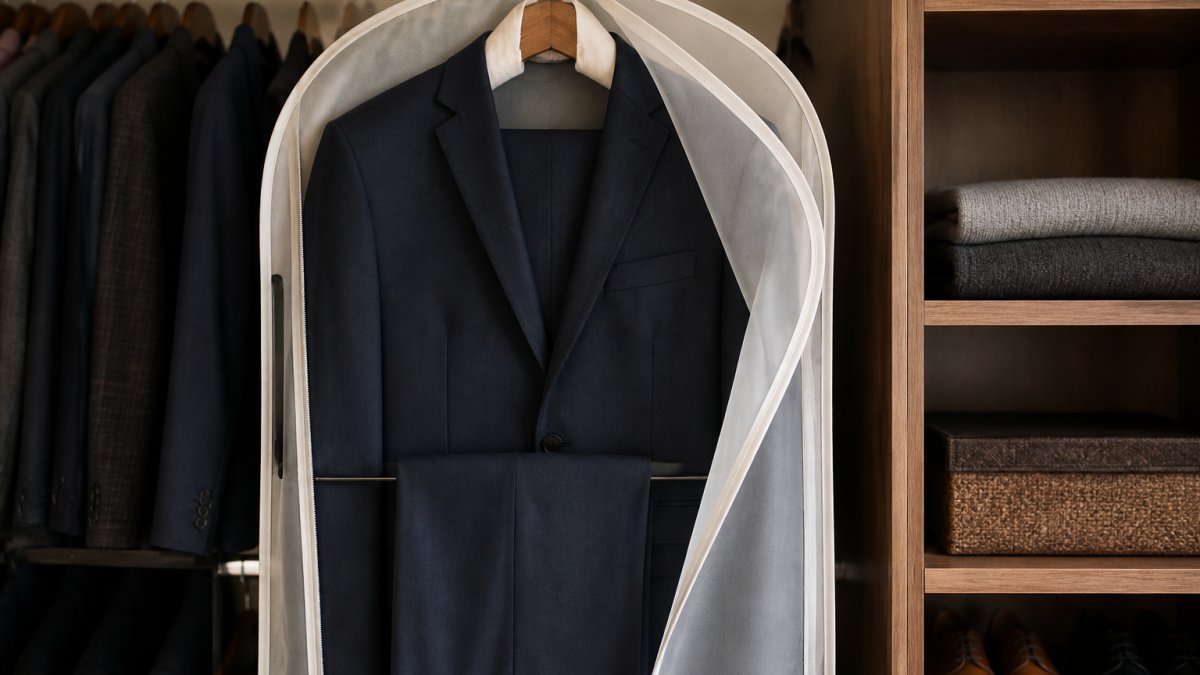
Padded hangers spread weight evenly across the shoulders, while wire hangers concentrate pressure on two points. They support the jacket without marks, keep shoulder seams aligned, and prevent stretching. Wooden hangers work too; avoid plastic, which cracks and offers poor support. Zip the bag fully to keep dust out while allowing minimal air exchange.
How to Prevent Mildew on Clothes in Humid Climates
Miami's humidity is the biggest threat to a stored suit. Miami-Dade County averages relative humidity in the high 70s much of the year, and a closet that feels fine can sit above 60% for weeks, the range where mildew spores colonize. Mildew digests cellulose and protein fibers and leaves stains professional cleaning may never fully remove.
Measure before you manage
You cannot control humidity you aren't measuring. Buy a cheap digital hygrometer, under $20 at hardware stores, and put it inside the closet at suit height, not on the floor. Check it daily for a week before storing anything and record the high and low.
- Under 50% relative humidity: ideal. Proceed with storage.
- 50-60%: acceptable for most suits, but watch for spikes after rain.
- Above 60% for more than a day or two: treat the closet as a mildew risk zone and correct it before storing.
Build a humidity-control plan for a Miami closet
Use layered controls, not a single silica gel packet:
- Active dehumidification. A small compressor or thermoelectric dehumidifier sized for the closet is the most reliable tool. Empty the reservoir on schedule, in a Miami summer it can fill in a day or two, or use a drain line.
- Air circulation. Leave gaps between suits on the rod, don't pack the closet wall-to-wall, and run a small fan on low during humid months. If the door stays closed for pest control, crack it for an hour a day while the AC runs.
- Desiccant inside the garment bag. Silica gel packets or a rechargeable canister handle the microclimate around the suit. Recharge or replace every 4-8 weeks during Miami's rainy season (roughly May through October) and every 2-3 months in drier months.
- Keep suits off exterior walls. In South Florida, exterior walls run cooler and collect condensation; an interior closet wall is safer.
- Never store against a concrete floor. Concrete wicks moisture, keep bins on a shelf or pallet.
What to do if you find mildew
Act the same day, mildew spreads and stains set.
- Isolate the suit. Take it out of the closet and bag immediately so spores don't spread.
- Do not brush it indoors. Brushing releases spores; take the suit outside or to a well-ventilated garage.
- Air it in direct sun briefly. UV light helps kill surface mildew, but limit exposure to 30-60 minutes, wool and silk fade and weaken with prolonged sun.
Suit-specific mildew risks
Wool absorbs and holds moisture and is the most mildew-prone. Linen and cotton blends wick moisture but wrinkle and can stain permanently if mildew sets. Synthetic blends resist mildew better but trap odor. If you store more than one suit, inspect the wool ones first and most often.
Protecting against pests and insects
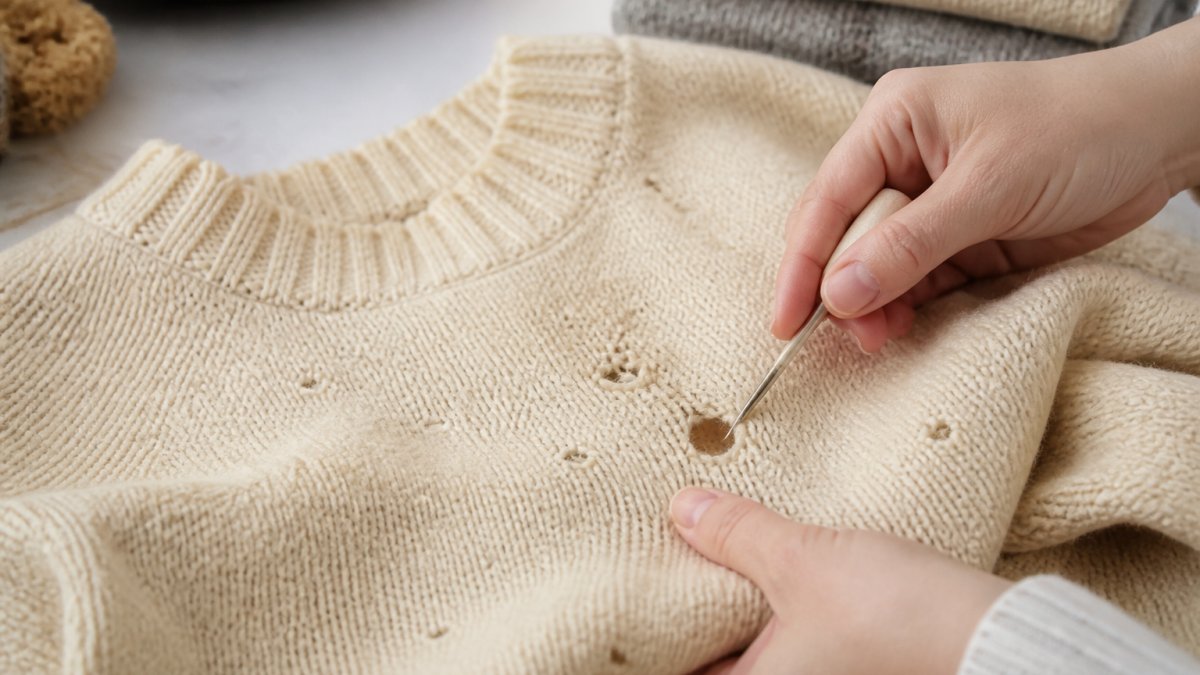
Moths and other insects eat natural fibers, and wool suits are especially vulnerable, insects can destroy a suit in weeks. Prevent damage by keeping the storage area clean and dust-free, using cedar blocks or cedar-lined storage, placing mothballs or repellent packets in the garment bag, sealing the bag completely, and inspecting suits every 3-4 months.
How Long Can You Store a Suit
There's no expiration date on a well-stored suit, but there is a maintenance schedule. A suit stored correctly in a climate-controlled Miami closet can last years, while one in a humid garage can be damaged in a single season.
Realistic storage windows by fabric
- Wool and wool blends: the most durable in storage if kept dry, but the most vulnerable to moths and mildew. Expect 2-3 years between professional cleanings with regular inspection; longer if the closet stays under 60% relative humidity.
- Linen: wrinkles and creases set permanently, and mildew stains are hard to remove. Inspect every 2-3 months and hang on a broad hanger to avoid fold lines.
- Cotton and cotton blends: generally stable, but absorb moisture and can yellow with age. Keep away from direct light and inspect every 3 months.
Inspection schedule that actually works
Use this cadence:
- Every 3 months (monthly in Miami's rainy season for wool and silk): open the bag and look for white or gray fuzz, dark spots, or a musty smell. Check shoulders and underarms first, mildew shows there first.
- Every 6 months: hang the suit in a well-ventilated room away from sun for a few hours, check the trousers' crease and jacket's lapels for distortion, and replace or recharge desiccant.
- Every 12 months: full review for pest damage (small holes, especially along seams and under collars), odor, and fading. Decide whether professional cleaning is needed before it goes back into storage.
What to check at each inspection
At each inspection, check:
- Smell. A musty odor means moisture is present even if you can't see it.
- Shoulders and underarms. Mildew starts where sweat residue and body heat linger.
- Trouser crease. A sharp, shiny crease means the press is setting in, rehang or have it pressed.
- Jacket shape. If the lapels and shoulder line are losing structure, the hanger or bag is the problem.
- Seams and hems. Moth larvae feed in dark, protected areas, turn the suit inside out occasionally.
- Desiccant status. Saturated silica gel is useless; recharge or replace it.
Refreshing a suit between inspections
Don't dry clean a suit every time you inspect it, over-cleaning shortens its life. Between professional cleanings:
- Air the suit outdoors in shade for an hour or two on a dry day.
- Brush it with a soft garment brush to lift dust.
- Steam lightly to release wrinkles rather than pressing them in.
If you store a suit for 5+ years without wearing it, have it professionally cleaned and pressed before wearing.
Best Way to Store Formal Suits: Step-by-Step Process
Here's the complete process to store formal suits long term correctly.
Step 1: Prepare your suit
Start with a clean suit, dry clean or spot clean as needed, then air it out for 24-48 hours. Check for stains or damage and note any problem areas.
Step 2: Select your storage location
Choose a cool, dry closet, avoiding basements, attics, and exterior walls where moisture collects. The ideal space stays between 50-60% humidity and 60-70°F. In Miami, use a closet with a dehumidifier if possible.
Step 3: Place in garment bag or container
Hang the suit on a padded wooden hanger inside a breathable garment bag and zip it fully. Add silica gel packets inside the bag and place cedar blocks or mothballs near the suit, not touching the fabric. For a rigid bin, wrap the suit loosely in acid-free tissue paper first.
Step 4: Monitor and inspect
Set a calendar reminder to check your suit every 3-6 months. Open the container and look for moisture, pests, or odors. Air out the suit if you notice any smell, replace saturated silica gel packets, and confirm temperature and humidity remain stable.
What Not to Do When Storing Formal Suits
Common storage mistakes can ruin expensive suits. Avoid these errors.
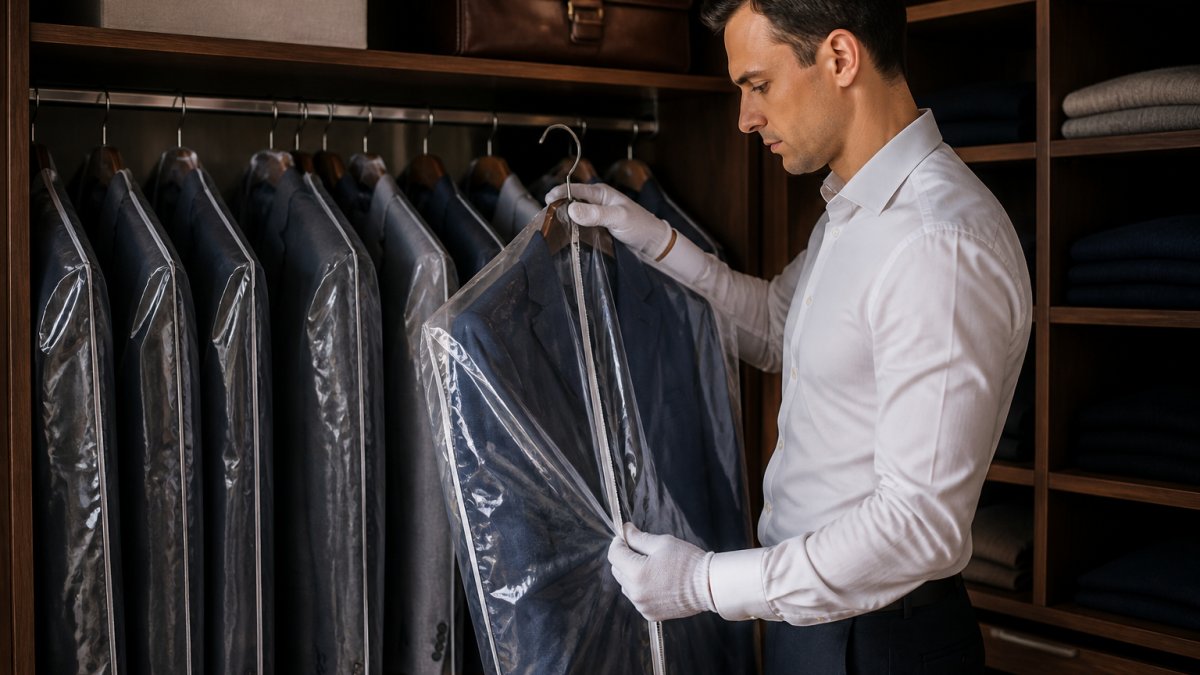
Don't use plastic dry cleaning bags, they trap moisture and chemicals.
Don't use wire hangers, they leave marks and don't support weight properly.
Don't skip humidity control in humid climates; mildew develops quickly when moisture is high.
Storing formal suits long term doesn't have to be complicated.
For busy professionals in Miami who need their formal wear in perfect condition, proper storage is just the beginning. With fast turnaround and premium product care, you keep your investment in top shape. Place Your Order with LaundrPro and let us handle the details while you focus on what matters.
Frequently Asked Questions
Should you dry-clean a suit before storing it long term?
Yes. Dry-clean your suit before long-term storage to remove oils, sweat, and stains that attract insects and cause deterioration. After dry cleaning, air out your suit for 24 hours in a well-ventilated space to let chemical fumes dissipate. This preparation step prevents mold, mildew, and pest damage during storage.
What is the best way to store a suit for several months?
Clean your suit thoroughly, hang it on a padded hanger inside a breathable garment bag, and place it in a cool, dry closet away from direct light. Keep humidity below 50% to prevent mildew. Store the jacket and trousers together in the same bag. Inspect monthly for signs of pests or moisture, and never use plastic bags or vacuum storage for formal wear.
How do you protect suits from humidity and mildew in humid climates?
Use silica gel packets or cedar blocks inside your garment bag to absorb excess moisture and deter insects. Store your suit in the driest part of your home, away from bathrooms and basements. A closet with a dehumidifier or moisture-absorbing rod works well. Check monthly for any musty odors or visible mold, and ensure your storage container has adequate air circulation.
How long can you store a suit without damage?
A well-maintained suit can be stored safely for 12-24 months with proper preparation and monitoring. Beyond two years, even in ideal conditions, fabrics may develop permanent creases or weaken. Inspect your suit every 2-3 months during storage. If storing for longer than a year, consider professional cleaning and storage services.