 how-to
Dry Cleaning for Formal Wear: What to Know in 2026
Table of Contents
- Why Formal Wear Needs Professional Dry Cleaning
- How to Prepare a Suit for Dry Cleaning
- What to Expect From the Dry Cleaning Process for Formal Wear
- Dry Cleaning Cost for Formal Wear: What Drives the Price
- Dry Cleaning Turnaround Time for Formal Wear
- Caring for Special Occasion Wear Between Cleanings
- Get Your Formal Wear Ready in Miami With LaundrPro
- Frequently Asked Questions
Last Updated: September 8, 2026
Formal wear is an investment, and dry cleaning for formal wear is the process that protects that investment by using professional solvents, specialized pressing equipment, and fabric-specific techniques that home washing cannot replicate. Whether it's a tailored suit for work or an evening gown for a special event, the wrong cleaning method can distort shoulders, dull sequins, or set stains permanently. At LaundrPro, our team handles delicate garments daily in Miami, and we understand the difference that proper care makes. Below, we'll show you exactly what happens to your formal pieces in professional care, how to prepare them, and what drives the cost and turnaround time.
Why Formal Wear Needs Professional Dry Cleaning
Formal attire is constructed differently from everyday clothing. Tailored suits use fused or canvassed interiors, evening gowns feature beaded embellishments and lace, and many designer pieces are hand-finished. Water and standard washing machines can cause shrinking, puckering, and color bleeding that ruin these structural details.
Professional dry cleaning for formal wear uses solvent-based cleaning that is gentler on delicate fabrics than water (peer-reviewed research). This method protects garment longevity while still removing body oils, stains, and odors effectively. The textile expertise required to handle couture and special occasion wear is precisely why most garment care specialists recommend professional cleaning over any at-home attempt, a standard supported by the Federal Trade Commission's guidance on clothing care labels, which explains the symbols and limits of home care.
How to Prepare a Suit for Dry Cleaning
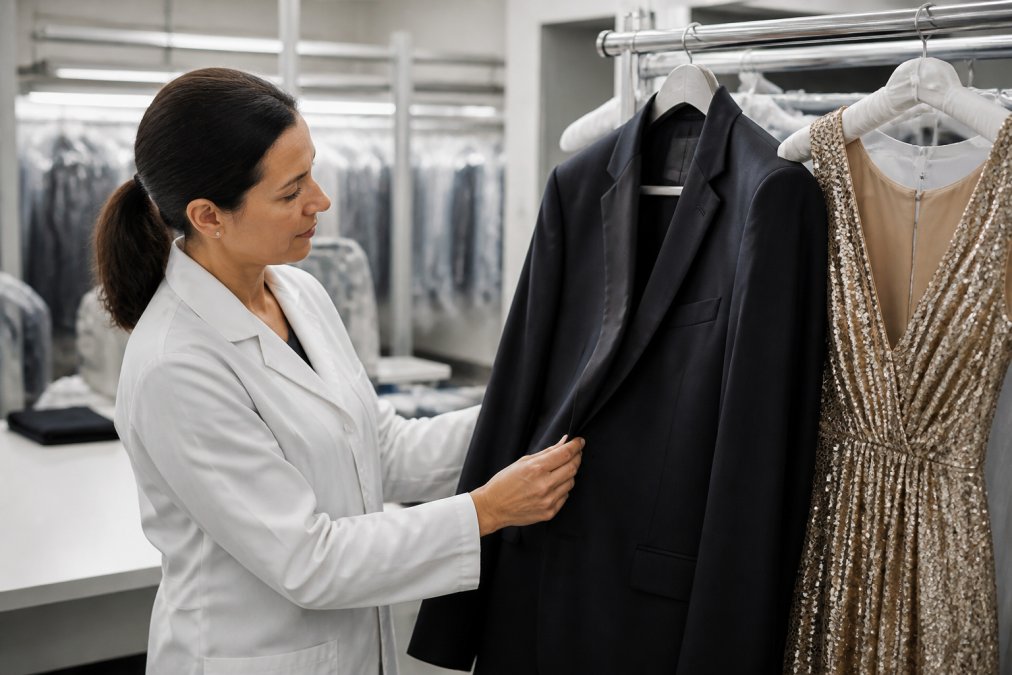
Preparing your suit correctly ensures the best possible result and minimizes the risk of damage during the cleaning process. A common mistake is bringing a garment to the cleaner with items still in the pockets or with obvious stains untreated. To protect your investment, use this pre-cleaning inspection checklist before handing over your formal wear.
The Pre-Cleaning Inspection Checklist
- Empty All Pockets: Check inside breast pockets, trouser pockets, and the small coin pocket. Leftover pens, lipstick, or tissues can bleed onto the fabric during cleaning. Also remove any detachable accessories like cufflinks, collar stays, or belts and store them safely at home.
- Document Existing Damage: Before you hand over your garment, note any existing flaws. Check the lining for tears, look for loose buttons, and inspect the seams. Pointing these out during the drop-off creates a clear record and ensures the cleaner knows to handle these areas with extra care.
- Identify and Point Out Stains: Do not attempt to rub or treat stains yourself, as this can set them deeper into the fibers. Instead, point out each specific stain to the cleaner, whether it's a wine spill on the lapel or body oil on the collar, so they can apply a targeted pre-treatment before the main cleaning cycle. Be specific about what the stain is, if you know.
- Check for Loose Threads and Buttons: A loose button can be lost in the cleaning process. If you notice one, either secure it yourself with a few stitches or mention it during the pre-cleaning inspection so the cleaner can protect it or remove it for safekeeping and reattach it later.
- Leave the Suit Unbagged: Remove the suit from any plastic dry cleaning bag before pickup. Plastic traps moisture and can cause yellowing. Leaving it unbagged allows the cleaner to perform a full, unobstructed fabric inspection.
What to Tell the Cleaner
When you drop off your suit, provide as much context as possible. Mention the last time it was worn and the nature of the event (e.g., a long flight, a formal dinner). This information helps the specialist determine if the garment needs a simple refresh or a more intensive cleaning to remove embedded soils and odors. For suits made of delicate fabrics like mohair or tropical wool, explicitly ask if the cleaner recommends a shorter cleaning cycle to preserve the fabric's natural luster.
Many people ask how to prepare a suit for dry cleaning and assume brushing it first helps. It does not. Leave surface dust to the professionals, who use specialized vacuums and pressing and steaming equipment. Your primary job is to be a detective: identify the risks and communicate them clearly. This proactive step is the single most effective way to ensure your formal wear returns in pristine condition.
What to Expect From the Dry Cleaning Process for Formal Wear
The process begins long before the garment touches solvent. Every piece goes through a detailed evaluation to determine the safest cleaning method for its specific construction and trims.
Fabric Inspection and Stain Treatment
A thorough pre-cleaning inspection identifies the fabric type, the condition of trims, and any existing damage. Specialists classify stains and apply appropriate treatments before cleaning, because heat from the drying process can set certain stains permanently if they are not pre-treated. Beaded embellishments and sequin and lace care often require extra protective measures during this stage.
Pressing and Hand-Finishing Details
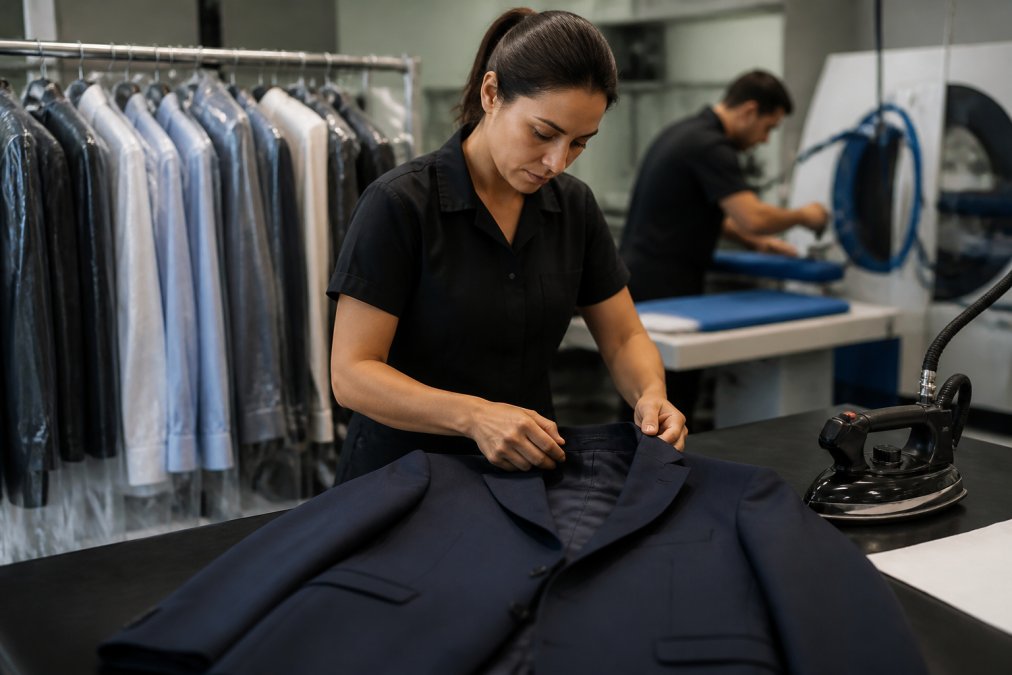
After cleaning, formal wear does not go through a standard industrial press. Suits and gowns are finished by hand, with careful attention to lapels, collars, and pleats. Hand-finished pressing and steaming restore the garment's sharp silhouette without crushing delicate textures. This level of quality assurance is what separates professional results from a standard wash and fold service.
Dry Cleaning Cost for Formal Wear: What Drives the Price
Several factors influence the dry cleaning cost for formal wear. The complexity of the garment, the need for specialized stain removal, and the level of hand-finishing required all play a role.
- Garment type: A simple blazer costs less to clean than a multi-layer evening gown with intricate beading.
- Fabric: Suede and leather require specialized handling that increases the price.
- Condition: Heavy soiling or set-in stains demand more labor and time.
- Turnaround: An express or same-day service typically carries a premium over standard processing.
Pricing depends on the specific item and its condition. For transparent, flat-rate pricing with no hidden fees, check the current rates on the LaundrPro pricing page to see exactly what your formal pieces will cost.
Dry Cleaning Turnaround Time for Formal Wear
Standard dry cleaning turnaround time for formal wear typically ranges from two to three days, though many services offer express options (the American Dental Association). For busy professionals, this timeline is critical when a Thursday morning meeting depends on a freshly pressed suit.
LaundrPro provides a fast 24-48 hour turnaround for daily garments and formal pieces. When you need a garment for a specific event, always request the express timeline and confirm it during the initial pickup. Planning ahead for wedding gown preservation or other time-sensitive needs avoids last-minute stress.
Caring for Special Occasion Wear Between Cleanings
Proper storage and maintenance between cleanings extends the life of your formal attire and reduces the frequency of professional cleanings needed. The key is understanding that different fabrics require different care. Here is a fabric-specific guide to keeping your formal wear pristine.
Fabric-Specific Care Guide
- Silk and Satin: These delicate fabrics are prone to water spotting and crushing. Always hang silk garments on padded hangers to prevent stress marks at the shoulders. If you notice minor wrinkles, hang the garment in a steamy bathroom for 15-20 minutes, never spray water directly on the fabric. For perspiration stains on silk, do not attempt home remedies; take it to a professional immediately, as the acid in sweat can weaken silk fibers over time.
- Velvet: Velvet is one of the most fragile formal wear fabrics. Never hang velvet gowns on wire hangers, as the pressure will crush the pile irreversibly. Store velvet garments flat or rolled in acid-free tissue paper. If wrinkles appear, do not press them, the heat will flatten the fibers permanently. Instead, hang the garment in a steamy room and gently brush the velvet with a soft garment brush in the direction of the pile.
- Wool and Wool Blends: Quality suits made from wool are resilient but attract moths. Always store wool suits in a breathable garment bag with cedar blocks or lavender sachets to deter pests. After wearing, allow the suit to rest for 24-48 hours before returning it to the closet. This allows the natural fibers to recover their shape and release moisture.
- Beaded and Sequined Garments: These pieces are heavy and the embellishments can pull on the fabric. Always store beaded gowns on padded hangers and never stack other garments on top of them. Before storing, check that no beads are loose. If you find any, secure them with a matching thread before the next wearing to prevent loss.
- Tulle and Organza: These stiff, delicate fabrics can crush easily. Store ball gowns with tulle skirts in a large garment bag that allows the skirt to hang freely without compression. Never fold these garments for storage.
Storage Essentials
Always use a breathable garment bag made of cotton or muslin, never plastic dry cleaning bags, which trap moisture and can cause yellowing and mildew. Hang suits on wide, padded hangers to preserve shoulder shape. For gowns with heavy beading, consider a hanger with extra padding or a specialized gown hanger with clips that support the waistband rather than the shoulders.
When to Air Out vs. When to Clean
Airing out a garment after wearing it helps release odors before it goes back into the closet. Hang the piece in a well-ventilated area away from direct sunlight for a few hours. For minor wrinkles, hanging the piece in a steamy bathroom can help, but avoid direct contact with water.
For significant soiling, do not wait weeks to seek professional cleaning. The longer a stain sits, the harder it is to remove. A general rule of thumb: if you wore the garment for more than four hours, especially in warm weather, it likely needs professional cleaning before storage. Perspiration and body oils are invisible but will attract dirt and cause fabric deterioration over time. For wedding gowns or other once-in-a-lifetime pieces, consider professional preservation services within a few weeks of the event to prevent yellowing and set-in stains.
Get Your Formal Wear Ready in Miami With LaundrPro
For residents searching for reliable dry cleaning near me in Miami, LaundrPro offers door-to-door pickup and delivery that fits demanding schedules. You do not need to be home for the pickup, and our team works to accommodate your schedule.
Our service is built on transparent, flat-rate pricing with no subscriptions and no hidden fees. We handle everything from daily garments to bulky household items and delicate couture, with the fast turnaround that working professionals rely on. The LaundrPro team is local to Miami and committed to protecting your garment investment with premium product care.
Frequently Asked Questions
Should formal dresses be dry cleaned?
Yes, most formal dresses should be dry cleaned, especially those made from delicate fabrics like silk, chiffon, or taffeta, or featuring beaded embellishments and sequins. Water and home washing can distort the shape, cause colors to run, or damage trims. Professional dry cleaning for formal wear uses solvent-based cleaning that protects these materials. Always check the care label, but when in doubt, professional care is the safer choice for preserving the garment's structure and finish.
What is the average price to dry clean a suit or wedding dress?
Pricing for dry cleaning formal wear varies based on the garment type, fabric, level of soiling, and any specialty treatments needed. A standard two-piece suit generally costs less than a floor-length evening gown or a wedding dress, which requires more labor and careful handling. For the most accurate estimate, request a quote from your local provider. At LaundrPro, we offer transparent, flat-rate pricing with no hidden fees, so you know the cost upfront before we begin.
How do I prepare formal wear for professional dry cleaning?
Start by emptying all pockets and removing any detachable parts like belts, sashes, or shoulder pads. Check for items left in inner pockets. Point out any specific stains, such as wine or sweat marks, to the cleaner so they can treat them properly. Do not attempt to rub stains at home, as this can set them further. Place the garment in a breathable garment bag for transport, and mention any loose buttons or tears so they can be secured before cleaning.
Does dry cleaning remove sweat stains from formal fabrics?
Professional dry cleaning can remove many sweat stains and odors from formal fabrics, but success depends on how long the stain has been set. Fresh stains respond best, so have the garment cleaned promptly after an event. During the pre-cleaning inspection, a professional will identify protein-based stains and apply targeted treatments before the cleaning cycle. This process is more effective than home remedies, which often damage delicate fabrics like silk.
Getting formal wear cleaned properly comes down to trusting a service that understands fabric, construction, and finishing. LaundrPro delivers spotless results with the convenience of door-to-door service and the transparency of flat-rate pricing. Place Your Order and get your formal wear ready without leaving your front door.