 listicle
Does Professional Cleaning Remove Old Ink Stains
Table of Contents
- Can Professional Cleaning Remove Old Ink Stains
- How Professional Cleaners Remove Ink Stains from Clothes
- Dry Cleaning for Formal Wear and Delicate Fabrics
- Dry Cleaning Turnaround Time for Stains
- When DIY Stain Removal Fails: Professional Assessment
- What Makes Professional Stain Removal Different from Home Remedies
- Frequently Asked Questions
Last Updated: August 31, 2026
Can Professional Cleaning Remove Old Ink Stains
Old ink stains are notoriously difficult to remove, but professional cleaners have the expertise, equipment, and specialized solvents to tackle them effectively. The real challenge is that the longer stains sit, the more they bond with fabric fibers. Fresh ink stains respond quickly to treatment because the ink hasn't fully penetrated or oxidized. Aged stains have chemically bonded with textile fibers, making them significantly harder to reverse. Professional assessment determines whether a stain is salvageable or if the damage is permanent.
At LaundrPro, we understand that stains don't just disappear on their own. Professional cleaning removes old ink stains through a combination of proper technique, appropriate chemistry, and the right equipment. The success rate depends on several factors we'll explore throughout this guide.
How Professional Cleaners Remove Ink Stains from Clothes
Professional cleaners remove ink stains through a methodical process that begins with assessment: examining the stain under proper lighting, identifying the ink type if possible, and testing the fabric's colorfastness to ensure the treatment won't cause additional damage.
The core technique involves solvent-based treatments paired with controlled blotting rather than rubbing. Rubbing spreads the stain and pushes ink deeper into fibers, which is why home attempts often backfire. Professional cleaners use specialized equipment and trained technique to lift ink outward from the fabric rather than driving it deeper.
Solvent-Based Treatments and Blotting Techniques
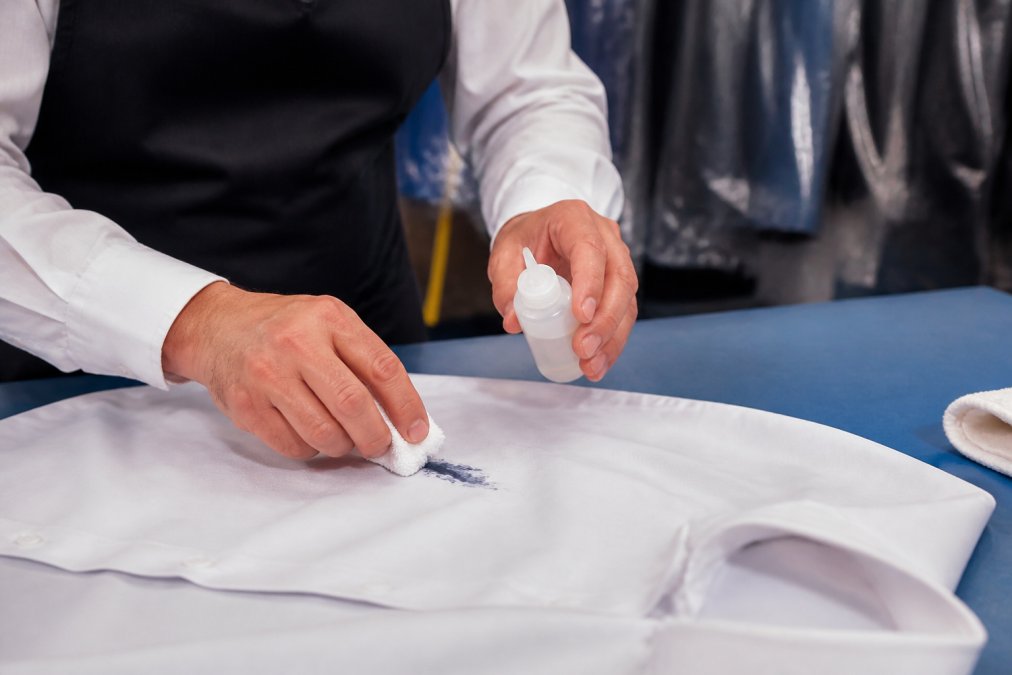
Solvent-based cleaners work by dissolving ink molecules, allowing them to be lifted away from textile fibers. Different ink types respond to different solvents: ballpoint ink requires different chemistry than permanent marker, and fountain pen ink behaves differently still.
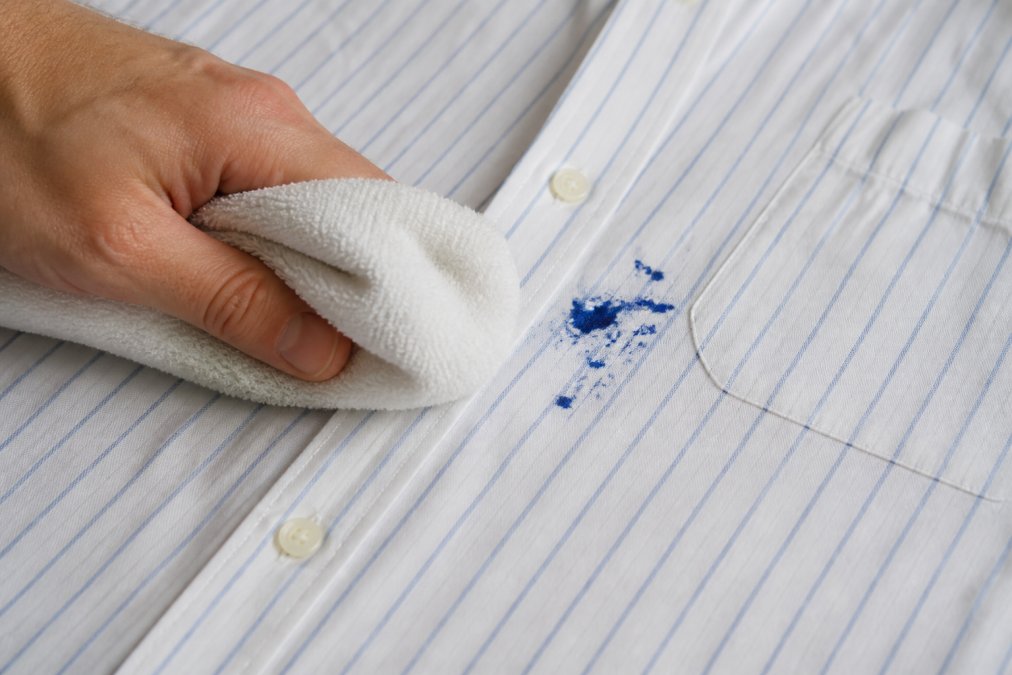
The blotting technique is critical. A professional cleaner applies solvent to the stain, allows it time to penetrate and work on the ink, then uses a clean white cloth to blot, never rub, the area. This process is repeated multiple times, with fresh sections of cloth used each time. The repetition gradually transfers ink from the garment to the cloth.
Professional-grade solvents like those used in dry cleaning facilities are formulated specifically for stain removal (the CDC). Products such as AlbaChem ALBA-INK are designed for ballpoint, fountain, and felt-tip inks and are considered safe for all fabrics when applied correctly. These specialized solutions are significantly more effective than household solvents because they target the specific chemical composition of ink without damaging the fabric's dyes or fibers.
For old stains, extended dwell time is essential. The solvent needs prolonged contact with the stain to penetrate and break down the ink-fiber bond. Some professional cleaners will apply solvent and allow it to sit for 15-30 minutes before blotting. This patience is part of what separates professional results from rushed home attempts.
Pre-Treatment and Stain Saturation Assessment
Before formal cleaning begins, professionals evaluate how deeply the ink has penetrated the fabric. A surface stain is far easier to remove than one where ink has soaked through multiple layers. This assessment determines the treatment approach.
Pre-treatment involves applying solvent to the stain and letting it work before the garment enters the main cleaning process. For old stains, this pre-treatment phase is extended, sometimes overnight, giving the solvent maximum time to break down the ink-fiber bond. The saturation assessment also reveals whether the stain is actually permanent. If the ink has fully bonded with the fibers at a molecular level, no amount of solvent will completely remove it. Professional cleaners can usually determine this within minutes of examining the stain.
Dry Cleaning for Formal Wear and Delicate Fabrics
Dry cleaning is the preferred method for formal wear and delicate fabrics because it uses organic solvents rather than water, which can damage certain materials. Water-based washing would be inappropriate for silk, wool, cashmere, and many formal garments because it can cause shrinkage, color bleeding, or fiber damage (the FDA).

For ink stains on formal wear, blazers, dress shirts, and evening wear, dry cleaning offers several advantages. The solvent used is gentler on delicate fibers than some household treatments, yet still effective at breaking down ink molecules. The controlled environment of a professional facility means temperature, solvent concentration, and application technique are all optimized for the garment type.
Formal wear often carries significant monetary value, which is why professional assessment becomes critical. A $300 blazer stained with ink deserves professional evaluation before any treatment attempt. The dry cleaning process typically involves pre-spotting, applying solvent to the stain before the garment enters the main cleaning machine, followed by the full dry cleaning cycle. If the stain remains after the first cycle, a second treatment may be necessary.
Dry Cleaning Turnaround Time for Stains
Standard dry cleaning turnaround in most facilities is 2-3 business days, but stain removal often requires additional time. A garment with an old ink stain may need extended pre-treatment, multiple spotting sessions, and careful monitoring between treatments. Expect 3-5 business days rather than the standard 2-3. This extended timeline reflects the reality that stubborn stains require patience and multiple treatment cycles.
Rushing the process is counterproductive. The solvent needs time to work on old stains. Attempting to remove an old ink stain in 24 hours often results in partial removal and a garment that still shows visible staining. Professional cleaners understand this trade-off and will recommend the appropriate timeline rather than promising unrealistic speed.
When DIY Stain Removal Fails: Professional Assessment
Most people discover their DIY stain removal attempt failed only after the garment has already been washed or dried, at which point the stain has often become more permanent. Heat from a dryer sets ink stains, making them significantly harder to remove (peer-reviewed research). Once a stained garment has been through the dryer, professional removal becomes more difficult and less likely to succeed completely.
Before investing time and money in treatment, a professional cleaner can examine the stain and provide honest feedback about removability. Some stains, particularly old ones on natural fibers, may be partially or completely permanent.
Material-Specific Risk Assessment
Different fabrics present different challenges for ink stain removal. Cotton and synthetic blends are generally more forgiving; solvents can penetrate these fibers without causing damage. Natural fibers like silk and wool require more careful handling because aggressive solvent treatment can damage the fibers themselves.
Dye stability is another critical factor. Some colored fabrics will lose color if exposed to certain solvents. A professional tests a hidden seam or inconspicuous area before treating a visible stain. This test determines whether the solvent will damage the garment's color. If the dye isn't stable, alternative approaches or acceptance of partial stain removal may be necessary.
Cost-Benefit Analysis of Professional Intervention
The cost of professional stain removal varies based on the garment type, stain severity, and local market rates. For a garment worth $100 or more, professional treatment is a reasonable investment. For items worth $300 or more, professional assessment is essential. The cost of treatment is far less than the cost of a permanently stained or damaged garment.
Professional treatment also has a significantly higher success rate than DIY attempts because of expertise and appropriate materials. There's also the time factor: professional cleaners handle the process while you focus on other priorities. The hidden cost of failed DIY attempts is damage to the garment. Aggressive rubbing, inappropriate solvents, or heat exposure can cause permanent damage that makes the stain worse or ruins the garment entirely.
What Makes Professional Stain Removal Different from Home Remedies
Professional stain removal differs from home remedies in several fundamental ways. Professionals have access to specialized equipment, trained expertise, and formulated solutions designed specifically for stain removal. Home remedies rely on common household items that were never designed for this purpose.
Professional cleaners understand ink chemistry. Different inks have different solubility profiles. Ballpoint ink, permanent marker, fountain pen ink, and felt-tip inks all require different approaches. A professional diagnoses the ink type by appearance and applies the appropriate solvent.
The blotting technique separates professionals from amateurs. Rubbing spreads ink and drives it deeper into fibers. Blotting lifts ink outward. Most people instinctively rub stains, which is exactly wrong. Professional training ensures the correct technique is applied every time.
Professional facilities use pH-balanced solutions and surfactants formulated to break down ink without damaging fabric. Household cleaners often have the wrong pH or contain ingredients that can damage dyes or fibers. Temperature control is another factor. Some solvents work better at specific temperatures. Professional facilities can control temperature during treatment, contributing to the difference between partial and complete removal.
The experience factor is significant. A professional has treated hundreds or thousands of ink stains and has learned which approaches work for different scenarios. This accumulated knowledge translates to better results than a first-time home attempt.
Old ink stains can be removed through professional cleaning, but success depends on the stain's age, the fabric type, and whether previous treatment attempts have already caused damage. Professional cleaners assess these factors and apply solvent-based treatments with proper technique to extract ink without damaging the garment.
For formal wear and valuable items, professional stain removal is worth the investment. LaundrPro provides professional dry cleaning and stain removal services throughout Miami with fast turnaround and transparent pricing. When you have an old ink stain on a garment you value, professional assessment and treatment offer the best chance of restoring your item to wearable condition. Place your order with LaundrPro and let our team handle the stain removal while you focus on what matters.
Frequently Asked Questions
Can old ink stains be removed by professional cleaning?
Yes, professional cleaners can remove old ink stains using specialized solvents, blotting techniques, and stain extraction equipment that household methods cannot match. The success depends on the stain age, fabric type, and whether the stain has been heat-set. Permanent marker and ballpoint ink respond well to professional-grade solvent-based treatments, while older, dried stains may require extended pre-treatment. Professional cleaners assess colorfastness and fabric integrity before treatment to prevent damage.
What is the typical dry cleaning turnaround time for removing ink stains?
Professional dry cleaning turnaround time for stains typically ranges from 2-3 business days for standard stain removal. However, stubborn or old ink stains may require additional pre-treatment time, extending the timeline to 3-5 days. Rush services are available but may incur additional fees depending on the cleaner. Fresh stains treated immediately often see faster results, while set-in stains require careful analysis and extended soaking with oxygen-based or solvent-based solutions before the garment enters the main cleaning cycle.
Is it worth taking stained formal wear to a professional cleaner?
Yes, especially for high-value formal wear like blazers, dress shirts, and silk garments. Professional cleaners have access to dry cleaning solvents, pH-balanced solutions, and professional-grade equipment that remove ink without damaging delicate fibers or affecting colorfastness. For expensive pieces, the cost of professional stain removal is far less than replacement. Professional assessment also prevents costly mistakes like setting the stain permanently with heat or using inappropriate household chemicals that can damage fabric integrity.
What happens if an ink stain has already been heat-set in the dryer?
Heat-set ink stains are significantly harder to remove but not impossible for professionals. Once ink bonds to fibers through heat, standard washing won't work. Professional cleaners use specialized solvent-based treatments and extended pre-soaking to gradually break down the chemical bond between the ink and textile fibers. Success depends on the fabric type and ink composition. Some heat-set stains may require multiple treatment cycles, increasing turnaround time. Professional assessment can determine if removal is feasible before treatment begins.
This article was written using GrandRanker