 How-to
Repairing Small Holes in Wool Suits: A Step-by-Step Guide
Quick Summary
Repairing small holes in wool suits is usually possible at home when the hole is smaller than a fingernail. Holes up to about the size of a fingernail can be darned or closed with an internal patch, while larger or seam-adjacent damage calls for a professional tailor.
- Holes smaller than a pea can often be closed by gently pulling the surrounding fabric together.
- Use thread that matches the suit's color under daylight and a weight suited to the fabric.
- Always place a pressing cloth over wool and use a warm iron, never a hot one, to avoid scorching.
- Keep darning stitches relaxed, because tight stitches pucker the fabric and leave a ridge.
- Check suits at least twice a year, especially before winter storage, to catch moth damage early.
Table of Contents
- Identifying Moth Damage and Assessing Hole Size
- Repairing Small Holes in Wool Suits at Home: Tools and Materials
- Step-by-Step Darning and Suit Reweaving Technique
- Using an Internal Patch and Fusible Adhesive Safely
- When to DIY Versus Hire a Professional Tailor
- How Much Moth Hole Repair in Suits Typically Involves
- Booking Your Suit Repair and Protecting It From Moths
- Frequently Asked Questions
Identifying Moth Damage and Assessing Hole Size
Small holes in a wool suit usually come from clothes moths, and repairing small holes in wool suits starts with recognizing that damage. For a related guide on fixing moth damage in knitwear, see how to remove moth holes from wool sweaters. Moth larvae feed on keratin, the protein in wool fibers, and they often leave holes in hidden spots like the inside of the jacket, behind lapels, around the cuffs, and along the back vent. If you find a hole in a suit, check the nearby fabric for fine webbing, tiny droppings, or small cases the larvae have built. Those signs confirm moths, and they tell you the damage may be spreading.
Hole size decides which repair method works. A hole smaller than a pea can often be closed by gently pulling the surrounding fabric together. Holes up to about the size of a fingernail usually need a patch or darning. Larger damage, or holes near a seam or buttonhole, often call for professional reweaving.
Quick size guide:
| Hole Size | Likely Repair Method | DIY Difficulty |
|---|---|---|
| Pinhead to pea-sized | Close by pulling fabric together, or hand stitch | Easy |
| Pea-sized to fingernail | Darning or a backing patch | Moderate |
| Larger than a fingernail | Professional reweaving | Hard |
Before you start, check the lining and the back of the fabric. A hole can look small on the outside while the damage underneath is wider.
Repairing Small Holes in Wool Suits at Home: Tools and Materials
Gather the right supplies before you begin. Using the wrong thread or heat setting can make the repair more visible than the hole itself.
You will need:
- A fine needle, such as a size 10 or 12 sharp
- Thread that closely matches the suit's color and weight
- A small pair of scissors
- Fabric scraps from the hem or an inside seam, if you plan to use a patch
- A fusible bonding powder or adhesive tape made for wool, if you choose the iron-on method
- A pressing cloth, such as a thin cotton tea towel
- A clean, well-lit table and a magnifying glass for small holes
Match the thread to the wool's color under daylight, not under a warm indoor light. Choose a slightly finer thread for lightweight suits and a sturdier one for heavy winter fabrics.
Watch out: Never use a hot iron directly on wool without a pressing cloth. High heat can scorch the fibers, make them shiny, or melt the adhesive into a stiff patch that is harder to fix later.
Step-by-Step Darning and Suit Reweaving Technique
Darning rebuilds the weave by running new thread across the hole, then under and over the existing fibers. For a different fabric type, see how to repair small tears in down jackets at home. It works best on holes up to about the size of a fingernail.
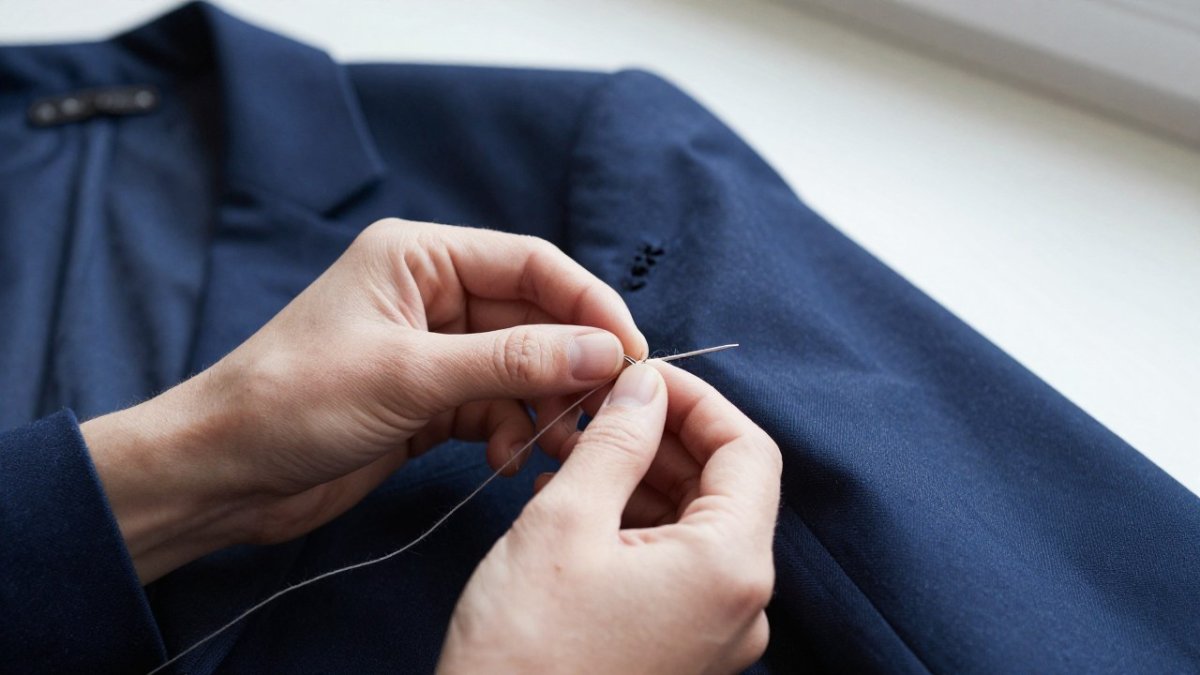
- Trim loose fibers. Snip any frayed or fuzzy threads around the hole so the edges are clean.
- Stabilize the area. Slip a small piece of thin cotton or a clean fabric scrap inside the jacket behind the hole. This keeps you from stitching through both layers of the suit.
- Lay the first threads. Stitch straight lines across the hole, about 1/8 inch apart, using matching thread. Work the needle in and out of the sound fabric on each side.
- Weave across the lines. Turn the work 90 degrees and weave the new thread over and under the first set of lines, the way a loom would.
- Blend the edges. Work your needle a little into the sound fabric around the hole so the repair fades into the weave.
- Knot and hide the ends. Tie off the thread inside the jacket, then trim the tails close.
Expect the finished repair to be visible up close. Darning hides a hole best when the thread color, weight, and weave direction all match the original fabric.
A common mistake is pulling the stitches too tight. Tight stitches pucker the fabric and create a ridge. Keep each stitch relaxed.
Using an Internal Patch and Fusible Adhesive Safely
An internal patch covers the hole from behind. It adds support and hides the repair from the outside. Use a piece of lightweight wool or fine cotton lining, cut a little larger than the hole.
Slide the patch inside the suit, centered behind the damage. Apply fusible bonding powder or a heat-activated tape to the patch side. For guidance on working with suit lining safely, read how to remove sweat stains from suit lining safely. Place a pressing cloth over the area, then press with a warm iron, not a hot one, for about 10 to 15 seconds. Lift the iron straight up and do not slide it. Let the repair cool fully before you move it.
Test the process on a hidden seam allowance first. If the wool shows shine, stiffness, or a glue smell, lower the heat and stop.
Watch out: Adhesives can seep through thin wool and stiffen the surface. If the suit is vintage, has a delicate lining, or is a high-end garment, a tailor is usually the safer choice.
When to DIY Versus Hire a Professional Tailor
Home repairs make sense for small, simple holes on a sturdy suit you wear often. Choose a professional when:
- The hole is larger than a fingernail or near a seam or pocket
- The suit is expensive, vintage, or has sentimental value
- There are several holes or signs of spreading moth damage
- The lining is torn or the fabric is thin and fragile
- You are not comfortable with needle work
Before you decide, check the suit's construction. Turn the jacket inside out and look at the lining, the seams, and the canvas or interlining between the wool and the lining. A hole that looks small on the outside can sit directly over a canvas layer, and a DIY patch or fusible tape applied there can stiffen the chest piece and change how the jacket drapes. On a half-canvassed or fully canvassed jacket, heat and adhesive are riskier because the fusible can bond to the canvas rather than the wool. On an unlined summer suit, there is no lining to hide a patch, so the repair is visible from the inside and must be finished cleanly.
Fabric weight matters too. Lightweight tropical wool and high-twist fabrics used in Miami suits are less forgiving of darning because the weave is open and the thread contrast shows. Heavier flannel and tweed hide darning better but can pill around a patch. If the suit is part of a matched set, remember that repairing only the jacket may leave the trousers looking different under daylight.
A tailor or invisible mending specialist can reweave damaged areas so the repair is hard to see. Ask about their method, look at examples of their work, and confirm whether they can match the wool and color. If you need the suit for a specific event, confirm the completion date in writing.
A practical rule: if the repair requires disassembling the lining, matching a pattern across a seam, or working on a suit that cost more than a few hundred dollars, the risk of a visible DIY fix usually outweighs the savings. For a single pinhead hole on a solid-color work suit, a careful hand stitch or internal patch is a reasonable first attempt.
How Much Moth Hole Repair in Suits Typically Involves
Repair cost depends on the size and location of the damage, the fabric, and how much work is needed. For current pricing on LaundrPro services, check the LaundrPro pricing page or request a quote directly.
To get a realistic estimate, ask the shop to assess the hole's diameter, whether it crosses a seam or buttonhole, whether the lining or canvassing is affected, and whether the wool is a solid color or a pattern that must be matched.
Turnaround can also vary. Simple mending may be done quickly, while detailed reweaving can take longer, especially during busy seasons. Ask for a written quote and a completion timeline before you leave the suit.
Qualified guidance: Get a quote in person or by phone, and ask the shop to examine the suit before giving a price. This helps you avoid surprises. If the quote seems high, ask whether the price includes pressing and lining repair, and whether the shop guarantees the repair against unraveling. A written quote that separates labor from materials makes it easier to compare shops in Miami and avoid paying for work you did not authorize.
Booking Your Suit Repair and Protecting It From Moths
Once the hole is fixed, protect the suit from future damage. Brush the wool after each wear, let it air out, and store it in a breathable garment bag. Clean the suit before long-term storage, since moths are drawn to body oils and food stains. Cedar blocks and lavender can help as deterrents, but they do not replace regular inspection.
If you want help with the aftercare, LaundrPro offers a wash and fold service for clothing care that can keep garments clean and stored well between wears. If the suit needs professional repair or you would rather handle the whole job, you can get help with commercial and recurring laundry needs through LaundrPro as well.
Check your suits at least twice a year, especially before winter storage. Catching moth damage early keeps a small hole from becoming a large repair.
Frequently Asked Questions
Can a small hole in a suit be repaired?
Yes. Small holes in a wool suit, especially those caused by moths, can usually be closed with hand stitching, darning, or an internal patch. The best method depends on the hole size, the fabric weight, and whether the repair will be visible. Trim loose fibers first, work with matching thread, and test any heat-activated adhesive on a hidden seam allowance before applying it. Holes larger than a few millimeters or in high-stress areas like elbows and seat seams are usually better handled by a professional tailor who can reweave the fabric.
Can holes in wool be repaired?
Holes in wool can often be repaired successfully, though the result depends on the damage. Moth holes are typically small clusters of missing fibers that can be reinforced by darning or reweaving. Larger holes or areas where the weave has thinned need a backing patch or professional reweaving. Wool is a forgiving fiber to work with because it can be steamed to help blend mended areas into the surrounding cloth.
How much does moth hole repair in suits cost?
Repair cost depends on the number and size of the holes, the location on the garment, and the complexity of the reweaving required. Doing the repair yourself costs only the price of matching thread, a fine needle, and any patch material. Professional repair pricing varies by tailor and by the amount of work involved, so request a written quote before authorizing the job. For current pricing on garment care services, check the LaundrPro pricing page or request a quote directly.
How do you fix moth holes in a wool suit?
Start by cleaning the area and trimming any loose fibers so the hole edges are neat. For small holes, use a fine needle and matching wool thread to darn across the hole in a grid pattern, then weave the threads over and under the surrounding fabric. For larger areas, place a lightweight backing patch behind the hole, secure it with stitches, and then reweave the damaged section. Steam the finished repair gently with a pressing cloth to help it blend in.