 How-to
7 Signs Your Suit Needs Professional Pressing
Last Updated: November 14, 2026
Quick Summary
A suit needs professional pressing when home steaming no longer removes its creases, when shiny patches or glazed fabric appear, or when the lapel roll or chest has collapsed. Also look for trouser creases that have wandered off-center. If you see two or more of these signs at once, book a professional press before the creases set further. Professional pressing restores shape that steam alone cannot.
- Creases that return within hours of steaming usually need professional pressing.
- Shine marks and glazed patches are hard to reverse at home and need a presser.
- Hang the suit overnight: wrinkles still visible the next morning have set into the fiber.
- Book a press every three to five wears for a suit in regular rotation.
Table of Contents
- Why Suits Need More Than a Quick Steam
- Signs Your Suit Needs Professional Pressing
- How to Remove Wrinkles from a Suit at Home First
- Suit Pressing vs. Dry Cleaning: What Each Service Does
- How to Tell If a Suit Needs Tailoring Instead
- What to Expect from a Professional Pressing Service
- Finding Suit Pressing Near Me in Miami
- Book Your Suit Pressing with LaundrPro
- Frequently Asked Questions
Why Suits Need More Than a Quick Steam
A quick steam can freshen a suit, but it rarely restores the sharp lines that make a suit look tailored. Over time, fabric fibers relax, creases set in, and shine builds up on high-wear areas. Knowing when a suit has moved past home care is the first step to keeping it looking its best.
Many people in Miami wear suits in heat and humidity, which can speed up wrinkling and make garments feel tired faster.
Signs Your Suit Needs Professional Pressing
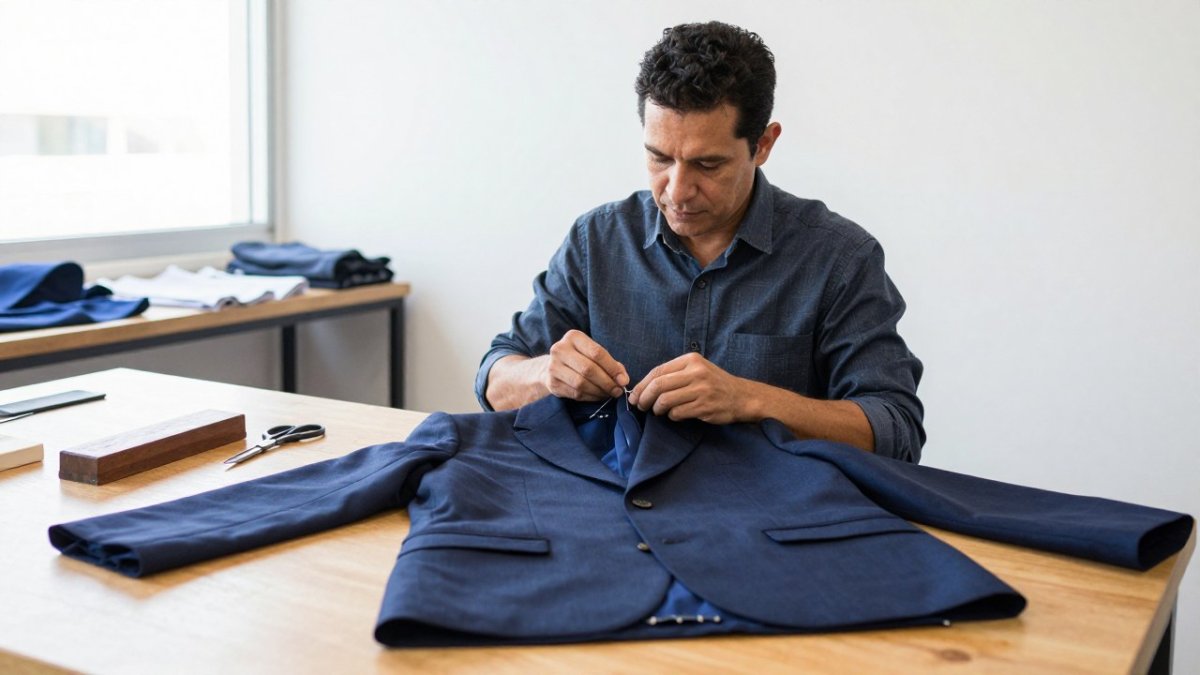
Professional pressing is usually the right call when home steaming stops working. The trick is separating a suit that is merely rumpled from one whose structure has relaxed, whose fibers have taken a set, or whose surface has been glazed by heat. Look for these warning signs before your next important meeting.

!Professional in a tailored navy suit in a bright Miami apartment hallway, close-up of jacket sleeve with visible crease
Shine Marks and Fabric Glaze
Shine marks appear when pressure and heat flatten the fabric surface over time. They show most on the seat, elbows, and jacket front.
- Shiny patches that catch light at certain angles
- Flattened texture where the fabric looks smooth or slick
- Areas that feel stiffer or harder than the rest of the suit
Shine is tough to reverse at home. A professional presser can often reduce the glaze and restore the fabric's natural finish. Wool is the most prone to glazing; linen rarely shines but creases instead, and synthetic blends can glaze quickly under a hot iron.
Stubborn Creases That Won't Release
Some creases stay put even after a steam. They often form along the sleeves, trouser legs, or the jacket's lower back when a suit has been folded or packed for a long time.
- Creases that return within hours of steaming
- Sharp fold lines across the trouser legs
- Wrinkles near the collar or lapels that won't lift
If a crease survives two or three rounds of steaming, a professional pressing will likely do a better job. A useful test: hang the suit on a shaped hanger in an airy room overnight. Wrinkles that fall out on their own were temporary; wrinkles still visible the next morning have set into the fiber.
Crushed Lapel Roll and Collapsed Chest
A jacket's lapel should roll softly from the collar down to the button stance, and the chest canvas should hold a gentle curve. When the roll flattens into a hard crease or the chest looks deflated, the garment's internal structure has been compressed, usually from being folded, packed, or sat on. Steaming alone will not rebuild that shape; a presser works the roll back over a curved form.
Trouser Creases and the Break
A sharp front crease down each trouser leg is a pressed feature, not a permanent one. When the crease wanders off-center, fades unevenly, or the fabric pools and bunches at the shoe, the trousers need pressing and possibly a hem adjustment. Check the back of the knee as well: sitting stretches that area first, and a baggy seat is an early signal.
Odor, Dampness, and Miami Humidity
Heat and humidity speed up wrinkling and trap perspiration in the lining and underarm gussets. If a suit smells faintly sour after a day indoors, pressing will not fix it, that is a cleaning issue. But if the suit is clean and still feels limp or clammy after airing, the fibers have absorbed ambient moisture and need a dry press to reset.
When to Book the Press
A common pattern is one professional press every three to five wears for a suit in regular rotation, and sooner after travel, a long event, or a rainy commute. If you spot two or more of the signs above at once, do not wait for the next wearing, book the press before the creases set further.
Watch out: pressing a suit that is soiled can bake oils into the fabric and set stains, so clean first when odor or visible grime is present.
How to Remove Wrinkles from a Suit at Home First
Try these simple steps before you book a professional. They work well for light wrinkles.
- Hang the suit in a steamy bathroom after a hot shower for 10 to 15 minutes.
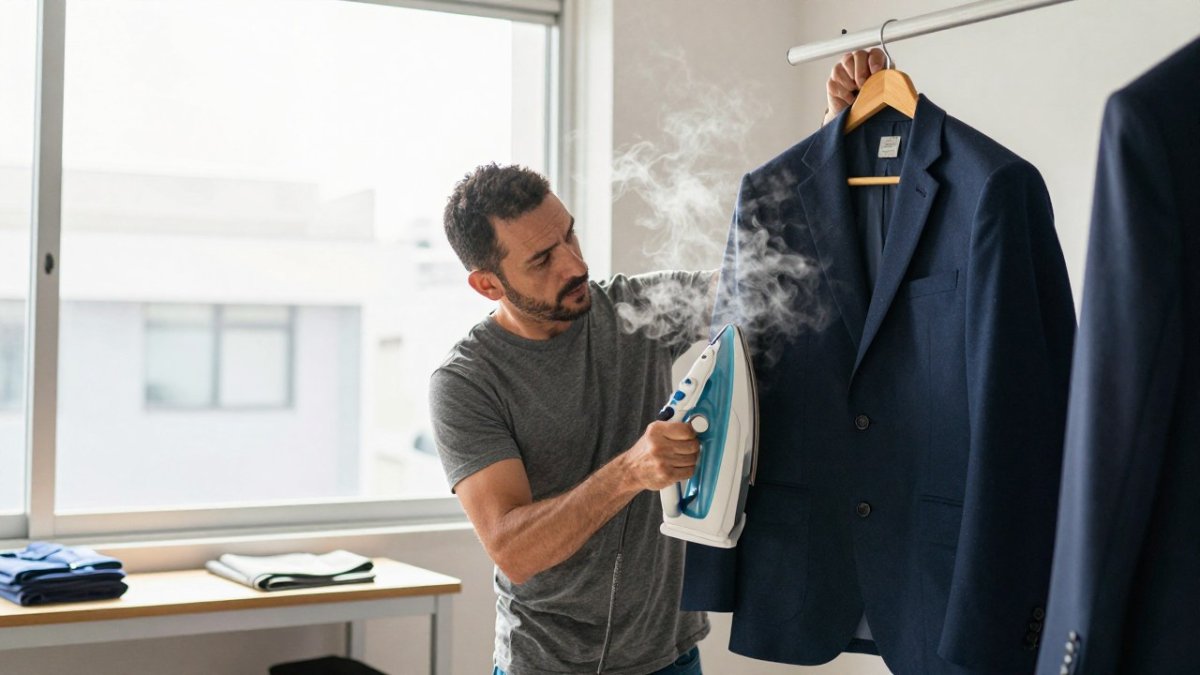
- Use a handheld steamer, holding it 1 to 2 inches from the fabric.
- Smooth the fabric with your hands while it is still warm.
- Let the suit hang and cool completely before wearing.
Avoid pressing directly with a hot iron unless the care label allows it, and always use a pressing cloth. Direct heat can cause shine marks.
Suit Pressing vs. Dry Cleaning: What Each Service Does
These two services do different jobs. Pressing focuses on shape and smoothness. Dry cleaning focuses on removing dirt, oil, and odors from the fabric.
Pressing uses steam and controlled pressure to set the suit's shape and remove wrinkles. It is the right choice when your suit is clean but looks rumpled.
Dry cleaning uses solvents to lift stains and grime. Many suits need dry cleaning every few wears or after a spill.
If your suit smells, looks dirty, or has a stain, start with dry cleaning. If it's clean but wrinkled or glazed, pressing is the better fit.
How to Tell If a Suit Needs Tailoring Instead
Sometimes a suit that looks wrinkled actually has a fit problem. Pressing cannot fix poor fit, and tailoring cannot fix a wrinkled cloth, so the first job is to diagnose which problem you actually have. Use this decision path before you drop the suit anywhere.
Step 1: Rule Out Temporary Wrinkles
Brush the suit with a garment brush, hang it on a shaped hanger, and let it air in a dry room overnight. If the wrinkles fall out, you needed airing and brushing, not pressing. If faint creases remain, move to step 2.
Step 2: Try Cautious Steaming
Hold a handheld steamer one to two inches from the fabric and work in short passes. If the suit looks crisp afterward, you are done. If creases return within a few hours, the fiber has taken a set and professional pressing is the next step.
Step 3: Check Fit Before You Press
Press the suit only after the cloth is smooth enough to judge the fit. Then check these areas:
- Shoulder seams that sit past the edge of your shoulder
- Jacket sleeves that cover your knuckles or leave too much shirt cuff showing
- Trousers that pool heavily at the shoe
- A jacket that pulls or gapes when buttoned
If any of these are present, pressing will make the suit look sharper but will not make it fit. That is a tailoring job.
Step 4: Separate Repair from Pressing
Small holes, torn seams, loose buttons, and split linings need repair, not pressing. Ask a tailor for a repair estimate before any pressing work begins, because heat and steam can enlarge an existing tear.
Pressing vs. Tailoring: What Each Can and Cannot Do
| Problem | Pressing fixes it? | Tailoring fixes it? |
|---|---|---|
| Surface wrinkles and packed-fold lines | Yes | No |
| Glazed or shiny patches | Often reduces | No |
| Crushed lapel roll | Yes, with shaping | No |
| Shoulder seam past the shoulder | No | Yes |
| Sleeves too long or short | No | Yes |
| Trouser pooling at the shoe | No | Yes, via hem |
| Jacket pulling when buttoned | No | Yes, via let-out or resize |
| Torn seam or missing button | No | Yes, via repair |
Fabric-Specific Cautions
Wool holds a press well and is the most forgiving fiber for professional shaping. Linen wrinkles by nature and will never look board-flat; pressing restores its drape but not a crisp finish. Cotton takes heat but can scorch, and synthetic blends are the most heat-sensitive, a home iron can glaze them in seconds. If you are unsure which fiber you are handling, check the care label before any heat touches the garment.
The Cost of Getting the Order Wrong
Pressing a suit that needs tailoring wastes a service and leaves you with the same fit problem. Tailoring a suit that only needed pressing adds unnecessary cost and can alter a garment that already fit. Diagnose first, then choose the remedy, and when in doubt, ask the service to inspect the suit and tell you which category it falls into.
Watch out: never press over a stain or a tear; heat sets stains and can pull a small tear into a larger one.
What to Expect from a Professional Pressing Service
Ask about turnaround time before you drop off your suit, and mention any stains or damage you've noticed.
Finding Suit Pressing Near Me in Miami
Searching for suit pressing near me in Miami? Look for a service that offers clear pricing, convenient pickup, and quick turnaround. Ask how they handle delicate fabrics.
Visit our pricing page for current rates and a quote for your suit.
Book Your Suit Pressing with LaundrPro
Tired of suits that look worn before the week is over? Keep them sharp with professional care from LaundrPro. Door-to-door pickup and delivery keeps the trip off your schedule, so your suit is ready when you need it.
Frequently Asked Questions
Does a brand new suit need to be pressed?
Many new suits arrive folded in packaging for weeks, which can leave deep creases in the fabric. A light steam or a single professional press before the first wear usually relaxes these folds and gives the jacket its intended shape. Pressing a new suit is not always mandatory, but it is often the fastest way to make a suit look finished. If the creases do not release after a gentle steam at home, a careful pressing by a professional is the safer next step to avoid scorching the wool.
Is suit pressing the same as dry cleaning?
No. Dry cleaning removes dirt, odor, and stains using solvents, while pressing reshapes the fabric and removes wrinkles using heat, steam, and pressure. A suit may need one, the other, or both depending on its condition. Many suits that look rumpled after a few wears only need pressing, which is faster and less wearing on the fabric than a full cleaning cycle. If the suit smells, shows stains, or is visibly dirty, dry cleaning comes first.
How often should you have a suit professionally pressed?
For a suit worn once or twice a week, a professional press every few wears or every month or two is a reasonable schedule, depending on how quickly it wrinkles. Between professional visits, hang the jacket on a wide wooden hanger and let it air out after each wear. Pressing too often can wear down the fabric, so schedule it when the suit shows shine marks, persistent creases, or a loss of shape rather than on a fixed calendar.
How long does professional suit pressing take?
For timing, check LaundrPro's website or request a quote directly. Pricing also depends on quantity, dates, and delivery, so visit LaundrPro's pricing page for current details before scheduling.