 How-to
How to Remove Sweat Stains From Suit Lining Safely
Table of Contents
- Why Sweat Stains Form Inside Suit Linings
- Check the Care Label and Test a Hidden Spot First
- How to Remove Sweat Stains From Suit Lining With Vinegar
- Treating Old or Set-In Perspiration Stains
- When to Stop at Home and Use a Professional Dry Cleaner
- Professional Dry Cleaning Services in Miami for Suit Linings
- Preventing Sweat Stains on Suit Jackets
- Book Your Suit Cleaning With LaundrPro
- Frequently Asked Questions
Last Updated: November 10, 2026
Why Sweat Stains Form Inside Suit Linings
Sweat stains form inside a suit lining when perspiration soaks through the fabric and leaves behind salts and acids. Those residues dry into yellow or white rings that can look worse over time. Styleforum, a long-running men's style forum, notes that perspiration acids and salts must be flushed out by a skilled technician before dry cleaning, or the damage can become permanent Styleforum discussion on perspiration stains in suit linings.
Heat and humidity can make sweat build up faster, and a suit can stay damp longer in warm conditions. Treating stains early helps prevent them from setting.
Stains are often noticed only after several wears, by which point residue may have set into the fibers.
Check the Care Label and Test a Hidden Spot First
Before you touch the stain, read the care label inside the jacket. It tells you what the fabric can handle. Look for "dry clean only" or "spot clean" instructions.
Next, test any cleaning solution on a hidden spot. The inside hem or the back of a seam works well.
- Dampen a cotton swab with your solution
- Press it lightly on the hidden area
- Wait 60 seconds, then check for color transfer or fading
- Stop if the dye bleeds or the fabric looks thin
If the test fails, skip home treatment and go straight to a professional.
How to Remove Sweat Stains From Suit Lining With Vinegar
White vinegar is a common first step in learning how to remove sweat stains from suit lining, because it helps break down the salts that cause sweat stains. Dilute it before use. A ratio of one part white vinegar to three parts cool water is a common starting point.
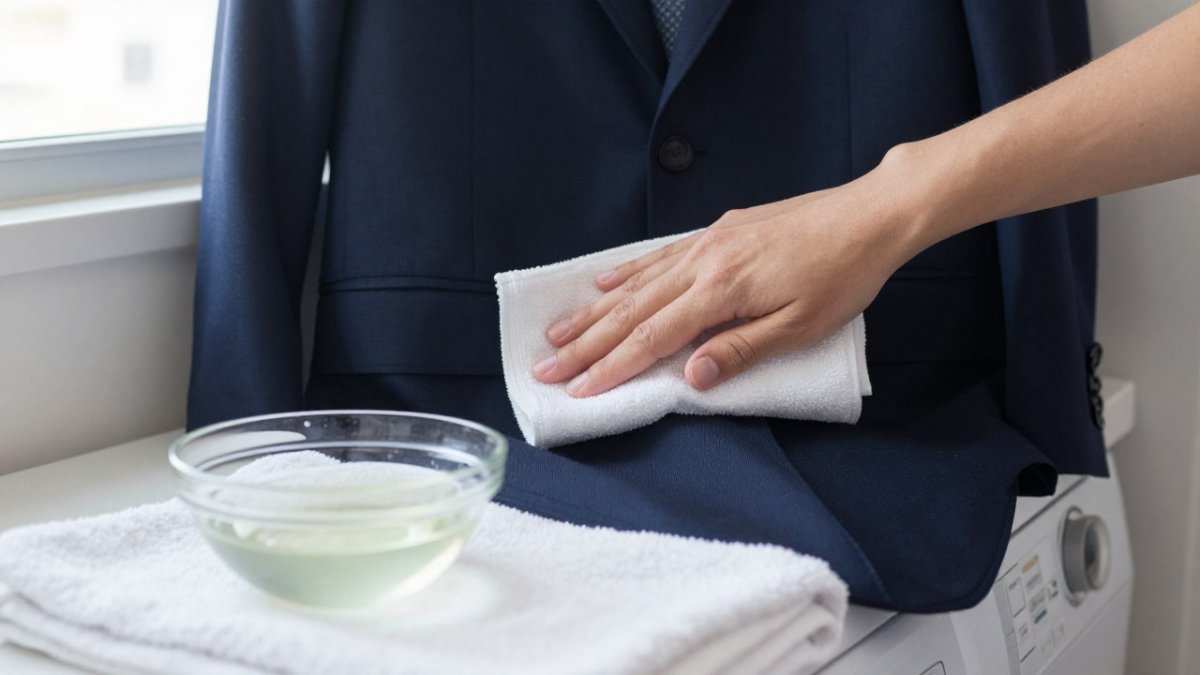
Work from the outside of the stain inward. This keeps the mark from spreading.
Blotting Fresh Stains Without Spreading Them
Fresh stains respond best to blotting. Rubbing pushes the residue deeper into the lining.
- Place a clean white cloth under the stain
- Dampen a second cloth with the diluted vinegar
- Dab the stain gently, moving from edge to center
- Switch to a clean section of cloth as it picks up residue
Let the area air dry away from direct heat. Heat can set the stain.
Removing Salt and Deodorant Residue Without Spreading the Stain
Salt and deodorant often combine with sweat to make a harder stain. Many people make the mistake of scrubbing these residues, which drives them deeper.
Use a barely damp cloth with plain water first to lift loose salt. Then apply a very small amount of the diluted vinegar solution and blot. Rinse the cloth often. Stop if the lining starts to look wet or patchy.
Treating Old or Set-In Perspiration Stains
Older perspiration stains are harder because the salts and acids have had time to oxidize and bind to the fibers. For valuable pieces, our professional garment care guide for expensive clothes explains what a specialist can do. Oxidized residue often shows up as a yellow or brownish tint along the armpit area of the lining, and it tends to look worse after each cleaning attempt that leaves moisture behind. Home treatment can still help with lighter cases, but the goal is to lift residue without pushing it deeper or changing the dye.
The lining fiber matters more than the stain age. Use these rough guidelines before you pick a method:
- Wool and wool blend linings: Mild dampening with a diluted vinegar solution is usually the safest starting point. Avoid hydrogen peroxide, because it can weaken protein fibers and lighten dye unevenly.
- Silk linings: Keep moisture to a minimum. Even diluted vinegar can leave water rings on silk, and peroxide can cause permanent yellowing. Most silk linings should go to a professional.
- Acetate and rayon linings: These fibers are sensitive to water and heat. Test every solution carefully, and avoid soaking. Peroxide is generally too strong for acetate.
- Polyester and other synthetic linings: These tolerate mild water-based treatments better than natural fibers. A diluted solution is usually acceptable after a hidden-spot test.
For a baking soda paste, mix a small amount with cool water until it forms a thick paste, dab it onto the stain with a clean cloth, and leave it for a few minutes. Then blot with a damp cloth that has only plain water. Do not let the paste dry fully on the lining, because it can leave a chalky residue that attracts more dirt.
Watch out: Do not use hydrogen peroxide on dyed or colored linings until you have tested it on a hidden seam, since peroxide can lighten color in ways that look like a new stain.
If the stain has not lightened after two gentle attempts, or if the test area shows any color transfer, stop and take the suit to a professional cleaner who can flush the lining with appropriate solvents.
The article's guidance on set-in stains depends on the lining fiber, so the table below summarises which approach suits each fabric.
| Lining fiber | Safest starting point | Avoid |
|---|---|---|
| Wool and wool blend | Mild dampening with diluted vinegar | Hydrogen peroxide |
| Silk | Minimal moisture; usually a professional | Vinegar and peroxide |
| Acetate and rayon | Careful testing; avoid soaking | Peroxide |
| Polyester and synthetics | Diluted water-based solution after a hidden-spot test | Untested solutions |
When to Stop at Home and Use a Professional Dry Cleaner
Stop home treatment if any of these apply:
- The care label says "dry clean only" and the stain is large or old
- The lining is silk, rayon, or a dyed fabric that bled during testing
- The stain has not lightened after two gentle attempts
- The suit is expensive or hard to replace
A professional cleaner can flush the lining properly and avoid the risks of DIY work. If you want help, you can find Guidance on choosing a professional garment care service that matches your needs.
For a quick local option, see our Walk-in Laundromat in Allapattah: Drop-Off, Self-Service, or Pickup? options to compare drop-off and pickup services.
Professional Dry Cleaning Services in Miami for Suit Linings
When choosing a dry cleaner, look for one that explains how it handles lining stains and asks about the fabric before cleaning. A good cleaner will test the garment and tell you what to expect.
Check current rates and service details on our Laundry Prices & Quick Facts in Miami page. You can also request garment care and dry cleaning pickup directly when you are ready.
Before you hand over a suit, ask how the lining will be treated. Our checklist for vetting a professional laundry service lists the questions to ask. Vetting a cleaner takes a few minutes, and it can save a suit you care about. Tips for judging dry cleaner quality can help you compare options.
Preventing Sweat Stains on Suit Jackets
Prevention can help protect a suit lining, and it is especially useful in hot, humid conditions where perspiration builds up quickly. Good habits can also reduce the need to learn how to remove sweat stains from suit lining later. The goal is to keep sweat away from the lining in the first place and to let the jacket dry completely between wears.
Start with a breathable undershirt, ideally cotton or a moisture-wicking blend, worn snugly under the arms. An undershirt absorbs most perspiration before it reaches the jacket. Replace undershirts regularly, because worn-out ones absorb less and transfer more salt and oil.
After each wear, hang the jacket on a wide wooden or padded hanger and leave it in a ventilated area for at least 24 hours before wearing it again. In humid climates, avoid closets with no airflow, since trapped moisture can encourage mildew along the lining. A small fan or an open closet door helps. Do not hang a damp suit in direct sunlight or next to a heater, because heat can set residue and stiffen the fabric.
For frequent wear in hot weather, rotate suits so that no single jacket is worn on consecutive days. Rotation gives each lining time to dry fully and reduces the buildup of salts and deodorant residue.
Reduce deodorant buildup by applying antiperspirant at night, when sweat glands are less active, and allowing it to dry before dressing. Wipe excess product from the underarm area before putting on the jacket. Antiperspirant residue can transfer to the lining and combine with sweat to form a harder stain.
Consider scheduling professional cleaning on a regular basis rather than only after a stain appears. Routine cleaning can remove residue before it oxidizes and sets. If your suit is worn several times a week in warm weather, discuss a cleaning schedule with your cleaner so the lining is checked before buildup becomes visible.
Book Your Suit Cleaning With LaundrPro
Stains that linger in a suit lining are easier to handle early, so if you are unsure how to remove sweat stains from suit lining on your own, a professional can help. LaundrPro offers door-to-door laundry and dry cleaning with flat-rate pricing and no subscriptions. Our fast turnaround fits busy schedules, and we handle delicate garments with careful product care.
Place your order today and get your suit back looking its best.
Frequently Asked Questions
How do you get sweat stains out of a suit coat?
Start by checking the care label, then test a hidden spot inside the jacket with a small amount of diluted white vinegar. If the lining shows no color change after a few minutes, blot the stained area gently with a damp cloth dampened with a 1:1 mix of white vinegar and water. Blot rather than rub, rinse the area with a clean damp cloth, and let the lining air dry away from direct heat. For stains that persist or any fabric that is delicate, take the jacket to a professional cleaner rather than pushing harder at home.
Can old sweat stains be removed from suit lining?
Older perspiration stains are harder to lift because the salts and acids have bonded with the fibers, but many can be improved. Repeated light blotting with diluted white vinegar, followed by a rinse and air drying, can lighten them over several attempts. Avoid soaking the lining or scrubbing, since both can spread the stain or weaken the fabric. If discoloration remains after two or three careful attempts, a professional dry cleaner who handles suit linings is the safer choice.
Is it safe to use vinegar on suit lining?
Diluted white vinegar is a common first step for perspiration stains because it helps break down the salts left by sweat. It is still safe only after a test on a hidden seam inside the jacket, since some dyes and fabric blends can change color. Use a light touch, rinse afterward with a clean damp cloth, and avoid heat from hair dryers or irons until the lining is fully dry. Never use vinegar on a suit with a care label that calls for dry cleaning only without testing first.
When should you take your suit to a professional dry cleaner in Miami?
Take the suit to a professional when the lining is heavily soiled, the stain is older than a few weeks, the fabric is silk or delicate wool, or the care label says dry clean only and the stain does not respond to a hidden-spot test. Miami's heat and humidity speed up perspiration build-up, so suits worn often in summer benefit from regular professional cleaning. Pricing depends on garment type and service level, so request a current quote from LaundrPro before dropping off.