 how-to guide
How to Wash Bedding at Home: Complete Step-by-Step Guide
Table of Contents
- How to Wash Bedding at Home: The Complete Process
- What You'll Need Before Starting
- Reading the Care Label and Sorting Your Bedding
- How to Wash Sheets Without Damage
- How to Wash a Duvet Cover and Comforters
- How to Wash Pillows for Hygiene and Longevity
- Washing Machine Settings for Bedding Success
- Choosing the Right Detergent and Additives
- Drying Your Bedding: Air Dry vs. Tumble Dry
- Frequently Asked Questions
Last Updated: July 24, 2026
How to Wash Bedding at Home: The Complete Process
Proper bedding care extends sheet life, prevents shrinkage and fading, and maintains hygiene standards. Most people toss everything into the machine at the same temperature with whatever detergent is handy, but different fabrics require different treatment. Cotton sheets need different handling than linen or polyester blends. Pre-treating stains prevents permanent damage. Water temperature, cycle selection, and load size all matter significantly.
Below, we'll show you exactly how to wash bedding using a systematic approach that protects your investment while delivering spotless results.
What You'll Need Before Starting
Gather these essentials before your first load:
- Laundry detergent (choose based on fabric type)
- Stain remover or pre-treatment spray
- Fabric softener (optional, for cotton sheets)
- Washing machine with adjustable settings
- Dryer or clothesline for air drying
- Mesh laundry bag (for delicate items)
- Hamper or basket for sorting
- Iron or steamer (optional, for finishing)
Ensure your washing machine is clean before washing bedding. Run a quick empty cycle with hot water and a cup of white vinegar monthly to prevent mildew and odors that transfer to sheets.
Reading the Care Label and Sorting Your Bedding
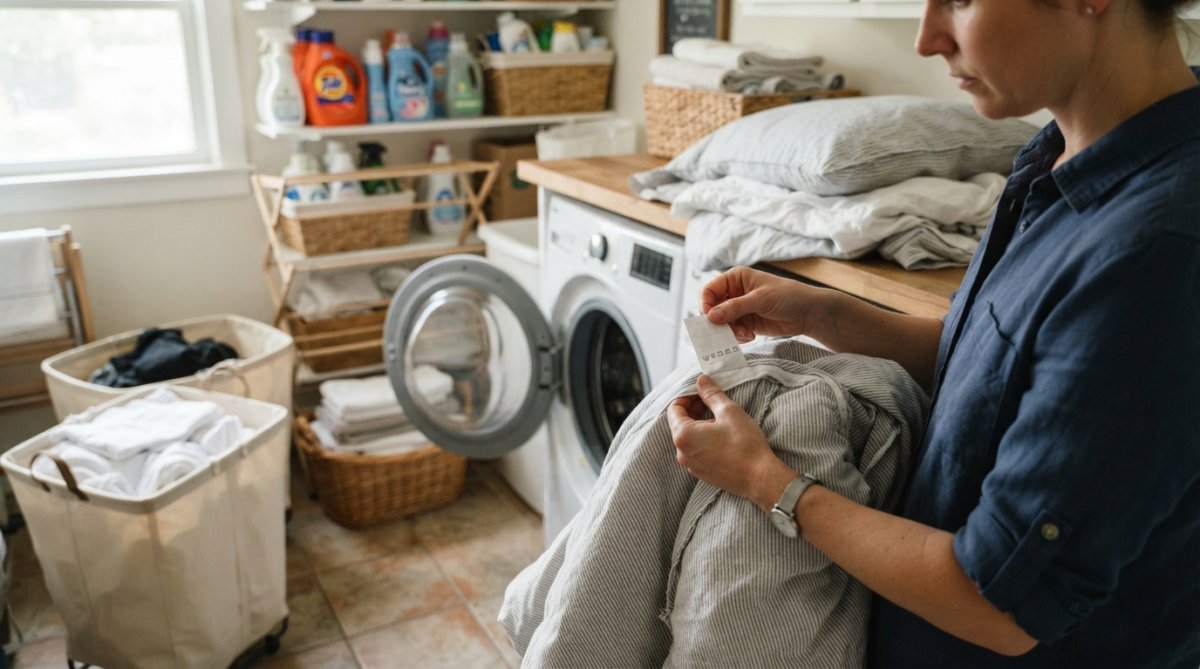
Understanding fabric care labels prevents costly mistakes. Every piece of bedding carries specific washing instructions that manufacturers tested extensively.
Decoding Care Label Symbols:
A tub with a number inside indicates maximum water temperature in Celsius. A single line under the tub means gentle cycle; two lines mean extra gentle. An X through the tub means do not wash, dry clean only. These are engineering specifications, not suggestions.
Sorting Your Bedding:
Separate bedding into these categories before washing:
- Whites: Pure white sheets, pillowcases, and white comforters
- Lights: Cream, light gray, pale yellow, light pink
- Darks: Navy, black, dark gray, burgundy
- Delicates: Silk pillowcases, specialty fabrics, embroidered items
Wash whites separately from colors. New colored sheets release dye in the first 3-5 washes. Check pockets for tissues, coins, or other items that damage machines and bedding.
Understanding Fabric Types: Cotton, Linen, and Polyester Blends
Cotton Sheets perform well in hot or warm water, which sanitizes effectively and dissolves detergent better. Cotton shrinks slightly (3-5%) in the first wash, which manufacturers account for in sizing.
Linen Bedding demands care despite its durability. Use cold or lukewarm water and gentle cycles to minimize fiber stress. Linen becomes softer with repeated washing if treated properly.
Polyester Blends resist shrinkage and wrinkles, making them practical for busy households. Warm water works well. Avoid high dryer heat, which causes melting and permanent damage.
How to Wash Sheets Without Damage
Water temperature, detergent amount, and cycle selection determine washing success. Follow the care label first. If it specifies a temperature, use that. If it offers a range, choose the cooler option to extend sheet life.
Load size affects wash quality significantly. Overloading prevents detergent from reaching all fibers and causes excessive tangling. Fill the machine about three-quarters full. A typical load includes 2-3 sheet sets plus pillowcases.
Cycle Selection Matters:
Standard or normal cycle works for most cotton and polyester-blend sheets. Delicate or gentle cycles suit linen and specialty fabrics, reducing agitation intensity and spin speed. Never use heavy-duty cycles for bedding.
Add detergent according to package directions. Too much leaves residue that makes sheets feel stiff and reduces absorbency. Too little fails to remove soil effectively. Liquid detergent dissolves quickly in cold water. Powder detergent requires warmer water for complete dissolution.
Pre-treating Stains and Heavy Soil
Stains set permanently if you dry sheets before treating them. Address stains immediately after use.
Common Bedding Stains and Treatment:
Blood stains respond best to cold water. Hot water sets protein-based stains permanently. Rinse with cold water immediately, then apply a stain remover and let sit for 15-30 minutes before washing.
Sweat and body oils accumulate gradually. Pre-treat these areas with liquid laundry detergent applied directly to the fabric. Rub gently and let sit for 10 minutes before washing.
Wine, juice, and food stains require immediate attention. Blot excess liquid with a clean cloth. Mix one tablespoon of liquid detergent with two cups of warm water. Apply to the stain and let sit for 15 minutes. Rinse thoroughly with cold water before washing.
For heavy soil, soak sheets in cool water with detergent for 30 minutes before the regular wash cycle. Never put stained sheets in the dryer, heat sets most stains permanently.
How to Wash a Duvet Cover and Comforters
Duvet covers protect the actual duvet or comforter, making them easier to wash. Most are cotton or cotton-blend and follow standard sheet-washing protocols. Wash duvet covers inside-out to protect the exterior from abrasion and fading. Close all zippers and buttons before washing.
For the actual comforter or duvet inside, consult the manufacturer's care instructions carefully. Many down-filled comforters require gentle cycles and specific water temperatures.
Washing Synthetic-Filled Comforters:
Synthetic fills handle standard washing well. Use warm water and a gentle cycle. Add an extra rinse cycle to remove all detergent.
Washing Down-Filled Comforters:
Down requires special care because the filling clumps if not dried properly. Use cool or lukewarm water only. Select a delicate or gentle cycle. Use minimal detergent and add an extra rinse cycle. Dry on low heat with wool dryer balls or clean tennis balls, removing the comforter every 15 minutes and shaking vigorously to redistribute the filling. This process takes 45-60 minutes but prevents permanent damage.
Preventing Tangling and Shedding
Prevent tangling by washing sheets in mesh laundry bags. These allow water and detergent to reach sheets while preventing them from wrapping around agitators or other items.
For new bedding that sheds excessively, wash separately for the first 3-4 washes. Never use fabric softener on new bedding, which coats fibers and can trap loose fibers against the fabric, making shedding worse.
How to Wash Pillows for Hygiene and Longevity
Pillows accumulate dead skin cells, dust mites, and body oils. Regular washing removes these contaminants and extends pillow life. Check the care label first, as some pillows specify dry cleaning only.
Most standard pillows are machine-washable. Wash two pillows together to balance the machine load. Use warm water and a gentle cycle. Add an extra rinse cycle to ensure all detergent is removed. Wash pillows every 3-6 months depending on use.
Down vs. Synthetic Fill: Different Approaches
Down Pillows:
Down clusters are delicate and break apart under excessive agitation. Wash on a delicate cycle with cool or lukewarm water. Use minimal detergent and add two rinse cycles. Dry on low heat with wool dryer balls, removing the pillow every 15 minutes to shake and redistribute filling. This takes 60-90 minutes but is essential for longevity. Down pillows last 10-15 years with proper care.
Synthetic Pillows:
Synthetic fills tolerate standard washing and drying. Warm water and normal cycle work well. Standard dryer heat is acceptable. Synthetic pillows dry faster, typically 30-45 minutes on medium heat. They last 3-5 years before the filling compresses and loses support.
Washing Machine Settings for Bedding Success
Water temperature, load size, and cycle type form the foundation of successful bedding washing.
Temperature Guidance:
Hot water (130°F or higher) cleans effectively and sanitizes but damages delicate fabrics and causes shrinkage. Use for white cotton sheets and heavily soiled bedding. Warm water (90-110°F) represents the safest choice for most household bedding. Cold water (below 70°F) preserves colors and prevents shrinkage but cleans less effectively. Reserve for delicate fabrics, new colored sheets, and lightly soiled items.
Cycle Selection:
Normal or standard cycle provides adequate agitation for most cotton and polyester-blend sheets. Delicate or gentle cycles reduce agitation, suitable for linen and specialty fabrics. Quick wash cycles skip important steps and don't fully clean heavily soiled bedding.
Load Size Considerations:
Overloading prevents proper cleaning and causes excessive tangling. Fill the machine about 75% full. A typical load includes 2-3 complete sheet sets plus pillowcases. Don't wash bedding with towels, which shed lint and require different cycle settings.
Water Temperature, Load Size, and Cycle Selection
Temperature affects how effectively detergent dissolves and works. Powder detergent requires warmer water for complete dissolution. Liquid detergent works in cold water. Enzyme-based detergents work better in warm or hot water.
Load size determines how much agitation each item receives. Smaller loads allow more movement and thorough cleaning. Find the middle ground for most household bedding: warm water, standard cycle, appropriately sized load. This combination cleans effectively while preserving fabric integrity.
Choosing the Right Detergent and Additives
Standard laundry detergents contain surfactants that lift soil from fibers. Enzyme-based detergents break down protein-based stains more effectively. The amount of detergent matters more than most people realize. High-efficiency (HE) machines require less detergent than standard machines. Follow the package directions as a starting point, then adjust based on results.
Liquid detergent dissolves quickly in cold water and works well for pre-treating stains. Powder detergent costs less but requires warmer water. Detergent pods offer convenience but cost more per load.
When to Use Fabric Softener, Bleach, and Eco-Friendly Alternatives
Fabric softener coats fibers with a waxy substance that reduces absorbency over time. Most people don't need it. If you want softer sheets, use wool dryer balls instead.
Bleach kills bacteria and removes stains effectively but damages colored fabrics and weakens fibers over time. Use only on white cotton sheets if the care label permits. Oxygen-based bleach works on colored fabrics without the damage of chlorine bleach.
Eco-friendly detergents use plant-based surfactants instead of petroleum-based ones. White vinegar (one cup per load) acts as a natural fabric softener and odor remover. Baking soda (one-half cup per load) boosts detergent effectiveness and neutralizes odors.
Drying Your Bedding: Air Dry vs. Tumble Dry
Drying method significantly affects sheet longevity and final feel. Machine drying on high heat damages most bedding. Use medium or low heat instead. Remove sheets while slightly damp to prevent wrinkles and over-drying.
Air drying preserves fabric condition beautifully. Sheets dried on a clothesline in sunlight benefit from natural bleaching and odor removal. Sunlight acts as a natural disinfectant, killing bacteria and dust mites.
Match the drying method to the fabric type. Delicate fabrics benefit from air drying. Cotton sheets tolerate machine drying on medium heat. Linen improves with air drying but can handle low-heat machine drying.
Wool dryer balls improve machine-dried sheets by physically softening fibers and reducing static. Add 3-5 dryer balls to the machine with damp sheets. Remove sheets while slightly damp and fold or hang them immediately to prevent wrinkles.
| Drying Method | Best For | Time Required | Energy Use | Fabric Condition |
|---|---|---|---|---|
| Air dry (clothesline) | Delicate fabrics, linen, all cotton | 2-4 hours | None | Excellent |
| Low heat machine dry | Cotton, polyester blends | 30-45 minutes | Minimal | Good |
| Medium heat machine dry | Sturdy fabrics only | 45-60 minutes | Moderate | Fair |
| High heat machine dry | Work clothes only | 30-45 minutes | High | Poor |
Proper bedding care doesn't require special skills or expensive products. The fundamentals, reading care labels, sorting appropriately, using correct water temperature, and selecting suitable cycles, transform bedding longevity and comfort. For households seeking professional care without the hassle, LaundrPro offers door-to-door laundry service with flat-rate pricing and no hidden fees. Their team specializes in premium product care for delicate fabrics, ensuring spotless results with fast turnaround times. Get started with LaundrPro today and reclaim the hours you spend on laundry each week.
Frequently Asked Questions
How often should you wash bedding?
Most experts recommend washing bedding every 7-10 days for optimal hygiene and to reduce dust mites and allergens. However, frequency depends on personal preference, climate, and health factors. If you have allergic reactions or respiratory sensitivities, washing weekly may be beneficial. During hot, humid months, you may want to wash more frequently due to increased perspiration and moisture.
What water temperature should I use when washing bedding?
Water temperature depends on fabric type and soil level. Cold water works well for most bedding and is energy-efficient. Warm water is better for heavily soiled sheets and helps remove dust mites. Hot water can damage delicate fabrics and cause shrinkage in cotton and linen. Always check the care label first, most modern bedding performs well in cold or warm water with appropriate detergent.
Can you wash all bedding together in one load?
You can wash sheets, pillowcases, and duvet covers together if they're similar colors and fabrics. However, avoid mixing heavily soiled items with delicate pieces. Separate whites from colors to prevent dye transfer. If washing down pillows or comforters, wash them separately or in smaller loads to prevent tangling and ensure thorough cleaning. Check care labels for any conflicting temperature or cycle requirements.
How do I prevent bedding from shrinking and fraying?
To avoid shrinkage and fraying, always read the care label and follow recommended water temperature and cycle settings. Use a delicate or gentle cycle for delicate fabrics like linen and silk. Avoid hot water and high heat in the dryer. Tumble dry on low heat or air dry whenever possible. Washing in cold water with a gentle detergent and using lower spin speeds reduces stress on fibers and minimizes fraying.
Sources Referenced:
[EXTERNAL_LINK: American Cleaning Institute fabric care guidance | cleaninginstitute.org]
[EXTERNAL_LINK: The Spruce laundry and bedding care guide | thespruce.com]
[EXTERNAL_LINK: Consumer Reports washing machine and laundry recommendations | consumerreports.org]
This article was written using GrandRanker