 how-to guide
How to Organize Laundry Room: 7 Practical Steps
Table of Contents
- How to Organize Laundry Room: Start With Decluttering
- Create a Laundry Sorting System With Bins and Hampers
- Small Laundry Room Organization: Maximize Vertical and Wall Space
- Laundry Room Storage Ideas: Shelves, Cabinets, and Containers
- Set Up a Functional Folding Station and Countertop
- Store Detergents, Cleaning Supplies, and Stain Removers Safely
- Laundry Room Hacks for Efficiency and Accessibility
- Common Mistakes to Avoid When Organizing Your Laundry Room
- Frequently Asked Questions
Last Updated: July 28, 2026
How to organize laundry room spaces efficiently transforms one of the most chaotic areas of the home into a functional zone. At LaundrPro, we understand that busy families and professionals need systems that actually work. The difference between a laundry room that serves you and one that stresses you out comes down to five core decisions: what stays, how you sort, where things go, what gets accessible, and what gets hidden.
How to Organize Laundry Room: Start With Decluttering
Decluttering your laundry room is the foundation everything else sits on. Before you buy a single shelf or bin, you need to know what you're actually keeping.
Pull everything out. Create three piles: keep, donate, and trash. Be honest about what you actually use. That specialty fabric spray you bought three years ago? If you haven't used it in six months, it's taking up real estate. Most households need one detergent, one stain remover, and one fabric softener alternative. Everything else is redundancy. Expired products should go immediately.
The appliances themselves should have clear space around them for loading and maintenance. A truly organized laundry room has breathing room. Once you've decluttered ruthlessly, you'll be surprised how much space actually exists.
Create a Laundry Sorting System With Bins and Hampers
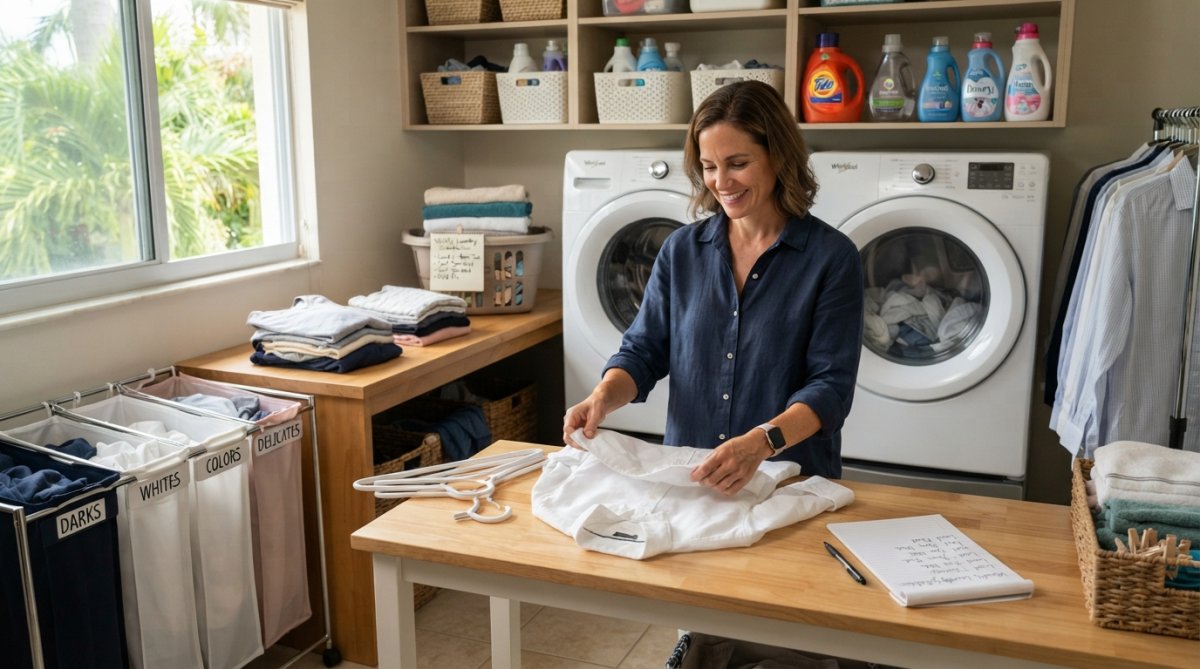
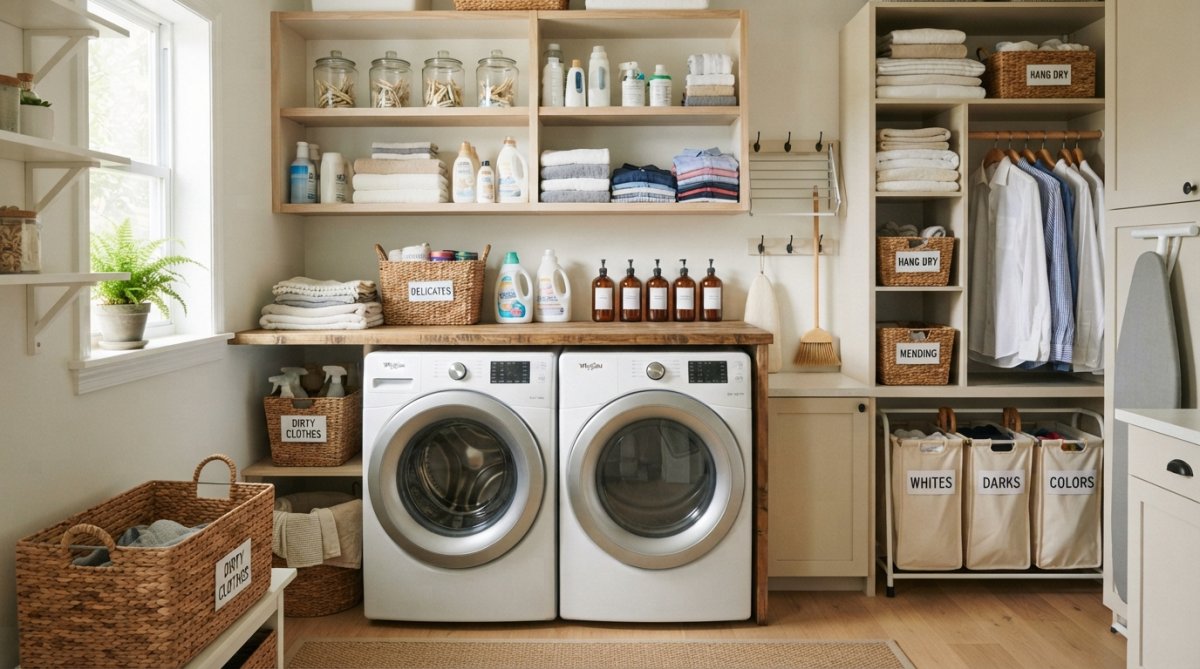
A sorting system prevents laundry from becoming a chaotic pile. Most families benefit from a three-bin sorting system: lights, darks, and delicates. This matches how you actually wash clothes and prevents color-bleeding disasters. Use clear plastic bins or labeled fabric hampers so anyone can see what goes where without asking.
For households with kids, this system prevents the "Mom, where are my soccer socks?" problem. When everyone sorts properly, you know exactly where to find specific items. Wire rolling hampers work well if you have floor space. Fabric hamper bags work better if you're tight on room, they hang on hooks and collapse when not in use.
Color-coding helps households with multiple people. Use red bins for Person A, blue for Person B. This prevents the "Is this my shirt?" debate and makes it easy to return clean laundry to the right person's room.
| Sorting Method | Best For | Setup Time | Space Needed |
|---|---|---|---|
| Three-bin system | Standard households | 10 minutes | 2-3 square feet |
| Four-bin (with towels) | Families with linens | 15 minutes | 3-4 square feet |
| Rolling hamper carts | Frequent laundry users | 5 minutes | 2 square feet |
| Wall-mounted hamper bags | Compact rooms | 20 minutes | 1 square foot |
Small Laundry Room Organization: Maximize Vertical and Wall Space
When square footage is limited, vertical space becomes your best friend. Install floating shelves directly above your washer and dryer. A single shelf 12 inches deep and 3 feet wide costs under $50 and transforms storage capacity. Mount it 12-18 inches above the machines so you can still open the lids fully.
Pegboards work exceptionally well for laundry rooms. They hold drying racks, hanging supplies, lint rollers, and spray bottles without taking up floor space. Paint the pegboard to match your room or leave it natural for an industrial look.
Over-the-door organizers hang on the back of your laundry room door and hold small bottles, clothespins, and supplies. A single over-the-door organizer adds 15-20 pockets of storage with zero floor impact.
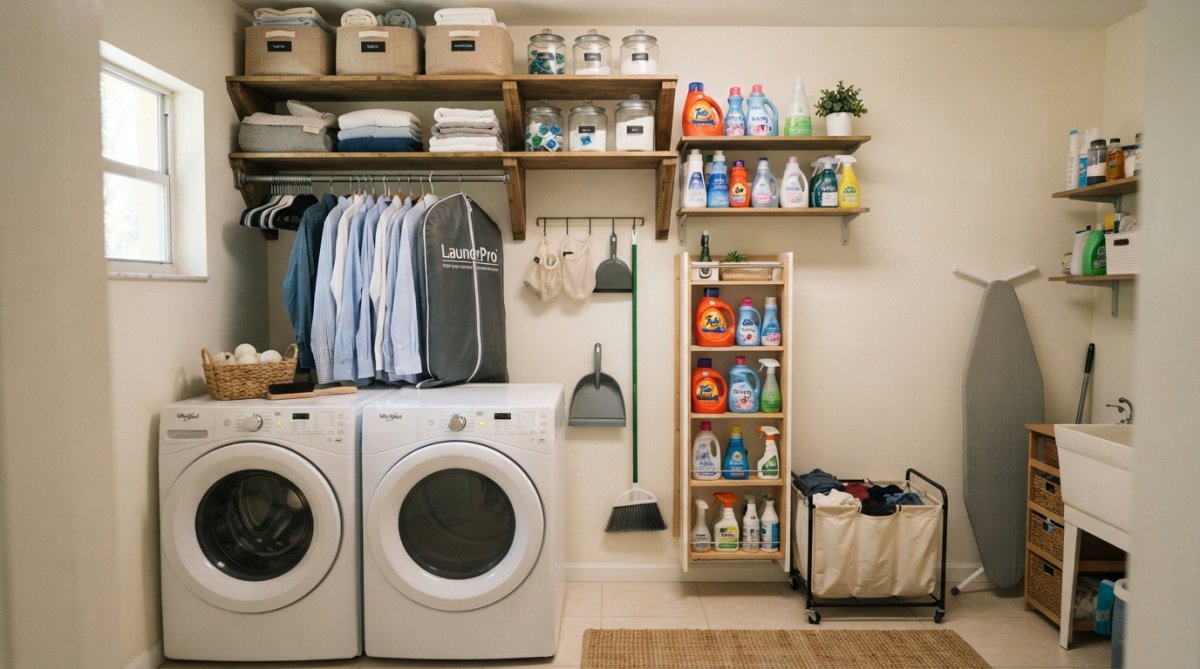
Tension rods installed horizontally between wall studs create hanging space for air-drying delicates. One tension rod costs five dollars and creates a drying station that doesn't require a separate rack.
Corner space often goes unused. A tall, narrow corner shelf (12 inches wide, 72 inches tall) fits in the corner and holds six to eight shelves of supplies without blocking movement.
Laundry Room Storage Ideas: Shelves, Cabinets, and Containers
Wire shelving units cost $60-150 for a four-shelf unit and hold significant weight. Place one along an empty wall and you've added 12+ square feet of storage. Wooden shelves look better and cost more ($150-400 for a built-in unit), useful if your laundry room is visible from other parts of your home.
Stackable plastic storage bins organize supplies on shelves. Clear bins let you see what's inside without opening them. Label each bin so you know at a glance where everything lives.
Using Laundry Room Cabinets for Hidden Storage
Cabinets hide clutter and create a polished look. Wall-mounted cabinets (24-36 inches wide) store supplies out of sight while keeping them accessible. Base cabinets (floor-level) hold larger items and create a work surface on top that doubles as a folding station.
Use shelf dividers inside cabinets to create zones: one section for detergents, one for stain removers, one for dryer supplies. Magnetic strips mounted inside cabinet doors hold metal spray bottles and scissors, freeing up shelf space.
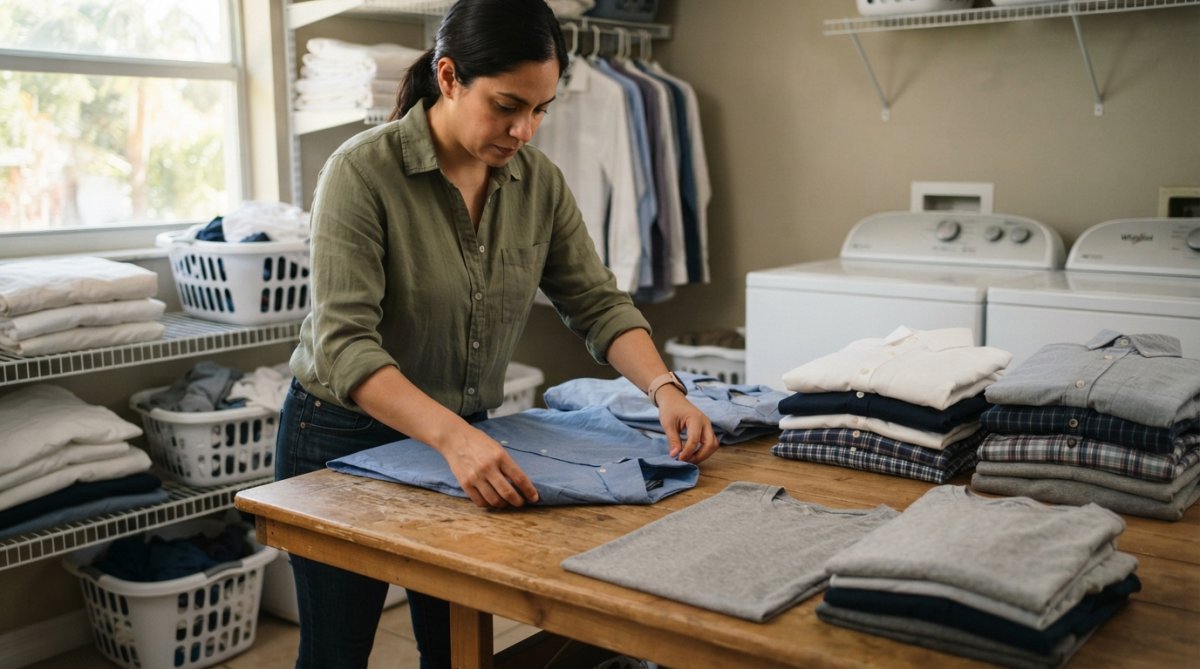
Set Up a Functional Folding Station and Countertop
A dedicated folding station prevents clean laundry from becoming a chair in your bedroom. A simple folding table (24 x 48 inches) costs $40-80 and provides enough space to fold a full load. Position it perpendicular to your washer and dryer so you can move clothes directly from the dryer to the table without carrying them.
If you don't have floor space for a table, install a wall-mounted fold-down countertop. These hinge down when you need them and fold up against the wall when you don't. A 24-inch wide fold-down desk costs $100-200.
Shelving above your folding station holds folded items waiting to be distributed to bedrooms. Good lighting transforms the folding experience. A bright overhead light or LED strip above your folding station makes it easier to see stains and fold neatly.
Store Detergents, Cleaning Supplies, and Stain Removers Safely
Storage location matters for both safety and accessibility. A wall-mounted cabinet with a lock is ideal if you have young children or pets. Detergents, stain removers, and bleach should never be stored at kid-height or pet-height.
If you don't have a lockable cabinet, use a high shelf (at least 48 inches off the ground) that requires a step stool to access. Spray bottles should be stored upright to prevent leaks. Group similar products together: all stain removers in one spot, all fabric softeners in another, all bleach products in a third spot.
Liquid detergent bottles are heavy. Use a lower shelf that can handle weight, and store them where you can grab them without reaching overhead. Keep a small trash bin near your supply storage for empty bottles and packaging.
Laundry Room Hacks for Efficiency and Accessibility
Small changes create big efficiency gains. Install a utility sink if you don't have one. A wall-mounted or pedestal sink costs $150-400 and lets you pre-soak stained items or rinse delicates by hand without using your kitchen sink.
A pull-out hamper cart slides between your washer and dryer and holds clean laundry waiting to be folded. You load it directly from the dryer, roll it to your folding station, and unload everything in one place.
Hang a whiteboard or chalkboard on the wall to track laundry tasks or note items that need repair. A tension rod hung horizontally between wall studs creates a hanging space for air-drying clothes. Hooks on the wall hold hangers so you can hang items straight from the dryer without creating a separate pile.
Budget-Friendly Organization Solutions
You don't need to spend hundreds to organize your laundry room. Clear plastic storage bins cost $5-15 each and hold supplies effectively. Buy a set of matching bins and you've created visual organization for under $50.
Tension rods cost $5-10 each and create hanging space for air-drying. Pegboards cost $15-30 and hold dozens of items. Over-the-door organizers cost $10-20 and add 15+ pockets of storage to a single door. Wire shelving units cost $60-150 and provide more storage than cabinets that cost triple the price. Thrift stores often have small tables, shelves, and storage items for $5-25 each.
Organization for Different Laundry Types
Different items require different storage and handling. Creating zones for different laundry types prevents confusion and extends garment life.
Delicates and Hand-Wash Items: Store these in a separate bin from everyday clothes. A small basket or bin labeled "Delicates" keeps them separate through the entire process. Hang-dry items should have their own designated space so they don't get thrown in the dryer by mistake.
Activewear: Moisture-wicking athletic clothes need special care. Store them separately so you remember to use the appropriate detergent and temperature.
Baby Clothes: If you have an infant, store baby items separately from the rest of your laundry. This prevents cross-contamination and makes it easy to wash baby items on a gentle cycle.
Towels and Bedding: These items wash on different cycles than regular clothes (usually hotter and heavier). A separate bin prevents them from getting mixed with delicates or everyday wear.
Work Clothes: If you have uniforms or work-specific clothing that requires special treatment, a separate bin keeps them organized.
Common Mistakes to Avoid When Organizing Your Laundry Room
Buying storage before decluttering: This is the biggest mistake. People buy cabinets, shelves, and bins to organize clutter instead of removing it first. Declutter first, then buy storage that fits what actually remains.
Choosing aesthetic over function: A beautiful laundry room that doesn't work is worse than a functional one that looks basic. Prioritize function. Beauty follows.
Making sorting too complicated: A system with seven categories sounds thorough but fails because nobody follows it. Stick with three to four sorting categories maximum.
Storing supplies in hard-to-reach places: If your detergent is in a high cabinet that requires a step stool, you'll avoid using the right product. Store frequently used items at arm's height.
Forgetting about accessibility: Ensure your washer and dryer aren't too high or too low, and keep supplies within comfortable reaching distance.
Ignoring workflow: Your laundry room layout should match how you actually do laundry. If you sort clothes in your bedroom, your sorting bins should be there, not in the laundry room.
Overstocking supplies: Buying detergent in bulk sounds economical but creates clutter if you don't have storage space. Buy only what you can store comfortably.
Neglecting lighting: A dark laundry room is depressing and makes the work harder. Invest in good lighting.
A well-organized laundry room requires honest assessment of what you actually use, a sorting system that matches your household, and storage that's both functional and accessible. LaundrPro understands that some people prefer to outsource laundry entirely, which is why we offer door-to-door pickup and delivery with flat-rate pricing, no subscriptions, and no hidden fees. Whether you organize at home or delegate to professionals, the goal is the same: reclaim time and reduce stress. Place Your Order with LaundrPro and let us handle the laundry while you focus on what matters.
Frequently Asked Questions
What is the best way to organize a small laundry room?
Focus on vertical space by installing wall-mounted shelves, hanging rods, and over-the-door organizers. Use stackable bins and baskets to maximize storage without taking up floor space. Keep your washer and dryer accessible, and create a compact folding station using a pull-out counter or wall-mounted shelf. Label everything clearly and store frequently used items like detergent and dryer sheets at eye level for easy access.
How do I organize laundry cabinets for maximum efficiency?
Group similar items together in your laundry room cabinets: detergents and fabric softeners on one shelf, stain removers and cleaning supplies on another, and linens or folded items on lower shelves. Use clear containers or baskets to prevent items from shifting, and install pull-out drawers or shelves for easier access to back items. Label each section clearly so family members know where everything belongs and can maintain the system.
What laundry room hacks save the most time and space?
Install a hanging rod above your washer and dryer for air-drying delicates and activewear immediately after washing. Use drawer dividers or small bins to prevent lost socks and small items from disappearing. Mount a wall-mounted drying rack that folds down when not in use. Create a pre-sort system with labeled hampers for different laundry types so washing day requires fewer decisions. These hacks reduce clutter and streamline your entire laundry routine.
How should I store detergents and cleaning supplies safely?
Keep all detergents, stain removers, and cleaning supplies in a locked cabinet or high shelf away from children and pets. Use clear, labeled containers to identify each product quickly. Store liquid detergent in a dedicated dispenser or shelf with a drip tray underneath to prevent spills. Keep dryer sheets in a small basket or container on a middle shelf for easy access. Ensure your utility sink area stays clear and organized for treating stains before washing.
EXTERNAL SOURCES CITED:
[EXTERNAL_LINK: Organization and Storage Solutions for Home Spaces | container-store.com]
[EXTERNAL_LINK: Laundry Room Design and Efficiency Guidelines | thespruce.com]
[EXTERNAL_LINK: Household Organization Best Practices | apartmenttherapy.com]
This article was written using GrandRanker