 listicle
Best Laundry Detergents for Sensitive Skin: 10 Top Picks
Table of Contents
- Best Laundry Detergents for Sensitive Skin: Quick Comparison
- What Makes a Detergent 'Sensitive Skin' Friendly?
- Laundry Detergent Ingredients to Avoid
- Top 10 Best Laundry Detergents for Sensitive Skin Reviews
- 1. All Free Clear: The Dermatologist-Recommended Standard
- 2. Tide Free & Gentle: Powerful Cleaning Without Irritation
- 3. Seventh Generation Free & Clear: Eco-Conscious Choice
- 4. Molly's Suds Original: Ultra-Minimalist Formula
- 5. Dropps Sensitive Skin & Baby Pods: Convenience Meets Sustainability
- 6. Puracy Natural: Doctor-Developed Enzyme Power
- 7. Dirty Labs Free & Clear: Advanced Eczema-Safe Technology
- 8. Biokleen Free & Clear: High-Value Concentrated Formula
- 9. Arm & Hammer Sensitive Skin: Budget-Friendly Reliability
- 10. LaundrPro Professional Service: Expert Care for Delicate Items
- How to Wash Clothes for Sensitive Skin: Best Practices
- Is Fragrance-Free Detergent Better for Sensitive Skin?
- Troubleshooting Laundry Residue and Skin Irritation
- Environmental Impact of Free & Clear Formulas
- Frequently Asked Questions
Best Laundry Detergents for Sensitive Skin: 10 Top Picks
Last Updated: July 15, 2026
Finding the best laundry detergents for sensitive skin requires understanding what triggers irritation and which formulas deliver clean clothes without the itch. Many assume all "free and clear" detergents are equal, they're not. The difference between mediocre and excellent often comes down to surfactant chemistry and what's deliberately left out of the formula.
This guide covers the top 10 best laundry detergents for sensitive skin, explains what makes a detergent safe for reactive skin, and identifies ingredients to avoid. Whether you're dealing with eczema, contact dermatitis, or general sensitivity, you'll find a product that works without compromise.
Best Laundry Detergents for Sensitive Skin: Quick Comparison
| Product | Type | Key Feature | Best For |
|---|---|---|---|
| All Free Clear | Liquid | Dermatologist-recommended, EPA Safer Choice certified | Severe sensitivities |
| Tide Free & Gentle | Liquid | Powerful stain removal, hypoallergenic formula | Families needing performance |
| Seventh Generation Free & Clear | Liquid | Plant-based, biodegradable, eco-conscious | Environmentally aware households |
| Molly's Suds Original | Powder | Ultra-minimalist (5 ingredients), septic-safe | Extreme chemical sensitivities |
| Dropps Sensitive Skin & Baby | Pods | Plastic-free packaging, pre-measured convenience | Busy households |
| Puracy Natural | Liquid | Doctor-developed, enzyme-powered | Organic stain fighters |
| Dirty Labs Free & Clear | Liquid | Eczema Association recognized, advanced enzymes | Eczema-prone skin |
| Biokleen Free & Clear | Liquid | Highly concentrated, excellent value | Large families |
| Arm & Hammer Sensitive Skin | Liquid | Budget-friendly, dermatologist-tested | Cost-conscious shoppers |
| LaundrPro Professional Service | Service | Expert care for delicate items, flat-rate pricing | Premium garment care |
What Makes a Detergent 'Sensitive Skin' Friendly?
A detergent formulated for sensitive skin cleans clothes without triggering allergic reactions or contact dermatitis. Hypoallergenic detergents remove common irritants, synthetic fragrances, dyes, and optical brighteners, while maintaining cleaning power through carefully selected surfactants.
Surfactants are the workhorses of detergent. They break down oils and allow water to lift dirt from fabric. Plant-based surfactants rinse out more completely than petroleum-derived alternatives, leaving less residue on clothing. This residue is often the culprit behind post-wash irritation.
pH balance also matters. Skin-friendly detergents maintain neutral pH, reducing disruption to your skin's protective barrier. The absence of harsh enzymes and preservatives helps, though many sensitive-skin formulas include enzymes because they're highly effective at removing organic stains without harming skin.
Laundry Detergent Ingredients to Avoid
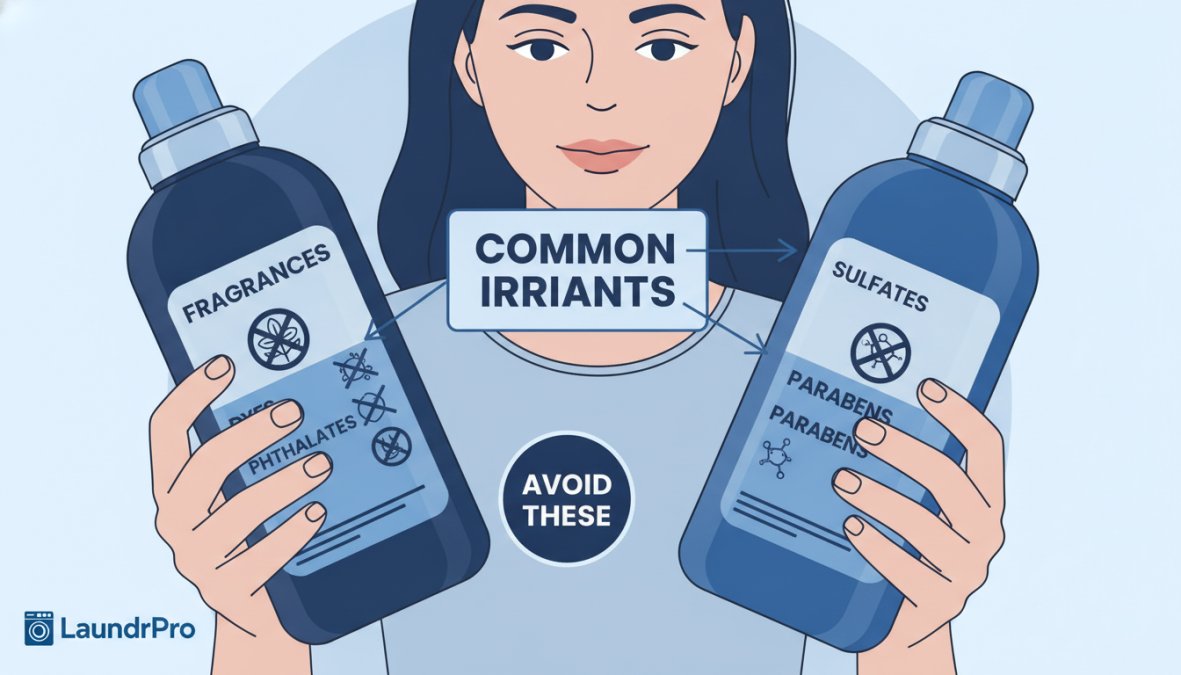
Synthetic fragrances are the leading culprit. Fragrance compounds can contain dozens of undisclosed chemicals. These volatile organic compounds accumulate on fabric and release during wear, especially with body heat. Even "light" fragrances cause problems for reactive skin.
Dyes serve no cleaning function and are among the most common irritants for contact dermatitis and eczema. A detergent's color has zero correlation with cleaning power.
Optical brighteners (fluorescent whitening agents) coat fabric fibers to reflect light and make clothes appear brighter. They don't wash out completely and can accumulate on skin over time, triggering delayed reactions.
Enzymes require nuance. Some people with sensitive skin can't tolerate protease or amylase enzymes because they break down proteins. If you have eczema or severe sensitivity, start with enzyme-free options and test carefully before moving to enzyme-based products.
Sulfates (like sodium lauryl sulfate) strip oils effectively but can be harsh. Many sensitive-skin detergents replace these with milder alternatives like coco-glucoside.
Top 10 Best Laundry Detergents for Sensitive Skin Reviews
1. All Free Clear: The Dermatologist-Recommended Standard
All Free Clear stands as the gold standard for sensitive skin. It's 100% free of perfumes and dyes and carries EPA Safer Choice certification. The formula is backed by dermatologists, allergists, and pediatricians, and the surfactant blend cleans effectively without leaving waxy residue. For people with eczema or contact dermatitis, this detergent rarely triggers reactions.
The limitation is price. All Free Clear costs more per load than generic alternatives and may struggle with heavy-duty stains. For everyday laundry and sensitive skin protection, the trade-off is worth it.
Pros: Widely available, strong dermatologist track record, effective rinse profile, works in all temperatures
Cons: Premium pricing, may require pre-treating for stubborn stains
2. Tide Free & Gentle: Powerful Cleaning Without Irritation
Tide Free & Gentle removes fragrances and dyes while preserving stain-fighting technology. The concentrated formula performs exceptionally well on grass, food, and blood stains. It's dermatologist-tested and hypoallergenic, and many users report fewer skin reactions compared to non-free alternatives.
The catch is that it contains enzymes, which some people with severe sensitivities cannot tolerate.
Pros: Superior stain-fighting, concentrated formula, compatible with HE machines, easily accessible
Cons: Contains enzymes, higher price point
3. Seventh Generation Free & Clear: Eco-Conscious Choice
Seventh Generation Free & Clear uses plant-based cleaning agents from renewable resources and is fully biodegradable. It's USDA Certified Biobased and Leaping Bunny certified (cruelty-free). The formula cleans effectively on everyday loads, though heavy-duty stains may require pre-treatment.
In hard-water areas, concentrated plant-based surfactants may leave slight residue. Consider pairing with a water softener or extra rinse cycle.
Pros: Environmentally responsible, effective on everyday stains, widely available, cruelty-free
Cons: May require pre-treating for tough stains, hard water reduces effectiveness
4. Molly's Suds Original: Ultra-Minimalist Formula
Molly's Suds Original contains just five ingredients: washing soda, borax, soap bark powder, peppermint essential oil, and rosemary essential oil. For people with severe chemical sensitivities who've reacted to every other detergent, this powder formula often works when nothing else does.
The trade-off is handling. Powder detergents require careful scooping to avoid residue buildup and don't dissolve readily in cold water. It's also expensive per load despite the large supply per bag.
Pros: Exceptionally short ingredient list, septic-safe, extremely concentrated, minimal environmental impact
Cons: Powder form requires careful measurement, may leave residue, slow cold-water dissolution, premium pricing
5. Dropps Sensitive Skin & Baby Pods: Convenience Meets Sustainability
Dropps delivers pre-measured pods in compostable cardboard packaging. Each pod dissolves completely and delivers a fragrance-free, dye-free formula. The pods work in all water temperatures and eliminate over-dosing that leads to residue buildup.
The primary caveat is that pods may not dissolve completely in very cold water (below 60°F), especially in standard machines. The subscription model also requires active management.
Pros: Zero-waste packaging, pre-measured convenience, effective in all temperatures, cruelty-free
Cons: Cold-water dissolution issues possible, subscription requires management, higher per-load cost
6. Puracy Natural: Doctor-Developed Enzyme Power
A physician developed Puracy Natural specifically for households with sensitive skin, combining plant-based enzymes with a hypoallergenic surfactant blend. The enzyme approach is particularly effective on protein-based stains (blood, sweat) and carbohydrate stains (grass, food). The formula is highly concentrated.
People with severe protein sensitivities should test carefully. For most with general sensitivity or eczema, Puracy's enzymes rinse cleanly without triggering reactions.
Pros: Doctor-developed, highly effective on organic stains, concentrated formula, free of sulfates and phosphates
Cons: Contains enzymes, premium pricing, less widely available
7. Dirty Labs Free & Clear: Advanced Eczema-Safe Technology
Dirty Labs Free & Clear uses proprietary Phytolase enzyme technology that breaks down stains more effectively than standard enzymes while remaining gentle on compromised skin barriers. The National Eczema Association recognizes this formula. It arrives in sustainable aluminum bottles, and one bottle delivers approximately 40 loads.
The trade-off is cost. Dirty Labs charges a premium, and the advanced enzyme technology is overkill for basic laundry needs.
Pros: Eczema Association recognized, advanced enzyme technology, sustainable packaging, highly concentrated
Cons: Highest price per load, subscription model requires management, overkill for basic needs
8. Biokleen Free & Clear: High-Value Concentrated Formula
Biokleen Free & Clear is highly concentrated, one gallon produces approximately 300 loads, so per-load cost drops significantly. The plant-based surfactant formula is free of artificial fragrances, dyes, and chlorine. It performs particularly well at removing odors and works in all water temperatures.
The main limitation is the large container size. A gallon jug is heavy and awkward to pour, and improper pouring leads to over-dosing.
Pros: Exceptional value per load, highly concentrated, excellent odor removal, plant-based surfactants
Cons: Large container is heavy and difficult to pour, over-dosing leads to residue, limited availability
9. Arm & Hammer Sensitive Skin: Budget-Friendly Reliability
Arm & Hammer Sensitive Skin is dermatologist-tested, free of perfumes and dyes, and works in all water temperatures. It's widely available and delivers solid performance for basic laundry needs without breaking the budget.
The limitation is ingredient sophistication. The simpler surfactant blend means stain-fighting lags behind premium brands, and heavy-duty stains may require frequent pre-treating.
Pros: Very affordable, widely available, dermatologist-tested, effective for everyday laundry
Cons: Less effective on tough stains, simpler ingredient profile, may require pre-treating
10. LaundrPro Professional Service: Expert Care for Delicate Items
LaundrPro offers professional handling for people who struggle with washing delicate items or have severe sensitivities that make handling detergents problematic. We use carefully selected products suited to sensitive skin, handle your laundry with premium care, and offer flat-rate pricing with no surprise charges.
This option removes the laundry problem altogether. You get professionally cleaned clothes without product selection, measurement, or handling chemical irritants yourself.
Pros: Door-to-door convenience, expert care, flat-rate pricing, no subscriptions, eliminates direct detergent contact
Cons: Service limited to Miami area, premium pricing, not suitable for those preferring to handle laundry themselves
How to Wash Clothes for Sensitive Skin: Best Practices
Choosing the right detergent is only half the battle. How you wash matters equally. Use an extra rinse cycle for every load, especially during the first few weeks with a new detergent. This removes residual detergent that would otherwise accumulate on fabric.
Warm water (around 100-110°F) strikes a balance: it rinses effectively without excessive energy use or fabric damage. Cold water works for lightly soiled loads but may leave more residue, so pair it with an extra rinse cycle.
Dose carefully. Most people over-dose detergent. Use half the recommended amount for lightly soiled laundry, and only increase to the full dose for heavily soiled loads. Concentrated detergents require even less.
High-efficiency (HE) machines use significantly less water, concentrating detergent residue on fabric. Use HE-specific detergents and make the extra rinse cycle non-negotiable. Avoid mixing detergents, as this creates unpredictable chemistry and increases residue buildup.
Is Fragrance-Free Detergent Better for Sensitive Skin?
Yes, unequivocally. Synthetic fragrances are the leading cause of contact dermatitis and allergic reactions from laundry detergents. However, "fragrance-free" requires scrutiny because the term is loosely regulated.
A truly fragrance-free detergent contains no added perfume compounds, neither synthetic nor natural. Some brands use "unscented" to mean they've masked the smell with a different fragrance. Check the ingredient list for "fragrance" or "parfum", if listed, the product isn't actually fragrance-free.
Natural fragrances (like essential oils) are less problematic than synthetic fragrances for most people, but some individuals react to essential oils. If you have severe sensitivities, start with detergents containing no fragrance compounds at all.
Troubleshooting Laundry Residue and Skin Irritation
If you've switched to a sensitive-skin detergent but still experience irritation, residue buildup is likely the culprit.
Run a hot-water cycle with two cups of white vinegar and no clothes or detergent to deep clean your washing machine. This dissolves mineral deposits and detergent buildup. Follow with a standard hot-water cycle to rinse thoroughly.
Cut your detergent amount in half and see if irritation decreases. If it does, over-dosing was the problem. Add an extra rinse cycle if you're not already using one. Run three consecutive rinses if irritation is severe.
Hard water can trap detergent on fabric. Check with your local water utility, and if you have hard water, install a water softener or use a chelating agent like borax. Finally, eliminate fabric softeners and dryer sheets entirely, these often resolve unexplained irritation faster than any detergent switch.
Environmental Impact of Free & Clear Formulas
Detergents marketed as "free and clear" often carry environmental benefits beyond skin safety. Removing synthetic fragrances and dyes reduces chemical compounds entering waterways. Plant-based surfactants biodegrade more completely than petroleum-derived alternatives, meaning they break down into harmless compounds rather than persisting in the environment.
Concentrated formulas reduce packaging waste directly. A highly concentrated detergent requires less plastic per load and fewer bottles ship to retailers, reducing transportation emissions. Enzyme-based detergents enable lower-temperature washing, which reduces energy consumption. A single load washed in cold water instead of hot saves approximately 0.3 kWh of electricity.
Sensitive skin doesn't mean accepting itchy, irritated clothes as inevitable. The best laundry detergents for sensitive skin deliver clean clothes without triggering reactions. If selecting and measuring detergent feels like too much friction, especially if you're managing eczema or severe allergies, LaundrPro's professional laundry service handles everything. We use carefully selected products suited to sensitive skin, ensure thorough rinsing, and deliver spotless results with zero hassle. Place your order with LaundrPro and reclaim the time you spend on laundry.
Frequently Asked Questions
What ingredients should I avoid in laundry detergent if I have sensitive skin?
Avoid synthetic fragrances, artificial dyes, optical brighteners, and harsh surfactants. Look for detergents labeled fragrance-free and dye-free. Optical brighteners can cause contact dermatitis in sensitive individuals. Enzymes and preservatives may also trigger reactions in some people. Check product labels for hypoallergenic certification or dermatologist recommendations to ensure the formula is truly gentle.
Is fragrance-free detergent better for sensitive skin?
Yes, fragrance-free detergent is generally better for sensitive skin. Synthetic fragrances are a leading cause of allergic reactions and skin irritation. Even 'hypoallergenic' fragrances can trigger contact dermatitis. Fragrance-free formulas eliminate this risk entirely. However, fragrance-free alone isn't enough, also check for dyes, optical brighteners, and harsh surfactants. Many best laundry detergents for sensitive skin combine fragrance-free, dye-free, and hypoallergenic features for maximum safety.
Can laundry detergent cause skin rashes and allergic reactions?
Yes, laundry detergent is a common cause of contact dermatitis and allergic reactions. Fragrances, dyes, optical brighteners, and certain surfactants trigger skin irritation in sensitive individuals. Residue left on clothes after washing can also cause prolonged irritation. If you experience rashes after wearing freshly laundered clothes, switch to a hypoallergenic, fragrance-free option and increase rinse cycles. Dermatologist-recommended brands like All Free Clear are tested to minimize these reactions.
How do I know if my laundry detergent is causing my skin irritation?
If rashes, itching, or redness appear on areas covered by clothing shortly after wearing freshly washed garments, your detergent may be the culprit. Symptoms typically develop within hours of wearing treated clothes. Test by switching to a hypoallergenic, fragrance-free detergent and running an extra rinse cycle. If symptoms improve within a few days, your previous detergent was likely responsible. Keep a laundry log to identify patterns and confirm the connection.
What's the difference between hypoallergenic and free & clear laundry detergents?
Hypoallergenic detergents are formulated to minimize allergic reactions by excluding common irritants like fragrances and dyes. Free & Clear detergents go further, they're specifically certified to be completely free of perfumes and dyes. All Free & Clear detergents are hypoallergenic, but not all hypoallergenic products are free & clear. For maximum safety with sensitive skin, choose products labeled both hypoallergenic AND free & clear, ideally with dermatologist or pediatrician recommendations.
This article was written using GrandRanker