 ultimate-guide
How to Remove Stains From Clothes: Step-by-Step Guide
Table of Contents
- Act Fast: Immediate Steps for Fresh Stains
- Understanding Stain Types: Protein, Oil, and Tannin
- Natural Stain Removal Hacks for Household Items
- How to Remove Oil Stains From Clothes
- How to Remove Set-In Stains From Clothes
- Fabric-Specific Care: Natural vs. Synthetic Fibers
- Troubleshooting Failed Stain Removal Attempts
- When to Call a Professional
Last Updated: August 9, 2026
Act Fast: Immediate Steps for Fresh Stains
Speed is critical, fresh stains haven't bonded to fabric yet and sit on the surface waiting to be lifted. The longer a stain remains, the deeper it penetrates the fiber structure, making removal exponentially harder.
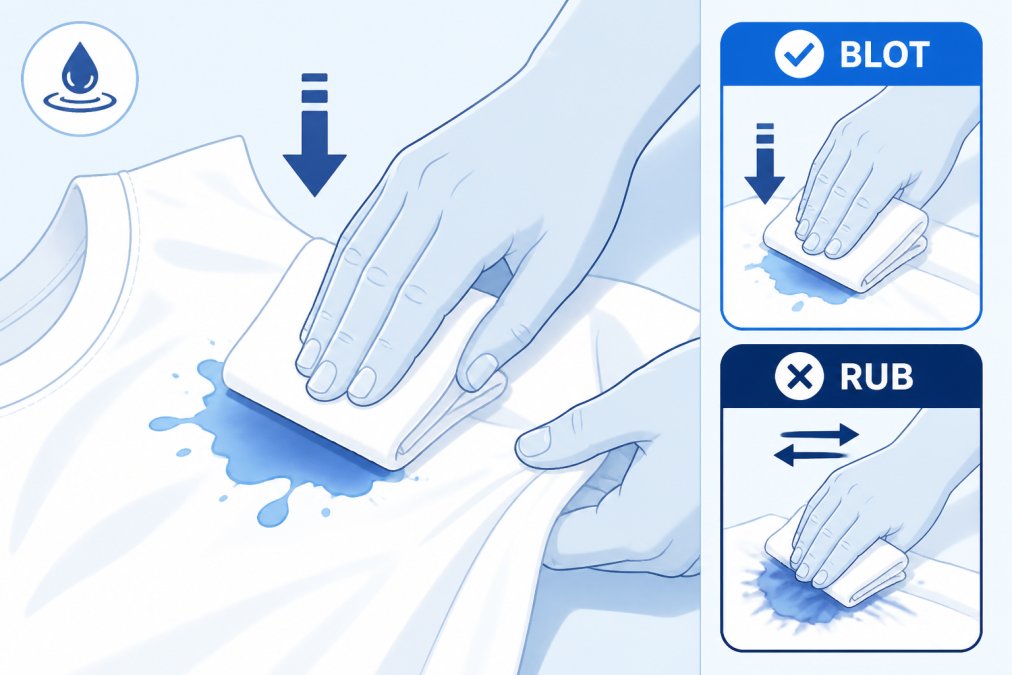
Blotting vs. Rubbing
Rubbing drives stains deeper into fabric through agitation and pressure. Blotting lifts stains upward without forcing them further down. Press a clean cloth firmly on the stain for 10-15 seconds, then lift. Repeat with a fresh cloth section each time, transferring the stain from garment to cloth rather than grinding it in.
For solid residue like mud or chocolate, let it dry completely first. Dried residue crumbles away when brushed gently; wet residue smears and spreads.
Cold Water Rinse and Pretreat
After blotting, rinse under cold running water. Hot water sets protein-based stains (blood, egg, dairy) by causing proteins to coagulate and bond permanently to fibers. Hold fabric so water flows through from the back, pushing the stain outward. Rinse for 30-60 seconds until water runs clear.
Apply a pretreat agent afterward. Pretreat creates a chemical barrier preventing the stain from setting during washing, giving you hours or days before laundering. Many people pretreat and let it work overnight while surfactants break down the stain's molecular bonds.
Understanding Stain Types: Protein, Oil, and Tannin
Stain composition determines which cleaning agent works. Protein, oil-based, and tannin stains each require different chemistry.
Protein-Based Stains
Protein stains include blood, egg, milk, sweat, and grass. These contain amino acid molecules that bond to fabric through hydrogen bonds and Van der Waals forces. Heat accelerates bonding, making cold water essential.
Enzyme-based detergents are the gold standard. Enzymes break down protein molecules into smaller, water-soluble fragments that rinse away easily. Look for detergents labeled "enzymatic" or containing protease. Soak the stained garment in cold water with enzyme detergent for 30 minutes to overnight. Longer soaking delivers better results on stubborn stains.
Oil-Based Stains
Oil stains include grease, butter, salad dressing, and cosmetics. Oil molecules repel water and cling to fabric fibers. You need a surfactant, a molecule with one end bonding to oil and another to water.
Dish soap is a surfactant formulated to cut grease. Apply a small amount directly to the dry oil stain and work it in gently with a soft brush. Let it sit 15-30 minutes, then rinse thoroughly with cold water. For heavy stains, sprinkle baking soda or cornstarch first to absorb surface oil, then apply dish soap to the remaining stain.
Tannin Stains
Tannin stains come from tea, coffee, wine, fruit juice, and plant matter. Tannins form chemical bonds with fabric fibers and don't dissolve in water alone.
White vinegar is effective against tannins. Its acidity (5% acetic acid) breaks down bonds between tannin molecules and fabric. Mix equal parts white vinegar and cold water, soak for 15-30 minutes, then rinse. Dried tannin stains may need 2-3 repetitions. Hydrogen peroxide also works, particularly on yellowed or browned stains, but test on inconspicuous areas first as it can bleach some dyes.
Natural Stain Removal Hacks for Household Items
Household items deliver comparable results to professional removers at a fraction of the cost, using the same chemistry: surfactants, acids, oxidizers, and enzymes.
White Vinegar and Baking Soda
When mixed, vinegar's acid reacts with baking soda's base, creating fizzing action that agitates and lifts stains. Apply vinegar directly to the stain, let sit 5 minutes, then sprinkle baking soda. Let the mixture foam for 10-15 minutes, then rinse with cold water. This combination works well on protein and light tannin stains.
For stubborn stains, make a paste with baking soda and water, apply directly, let dry, brush away, and rinse.
Rubbing Alcohol and Hydrogen Peroxide
Rubbing alcohol dissolves oil-based stains without damaging most fabrics and evaporates quickly. For ink, lipstick, or makeup, blot with a cloth dampened in rubbing alcohol, working from the stain's outer edge inward. Repeat with fresh cloth sections until the stain transfers to the cloth.
Hydrogen peroxide works on protein and light-colored stains. Test on hidden areas first, it's a mild bleach. Apply 3% drugstore-strength peroxide directly to the stain, let it bubble for 5-10 minutes, then rinse with cold water.
Dish Soap and Cold Water
Plain dish soap is a gentle surfactant safe for delicate fabrics. Mix a few drops with cold water, dab onto the stain, let sit 10-15 minutes, then rinse thoroughly. Complete rinsing prevents soap residue from attracting dirt and causing re-soiling.
How to Remove Oil Stains From Clothes
Oil stains are common and frustrating. They don't respond to water alone and spread easily if treated incorrectly.
Why Oil Stains Need Special Treatment
Oil is hydrophobic, water beads up and rolls off rather than mixing with it. Standard laundry detergent isn't formulated to break down oil specifically. You need a surfactant to bridge the gap between oil and water.
Oil stains spread easily during treatment. Water pushes oil outward, enlarging the stain. Heat also sets oil stains, so never dry an oil-stained garment in a hot dryer before treating it.
Step-by-Step Oil Stain Removal Process
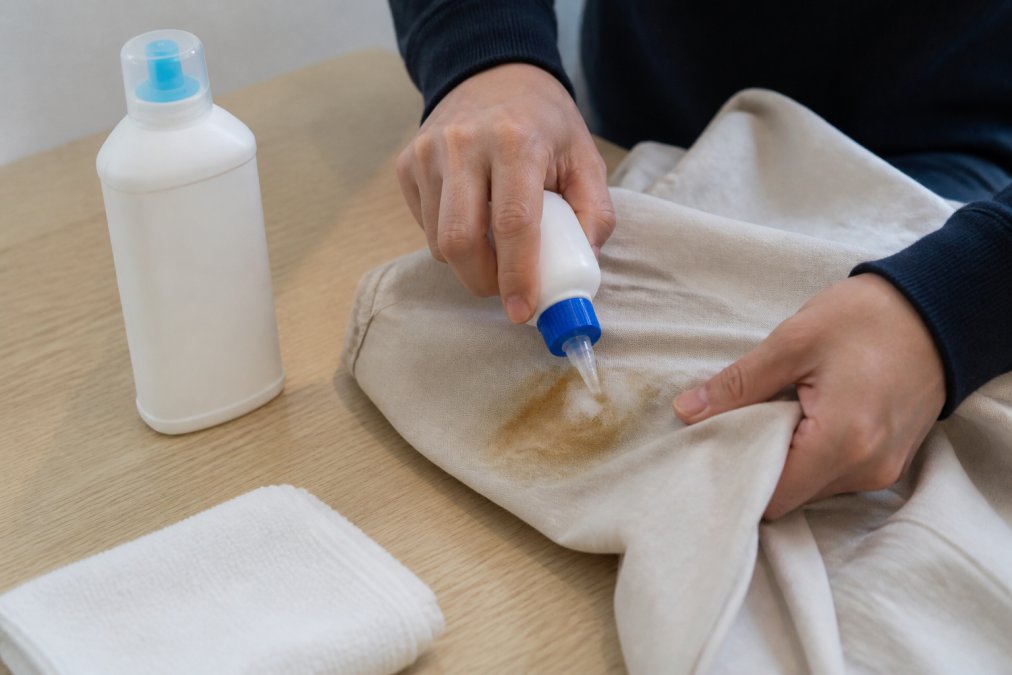
Step 1: Absorb the Surface Oil (Immediately)
Blot fresh, wet stains with a clean, dry cloth, pressing firmly without rubbing. For dried stains, sprinkle baking soda, cornstarch, or talc powder and let sit 15-30 minutes to absorb oil, then brush away gently.
Step 2: Apply a Surfactant (Before Washing)
Apply a dime-sized drop of liquid dish soap directly to the dry stain. Work it in gently with a soft brush, don't scrub. Let it sit 15-30 minutes while surfactant molecules break down the oil.
Step 3: Rinse with Cold Water
Rinse under cold running water with the fabric positioned so water flows through from the back, pushing oil and soap outward. Continue for 60 seconds until water runs clear and no soap smell remains.
Step 4: Pretreat and Launder
Apply a commercial pretreat or repeat dish soap application. Wash in cold water with regular detergent. Check the stain before drying, if oil remains, repeat the process. Heat will set any remaining oil permanently.
How to Remove Set-In Stains From Clothes
Set-in stains have dried and remained for days, weeks, or longer. Stain molecules have formed strong chemical bonds with fabric fibers. Water alone won't remove them, and single treatments rarely succeed.
Why Set-In Stains Are Harder to Remove
Extended stain exposure causes molecules to work deeper into fiber structure, forming hydrogen bonds, Van der Waals forces, and sometimes covalent bonds. Air exposure can cause oxidation, fruit juice and wine darken and become more stubborn. Heat from sunlight, warm storage, or accidental drying accelerates this process.
Set-in stains often involve multiple types. A food stain might contain protein, oil, and tannins simultaneously, requiring separate treatment for each component.
Enzyme-Based Detergents and Soaking
Enzyme-based detergents are your best tool. Enzymes break down molecular bonds between stain and fabric, reversing the bonding process that set the stain.
Fill a basin with cold water, add enzyme detergent per package directions, and submerge the garment completely. Soak 4-8 hours or overnight for stubborn stains. After soaking, gently rub the stained area between your fingers, you may feel the stain breaking apart. Rinse thoroughly with cold water. Repeat if necessary.
For oxidized or darkened stains, combine enzyme soaking with hydrogen peroxide treatment. After soaking, apply 3% peroxide and let it bubble for 10-15 minutes. The peroxide oxidizes darkened compounds, lightening them and making them easier to remove with subsequent enzyme treatments.
Spot Testing and Fabric Care Labels
Before treating any stain with chemical agents, test on a hidden area like an underside seam or inside hem. Wait 15 minutes, if fabric color changes, fades, or shows damage, don't use that treatment on the visible stain.
Always check the fabric care label for fiber content and recommended water temperatures. A "cold water only" label means hot water damages the fabric. A "do not bleach" label means hydrogen peroxide is risky. Respect these guidelines.
Delicate fabrics like silk, wool, and lace require gentler treatment. Enzyme detergents are safe, but limit soaking to 1-2 hours rather than overnight. Avoid rubbing or agitation. For valuable delicate items, professional dry cleaning is often the best choice.
Fabric-Specific Care: Natural vs. Synthetic Fibers
Fabric type matters enormously. Cotton, linen, wool, and synthetic performance fabrics respond differently to treatments.
Treating Delicate Fabrics
Silk, wool, cashmere, and lace have fragile fibers vulnerable to aggressive treatment. Always use cold water and gentle agitation. Enzyme detergents are safe with 1-2 hour maximum soaking. Avoid rubbing or wringing; gently squeeze soapy water through the fabric.
White vinegar is generally safe for wool but test first. Hydrogen peroxide can bleach delicate fabrics, so test on hidden areas. Rubbing alcohol is usually safe for silk and wool, but test first.
For expensive delicate items with set-in stains, professional dry cleaning is often the best choice.
Synthetic Performance Fabrics
Modern athletic wear and outdoor gear made from polyester, nylon, spandex, or proprietary blends have special finishes (water-repellent coatings, antimicrobial treatments) that harsh chemicals can damage.
Avoid chlorine bleach on synthetic performance fabrics, it breaks down elastic fibers and degrades special finishes. Enzyme detergents are safe. Hydrogen peroxide is generally safe but test first.
Cold water washing is essential for synthetics. Hot water damages elastic fibers and reduces stretch and recovery. Most synthetic performance fabrics specify cold water only.
Oil-based stains on synthetics respond well to dish soap treatment. The tight weave prevents deep oil penetration, making surface treatment often sufficient. Protein stains may require enzyme soaking, but shorter times (1-2 hours) usually work since stains haven't penetrated as deeply as on natural fibers.
Troubleshooting Failed Stain Removal Attempts
Sometimes first attempts don't work. Understanding what went wrong helps you adjust and succeed next time.
When Heat Sets the Stain
Heat is stain removal's enemy. Garments dried in hot dryers or exposed to hot water before stain removal are much harder to treat.
If heat has set the stain, enzyme-based detergents with longer soaking (overnight or longer) can still work. You may need multiple repetitions. For protein stains set by heat, soak in cold water with enzyme detergent for 12-24 hours. For oil stains, combine dish soap treatment with enzyme soaking overnight.
Some heat-set stains never fully disappear. Accept this possibility and move forward. Professional cleaning may help, or it may be time to retire the garment.
Residue Buildup and Decolorization
Multiple soap or detergent treatments can leave residue that attracts dirt and causes dingy appearance even after stain removal. Rinse thoroughly with plain cold water multiple times until water runs completely clear, you may need 5-10 rinses for heavily treated areas.
If rinsing doesn't work, soak in plain cold water for 1-2 hours, then rinse again. Decolorization from bleach or peroxide on dyed fabric is usually permanent. Always test bleaching agents on hidden areas first.
When to Call a Professional
Some stains exceed home treatment capabilities. Professional dry cleaners have specialized equipment, solvents, and expertise unavailable at home.
Consider professional cleaning if:
- The stain is on expensive or delicate garments (silk dress, designer blazer, wool coat)
- You've attempted removal multiple times without success
- You're unsure how to treat the fabric
- The stain involves unknown substances or combinations
- The garment has sentimental value
For busy professionals and families in Miami, services like LaundrPro handle stain removal as part of their standard laundry process. LaundrPro's door-to-door pickup and delivery service means you don't manage logistics, simply place your order and your clothes are handled professionally.
| Stain Type | Best Treatment | Water Temperature | Soaking Time |
|---|---|---|---|
| Protein (blood, egg, sweat) | Enzyme-based detergent | Cold | 30 min to overnight |
| Oil (grease, butter, cosmetics) | Dish soap or surfactant | Cold | 15-30 min |
| Tannin (coffee, wine, tea) | White vinegar or hydrogen peroxide | Cold | 15-30 min |
| Set-in stains (any type) | Enzyme soak + additional treatment | Cold | 4-8 hours minimum |
| Delicate fabric stains | Gentle enzyme soak, avoid heat | Cold | 1-2 hours |
| Synthetic performance fabric | Enzyme or dish soap, avoid bleach | Cold | 1-2 hours |
Stain removal improves with practice. Understanding the chemistry behind each treatment builds confidence. The difference between a ruined garment and a salvaged one often comes down to acting fast and choosing the right treatment for the stain type. When stains are stubborn or the garment is valuable, professional cleaning removes the risk. LaundrPro's team handles stain removal for all garment types with specialized treatment and premium product care, delivering spotless results with fast turnaround. Learn more about proper fabric care from the American Cleaning Institute for additional guidance on protecting your clothing investment.
Frequently Asked Questions
What household items remove old stains from clothes?
White vinegar, baking soda, rubbing alcohol, hydrogen peroxide, and dish soap are effective for set-in stains. Mix white vinegar with baking soda into a paste, apply to the stain, let it sit for 30 minutes, then rinse with cold water. For older stains, soak the garment in a solution of enzyme-based detergent and water for 2-4 hours before laundering. Always spot test on a hidden area first to ensure the fabric won't be damaged.
How do you remove set-in stains from white clothes?
For set-in stains on white fabrics, use hydrogen peroxide or a bleach-free stain removal agent. Apply hydrogen peroxide directly to the stain and let it sit for 5-10 minutes, then rinse thoroughly with cold water. For tougher stains, soak the garment in an enzyme-based detergent solution overnight. Avoid hot water, which can permanently set the stain. Always check the fabric care label before treating, and consider professional cleaning if the stain persists after treatment.
Does vinegar or baking soda remove stains better?
Both work well for different stain types. Baking soda is excellent for absorbing odors and lifting fresh stains, while white vinegar works better on tannin stains like wine or coffee. For best results, combine them: apply baking soda first to absorb the stain, then spray with white vinegar to activate a fizzing reaction that lifts the stain from the fabric. The combination is more effective than either ingredient alone.
Can a stain be removed after a long time?
Yes, but it requires more aggressive treatment. Set-in stains can be removed with enzyme-based detergents, soaking in cold water for several hours, or repeated applications of stain remover. However, some stains become permanent if they've been through a hot water cycle or dryer heat, which bonds the stain to the fiber. The longer a stain sits, the harder it becomes to remove, so professional cleaning services may be your best option for valuable garments with stubborn, aged stains.
This article was written using GrandRanker