 ultimate-guide
How to Care for Wool: Complete Guide to Cleaning & Storage
Table of Contents
- Understanding Wool Fiber: Types and Care Differences
- How to Wash Wool Sweaters and Knitwear Properly
- Choosing the Best Wool Detergent and Washing Solutions
- Drying Techniques to Prevent Shrinkage and Damage
- How to Remove Pilling from Wool and Maintain Garment Brush Care
- How to Store Wool Clothes for Summer and Year-Round Protection
- Spot Cleaning, Steaming, and Refresh Techniques
- Repair and Mending: Extending Wool Garment Life
- Frequently Asked Questions
Last Updated: July 14, 2026
Understanding wool fiber requires recognizing that care methods depend heavily on the type you're working with. At LaundrPro, we've helped countless Miami residents extend the life of their wool garments by matching care to fiber type. The difference between merino wool and standard wool can mean the difference between a sweater that lasts five years and one that survives twenty. Below, we'll show you exactly how to care for wool properly, from washing through storage, so your investment pieces stay pristine.
Understanding Wool Fiber: Types and Care Differences
Wool isn't a one-size-fits-all fabric. Fiber structure, density, and processing method determine how much agitation it can handle and what cleaning solutions work best.
Merino wool vs. standard wool represents the most common split in care requirements. Merino wool fibers are finer and softer, typically ranging from 17-24 microns in diameter, making them more prone to felting if exposed to heat and friction. Standard wool, often coarser at 25+ microns, has more natural resilience and can tolerate slightly more aggressive handling. Merino garments demand cold water and gentle motion; standard wool can handle warmer water and moderate agitation without damage.
Wovens and knitwear present another critical distinction. Knitwear, sweaters, cardigans, and knit scarves, uses interlocking loops that can snag or pull if stressed. Wovens, blazers, skirts, and structured coats, have a tighter weave and greater structural integrity. A wool blazer might survive a delicates cycle, while a wool sweater almost certainly won't.
How to Wash Wool Sweaters and Knitwear Properly
Hand washing remains the safest method for most wool knitwear, though the delicates cycle on modern machines has improved significantly. The key is controlling three variables: water temperature, detergent type, and agitation force.
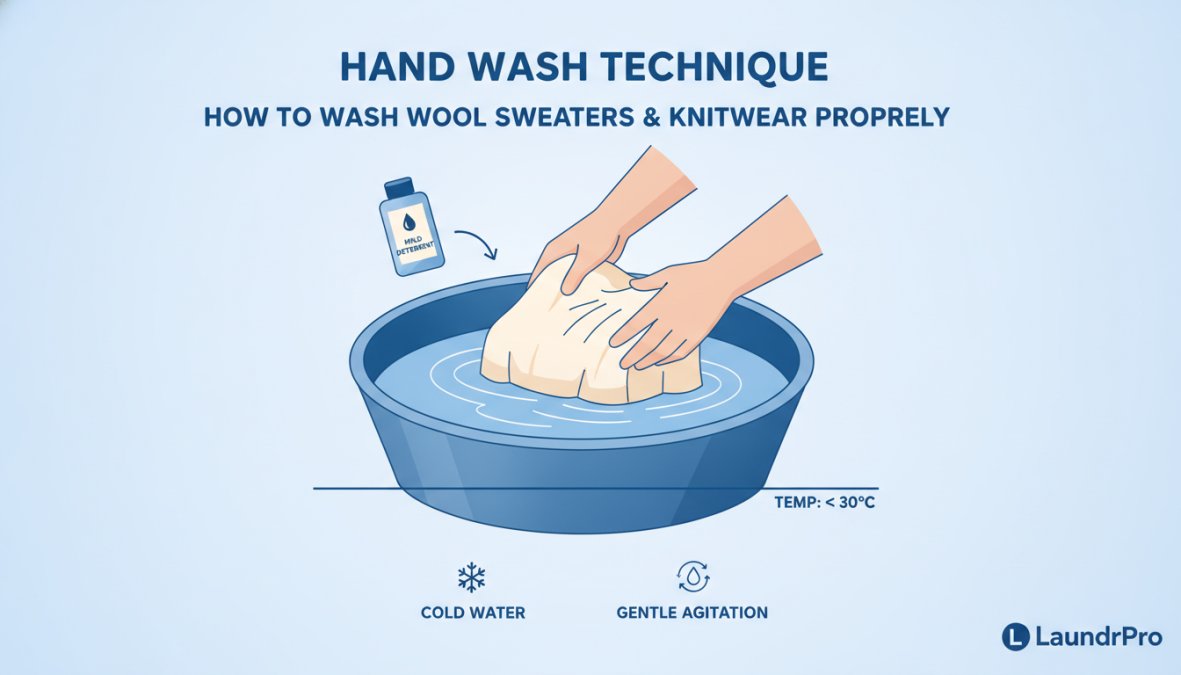
Hand washing steps work like this: Fill a basin with cold water at 65-75°F. Add a small amount of wool-specific detergent. Submerge the garment and let it soak for 10-15 minutes without agitation. Gently squeeze the soapy water through the fabric, avoiding wringing or twisting. Drain and rinse with fresh cold water two to three times until the water runs clear.
Cold water is essential because hot water causes wool fibers to expand and lock into a felted state. Wool fiber has microscopic scales along its surface; heat opens these scales. When scales open and fibers rub together, they interlock and mat, a process that's nearly impossible to reverse. Cold water keeps scales closed and prevents this damage.
Machine washing using the delicates cycle is acceptable for garments labeled as machine-washable wool. Use cold water only, select the delicates or wool-specific cycle, and place the sweater inside a mesh laundry bag. Add wool detergent, not regular laundry detergent, which contains enzymes that break down protein fibers. Remove the garment immediately after the cycle completes.
Research from the Woolmark organization indicates that proper washing technique extends garment life by 40-50% compared to careless methods.
Choosing the Best Wool Detergent and Washing Solutions
Not all detergents are created equal when it comes to wool care. The best wool detergent contains no enzymes, no bleach, and ideally includes lanolin, a natural oil that conditions fibers during washing.
Lanolin is the waxy substance that naturally coats sheep's wool, providing water resistance and fiber conditioning. Many commercial wool detergents add lanolin back into the formula because standard washing removes it. A detergent with lanolin helps maintain the garment's natural properties and can reduce future pilling.
Look for detergents labeled specifically for wool or delicates. Avoid products marketed for "all fabrics" or those containing optical brighteners, which can yellow wool over time. Use about one-quarter to one-half of what you'd use for a regular load; wool doesn't require heavy detergent to come clean.
For spot cleaning between washes, mix a small amount of wool detergent with cold water in a spray bottle. Spray the affected area, let it sit for 5 minutes, and gently blot with a clean cloth.
Drying Techniques to Prevent Shrinkage and Damage
How you dry wool matters as much as how you wash it. The wrong drying method can undo all the care you took during washing.
Lay flat to dry is the gold standard for wool knitwear. After washing, gently squeeze out excess water without wringing. Lay it flat on a clean, dry towel in a well-ventilated area away from direct heat. The garment should dry completely within 24-48 hours. Reshape gently as it dries if it begins to curl or distort. Gravity pulls on wet wool differently than on dry wool; a sweater hung while wet will elongate as the weight of water stretches the fibers.
Avoiding tumble dry and sunlight damage is equally important. Never put wool in a conventional dryer; the heat and mechanical action will felt the fibers and cause permanent shrinkage. Avoid drying wool in direct sunlight, as UV rays can cause discoloration and weaken fibers. Choose an indoor location away from heating vents and radiators.
How to Remove Pilling from Wool and Maintain Garment Brush Care
Pilling, those small balls of fiber that form on the surface, is a cosmetic issue, not a structural one. All wool pills eventually; it's a natural result of wear.
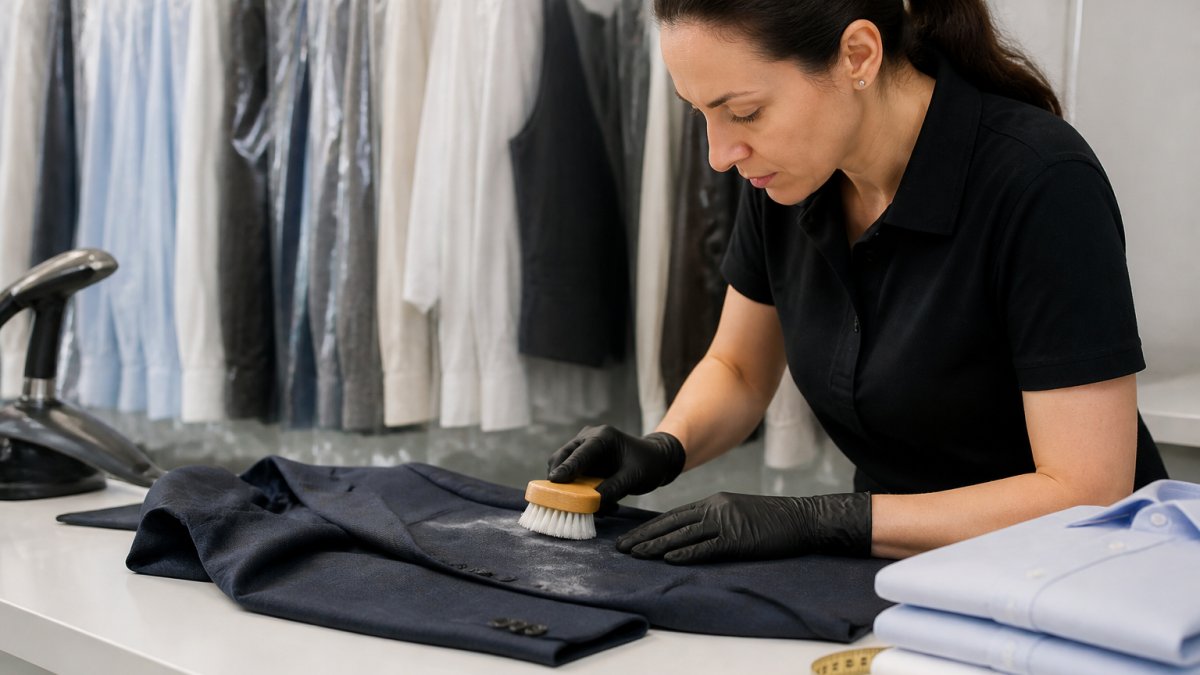
De-pilling techniques vary in effectiveness and risk. A garment brush with fine bristles removes pills gently by brushing in one direction across the fabric surface. For heavier pilling, a de-pilling stone or fabric comb designed specifically for this purpose works better. Avoid razors or scissors, which can cut the underlying fabric and create holes.
Regular brushing and lint removal prevent excessive pilling in the first place. Brush wool garments gently with a soft-bristled brush after each wear, brushing in one direction. This removes surface lint and loose fibers before they can tangle and pill. Spend 30-60 seconds per garment; this small step significantly reduces pilling over the garment's lifetime.
How to Store Wool Clothes for Summer and Year-Round Protection
Storage conditions directly impact wool longevity. Poor storage invites moths, moisture damage, and mildew.
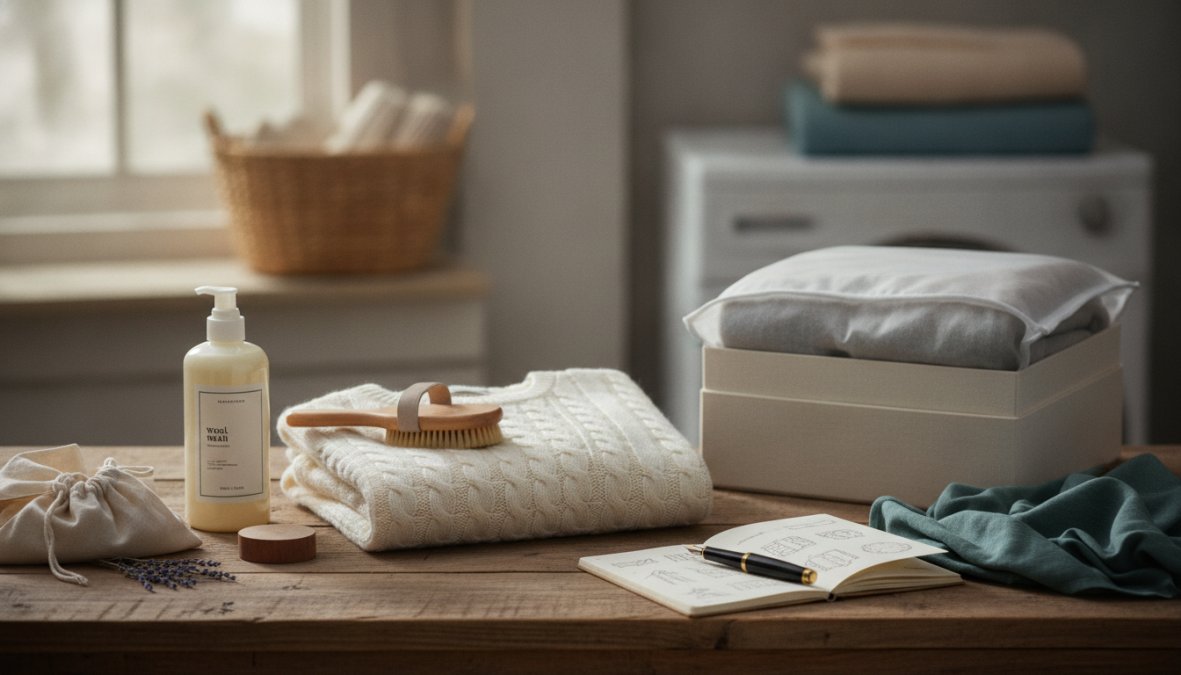
Moth prevention with cedar and lavender is essential. Moths feed on the protein in wool fibers. Place cedar blocks or cedar-lined storage boxes with wool garments. Lavender sachets also deter moths, though cedar is more effective. Replace cedar blocks every 2-3 months as their potency fades.
Store wool in sealed containers or garment bags when possible, especially during off-season months. Ensure garments are completely clean before storing; moths are more attracted to soiled fabrics.
Airing and resting garments between wears extends their lifespan considerably. Wool has natural resilience; fibers spring back to their original shape when given time to rest. Wear a wool sweater one day, then let it rest for 2-3 days before wearing again. During the rest period, hang the sweater on a padded hanger in a well-ventilated closet, not on a wire hanger.
Never store wool garments while damp or wet. Moisture trapped in fibers creates an environment where mildew thrives.
Spot Cleaning, Steaming, and Refresh Techniques
Between full washes, spot cleaning and steaming keep wool garments fresh without the wear of repeated washing.
Spot cleaning works for small stains or localized dirt. Mix a small amount of wool detergent with cold water. Apply it directly to the stain using a clean cloth, working from the outer edges toward the center. Blot gently, don't rub, and rinse with a separate cloth dampened with plain cold water. For protein-based stains like blood or egg, cold water is essential; hot water sets these stains permanently.
Steaming refreshes wool garments without washing. A handheld garment steamer or steam iron on the appropriate setting removes wrinkles and odors. Hold the steamer 6-12 inches from the fabric and move it slowly across the surface. If you must iron wool, use a low heat setting and place a damp cloth between the iron and the garment.
Airing garments outside on a breezy day removes odors naturally. Hang the sweater on a padded hanger in indirect sunlight and let fresh air circulate for 2-3 hours.
Repair and Mending: Extending Wool Garment Life
Small repairs prevent minor damage from becoming irreversible. A small hole caught early is far easier to fix than a large hole that's grown through repeated wear.
Small holes and snags require different approaches. A snag, where a single fiber is pulled out of place, can often be gently worked back into position using a crochet hook or needle. Insert the hook through the snag from the inside, catch the loose fiber, and pull it back through. Secure it with a small knot on the inside.
Small holes benefit from darning, which involves weaving yarn back and forth across the hole to fill it. This works best for holes smaller than a quarter-inch. For larger holes, a small patch sewn on the inside is more durable.
Pulled seams are common in frequently-worn wool garments. If a seam starts to separate, resew it immediately using a needle and matching thread. Reinforce the seam with a second pass of stitching if it's in a high-stress area.
According to Textile Exchange's Fiber Sustainability Report, extending garment lifespan by just nine months can reduce environmental impact by 20-30% compared to replacement.
Wool care isn't complicated, but it does require intentionality. Most wool damage results from rushing, using hot water, skipping the drying process, or storing improperly. When you invest in quality wool pieces, investing those extra minutes in proper care makes sense. LaundrPro's premium wool cleaning service handles the washing, drying, and storage preparation for you, ensuring your merino and wool garments receive the gentle handling they deserve. Whether you prefer to care for your pieces yourself or let professionals handle it, the fundamentals remain the same: cold water, gentle motion, flat drying, and proper storage. Your wool will reward careful treatment with years of wear.
Frequently Asked Questions
Can you wash wool in the washing machine?
Yes, you can wash wool in a washing machine using the delicates cycle with cold water and mild detergent. However, hand washing is gentler and preferred for fine merino wool and delicate knitwear. Always check the garment's care label first. Machine washing works best for sturdy wool wovens. Use a mesh laundry bag to protect the garment, avoid hot water to prevent shrinkage, and never use the spin cycle.
How do you get smells out of wool without washing?
Airing out wool garments is the most effective method for removing odors without washing. Hang the sweater or garment outdoors in fresh air for several hours or overnight. You can also use steaming to refresh wool and neutralize smells while maintaining fiber recovery and the garment's natural resilience. Cedar blocks or lavender sachets stored near wool also help prevent musty odors during storage.
How often should you wash wool sweaters?
Wash wool sweaters only when necessary, typically every 5-10 wears or when visibly soiled. Frequent washing accelerates wear and can damage wool fibers. Instead, rest wool between wears to allow the lanolin in the fiber to naturally recover and restore resilience. Spot cleaning minor stains and airing out garments between wears extends time between full washes and preserves the wool's quality.
What is the best way to dry wool?
The best method is to lay wool garments flat to dry on a clean, dry surface away from direct sunlight, which can cause damage. Never use a tumble dryer, as heat causes shrinkage and fiber damage. Gently squeeze out excess water, don't wring, before drying. For faster drying, place the garment on a towel and roll it to absorb moisture, then unroll and lay flat. This preserves the garment's shape and natural fiber properties.
How do you store wool to prevent moths?
Store wool in a cool, dry place in sealed containers or garment bags. Use natural moth prevention methods like cedar blocks, cedar chips, or lavender sachels placed inside storage areas. Ensure garments are clean before storing, as moths are attracted to soils and oils. Keep storage areas well-ventilated and check periodically for signs of moth activity. Avoid plastic bags that trap moisture and can encourage mildew.
This article was written using GrandRanker