 ultimate-guide
Laundry Service Damage Policy: Miami Guide 2026
Table of Contents
- How Laundry Damage Policies Protect Your Garments
- What a Standard Damage Policy Covers
- Common Causes of Garment Damage at Laundry Services
- Best Practices for Inspecting Laundry Upon Delivery
- How to File a Laundry Service Damage Claim
- Dry Cleaning Liability Laws in Florida: What You Need to Know
- Valuing Damaged Items: Replacement Cost vs. Depreciated Value
- When to Escalate: Mediation and Small Claims Court
- Frequently Asked Questions
Last Updated: September 27, 2026
How Laundry Damage Policies Protect Your Garments
A professional laundry damage policy is a written commitment defining who pays when your clothing is ruined during cleaning. Garment damage disputes in Miami almost always trace back to one thing: nobody documented the item's condition beforehand. This guide covers what standard policies include, how Florida liability rules apply, and how to file a claim that gets paid.
What a Standard Damage Policy Covers
Most service agreements cover damage caused by the provider's handling: tears from sorting equipment, burns from pressing, and color transfer from mixed loads. The Federal Trade Commission guidance on consumer service contracts notes that service terms must be disclosed before the transaction, not after.
Coverage typically includes:
- Damage from negligent handling or equipment failure
- Loss of items that were logged at drop-off
- Damage from improper chemical use
- Replacement or service credit for destroyed garments
What Falls Outside Coverage
Pre-existing wear, manufacturer defects, and unlisted items are commonly excluded, as are garments without fabric care labels, since the cleaner cannot verify safe handling instructions. Many policies also exclude non-washable clothing a customer insists on washing against written advice.
Common Causes of Garment Damage at Laundry Services
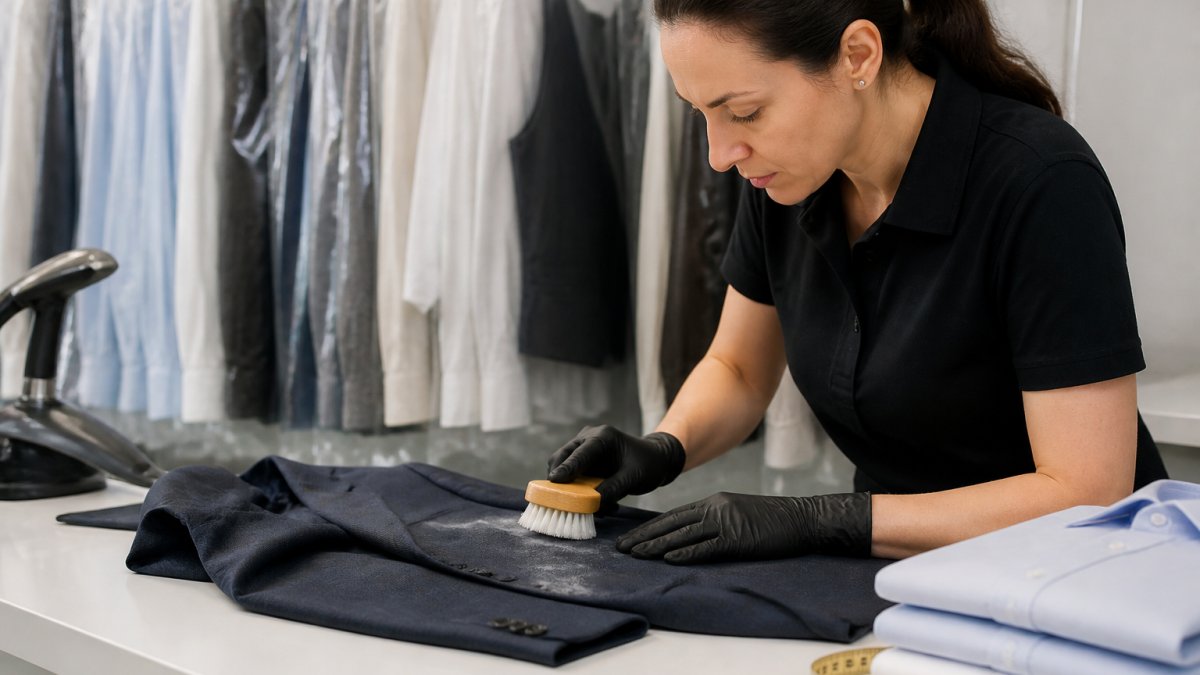
Chemical damage and detergent residue are the most frequent culprits, followed by shrinkage and dye bleeding. Chemical damage happens when the wrong solvent meets the wrong fabric, showing up as faded patches or a stiff, brittle texture.
Chemical Damage and Detergent Residue
Residue appears as white streaks or a chalky film, often on dark garments, and comes from insufficient rinsing or overloaded machines. The fix is a free re-wash. Chemical damage is harder to reverse: the solvent was too aggressive for the fiber, and the garment may not recover.
Shrinkage, Discoloration, and Fabric Failure
Shrinkage is the most disputed category because it can be natural: cotton and wool relax and contract with heat over time, even with correct care. Discoloration from dye transfer is usually preventable with proper sorting. Fabric failure often reflects the garment's age rather than the wash cycle.
Best Practices for Inspecting Laundry Upon Delivery
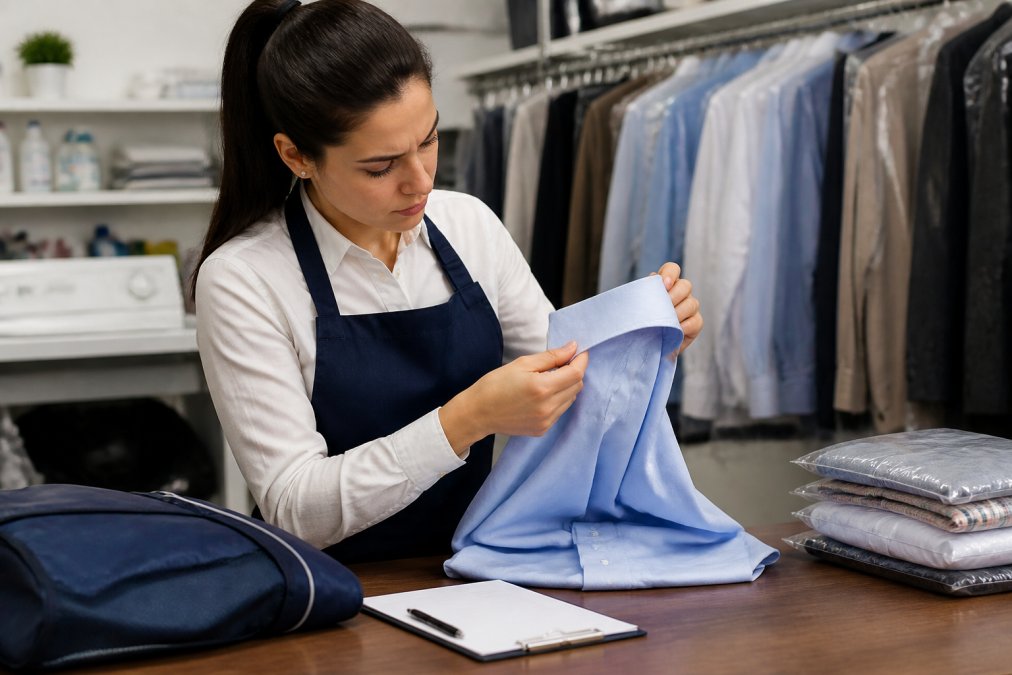
Inspect every item within 24 hours of delivery, in good lighting, before removing tags or wearing anything. Late inspection is the biggest reason claims get denied.
Drop-Off and Pick-Up Checklist
Use the same checklist at both ends of the service:
- Count every item against the receipt
- Photograph stains, tears, or missing buttons before drop-off
- Note existing wear on collars, cuffs, and hems
- Check care labels are present and legible
- At pickup, inspect in daylight, not dim entryway light
- Flag any new damage the same day, in writing
How to File a Laundry Service Damage Claim
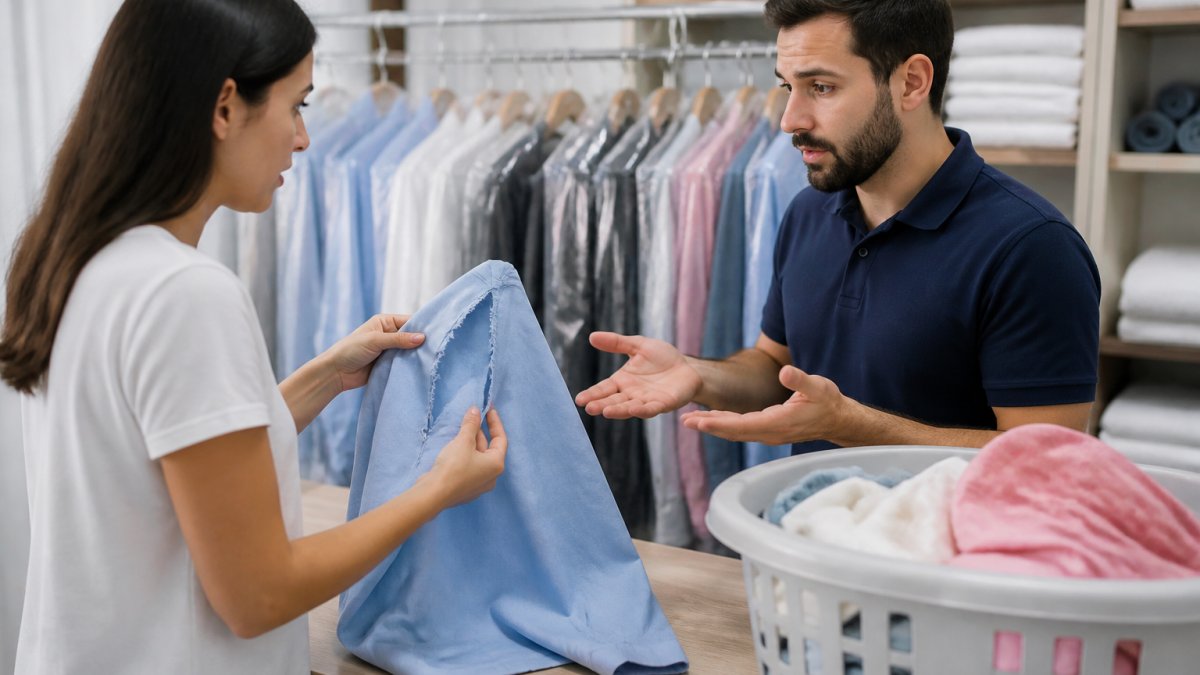
File the claim the same day you notice the damage, in writing, with photos attached. Speed establishes that the damage was not caused after delivery.
The steps:
- Contact the provider in writing (email or text, not a phone call)
- Attach your before and after photos
- Include your receipt and item count
- State the specific damage and the date you received the order
- Request a written response within a set window, such as 10 business days
- Keep a copy of everything
Documenting Damage With Photos and Receipts
Receipt retention is the backbone of any claim: it proves the item was in the provider's possession and gives the drop-off date. Without it, you rely on memory against their records.
Using a Laundry Service Damage Claim Template
Damage Claim Customer name: [Your name] Order number: [Order #] Drop-off date: [Date] | Delivery date: [Date] Item(s) affected: [Describe each item] Damage observed: [Describe the damage in plain terms] Photos attached: [Yes/No, list files] Receipt attached: [Yes/No] Requested resolution: [Repair, replacement, or service credit] Please respond in writing by: [Date]
Dry Cleaning Liability Laws in Florida: What You Need to Know
Florida has no single dry cleaning liability statute. Three layers of law govern what happens when a Miami cleaner damages your garment: the written service contract, Florida's consumer protection statute, and general bailment principles from common law.
The Contract Is the First Layer
When you hand garments to a cleaner, Florida courts treat the transaction as a bailment: you transferred possession of your property for a specific purpose, and the cleaner owes a duty of reasonable care. The written ticket or service agreement modifies that default duty, which is why the terms printed on the back of a drop-off receipt matter more in Florida than in states with a dedicated cleaner liability statute.
- A limitation of liability cap (often expressed as a multiple of the cleaning charge, not the garment's value)
- A time limit for claims (commonly 24 to 30 days from delivery)
- A requirement that unlisted or high-value items be declared at drop-off
- A disclaimer for pre-existing wear, missing care labels, and customer-directed cleaning
Florida's Consumer Protection Statute
The Florida Deceptive and Unfair Trade Practices Act, Chapter 501, Part II of the Florida Statutes, prohibits unfair or deceptive acts in trade or commerce. It is enforced by the Florida Attorney General's consumer protection division and can be raised by private parties under the statute's civil remedy provisions.
FDUTPA claims turn on the provider's conduct, not the size of the damage. Document what the cleaner promised, what it printed, and what it did. The gap between those three is where a consumer protection claim lives.
Burden of Proof and Willful Violation Rules
The burden of proof usually sits with the customer to show the damage happened during service, which is why intake photos matter. A willful violation, a provider knowingly mishandling garments or ignoring its own written terms, can carry stronger remedies than simple negligence, including attorney's fees in some FDUTPA actions.
Miami-Dade and Broward County Practical Notes
Miami-Dade and Broward consumers have a practical advantage most national guides ignore: both counties run consumer protection offices that mediate complaints against local businesses at no cost. The Miami-Dade and Broward County Consumer Protection Divisions accept complaints online and by phone, and can pressure a local cleaner to respond in writing far faster than a solo demand letter.
County consumer offices mediate; they do not award damages. If the cleaner refuses to budge, your next step is Florida small claims court, not the county office.
What Florida Law Does Not Do
Florida law does not set a statutory payout formula for damaged garments, require cleaners to carry insurance, or create a state licensing board for laundry or dry cleaning businesses. Your outcome therefore depends heavily on the paper trail you built at drop-off: the legal framework rewards documentation and punishes assumptions.
Valuing Damaged Items: Replacement Cost vs. Depreciated Value
Under most laundry damage policy terms, you receive depreciated value, not replacement cost. Depreciated value accounts for age and wear, so a five-year-old blazer does not pay out at today's retail price. Replacement cost applies only when the policy explicitly says so.
| Valuation Method | How It Works | Best For |
|---|---|---|
| Depreciated value | Current value minus age and wear | Everyday garments, older items |
| Replacement cost | Cost to buy a comparable new item | Recent purchases with receipts |
| Service credit | Free cleaning or account credit | Minor damage, loyal customers |
| Appraisal-based | Independent appraiser sets value | Luxury and designer items |
How Depreciated Value Is Actually Calculated
Depreciated value = Replacement cost × (Remaining useful life ÷ Total expected useful life)
- Everyday shirts, blouses, and casual pants: 2 to 3 years of expected life
- Suits, blazers, and dresses: 3 to 5 years
- Outerwear and coats: 5 to 7 years
- Formalwear and evening gowns: 5 to 10 years, often longer for couture
Ask the reviewer to show the useful-life schedule they applied. If they cannot produce one, their depreciated-value number is a guess, and you can push back with your own documented estimate.
What Counts as Wear
Reviewers subtract for visible wear: fading, pilling, thinning at the elbows, stretched cuffs, and repaired seams. Intake photos showing existing wear protect you, they stop the cleaner from claiming the wear was worse than it was, and stop you from overclaiming on an already tired item.
Replacement Cost: When It Applies
Replacement cost pays what it takes to buy a comparable new item today. It shows up in three situations:
- The policy explicitly promises it (rare outside premium or luxury service tiers)
- The garment was new with tags or purchased within the policy's stated window, often 30 to 90 days
- The cleaner's own negligence was so clear that it settles at full value to avoid escalation
Handling Luxury and Designer Item Claims
Designer items need an appraisal, not a guess. Keep original receipts and, for high-value pieces, a professional appraisal on file. Providers often cap payouts for unlisted luxury items, so declare them at drop-off and ask for separate documentation.
Many standard policies cap luxury payouts at a fixed dollar amount regardless of the garment's true value. If you are handing over a piece worth more than that cap, ask in writing for the cap to be waived or the item to be excluded from the standard terms before drop-off.
Negotiating the Number
You do not have to accept the first figure, initial offers commonly land at 30 to 50 percent of what a well-documented claim settles for. Bring three things: the original receipt, a current retail listing for a comparable item, and your own depreciated-value calculation using the formula above.
When to Escalate: Mediation and Small Claims Court
Escalate to mediation first, then small claims court if mediation fails. Mediation is faster, cheaper, and often resolves disputes within weeks. Florida small claims court handles monetary claims up to the state's statutory limit, which changes periodically, so confirm the current threshold with the Florida Courts small claims information before filing.
Frequently Asked Questions
What are my rights if a dry cleaner ruins my clothes in Florida?
Florida law treats garment damage claims under consumer protection statutes and common-law negligence principles. You have the right to file a claim, request an item inspection, and seek restitution for the depreciated value of the damaged garment. If the cleaner acted with willful violation of posted terms, you may pursue additional remedies. Document everything with photos and receipts, and submit a written claim to the provider before escalating to mediation or small claims court.
Are professional laundry services legally responsible for garment damage?
Yes, professional laundry services can be held liable for damage caused by professional negligence, such as chemical damage, improper sorting, or failure to follow fabric care labels. However, most service agreements limit liability to a set multiple of the cleaning charge or the depreciated value of the item. The burden of proof typically falls on the customer to show the damage occurred during the service, not from normal wear and tear.
What should a laundry service damage claim template include?
A solid laundry service damage claim template should include your contact information, the date of service, a description of the damaged item, photos showing the damage, the original receipt or proof of purchase, the estimated replacement cost or depreciated value, and a clear request for resolution. Attach a copy of the service agreement and any prior correspondence. Keep a copy for your records and send the claim via email or certified mail so you have a delivery record.
How do I prove a laundry service caused damage to my clothing?
Proving causation starts with documentation. Take dated photos of the garment before drop-off and immediately upon return. Keep your receipt retention consistent, and note any pre-existing wear on the intake form. If the damage is chemical or structural, a professional appraisal from a fabric specialist can support your claim. Under dry cleaning liability laws in Florida, the burden of proof shifts based on whether the provider followed proper quality control and sorting procedures.
What is the standard process for filing a damage claim with a laundry service?
The standard claim process starts with notifying the provider within their stated window, usually 24 to 48 hours after delivery. Submit a written claim with photos, receipts, and a completed damage claim template. The provider will then conduct an item inspection and compare findings against their terms and conditions. If the claim is approved, you may receive a service credit, repair reimbursement, or cash restitution based on the item's depreciated value. If denied, you can request mediation or file in small claims court.
How are luxury or designer items valued in a damage claim?
Luxury and designer items require an appraisal or documented purchase price to establish replacement cost. Most laundry service damage policies cap payouts at a multiple of the cleaning fee, which often falls far below the item's true value. For high-value garments, ask about the provider's coverage limits before drop-off and consider third-party insurance. Keep original receipts, authentication cards, and any prior appraisal documents to support your claim.