 how-to
Refinishing Hardwood Floors After Wine Damage in Miami
Last Updated: November 5, 2026
Quick Summary
Wine damage on hardwood is fixed by first checking whether the stain sits on the finish or has soaked into the wood. Surface stains often lift with gentle cleaning, while stains that reach the wood usually need sanding and refinishing by a professional.
- Use a white-cloth transfer test: color on the cloth means the wine is still on the finish.
- Blot spills right away with a dry cloth, and never rub, since rubbing pushes liquid deeper.
- Stop cleaning if a damp towel or soft, cupped boards suggest moisture has reached the wood.
- Test any cleaner on a hidden spot first and avoid soaking the floor.
- Ask a contractor for a written schedule that includes cure time, not just application time.
Table of Contents
- Identifying Whether the Stain Sits in the Finish or the Wood
- What to Do Immediately After a Wine Spill
- How to Get Wine Out of Wood Floor Without Refinishing
- How to Remove a Dried Red Wine Stain From Wood
- How to Remove Red Wine Stain From Unfinished Wood
- When Hardwood Floor Refinishing Is the Right Fix and How Long It Takes
- Booking Your Floor Assessment and Next Steps in Miami
- Frequently Asked Questions
Wine on hardwood floors in Miami can look like a disaster, but the fix depends on one question: did the wine sit on the finish, or did it soak into the wood? Get that answer right and you avoid paying for a refinish you don't need.
Refinishing costs add up quickly, so it pays to try the simpler fixes first. Hallmark Floors reports that typical hardwood refinishing costs run $3 to $8 per square foot, with an average project around $1,800 (Hallmark Floors hardwood refinishing cost guide). Those figures are general U.S. averages, not Miami-specific quotes, so get a local estimate before you commit.
Identifying Whether the Stain Sits in the Finish or the Wood
Wine damage on hardwood is not one problem. It is at least three, and each one calls for a different repair.
Step 1: The white-cloth transfer test. Fold a clean white cotton cloth and press it firmly on the stain for five seconds. If color transfers to the cloth, the wine is still sitting on top of the finish and has not bonded into the wood. If the cloth stays clean but the mark remains, the pigment has moved below the surface film.
Step 2: The fingernail and light test. Drag a fingernail lightly across the mark.
Step 3: The moisture check. Press a dry paper towel against the spot and hold it for 30 seconds.
Match the condition to the next step:
- Finish-level stain (color transfers, surface feels intact): Clean gently first. Most of these lift with a pH-neutral wood floor cleaner or a diluted dish-soap solution. No sanding needed.
- Wood-level stain (no transfer, dark or gray mark, grain looks muddy): Cleaning will not reach it. The fix is sanding the affected area and blending a matching stain and finish, or screening and recoating the whole floor if the mark is large or the finish is worn.
- Moisture damage (damp towel, cupped or soft boards): Stop cleaning and stop applying anything. Trapped moisture under a finish can cause board swelling, finish blistering, and eventually rot. This condition needs a professional moisture reading with a pin or pinless meter before any sanding or coating.
A common pattern in Miami homes is a finish-level stain that looks worse than it is because humidity has dulled the surrounding finish, making the spot stand out.
Watch out: Do not sand a spot you have not diagnosed.
Test any cleaner on a hidden spot first, such as inside a closet or under a rug edge. Never assume a product is safe for your floor.
What to Do Immediately After a Wine Spill
Speed matters more than anything else here. Wine that sits on wood has more time to soak in and set.
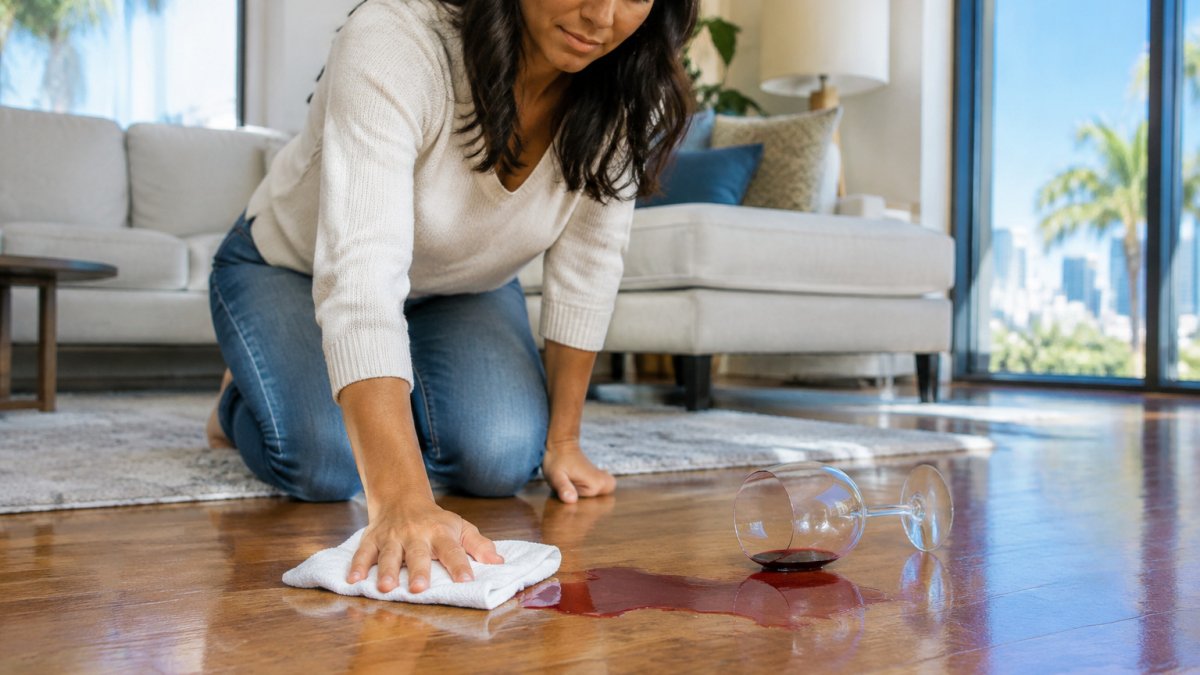
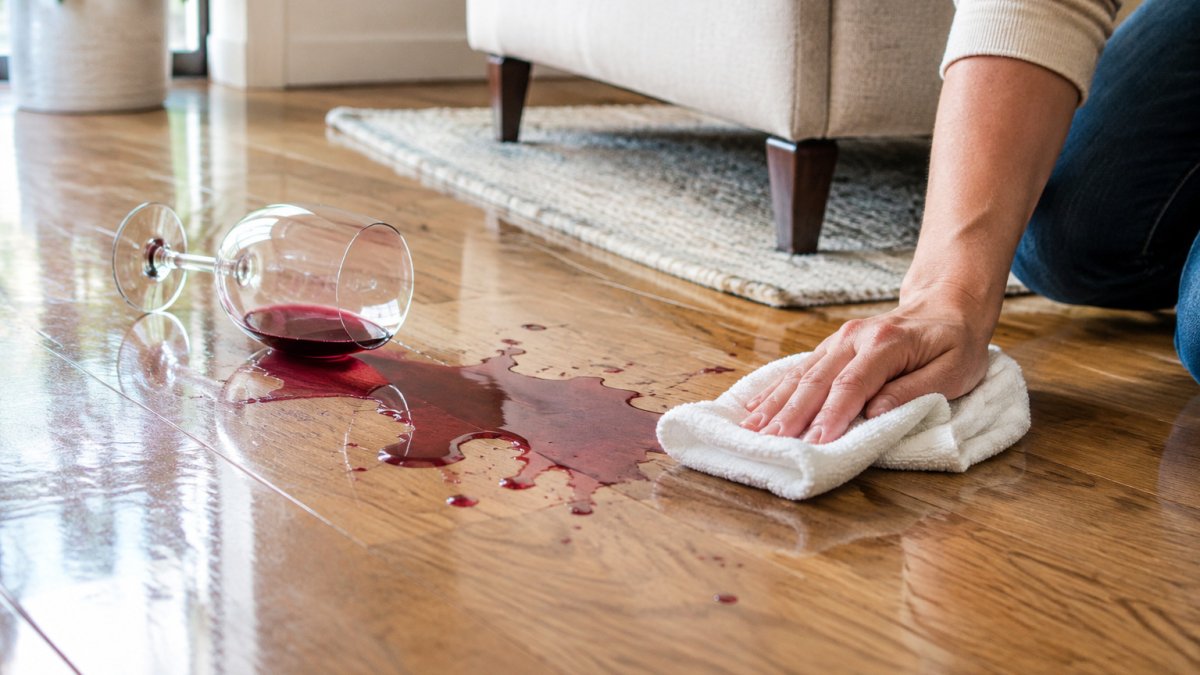
Blot the spill with a clean, dry cloth or paper towel right away. Do not rub, because rubbing pushes liquid deeper into the grain and can scratch the finish.
Once the surface is dry, look at the spot again. If you see color on the cloth or a noticeable mark, move to the cleaning steps below.
Your next step depends on what you see. A light surface mark often clears with gentle cleaning. A deep or dark mark usually needs professional attention.
!A homeowner in a sunlit Miami living room kneeling beside a hardwood floor, blotting a spill with a white microfiber cloth
How to Get Wine Out of Wood Floor Without Refinishing
Many surface wine marks can be lifted without sanding. The goal is gentle cleaning that works on the finish, not harsh scrubbing that damages it. If your wine spill is on a rug rather than a floor, see How to Get Wine Out of a Wool Rug: Step-by-Step for a related guide.
Try these steps on a hidden test spot first:
- Mix a few drops of mild dish soap into a cup of warm water.
- Dampen a soft cloth, wring it out well, and wipe the stain in the direction of the grain.
- Dry the area right away with a clean towel.
- Check the spot in good light. Repeat once if needed.
Avoid soaking the floor. Standing water can seep between boards and cause swelling or warping, especially in Miami's humid climate. A Naperville Hardwood Flooring contractor cautions that screening and recoating will not produce the same result as sanding to bare wood, particularly where water damage is present (Naperville Hardwood Flooring guidance on clean, screen and recoat).
If the mark survives gentle cleaning, it has likely reached the wood.
How to Remove a Dried Red Wine Stain From Wood
A dried red wine stain is harder to lift because the pigment has had time to set. For a dedicated step-by-step guide to cleaning wine from wood floors, see How to Clean Wine Stains from Hardwood Floors.
Start with the gentlest option. Use the soap-and-water method above, but let the cloth sit on the spot for a minute to soften the residue. Wipe, dry, and check.
If the stain stays, try a small amount of a product labeled safe for your floor finish. Apply it to a cloth, not directly onto the wood, and test it in a hidden spot first.
Stop if you see the finish cloud, lift, or change color. At that point, further cleaning will likely make things worse. Call a professional for an assessment rather than scrubbing harder.
How to Remove Red Wine Stain From Unfinished Wood
Unfinished wood absorbs liquids much faster than sealed wood, so wine can leave a deeper mark. Act fast and keep moisture to a minimum.
Blot the spot right away and dry it fully. Light sanding of the affected area may be needed to reach clean wood. Sand with the grain and use fine-grit paper, working gradually so you don't dig into healthy wood.
After sanding, you will likely need to restain and seal the area so the color matches the rest of the floor. Matching stain can be tricky, especially on older boards, and wood species, finish type, and sun exposure all affect the result.
Because unfinished wood is more vulnerable, many homeowners find that a professional handles this job more reliably.
When Hardwood Floor Refinishing Is the Right Fix and How Long It Takes
Refinishing is the right move when the wine has penetrated the wood, when the finish is worn or damaged, or when cleaning has failed.
The professional refinishing sequence, step by step:
- Inspection and moisture reading. The contractor checks stain depth, tests the existing finish, and takes moisture readings of the wood and the room. In Miami, a floor that reads high on moisture should not be sanded or coated until it stabilizes.
- Protection and containment. Furniture is moved, baseboards and cabinets are masked, and plastic sheeting seals doorways to keep dust out of the rest of the home.
- Sanding or screening. A full sand-and-refinish removes the old finish down to bare wood in stages, usually with coarse, medium, and fine grits. A screen-and-recoat scuffs the existing finish without removing it and is only appropriate when the finish is sound and the stain is surface-level.
- Stain matching. If the floor is being restained, the contractor tests stain on a spare board or hidden area to match the existing color. Wood species, age, and sun exposure all affect the match, and an exact match is not always possible.
- Coating. A sealer and then two to three coats of finish are applied, with sanding or buffing between coats. Water-based finishes dry faster and have less odor; oil-based finishes amber over time and need longer between coats.
- Curing and re-entry. This is where Miami homeowners get surprised. A water-based finish is typically walkable in about 24 hours and ready for light furniture in two to three days, but full cure takes about a week. Oil-based finishes need longer, often 48 to 72 hours before foot traffic and up to a week or more before rugs and heavy furniture. High humidity slows drying, so a Miami job can run a day or two longer than the same job in a dry climate.
Realistic timeline: A single room usually takes three to five working days from sanding to final coat, plus curing time. A whole-home job can run one to two weeks. Ask the contractor for a written schedule that includes cure time, not just application time.
Cost factors. Estimates depend on square footage, wood species, finish type, stain depth, and whether any boards need replacement. Cavalieri Flooring lists 2026 screen-and-recoat pricing at $1.50 to $3.50 per square foot, with standard full sand-and-refinish pricing starting at $3.50 per square foot (Cavalieri Flooring 2026 hardwood refinishing pricing).
Watch out: Sanding removes wood, and most hardwood floors can only be sanded a limited number of times over their life. Ask a contractor how many times your floor can still be refinished before you agree to a full sand.
The steps below show the professional refinishing sequence and the timing you can expect, including how Miami humidity affects cure time.
| Step | What happens | Time or note |
|---|---|---|
| Inspection and moisture reading | Contractor checks stain depth and takes moisture readings | Don't sand until moisture stabilizes |
| Protection and containment | Furniture moved, plastic seals doorways | Keeps dust out of the rest of the home |
| Sanding or screening | Full sand removes old finish; screening scuffs it | Screening only for sound finish, surface stain |
| Stain matching | Test stain on spare board or hidden area | Exact match not always possible |
| Coating | Sealer plus two to three coats of finish | Sand or buff between coats |
| Curing and re-entry | Finish dries and cures before use | Water-based: about a week to full cure |
| Single room | Sanding to final coat | Three to five working days |
| Whole home | Full project | One to two weeks |
Booking Your Floor Assessment and Next Steps in Miami
If the stain has reached the wood, or if you're unsure, a professional assessment is the safest next step. A contractor can check the depth of the damage, test the finish, and give you a clear quote for the right repair.
While you wait, keep the area dry and avoid harsh chemicals. If you need help with other cleaning tasks in your home, LaundrPro offers Comforter and bedding cleaning in Miami, including wash and fold service for comforters and duvets, with pickup and delivery in the area.
Acting quickly after a spill gives you the best chance of a simple fix. Start with the steps above, and call in a pro when the stain goes beyond the finish.
Frequently Asked Questions
Can you refinish hardwood floors after wine damage?
Often, yes. If the wine has discolored the finish but not the wood beneath it, a screen-and-recoat or a full sand-and-refinish can restore the surface. Actual costs depend on the floor's size, the damage, and local labor, so get a written estimate from a licensed flooring contractor before deciding.
Can red wine permanently stain hardwood floors?
It can, if the wine soaks past the finish and into the wood fibers, especially when it sits for hours or dries without being wiped. Light surface stains often lift with gentle cleaning. Deeper stains may leave a dark or gray mark that only sanding removes. Test a small hidden area first, and if the mark persists after a finish-safe cleaning attempt, plan for refinishing.
Will rubbing alcohol damage hardwood floor finish?
Rubbing alcohol can soften or dull some floor finishes, so it should not be used on a broad area. Test any cleaner, including alcohol-based products, in an inconspicuous spot first and wait for it to dry. Use the lightest effective method, and stop if the finish begins to cloud or lift.
When should you not refinish hardwood floors?
Refinishing is not the right choice when the boards are cupped, badly warped, or have been damaged by long-term water exposure that has reached the subfloor. Sanding cannot fix structural problems or deep staining in thin, worn boards. In those cases, board replacement or a professional inspection is the safer path.