 how-to
Remove Set-In Grass Stains: A Step-by-Step Guide
Table of Contents
- Can You Remove Set-In Grass Stains? The Short Answer
- Why Grass Stains Set In and Become Harder to Remove
- Immediate Steps for Fresh Grass Stains
- How Long to Soak Grass Stains for Best Results
- Best Laundry Stain Remover for Grass and Protein-Based Marks
- Removing Grass Stains From Athletic Wear and Delicate Fabrics
- How to Treat Set-In Grass Stains That Survived the Wash
- Common Mistakes to Avoid When Removing Grass Stains
Last Updated: August 29, 2026
Can You Remove Set-In Grass Stains? The Short Answer
Yes, you can remove set-in grass stains with enzymatic cleaners and oxygen-based bleach combined with cold water soaking and multiple wash cycles. Set-in grass stains are protein-based marks that have bonded to fabric fibers through heat exposure or time. The difference between a stain that disappears and one that stays permanent often comes down to method, not luck.
Heat sets protein stains permanently into fabric. Once a grass stain has been through a hot dryer, standard detergent alone won't touch it. But enzymatic cleaners designed to break down organic matter, paired with targeted soaking and mechanical agitation, can lift even stubborn stains that have survived previous wash cycles.
Why Grass Stains Set In and Become Harder to Remove
Grass stains are protein-based, not just surface dirt. When grass juice contacts fabric, the chlorophyll and plant proteins penetrate fiber strands rather than sitting on top. Fresh stains haven't fully bonded yet and respond quickly to cold water and enzymatic cleaners.
Heat is the enemy. Dryer temperatures, hot water, and direct sunlight cause protein molecules to cross-link with fabric fibers at a molecular level, making the stain part of the textile itself. Time compounds the problem, a stain left for a week is harder to remove than one treated within hours. Combined with heat exposure, a months-old grass stain can feel impossible to budge.
Fabric type matters too. Delicate fibers like silk and wool hold stains more stubbornly than sturdy cotton or synthetic blends. This is why athletic wear sometimes responds better to aggressive treatment than dress clothes.
Immediate Steps for Fresh Grass Stains
Step 1: Blot and Avoid Heat
The moment grass stains a garment, blot the area with a clean white cloth. Don't rub, rubbing pushes the stain deeper into fibers. Press firmly to absorb excess grass juice, then flip the cloth and blot again with a clean section.
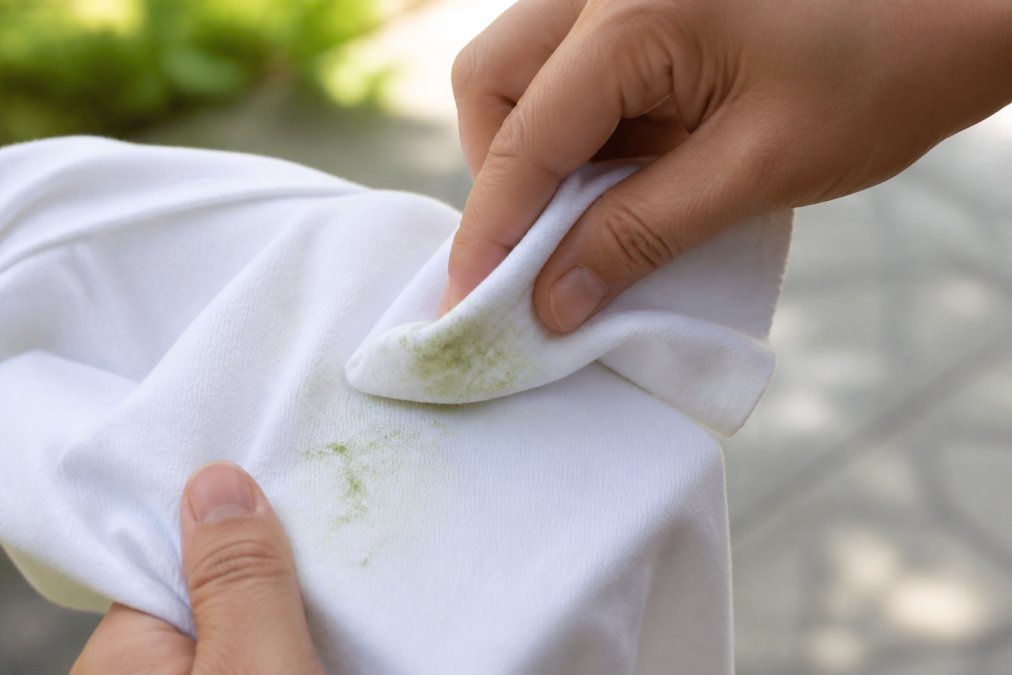
Never apply heat to a fresh grass stain. No hot water, no dryer, no direct sunlight. Heat will bond the protein to the fiber immediately, making removal exponentially harder. This is the single most common mistake, people assume a quick wash and dry will solve it, then find the stain has set.
Step 2: Pre-Treat With Cold Water
Rinse the stained area with cold water from the back of the fabric, pushing water through the stain rather than rubbing it. This flushes out loose grass particles and prevents the stain from spreading. Cold water keeps fibers tight and prevents the stain from setting further.
Step 3: Apply an Enzymatic Cleaner
Enzymatic cleaners contain protease enzymes that cut protein chains apart, allowing the stain to lift away from fibers. Apply the cleaner directly to the damp stain and let it sit for 15-30 minutes. After this window, gently work the cleaner through the stain with a soft cloth or old toothbrush using light pressure, then rinse thoroughly with cold water.
How Long to Soak Grass Stains for Best Results
Soaking gives enzymatic cleaners and oxygen-based bleach time to penetrate fibers and break down stain molecules. For fresh grass stains, 2-4 hours of soaking in cold water with an oxygen-based bleach or enzymatic cleaner is usually enough. For set-in stains that have survived previous washes, overnight soaking (8-12 hours) often produces better results.
Cold water during soaking keeps fibers closed and prevents the stain from spreading or setting deeper. For the most stubborn set-in stains, consider multiple soaks. Remove the garment after the first soak, wash it, and if the stain remains, soak again. Some stains require two or three cycles before they fully release.
Oxygen-based bleach is safer than chlorine bleach for colored fabrics and most fiber types. When combined with enzymatic cleaners in a cold-water soak, oxygen bleach can handle stains that detergent alone cannot touch.
Best Laundry Stain Remover for Grass and Protein-Based Marks
Enzymatic Cleaners and Oxygen-Based Bleach
Enzymatic cleaners are the gold standard for protein-based stains like grass, blood, and sweat. The enzymes literally break apart the protein chains holding the stain to the fabric. Oxygen-based bleach (also called color-safe bleach) works through a different mechanism, releasing oxygen atoms that oxidize stain molecules. Unlike chlorine bleach, oxygen bleach is safe for most colored fabrics.
The best results come from combining both: apply an enzymatic cleaner first to break down the protein, then soak in oxygen-based bleach to lift any remaining residue.
Household Ingredients That Work
White vinegar is acidic enough to break down some stain compounds. Mix equal parts white vinegar and cold water, apply to the stain, and let it sit for 30 minutes before rinsing. This works best on fresh stains; set-in stains usually need stronger treatment.
Rubbing alcohol can help dissolve some stain compounds on fresh marks. Apply it directly to the stain, let it sit for 10-15 minutes, then rinse with cold water. Baking soda mixed into a paste with cold water can provide mild abrasive action as a secondary treatment.
For set-in stains, these household options are usually insufficient on their own. Commercial enzymatic cleaners are formulated specifically for protein stains and outperform household alternatives on stubborn marks.
Removing Grass Stains From Athletic Wear and Delicate Fabrics
Cotton and Polyester Performance Fabrics
Athletic wear made from cotton blends and polyester is generally forgiving for stain removal. These fibers are durable enough to handle aggressive treatment with enzymatic cleaners and oxygen bleach. The tight weave of performance fabrics resists stain penetration, meaning stains often sit on the surface longer before bonding deeply.
For cotton athletic wear, cold-water soaking with an enzymatic cleaner followed by a wash cycle in cold water usually removes grass stains effectively. Polyester responds even better because synthetic fibers don't absorb stains as readily as natural fibers.
Wool and Silk: Fabric-Specific Safety Warnings
Wool and silk require a completely different approach. These delicate natural fibers are easily damaged by harsh chemicals, high temperatures, and aggressive scrubbing.
For wool, use cold water only and avoid strong enzymatic cleaners. Instead, opt for a mild detergent designed for delicate fabrics. Soak the stained area in cold water with the mild detergent for 30 minutes, then gently work the solution through the fibers with your fingers. Never scrub or use a brush on wool.
Silk is even more delicate. Skip enzymatic cleaners entirely and use only cold water with a silk-specific detergent. Soak for 15-20 minutes, then rinse gently. For set-in stains on silk, professional dry cleaning is often the safer option than attempting removal at home.
Avoid oxygen-based bleach on wool and silk unless the product specifically states it's safe for these fibers.
How to Treat Set-In Grass Stains That Survived the Wash
Agitation and Scrubbing Techniques
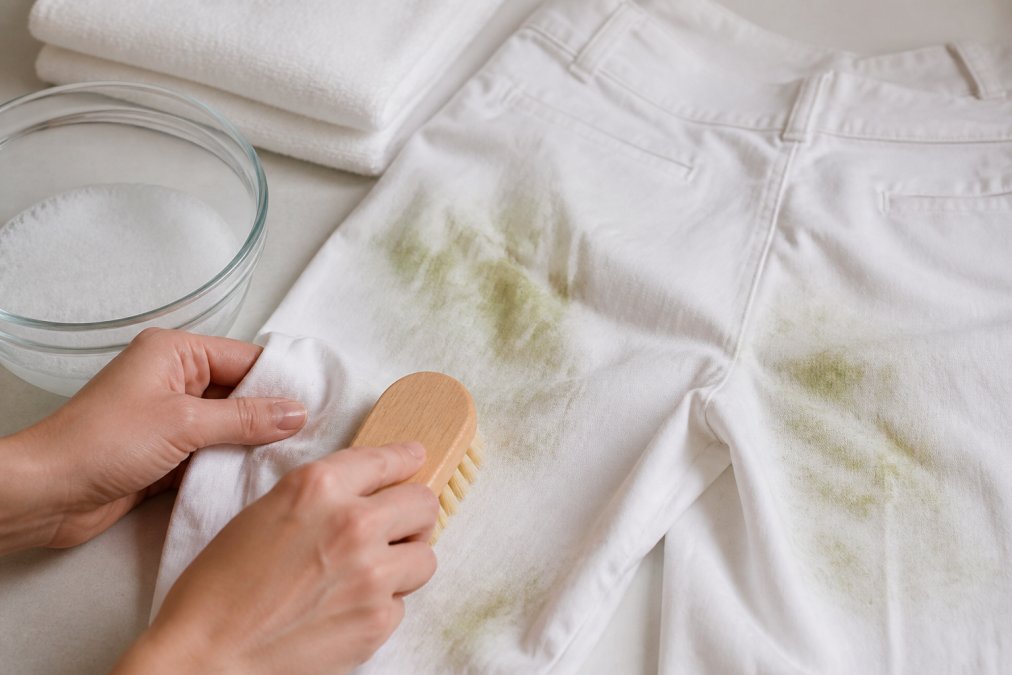
Once a grass stain has survived a wash cycle, it's bonded more firmly to the fabric. Gentle treatment is no longer enough, you need mechanical agitation to break the stain's hold. A soft-bristled brush is your best tool. After soaking the garment in an enzymatic cleaner or oxygen bleach solution for several hours, use the brush to gently work the solution through the stained area.
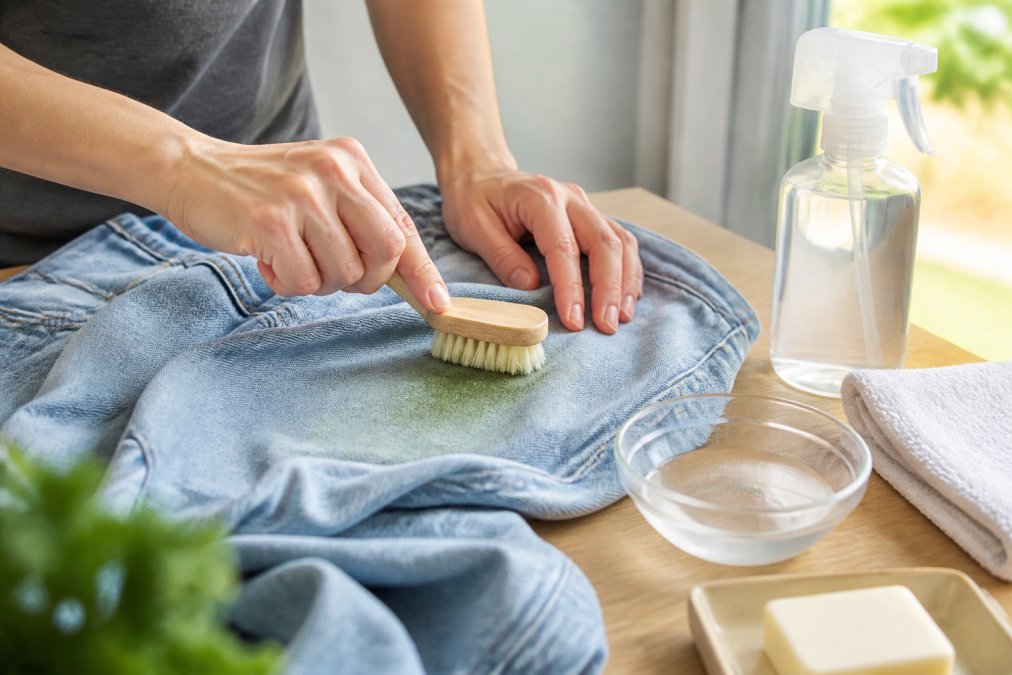
Use firm but controlled pressure in circular motions. The brush bristles should flex and work the cleaning solution into the fibers without causing visible wear or pilling. After brushing, rinse thoroughly with cold water and let it air dry or hang it in sunlight. UV light can help oxidize remaining stain compounds. Check the stain before washing, you may need another round of soaking and brushing if it remains.
Multiple Soak and Wash Cycles
Stubborn set-in stains sometimes require multiple treatment rounds. First cycle: Soak the garment in cold water with oxygen-based bleach for 8-12 hours, then wash in cold water with regular detergent. Air dry, no heat.
If the stain remains, repeat the process. Second soak: Use the same cold-water soak with oxygen bleach for another 8-12 hours, then wash again in cold water. Many stains lift completely on the second cycle.
Third cycle (if needed): For extremely stubborn stains, a third soak and wash cycle is sometimes necessary. The multiple cycles give cleaning agents time to gradually break down the stain compounds. Always air dry until you're certain the stain is gone.
Common Mistakes to Avoid When Removing Grass Stains
The biggest mistake is using heat before the stain is completely gone. One cycle through a hot dryer can permanently set a stain that would have come out with another cold-water wash. Always air dry until you're certain the stain has been removed.
Rubbing or scrubbing too aggressively on fresh stains pushes the stain deeper into fibers and spreads it across a larger area. Blotting and gentle pressure are all that's needed for fresh marks.
Using hot water on fresh grass stains accelerates bonding. Cold water is counterintuitive but correct throughout the entire treatment process.
Mixing chlorine bleach with enzymatic cleaners or other products can reduce effectiveness. Stick with one approach: either enzymatic cleaner alone, or oxygen-based bleach, or household vinegar.
Waiting too long before treating a stain is costly. A grass stain treated within hours is significantly easier to remove than one that sits for days or weeks. If you can't treat it immediately, at least rinse it with cold water and let it air dry.
Finally, assuming that one wash cycle will remove a set-in stain is unrealistic. Multiple soaks and washes are the realistic expectation for stains that have already been through heat or time.
Removing grass stains, especially ones that have already set in, requires patience and the right approach. The difference between a garment you save and one that's ruined often comes down to whether you treat it with cold water and enzymatic cleaners before heat exposure. For busy professionals and active families in Miami, stain management can feel like a constant battle. That's where professional laundry care comes in. LaundrPro handles grass stains, athletic wear, and delicate fabrics with the expertise and equipment needed to remove stubborn marks without damaging your garments. Our door-to-door service means you can focus on your day while we handle the stain removal, and we guarantee spotless results with transparent, flat-rate pricing and fast turnaround. Place your order with LaundrPro today and reclaim the time you spend fighting laundry battles.
| Treatment Method | Best For | Time Required | Temperature |
|---|---|---|---|
| Cold water rinse | Fresh stains (immediate) | 5 minutes | Cold |
| Enzymatic cleaner soak | Fresh and set-in stains | 2-12 hours | Cold |
| Oxygen-based bleach soak | Colored fabrics, protein stains | 4-12 hours | Cold |
| Soft-bristle brush agitation | Set-in stains after soaking | 10 minutes | Cold |
| Multiple soak cycles | Stubborn set-in stains | 24-36 hours total | Cold |
| White vinegar treatment | Light fresh stains | 30 minutes | Cold |
According to the American Cleaning Institute's fabric care guidelines, cold water is essential for protein-based stains because heat causes protein molecules to bond permanently to fabric fibers.
Research from the Textile Research Institute shows that enzymatic cleaners are significantly more effective on organic stains than standard detergents because the enzymes specifically target protein and plant-based compounds.
The International Textile Care Labeling Code provides guidance on fabric-specific care, including warnings about heat exposure and chemical compatibility.
Frequently Asked Questions
Q: How long should I soak grass stains before washing?
A: Soak fresh grass stains for 30 minutes to 2 hours in cold water with an enzymatic cleaner or oxygen-based bleach. For set-in stains, extend the soak to 4-8 hours or overnight. Avoid hot water, which can set protein-based stains permanently. After soaking, scrub gently with a soft-bristled brush and wash in cold water. Check the stain before drying; heat locks in remaining marks.
Q: What is the best laundry stain remover for grass stains?
A: Enzymatic cleaners work best on grass stains because they break down chlorophyll and protein-based organic matter. Oxygen-based bleach is also effective and safer on colored fabrics than chlorine bleach. Always spot test on a hidden area first to check for colorfastness. Pre-treat and let the product saturate the fibers for at least 30 minutes before washing.
Q: Can you really remove set-in grass stains after they've been dried?
A: Yes, set-in grass stains can be removed, but they require more aggressive treatment. Use an enzymatic cleaner or oxygen-based bleach and soak for 4-8 hours or overnight. Apply agitation with a soft-bristled brush to lift the stain from fiber penetration. You may need multiple soak-and-wash cycles. Delicate fabrics like wool or silk may require professional cleaning to avoid damage. If home treatments fail after 2-3 attempts, professional dry cleaners may have industrial-strength solvents that can remove stubborn marks.
Q: Should I use hot or cold water for grass stains?
A: Always use cold water for grass stains. Hot water sets protein-based stains permanently by causing them to bond more tightly to fabric fibers. Cold water helps prevent this and works with enzymatic cleaners to lift the stain. After pre-treating and soaking in cold water, you can wash in warm water during the laundry cycle, but avoid high heat. Never put stained garments in the dryer until the stain is completely gone; heat finishes the setting process.
This article was written using GrandRanker