 how-to
How do you remove grease stains from wool coats?
Last Updated: October 24, 2026
Quick Summary
To remove grease stains wool coats, act within minutes by blotting gently with a white cloth, then applying baking soda or cornstarch for 15-30 minutes to absorb remaining oil. For fresh stains on washable wool, use a wool-safe detergent solution; for dry-clean-only coats, spot-treat minimally and plan professional finishing.
- Blot grease stains immediately without rubbing, as oil penetrates deeper into fibers the longer you wait.
- Use baking soda, cornstarch, or talcum powder for 15-30 minutes to absorb excess grease after blotting.
- Test any liquid pre-treatment on an inconspicuous spot first to check for color transfer or damage.
- Never use hot water, chlorine bleach, enzyme detergents, or machine washing on wool coats.
- Stop home treatment and call a professional if the stain is larger than a quarter, older than one week, or near seams and linings.
Table of Contents
- Act Fast: Why the First Minutes Matter for Grease Stains on Wool Coats
- How to Blot Grease Stains from Delicate Fabric Without Spreading
- Absorb Excess Grease Using Powder and Household Materials
- Pre-Treat the Stain Before Washing or Cleaning
- How to Remove Old Grease Stains from Clothes
- Understanding Your Wool Coat Care Label Instructions
- When Professional Dry Cleaning for Wool Coats Is Your Best Option
- Get Your Wool Coat Professionally Restored
- Frequently Asked Questions
Act Fast: Why the First Minutes Matter for Grease Stains on Wool Coats
Learning how to remove grease stains wool coats isn't difficult if you act within minutes, the longer you wait, the deeper the oil soaks into the fibers.
Time is your biggest advantage. Fresh grease sits on the surface; set-in grease has bonded with the fibers, making removal exponentially harder.
When you delay:
- Oil penetrates deeper into fibers
- The stain spreads as you move the garment
- Body heat or friction sets the stain permanently
Stop what you're doing. Don't rub, don't pour water on it, don't panic. Remove excess grease first, then blot, here's exactly how.
How to Blot Grease Stains from Delicate Fabric Without Spreading
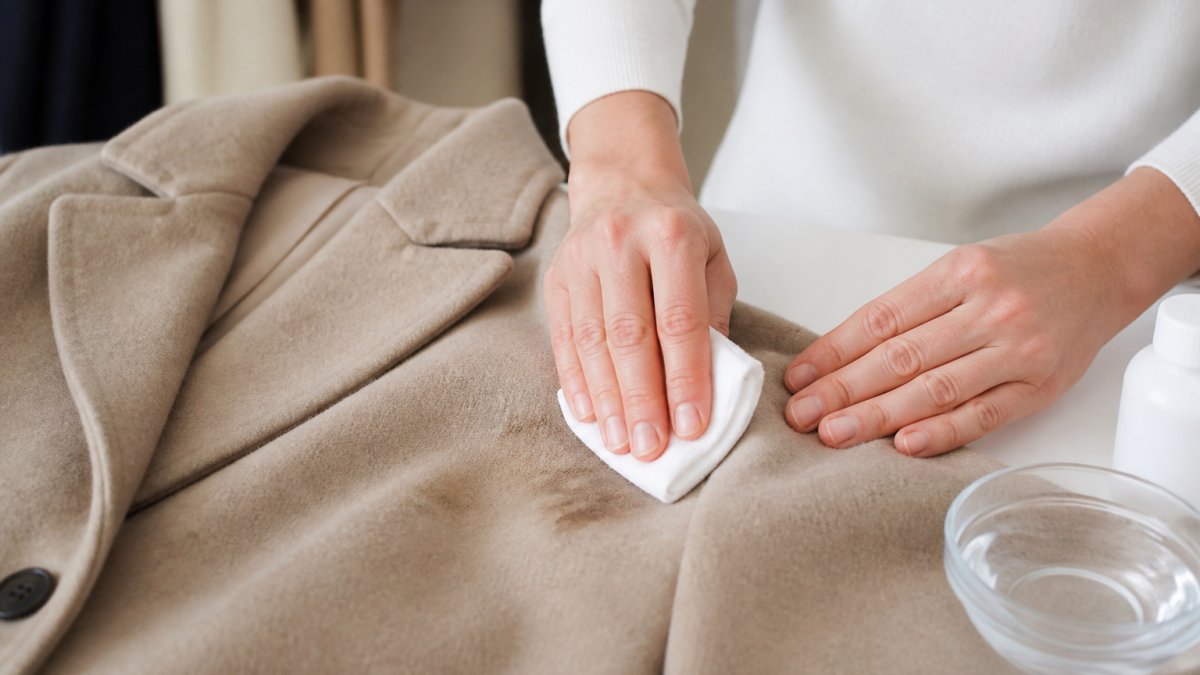
Blotting is the most important step for wool coats: rubbing spreads the stain, blotting lifts it away.
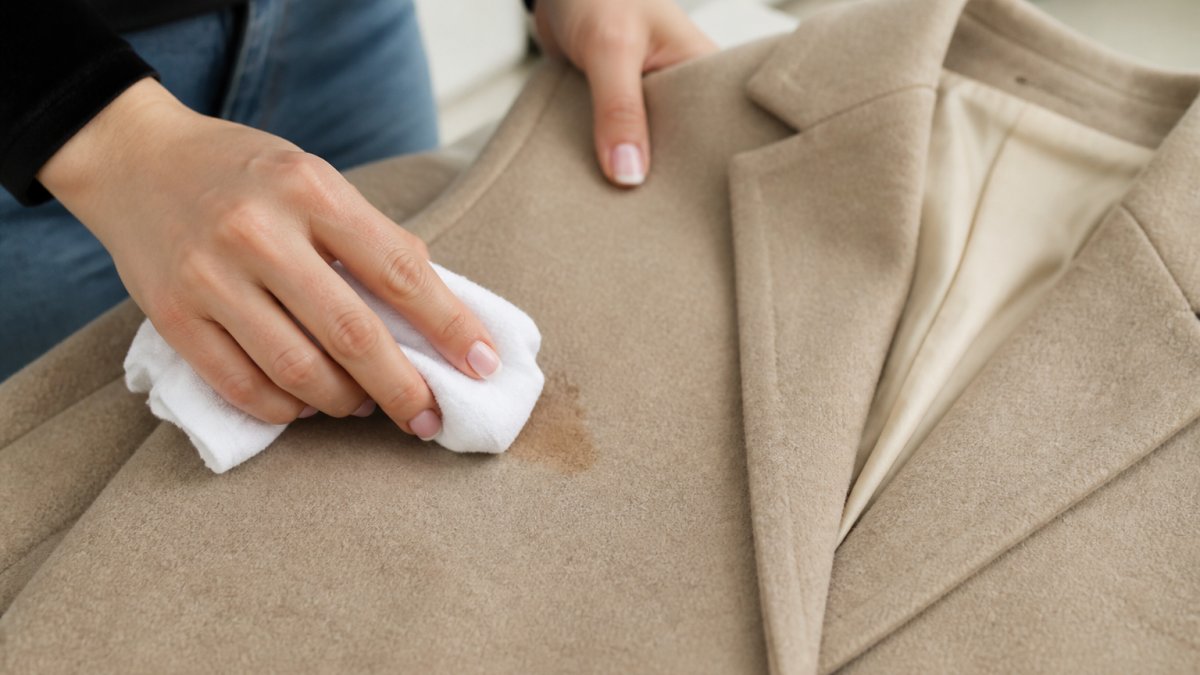
Use gentle pressure with an absorbent material, white cloth, paper towels, or lint-free fabric.
Here's the safe blotting method:
- Place the coat on a flat surface
- Press the cloth gently against the stain
- Hold for 3-5 seconds without rubbing
- Lift the cloth away slowly
- Repeat with a clean section of cloth each time
- Continue until no more grease transfers
Watch out: Rubbing in circular motions spreads grease deeper into the fibers and makes the stain larger.
The cloth should absorb the grease, not move it around, seeing the stain transfer onto the cloth means it's working.
Absorb Excess Grease Using Powder and Household Materials
After blotting, powder absorbs what's left. Common household powders work well for this step.
Cornstarch works similarly and is slightly finer, so it penetrates fabric more easily.
Talcum powder or baby powder also absorbs grease effectively.
Here's how to use powder absorption:
- Sprinkle powder generously over the stain
- Let it sit for 15-30 minutes (longer for stubborn stains)
- Gently brush or shake off the powder
- Check if grease residue remains
- Repeat if needed
The powder darkens as it absorbs grease, your signal it's working. Don't press the powder into the fabric; let gravity and time do the work.
Several common household powders effectively absorb grease from wool coats.
| Powder Type | Dwell Time | Key Benefit |
|---|---|---|
| Baking soda | 15-30 minutes | Most accessible option |
| Cornstarch | 15-30 minutes | Slightly finer, penetrates easily |
| Talcum powder or baby powder | 15-30 minutes | Absorbs grease effectively |
Pre-Treat the Stain Before Washing or Cleaning
Pre-treatment is where most home attempts on wool coats go wrong. The goal is to break down the oil so it can be lifted out, not to wash the coat. Wool is a protein fiber with overlapping scales; heat, agitation, and high alkalinity can felt those scales and strip the natural lanolin that keeps the coat soft. Match your pre-treatment to the coat's care label and construction.
First, read the coat, not just the label
Check the care label for fiber content and cleaning method. Three scenarios:
- Dry clean only (most structured wool coats): Do not submerge the coat or machine wash it. Spot-treat only, keep moisture minimal, and plan to have the coat professionally finished. Home spotting is acceptable for fresh grease; the final cleaning should be professional.
- Washable wool (labeled hand wash or machine wash on wool cycle): You can use a small amount of cool water and a wool-safe detergent, but still avoid wringing, hot water, and the dryer.
- Wool blends: A blend with polyester or nylon is generally more forgiving than 100% wool, but the wool content still dictates cold water and no agitation. If the label is missing or unreadable, treat the coat as dry-clean-only.
Check construction before applying anything wet. Linings, fusible interfacing, shoulder pads, and trims like leather buttons or suede can react differently from the wool face fabric, water-based spotting can ring the lining or bubble interfacing. Keep treatment on the wool face fabric, away from seams, lining, and trims.
Do a colorfastness test first
Before any pre-treatment, test in an inconspicuous spot, inside the hem, a pocket flap, or the underarm seam allowance. Apply a drop of your solution with a white cotton swab, wait 5-10 minutes, and blot with a white cloth. If you see color transfer or a change in the wool's shade, stop and use a professional cleaner.
Choose a wool-safe pre-treatment
Dish soap works because surfactants surround oil and lift it into water, but many are highly alkaline and can dull or felt wool with repeated use. Conservators and dry cleaners favor the mildest effective option:
- Wool-safe or pH-neutral detergent: Best default for washable wool and for cautious spotting on dry-clean-only coats. Mix a few drops in cool water.
- Mild dish soap: Effective on grease, but use sparingly and rinse thoroughly. Do not let it sit long enough to dry into the wool.
- Isopropyl rubbing alcohol (70%): Useful for oily residue because alcohol dissolves oils that water alone won't. Apply to a white cloth and dab, never pour. Test first; alcohol can affect some dyes and finishes.
Avoid chlorine bleach, oxygen bleach on colored wool, enzyme detergents (proteases attack protein fibers), and hot water, which opens wool scales, drives grease deeper, and invites shrinkage and felting.
The wool-safe pre-treatment sequence
- Blot and powder first. Finish blotting and powder absorption before any liquid so the pre-treatment has less oil to handle.
- Mix a dilute solution. A few drops of wool-safe detergent or mild dish soap in about 1 cup of cool water, not a paste, which is hard to rinse out and leaves dirt-attracting residue.
- Apply with a white cloth or soft brush. Dab the solution into the stain only; do not scrub, since agitation felts wool.
- Let it dwell 5-10 minutes. Don't let it dry; re-dampen with cool water if it starts to.
- Rinse by blotting, not soaking. Press a clean cool damp cloth onto the area repeatedly to lift soap and loosened grease, keeping moisture localized on dry-clean-only coats.
- Blot dry and air-dry flat. Press with a dry white towel, then lay the coat flat away from heat and sunlight. In Miami's humidity, run a fan or dehumidifier and allow 24 hours; never hang a damp wool coat, which can stretch the shoulders.
How to Remove Old Grease Stains from Clothes
When you need to remove grease stains wool coats that are old, the oil has oxidized and bonded with the fiber, possibly carrying dirt or dye into the wool. The methods still work but need longer dwell times, gentler handling, and a clear stopping point, repeated wet treatment is itself a risk to wool.
Why set-in grease is harder on wool
Over days or weeks, grease wicks along the fibers into the yarn structure, and oxidation makes it tackier and more yellow. Wool's scaly surface traps the oil, and heat, body heat, a car, a radiator, pushes it deeper. That's why an old stain needs several gentle cycles, not one aggressive attempt.
The extended powder-first method
Start with absorption before any liquid, and give it time:
- Apply baking soda or cornstarch generously over the stain and press very lightly so it contacts the fibers, do not grind it in.
- Let it sit 24-48 hours. For a heavy stain, change the powder once it looks saturated or clumped.
- Brush off gently with a soft brush, working from the outside of the stain inward to avoid spreading.
- Repeat if the powder is still pulling color or oil.
Then a wool-safe solvent step
For residue powder won't lift, isopropyl rubbing alcohol (70%) dissolves oils and evaporates quickly, limiting moisture exposure. Dampen a white cloth, never pour, and dab from the outside edge toward the center to avoid rings. Test on an inside hem first, and keep alcohol off acetate linings and leather or suede trims.
Troubleshooting what actually goes wrong
- A ring or tide mark appears: This is dried detergent or dissolved soil at the wet edge. Re-wet the entire area evenly with cool water on a cloth, blot, and dry flat with airflow. Work in small sections and feather the edges.
- The stain spreads: You are pressing too hard or using too much liquid. Switch to blotting and reduce the solution.
- Residue feels stiff or soapy: Rinse by blotting with a clean cool damp cloth, then dry flat. Soap left in wool attracts dirt and can dull the color.
When to stop and call a professional
Set practical thresholds rather than guessing:
- The stain is larger than a quarter, or has been there more than a week.
- Two or three home cycles have not removed it.
- The stain reaches a seam, the lining, or structured areas like lapels and shoulders.
Professional cleaners use solvents and controlled processes home methods can't match, and they finish the coat, restoring shape, pressing, and texture, after spotting. In Miami, humidity raises the stakes: a damp coat can develop odor or mildew, so if you can't dry it flat with strong airflow within 24 hours, go professional.
American Cleaning Institute guidance on stain removal and fabric care
Understanding Your Wool Coat Care Label Instructions
Your coat's care label tells you what the manufacturer recommends. Ignoring it can damage the fabric permanently.
Check the label for these details:
- Fiber content (100% wool, wool blend, etc.)
- Cleaning method (dry clean, hand wash, machine wash)
- Temperature recommendations
Wool is protein-based, unlike synthetics: it shrinks easily in hot water, loses shape if wrung or twisted, and dryers damage it permanently.
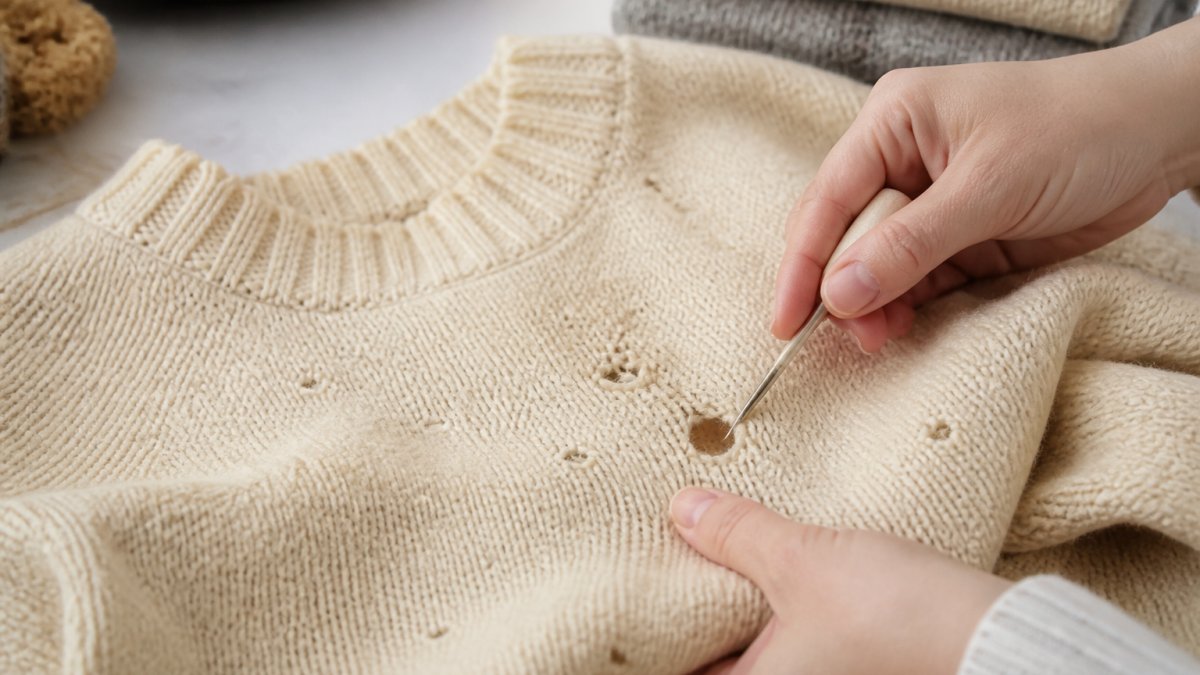
You can learn more about caring for delicate wool garments by reading about how to remove moth holes from wool sweaters, which covers similar fiber-protection principles.
The care label is your contract with the manufacturer, following it protects your investment.
When Professional Dry Cleaning for Wool Coats Is Your Best Option
Home treatment works for fresh stains. Professional cleaning handles the rest.
Use a professional cleaner when:
- The stain has been there for more than a week
- Home treatments haven't fully removed the stain
- The coat has multiple stains
Professional cleaners have industrial-strength solvents and equipment home methods can't match, and they restore the coat's shape and finish after stain removal. For Miami residents, professional dry cleaning pickup and delivery services make the process convenient, no need to leave home or work.
What professionals do differently:
- Use specialized solvents designed for oil and grease
- Apply controlled heat and pressure
- Inspect the entire coat for hidden stains
Professional cleaning costs more upfront but prevents costly mistakes, a ruined wool coat costs far more.
Get Your Wool Coat Professionally Restored
After home treatment, professional finishing ensures your coat looks and feels like new. Restoration includes:
- Deep cleaning of all fibers
- Removal of any remaining stain residue
- Shape restoration and pressing
Your wool coat is an investment: quick home action plus professional finishing keeps it wearable for years. For busy Miami professionals, LaundrPro provides door-to-door dry cleaning with fast turnaround, flat-rate pricing, and no hidden fees or subscriptions, spotless results without the drop-off hassle.
Frequently Asked Questions
What's the best way to remove a fresh grease stain from a wool coat?
Act within the first few minutes. Gently scrape off excess grease with a dull knife or spoon, then blot the stain with a clean white cloth or paper towel using downward pressure, never rub. Sprinkle baking soda or cornstarch over the damp area and let it sit for 10-15 minutes to absorb the remaining grease. Shake off the powder, then apply a small amount of dish soap mixed with cold water to the stain. Blot again with a damp cloth and allow the coat to air-dry completely away from direct heat.
Can you use dish soap on a wool coat grease stain?
Yes, but sparingly. Dish soap is effective at breaking down grease, but wool is delicate and can be damaged by harsh chemicals or excessive moisture. Use a mild dish soap diluted with cold water, mix just a few drops in a cup of water. Apply this solution only to the stained area with a soft cloth, blot gently, then rinse with clean cold water on a fresh cloth. Test the soap on a hidden part of the coat first to check for color bleeding or fiber damage.
How do you remove an old or set-in grease stain from wool?
Old grease stains require patience and gentleness. First, check the care label for fiber-specific guidance. Soak the stained area with a mixture of equal parts white vinegar and cold water for 15-20 minutes. Apply a wool-safe stain remover (designed for delicate fabrics) and let it sit for the time recommended on the product. Blot with a soft cloth, rinse thoroughly with cold water, and air-dry. If the stain persists after one treatment, stop and take the coat to a professional dry cleaner rather than risk permanent damage with repeated treatments.
Should you use cornstarch or baking soda on grease stains on wool?
Both work well as absorbents for fresh grease stains on wool. Baking soda is slightly more effective at neutralizing odor in addition to absorbing grease, while cornstarch is gentler on delicate fibers. Either powder can be sprinkled over a blotted stain and left for 10-15 minutes to draw out remaining oil. Shake off the powder gently and brush away residue with a soft-bristled brush. Avoid rubbing the powder into the fibers, as this can damage the wool's nap and leave discoloration.
Grease stains don't have to ruin your wool coat. Act fast, blot gently, use powder to absorb, and pre-treat with soap. For stains that resist home treatment or coats you want to protect completely, professional dry cleaning in Miami delivers results that last. Place your order with LaundrPro and get your wool coat back spotless and ready to wear.