 how-to
How to Store Wool Suits for Summer: A 2026 Guide
Table of Contents
- Why Proper Suit Storage Matters Before Summer Arrives
- How to Clean Suits Before Storage
- Best Garment Bags for Wool Suits
- Managing Humidity and Moisture in Your Storage Space
- How to Prevent Moth Damage in Wool
- Temperature Control and Long-Term Storage Strategies
- Preparing Your Wool Suits for Fall: Retrieval and Refresh
- Frequently Asked Questions
Last Updated: August 21, 2026
Why Proper Suit Storage Matters Before Summer Arrives
Storing wool suits correctly during warm months is the difference between a garment that lasts decades and one that deteriorates in a single season. Heat, humidity, and pests create a perfect storm for fabric damage, especially in Miami's subtropical climate where moisture levels stay high year-round.
A quality wool suit represents a significant investment. Improper storage invites mildew growth, moth larvae, and fiber breakdown that no amount of dry cleaning can reverse. This guide from LaundrPro covers exactly how to protect your wool suits for summer, whether you're storing them for three months or keeping them ready for occasional wear.
How to Clean Suits Before Storage
Never store a suit that's been worn. Dust, body oils, and invisible stains become permanent once the garment sits in storage.
Start with a gentle brush using soft bristles in downward strokes along the fabric grain, paying special attention to collars, cuffs, and seams. For visible stains, dab gently with a cool, damp cloth and mild detergent, never rub. Let the area air dry completely.
Frequent dry cleaning damages wool over time by stripping natural oils from fibers. If your suit has been worn only a few times with no visible stains, a thorough brush and air dry is sufficient. If it's been worn regularly or has stains, one professional cleaning is worth the investment.
After cleaning, hang the suit in a well-ventilated space for at least 24 hours before packing it away to allow any residual moisture to evaporate completely.
Best Garment Bags for Wool Suits
The garment bag you choose determines whether your suit emerges from storage in perfect condition or damaged beyond repair.
Breathable fabric garment covers made of cotton, linen, or muslin are the only choice for wool suits. These materials allow air circulation while protecting from dust and pests, preventing moisture from accumulating against the fabric, the primary cause of mildew in Miami's climate. Look for unbleached cotton covers, which are gentler on delicate fabrics than synthetic alternatives.
Avoid plastic garment bags entirely. Plastic traps condensation inside, creating a moist microclimate that accelerates mildew growth and fiber deterioration. Even "breathable" plastic bags restrict air movement compared to woven fabrics.
Cedar-lined garment bags offer natural moth prevention through compounds that repel moths and larvae without toxic chemicals. However, cedar alone isn't sufficient, you'll need additional moth prevention measures.
Use wooden or padded hangers with rounded shoulders. Thin wire hangers concentrate pressure on small points, creating permanent creases. Wooden hangers distribute weight evenly, preventing deformation. Cedar hangers provide both proper support and moth prevention.
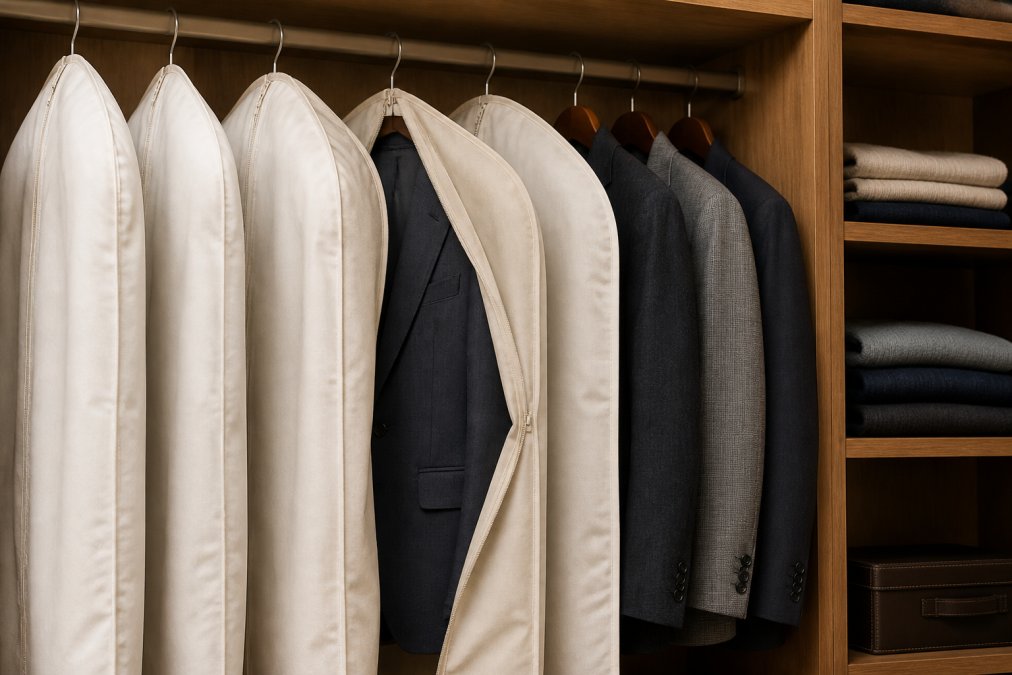
Store the bagged suit in a closet with good air circulation. Avoid sealed storage bins or airtight containers, which trap moisture and defeat the purpose of breathable bags. A standard bedroom or hallway closet works perfectly, the key is ensuring air can flow around and through the garment bag.
Managing Humidity and Moisture in Your Storage Space
Miami's humidity regularly exceeds 70% during summer months (noaa.gov). Without active moisture control, your storage closet becomes an incubator for mildew and fiber degradation.
Measure your closet's humidity with an inexpensive digital hygrometer (under $20). Aim to keep humidity below 55% for wool storage (peer-reviewed research). If your closet reads above 60%, moisture control becomes essential.
A portable dehumidifier designed for closets or small spaces removes excess moisture from the air, preventing condensation on garments. Run it continuously during summer months when humidity is highest. Many units have automatic shutoff when the water reservoir fills.
Silica gel packets provide a lower-tech alternative for smaller spaces. These packets absorb moisture and can be reused by heating them in an oven when saturated. Place several in the bottom of your garment bag or on a nearby shelf, replacing or reheating them monthly.
Ensure your closet door isn't sealed tightly, allow air to circulate between the closet and the rest of your home. A small gap under the door or occasional opening prevents stagnant, moisture-laden air from pooling around your suits.
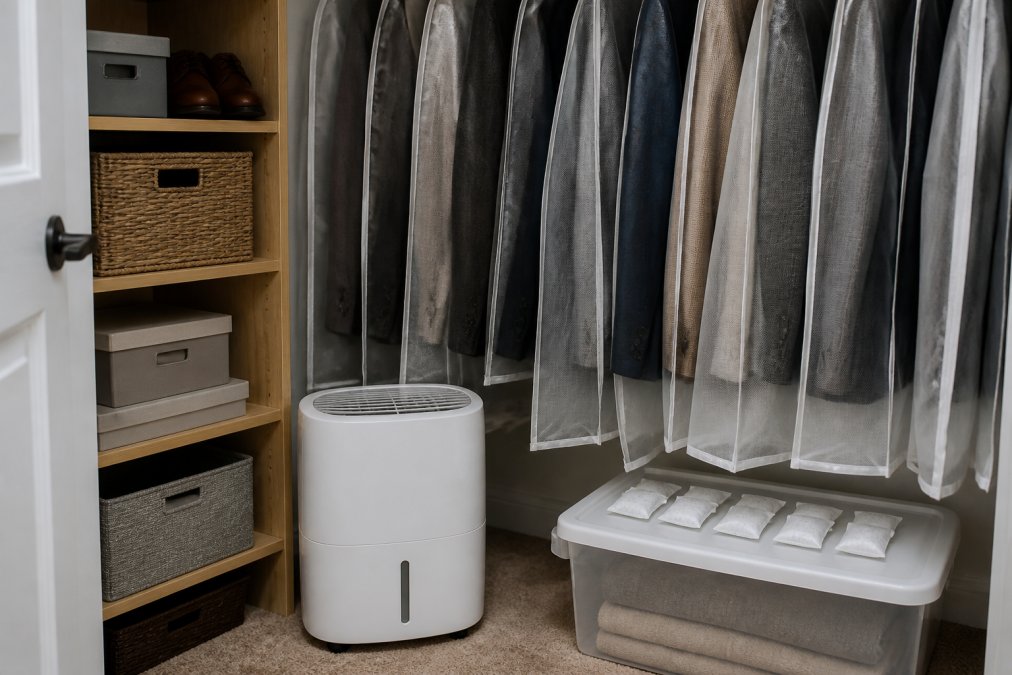
Avoid storing suits in basements or attics in Miami. Basements have higher humidity and temperature fluctuations, while attics exceed 100°F during summer. Interior closets in climate-controlled living spaces maintain more stable conditions.
How to Prevent Moth Damage in Wool
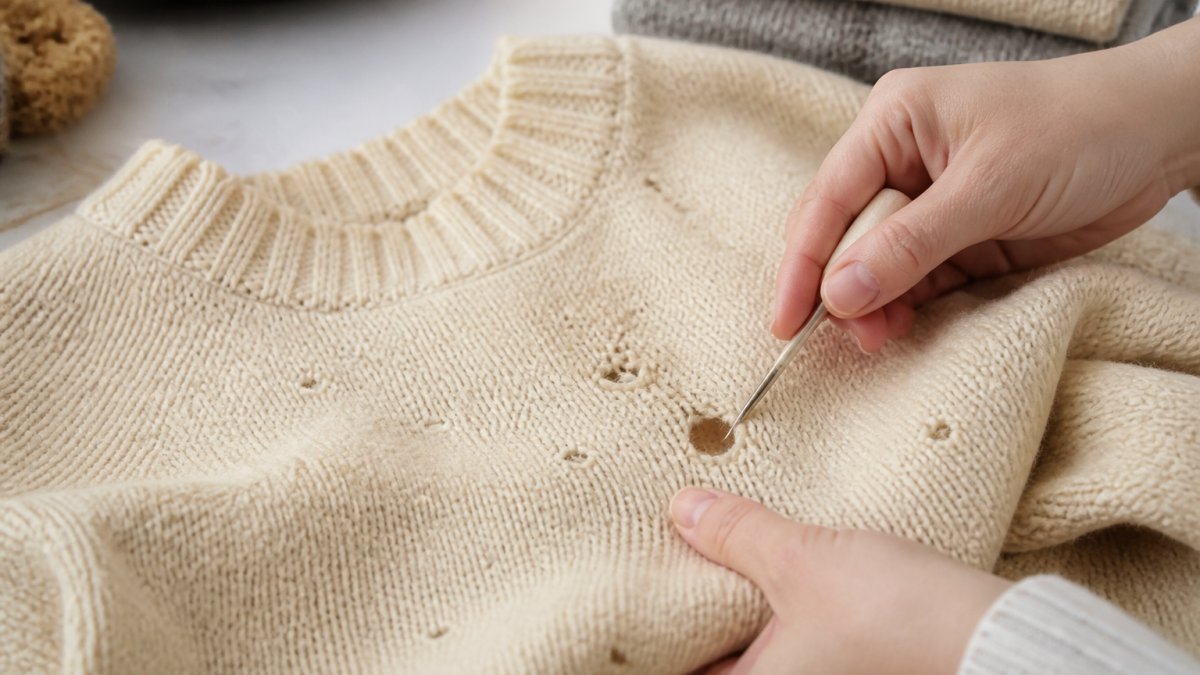
Moth larvae feed on the protein in wool fibers, creating holes and weak spots that ruin garments. Prevention is far easier than attempting repairs after damage occurs.
Cedar wood contains aromatic compounds that repel moths without toxic chemicals. Cedar hangers, blocks, or cedar-lined garment bags all contribute to pest prevention. However, cedar's effectiveness decreases over time, replace cedar blocks or refresh hangers every 6-12 months by lightly sanding the surface to release fresh oils.
Pheromone traps contain synthetic female moth pheromones that attract male moths. Once trapped, males can't reproduce, breaking the breeding cycle. Place several traps in your closet and around your storage area. They're non-toxic and provide early warning if moths are present.
Cleanliness is fundamental. Moth larvae thrive on dust, lint, and body oils. A thoroughly cleaned suit is far less attractive to moths. Vacuum your closet floor and shelves before storing suits to remove any lint or dust that might attract pests.
Inspect your suits every few weeks during storage for small holes, webbing, or larvae. Early detection allows immediate action before significant damage occurs.
If you discover moths or larvae, isolate the affected suit immediately in a plastic bag to prevent infestation from spreading. Professional dry cleaning can kill existing moths and larvae. After cleaning, store the suit in a fresh garment bag with new cedar and pheromone traps.
Temperature Control and Long-Term Storage Strategies
Temperature stability matters more than most people realize. Wool fibers expand and contract with temperature changes, causing fiber stress and premature aging.
The ideal storage temperature for wool is between 60-70°F (the FDA). Most climate-controlled homes maintain this range naturally. Avoid spaces with temperature swings like basements or attics. Interior closets in your main living space provide the most stable environment.
For long-term storage beyond a single season, clean suits again before retrieving them. Even in ideal conditions, dust settles over extended periods. A gentle brush and 24-hour air dry refreshes the fabric before wearing.
Acid-free tissue paper provides extra protection for extended storage. Wrap the suit loosely in acid-free tissue before placing it in the garment bag. Never use regular tissue paper or newspaper, which contain acids that damage wool over time.
Consider professional storage services for high-value suits. Specialty dry cleaners in Miami offer climate-controlled storage specifically designed for formal wear, handling environmental management for you while maintaining humidity, temperature, and pest prevention.
Preparing Your Wool Suits for Fall: Retrieval and Refresh
When summer ends and you're ready to wear your wool suits again, proper retrieval matters.
Remove the suit from the garment bag and hang it in a well-ventilated space for at least 48 hours to allow residual odors from storage to dissipate and the suit to acclimate to normal humidity levels.
Inspect the suit thoroughly for moth holes, mildew spots, or discoloration. Address any damage before wearing. Minor moth holes can be professionally repaired by a skilled tailor.
Refresh the fabric with a gentle brush in downward strokes along the grain to remove surface particles.
A light steam refresh can help remove wrinkles and odors. Hold a steamer 6-8 inches from the fabric and pass it slowly over the suit, avoiding direct contact. Alternatively, hang the suit in a bathroom while running a hot shower.
If the suit has been stored for several months, professional dry cleaning before wearing is reasonable. However, if storage conditions were ideal and the suit shows no visible issues, a brush and steam refresh may be sufficient.
LaundrPro's door-to-door dry cleaning service in Miami makes fall refreshing convenient. After retrieving your suits from storage, have them professionally cleaned and pressed before the season begins.
Proper wool suit storage protects your investment and extends the lifespan of your professional wardrobe. The combination of breathable garment bags, humidity control, and pest prevention creates an environment where wool thrives even during Miami's challenging summer months. For busy professionals who want to eliminate storage concerns entirely, LaundrPro offers expert dry cleaning and convenient solutions tailored to Miami's unique climate, ensuring your formal wear is always ready when you need it.
| Storage Element | Best Practice | Why It Matters |
|---|---|---|
| Garment Bag | Breathable cotton or muslin | Prevents moisture accumulation and mildew |
| Hanger | Wooden with padded shoulders | Distributes weight evenly, prevents creasing |
| Pre-Storage Cleaning | Gentle brush + spot clean or professional dry clean | Removes oils and stains that attract pests |
| Humidity Level | Below 55% | Prevents mildew and fiber degradation |
| Moisture Control | Dehumidifier or silica gel packets | Removes excess moisture from storage air |
| Pest Prevention | Cedar + pheromone traps | Stops moth breeding cycle before damage occurs |
| Temperature | 60-70°F, stable | Prevents fiber stress from expansion/contraction |
| Inspection Frequency | Every 2-4 weeks | Early detection of moths or environmental issues |
Frequently Asked Questions
Q: Should I dry clean my wool suit before storing it for summer?
A: Yes, cleaning suits before storage removes body oils, sweat, and dirt that attract moths and can cause permanent staining over months. However, avoid excessive dry cleaning, which weakens fibers over time. One cleaning before storage is sufficient. If your suit was worn frequently during spring, a professional cleaning ensures it's pest-free and fresh when you retrieve it in fall.
Q: What's the difference between plastic and breathable garment bags for wool suits?
A: Breathable garment bags allow air circulation and prevent moisture buildup, protecting wool from mildew and mold in humid climates. Plastic bags trap humidity and can damage natural fibers, causing yellowing and fiber degradation. For summer storage in warm, humid regions, cotton or canvas garment covers are superior because they regulate moisture while blocking dust and pests.
Q: How do I prevent moth damage in wool during long-term storage?
A: Moths target soiled fabrics, so clean suits before storing them. Use cedar hangers or cedar blocks to repel moths naturally, and place pheromone traps near storage areas to monitor for pest activity. Silica gel packets absorb excess moisture that attracts larvae. Inspect suits monthly if storing for more than three months. Avoid mothballs, which can stain and leave odors.
Q: Is the freezer method safe for storing wool suits?
A: No. Freezing wool suits is ineffective and risky. Temperature fluctuations when removing suits from the freezer cause condensation, introducing moisture that damages fibers and promotes mildew. Instead, maintain consistent cool temperatures (60-70°F) in your storage space and control humidity with dehumidifiers. This protects wool integrity without the risk of moisture damage.
This article was written using GrandRanker