 how-to
How to Remove Sweat From Dress Shirts
Table of Contents
- Why Sweat Stains Form on Dress Shirts
- What You'll Need: Essential Cleaning Supplies
- Step-by-Step Process to Remove Sweat From Dress Shirts
- How to Get Yellow Stains Out of White Shirts
- Best Laundry Stain Remover for Perspiration
- How to Prevent Sweat Stains on Dress Shirts
- Common Mistakes to Avoid
- When to Use Professional Cleaning Services
Last Updated: August 23, 2026
Why Sweat Stains Form on Dress Shirts
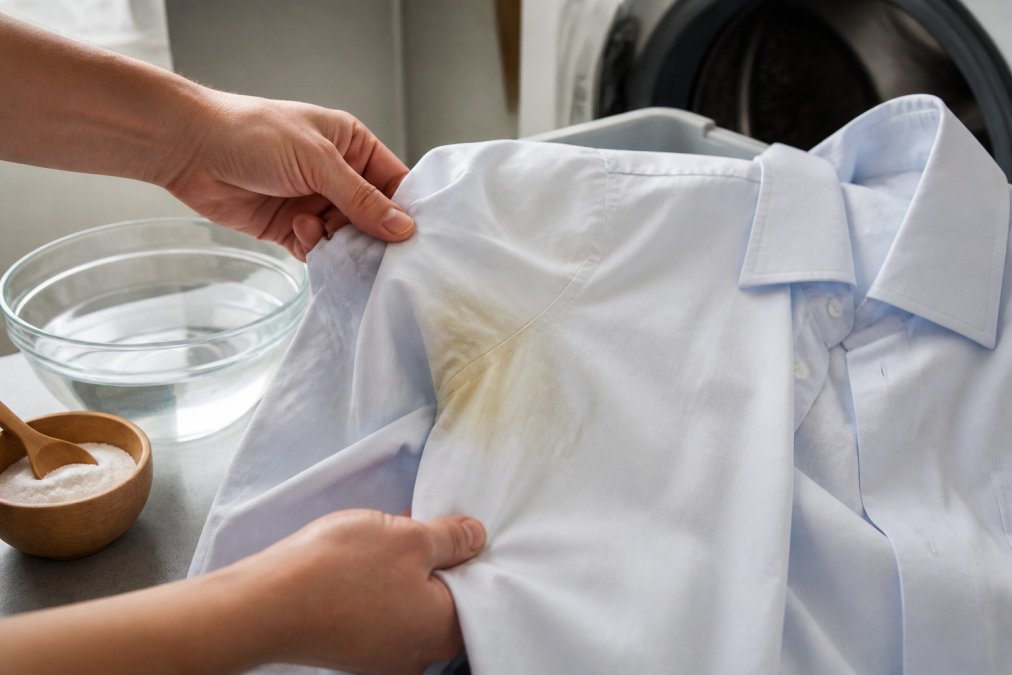
Sweat stains appear when aluminum-based antiperspirant combines with salt in sweat, creating a yellowish compound that bonds to fabric fibers (peer-reviewed research). This typically forms in the armpit area and collar, where sweat concentration and deodorant buildup are highest. The Miami climate accelerates this process, high humidity and heat keep dress shirts saturated with perspiration longer, giving the chemical reaction more time to set. Understanding this chemistry matters because fresh stains respond to mild treatments while dried, yellowed stains require stronger methods.
This guide covers how to remove sweat from dress shirts, from fresh stains to stubborn yellow marks. We'll walk through the supplies you need, the step-by-step process that works, and preventative measures that stop new stains from forming.
What You'll Need: Essential Cleaning Supplies
Gather these supplies before starting treatment:
For immediate treatment:
- Hydrogen peroxide (3% solution)
- Baking soda
- White vinegar
- Dish soap
- Cold water
- Soft brush or old toothbrush
- Clean white cloths or paper towels
For soaking and washing:
- Enzyme-based laundry detergent
- Salt
- A bucket or sink for soaking
Optional but effective:
- Oxygen-based bleach alternative
- Enzymatic cleaner for protein stains
The key is having cold water available. Hot water opens fabric fibers and allows stain compounds to penetrate deeper, while cold water keeps the stain on the surface where you can lift it away (the FDA).
Step-by-Step Process to Remove Sweat From Dress Shirts
The method depends on whether you're treating a fresh stain or one that's been sitting for days or weeks.
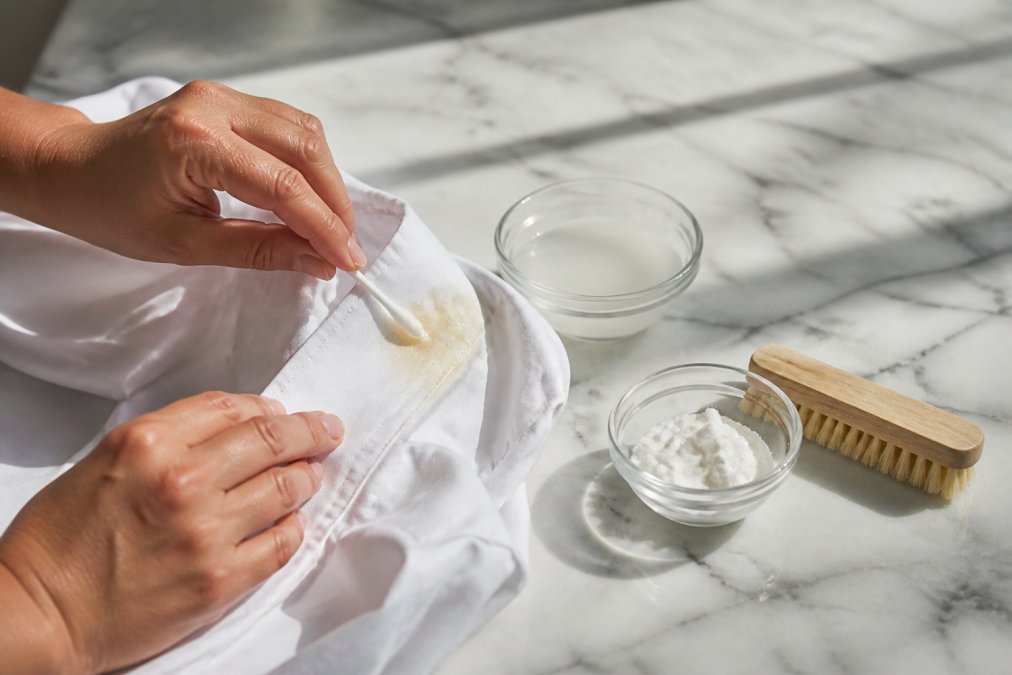
Step 1: Blot, don't rub [Time: 2 minutes]
If the stain is fresh, blot the affected area with a clean cloth. Press down gently to absorb excess moisture. Rubbing spreads the stain across more fabric and drives it deeper into the fibers.
Step 2: Create a paste for fresh stains [Time: 5 minutes]
Mix equal parts baking soda and water to form a thick paste. Apply directly to the stain and let it sit for 30 minutes. Baking soda is alkaline and neutralizes acidic sweat compounds. For fresh stains, this often prevents yellowing if caught early.
Step 3: Apply hydrogen peroxide for yellowed stains [Time: 10 minutes]
For stains that have already yellowed, apply hydrogen peroxide directly and let it sit for 5-10 minutes. You'll see the stain lighten as the peroxide breaks down the chemical bond between deodorant residue and fabric. This is the most reliable method for dried stains.
Step 4: Gentle scrubbing [Time: 3 minutes]
Using a soft brush, gently work the paste or peroxide into the fabric with light circular motions. Aggressive scrubbing damages the weave and can create pilling.
Step 5: Rinse thoroughly with cold water [Time: 5 minutes]
Rinse the treated area under cold running water until the water runs clear. Any residue left behind can reactivate when the shirt is washed or worn.
Step 6: Wash in cold water [Time: varies by machine]
Wash the shirt in cold water with enzyme-based laundry detergent. Enzyme formulas break down protein compounds in sweat more effectively than standard detergents (peer-reviewed research).
Step 7: Air dry [Time: 2-4 hours]
Do not use a dryer. Heat can set any remaining stain residue permanently. Hang the shirt to air dry or lay it flat.
Treating Fresh Sweat Stains
Fresh stains treated within a few hours respond quickly to simple methods. The baking soda paste method is often sufficient, apply it, wait 30 minutes, brush gently, rinse, and wash. Some people add a few drops of dish soap to the paste to help break down oily deodorant residue.
Removing Dried and Yellow Stains
Dried stains require stronger action since compounds have fully bonded to fibers. Apply 3% hydrogen peroxide directly to the yellow stain and let it sit for 10 minutes. For very stubborn stains, repeat the treatment before washing.
If hydrogen peroxide alone doesn't fully remove the stain, make a paste with hydrogen peroxide and baking soda instead of water. Apply, wait 15 minutes, scrub gently, rinse, and wash.
White vinegar is another option for dried stains. Soak the stained area in white vinegar for 30 minutes, then rinse and wash. Vinegar is gentler than peroxide but slower.
How to Get Yellow Stains Out of White Shirts
Hydrogen peroxide is safe on white cotton and white dress shirts without risk of bleaching surrounding fabric. Apply it, let it sit, and the stain lifts without affecting the base color.
For stubborn cases, oxygen-based bleach (like OxiClean) is effective on white fabrics. Dissolve it in cold water, soak the shirt for several hours, then wash normally.
Chlorine bleach is an option for pure white cotton dress shirts only. Dilute it heavily, one part bleach to ten parts water, and apply only to the stained area. Leave it for no more than 5 minutes, then rinse thoroughly. This should be a last resort.
Act before the stain sets. A yellow stain that's been there for weeks is harder to remove than one treated within days.
Best Laundry Stain Remover for Perspiration
Enzyme-based removers break down the protein compounds in sweat. Apply the enzyme remover, let it sit for 30 minutes, then wash.
Oxygen-based removers oxidize stain compounds, similar to hydrogen peroxide. They're gentler than chlorine bleach and safe on most fabrics.
Hydrogen peroxide itself is one of the most effective removers for perspiration stains. A 3% solution is safe on most fabrics, though always test on a hidden area first.
For professional results, LaundrPro offers specialized stain treatment for perspiration damage. The service includes pre-treatment, specialized washing, and proper drying, all designed to lift stubborn sweat stains without damaging delicate dress shirt fabric.
How to Prevent Sweat Stains on Dress Shirts
Prevention is always easier than removal.

Stop deodorant buildup. Wash your dress shirts regularly, ideally after each wearing. Weekly washing at minimum keeps buildup manageable.
Choose antiperspirant carefully. Aluminum-based antiperspirants are effective but create staining compounds when mixed with sweat. Non-aluminum antiperspirants or deodorant-only formulas avoid this chemical reaction.
Wash in cold water. Hot water can set perspiration stains. Cold water washing prevents this and is gentler on dress shirt fabrics.
Use enzyme detergent. Enzyme-based laundry detergents break down protein compounds in sweat more effectively than standard detergents.
Air dry every time. Heat from the dryer can set stain compounds permanently. Air drying guarantees that any remaining stain residue won't become fixed.
Undershirt Selection and Fabric Choices
A quality undershirt absorbs sweat before it soaks through to your dress shirt. Moisture-wicking undershirts pull sweat away from your skin and distribute it across the fabric surface where it evaporates faster. Cotton undershirts absorb moisture but can feel heavy once saturated. Synthetic blends or merino wool undershirts wick moisture better and dry faster.
Wear a fresh undershirt every day. A worn undershirt already saturated with sweat offers no protection.
For dress shirts themselves, pure cotton allows sweat to evaporate more readily. Synthetic blends or polyester trap moisture against your skin, leading to faster staining. Prioritize cotton content for both comfort and stain prevention.
Post-Treatment Fabric Care
Inspect the stain area before putting the shirt away. If any trace of yellowing remains, treat it again before storing.
Store dress shirts on hangers rather than folded. This allows air circulation and prevents moisture from reactivating old stain compounds.
Wash dress shirts within a few days of wearing them. Don't let them sit in a laundry basket for a week.
Use fabric softener sparingly on dress shirts. It can coat fibers and trap stain compounds, making them harder to remove in future washes.
Common Mistakes to Avoid
Using hot water. Hot water opens fabric fibers and allows stain compounds to penetrate deeper. Always use cold water.
Rubbing instead of blotting. Aggressive rubbing spreads the stain across more fabric and pushes it deeper. Gentle blotting lifts moisture without spreading.
Skipping the rinse step. Leftover cleaning agent residue can reactivate when the shirt is worn or washed again. Rinse until the water runs completely clear.
Using chlorine bleach on colored shirts. Chlorine bleach will lighten or discolor most dress shirt fabrics. Use oxygen-based alternatives or hydrogen peroxide instead.
Applying heat before the stain is gone. A dryer or iron will set any remaining stain residue permanently. Wait until you're certain the stain is completely removed.
Treating only the visible stain. If the stain has soaked through, treat both sides of the fabric.
Waiting too long to treat. Fresh stains respond to mild treatments. Old stains require stronger methods and multiple applications.
When to Use Professional Cleaning Services
If home treatment hasn't removed multiple stubborn stains, professional services are worth considering. Professional cleaners have access to stronger solvents and specialized equipment designed for stain removal.
For expensive dress shirts, professional treatment is insurance against accidental damage. A professional can often remove stains that home methods can't, preserving your investment.
If your dress shirts are delicate fabrics like silk blends or fine cottons, professional cleaning reduces the risk of damage.
LaundrPro offers professional stain treatment specifically designed for perspiration damage on dress shirts. The service includes pre-treatment with specialized solutions, gentle washing with enzyme detergents, and proper air drying. With flat-rate pricing and no hidden fees, you know exactly what you're paying for spotless results and fast turnaround.
Professional cleaning is practical if you're dealing with persistent staining despite prevention efforts. The cost often balances out against replacing stained shirts that home treatment couldn't save.
Sweat stains on dress shirts don't have to mean the end of a favorite garment. Catching them early and treating them with the right method, whether that's baking soda paste, hydrogen peroxide, or professional cleaning, removes even stubborn yellow stains. The real win comes from prevention: daily undershirt changes, cold water washing, and enzyme detergents stop most stains before they form. For busy professionals in Miami who need their dress shirts ready for work, combining smart prevention with quick treatment keeps your wardrobe in top condition. LaundrPro handles the stain removal and garment care so you can focus on what matters. Place Your Order today and let our team deliver spotless dress shirts with fast turnaround.
Frequently Asked Questions
Q: Can old sweat stains be removed from dress shirts?
A: Yes, dried sweat stains can be removed, though they require more aggressive treatment than fresh stains. Soak the affected area in a solution of hydrogen peroxide, baking soda, and water for 30 minutes to several hours before washing. For stubborn yellow stains, enzymatic cleaners and oxygen-based bleach alternatives work well on white fabrics. The longer a stain has set, the more time the pre-treatment needs to break down the deodorant buildup and perspiration compounds.
Q: What is the best laundry stain remover for perspiration?
A: Hydrogen peroxide combined with baking soda is highly effective for perspiration stains on white and light-colored dress shirts. For colored fabrics, oxygen-based bleach alternatives and enzymatic cleaners are safer choices. White vinegar mixed with salt also works well for fresh stains. Apply the solution directly to the stain, let it sit for 15-30 minutes, gently scrub, and rinse with cold water before washing. Always test any treatment on a hidden seam first to check colorfastness.
Q: How do I prevent yellow sweat stains on my dress shirts?
A: Wear an undershirt made from moisture-wicking synthetic fibers beneath your dress shirt to absorb perspiration before it reaches the outer garment. Apply antiperspirant the night before, not the morning of, to allow it to set properly. Wash dress shirts promptly after wearing them rather than letting sweat dry and set. Air dry whenever possible instead of using high heat, which can bond stains to the fabric permanently. Consider rotating dress shirts to reduce wear on any single garment.
Q: Does sweat permanently damage dress shirt fabric?
A: Sweat itself does not permanently damage fabric, but the combination of perspiration, deodorant buildup, and aluminum-based antiperspirant can cause yellowing and weakening of fibers over time if left untreated. Prompt treatment prevents stains from setting into the textile structure. With proper stain removal and care, dress shirts can be restored to their original condition. However, repeated exposure to untreated sweat and heat can eventually compromise fabric integrity, so consistent maintenance is key to garment longevity.
This article was written using GrandRanker