 how-to
How to Remove Grass Stains From White Sneakers
Table of Contents
- Why Grass Stains Are Tricky on White Sneakers
- What You'll Need Before You Start
- Step-by-Step: How to Remove Grass Stains From White Sneakers
- Best Cleaning Products for White Shoes by Material
- How to Dry White Sneakers Without Yellowing
- When to Use a Washing Machine vs. Hand Washing
- When to Call Professional Shoe Cleaning Services in Miami
- Conclusion
- Frequently Asked Questions
Last Updated: September 4, 2026
Why Grass Stains Are Tricky on White Sneakers
Grass stains contain chlorophyll, a pigment that bonds aggressively to fabric fibers, especially cotton canvas (PubMed). Unlike dirt, they require a chemical reaction to break down before rinsing, which is why scrubbing with plain water rarely works and often sets the stain deeper.
White fabric makes any leftover pigment immediately visible, and aggressive treatments like straight bleach can cause yellowing or damage.
Most guides recommend one generic method for every shoe, which is where they go wrong. Canvas, mesh, and leather each react differently to cleaning agents. In Miami, material-specific treatment is a reliable path to spotless results.
What You'll Need Before You Start
Gathering the right supplies prevents mid-process scrambling and damage from using the wrong tool. A common mistake is grabbing the harshest cleaner available, which can discolor white fabric or degrade synthetics.
- Hydrogen peroxide (3% solution) or white vinegar for natural stain breaking
- Baking soda to form a gentle abrasive paste
- Mild dish soap or a dedicated laundry detergent
- Soft-bristled scrub brush and an old toothbrush for seams
- Microfiber cloths for blotting and rinsing
- Warm water in a bowl or basin
Step-by-Step: How to Remove Grass Stains From White Sneakers
The complete process takes about 20 minutes of active work plus drying time. The method below works for most canvas and mesh sneakers, with adjustments for leather covered in the next section.
Step 1: Pre-Treat the Stain Immediately
Fresh grass stains are significantly easier to remove than set-in ones. As soon as you notice the stain, remove the laces and rinse the area under cool running water from the back of the fabric to push the pigment out rather than deeper into the fibers.
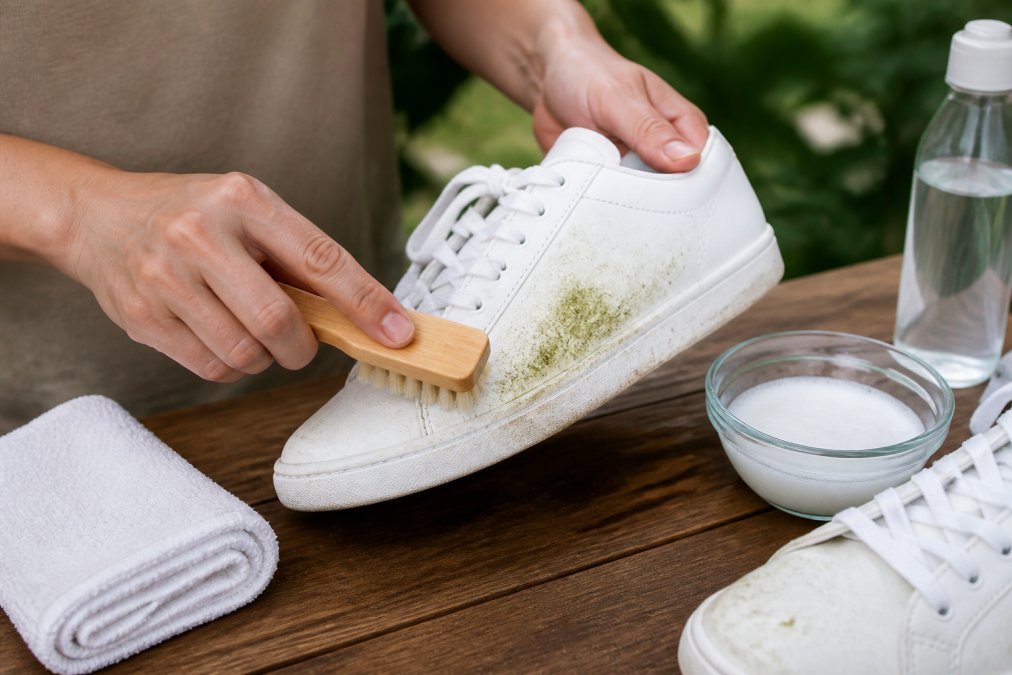
Apply a small amount of mild dish soap directly to the stain and gently work it in with your fingers or an old toothbrush. Let it sit for five minutes. Do not rub hard, as friction can grind the chlorophyll deeper into the weave.
Step 2: Apply Your Cleaning Paste
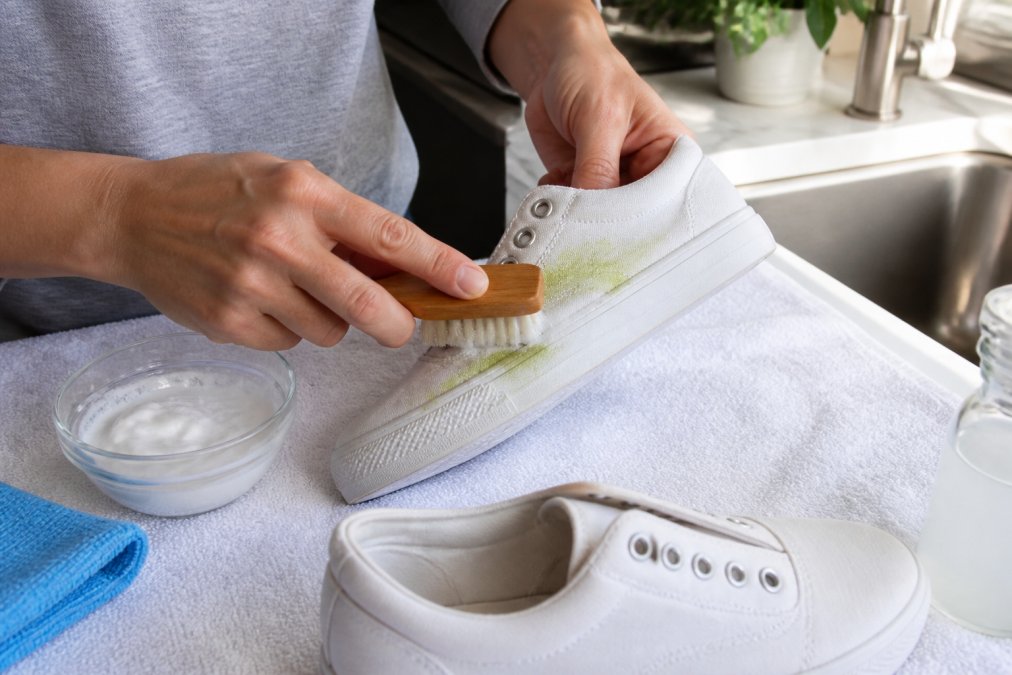
For the main treatment, mix baking soda and hydrogen peroxide into a paste consistency similar to toothpaste. The peroxide breaks down chlorophyll while the baking soda provides gentle abrasion to lift pigment.
Apply the paste generously over the stain with a soft brush or your fingers, covering the entire discolored area. Allow it to sit for 10 to 15 minutes. You should see it begin to foam slightly as the peroxide reacts with the organic matter.
Step 3: Scrub, Rinse, and Repeat
After the paste has rested, use your soft-bristled brush or old toothbrush to work it into the fabric in small circular motions, extending slightly beyond the stain to prevent a visible ring. For tough stains, apply more pressure on seams and textured areas.
Rinse thoroughly under cool running water until no paste remains. Inspect the sneaker while wet, as stains look lighter when dry. If discoloration remains, repeat the application. Most stains lift after one or two treatments; set-in stains may require three.
Best Cleaning Products for White Shoes by Material
Selecting the right cleaner depends entirely on the upper material. Using a product designed for one fabric on another can cause discoloration, stiffening, or permanent damage. Below is a breakdown for each major material type, including what to avoid.
Canvas and Mesh Sneakers
Canvas and mesh are the most forgiving materials and respond well to the baking soda and peroxide paste method, but the two fabrics require different handling.
Canvas: This tightly woven cotton can withstand moderate scrubbing. Use a soft-bristled brush or old toothbrush with the paste. For set-in stains, let the paste sit for up to 20 minutes. Canvas is the most likely material to be machine washable, but always check the care label first.
Mesh: Mesh is a delicate, open-weave synthetic; aggressive scrubbing will tear the fibers. Do not scrub. Apply the paste and use a soft-bristled brush or your fingers to gently work it in, letting the peroxide do the heavy lifting. Rinse thoroughly, as residual paste can dry stiff.
Product recommendations for canvas and mesh:
- Hydrogen peroxide (3%): The standard concentration found in most drugstores. It is a mild oxidizing agent that breaks down organic pigments without the harshness of chlorine bleach.
- White vinegar: An alternative to hydrogen peroxide for those with sensitive skin or who prefer a non-bleaching option. Mix one part white vinegar with two parts cool water. Vinegar is an acid that helps dissolve the chlorophyll. Do not mix vinegar with hydrogen peroxide, as this creates a potentially irritating acid.
- Baking soda: Acts as a mild abrasive. When mixed with hydrogen peroxide, it forms a paste that clings to vertical surfaces of the shoe.
- Avoid: Chlorine bleach, which weakens the cotton fibers in canvas and can cause yellowing on synthetic mesh.
Leather and Synthetic Uppers
Leather and synthetics require a completely different approach. The baking soda paste is too abrasive for smooth leather and can leave micro-scratches that trap dirt permanently, often invisible until the shoe is dry.
For smooth leather (full-grain or top-grain):
- Mix a few drops of mild dish soap (like Dawn or Seventh Generation) with warm water.
- Dip a microfiber cloth into the solution and wring it out thoroughly. The cloth should be damp, not wet.
- Wipe the stained area using gentle, straight strokes. Avoid circular scrubbing, which can stretch the leather.
- For stubborn grass stains, dilute hydrogen peroxide with two parts water (a 1:2 ratio). Dab this solution onto the stain with a cotton swab. Let it sit for no more than two minutes. Peroxide can strip the finish from leather if left on too long.
- Wipe clean with a damp cloth to remove any soap or peroxide residue.
- Critical step: Immediately follow with a leather conditioner (like Bickmore Bick 4 or Lexol) to replenish the oils that cleaning agents strip away. Without conditioning, the leather will dry out, crack, and become more susceptible to future staining.
For synthetic leather (PU or PVC): Synthetic leather is less porous than real leather but can still be damaged by harsh chemicals. Use the same soap-and-water method. Do not use hydrogen peroxide on synthetic leather, as it can cause yellowing or a sticky residue. A magic eraser can work on scuffs, but test it first, as it can dull the finish.
For suede and nubuck: These materials are the most challenging and should not be treated with any wet method. Water and cleaning agents will cause permanent water stains and ruin the nap. For grass stains on suede:
- Let the stain dry completely.
- Use a suede brush or a clean, dry toothbrush to gently brush the stain in one direction to lift the pigment.
- If the stain persists, use a dedicated suede eraser to rub it out.
- If the stain is still visible, professional cleaning is the only safe option. Do not attempt to use soap or water on suede.
The Role of Laces and Insoles
Do not forget the laces and insoles, as grass stains often transfer to them. Remove them before cleaning. Laces can be soaked in warm water with a drop of dish soap and a teaspoon of baking soda. Insoles should be cleaned separately with mild soap and air dried completely before being placed back in the shoe to prevent trapped moisture, odor, and mildew.
How to Dry White Sneakers Without Yellowing
The drying process is where most people undo their hard work. The yellow tinge that appears after cleaning is rarely from the stain itself; it is almost always a chemical reaction caused by improper drying.
Why Yellowing Happens
Yellowing occurs for two reasons:
- Residual detergent and cleaning agents: Soap, baking soda, and peroxide can leave microscopic residues that oxidize and turn yellow when exposed to heat or UV light. Rinsing thoroughly is just as important as cleaning.
- UV light degradation: Direct sunlight breaks down the optical brighteners in white fabric that reflect blue light to make it appear whiter, causing it to revert to its natural yellowish color (peer-reviewed research).
The Correct Drying Method
The only safe way to dry white sneakers is to air dry them in a shaded, well-ventilated area at room temperature:
- Remove excess water: Gently press the sneakers with a clean, dry microfiber towel. Do not wring or twist.
- Stuff with paper towels: Crumple white paper towels or use clean, undyed cloths inside the sneakers to hold their shape and wick moisture. Replace once damp.
- Place in a shaded area: Choose a spot with good airflow but no direct sunlight. In humid climates, use a small fan to reduce drying time.
- Flip and rotate: After 6-8 hours, remove the damp paper towels, flip the sneakers, and re-stuff with fresh ones to ensure even drying.
What to Avoid at All Costs
- Direct sunlight: As noted, UV rays cause yellowing. Even on a cloudy day, UV light penetrates. Always dry in the shade.
- Clothes dryer: The heat will not only yellow the fabric but can also shrink canvas, warp synthetic materials, and melt the glue that holds the sole to the upper. This is irreversible damage.
- Radiators, hair dryers, or heat vents: Any direct heat source will cause the same problems as a dryer. High heat accelerates the oxidation of residual cleaning agents.
- Newspaper: Do not stuff sneakers with newspaper. The ink will transfer onto the damp white fabric, creating a new, harder-to-remove stain.
Drying Time Expectations
Drying time varies by material and environment. In a dry climate, canvas may dry in 8-12 hours; in humid climates like Miami, it can take 24 hours or more. Leather dries faster than canvas. Always ensure sneakers are completely dry before wearing or storing, as trapped moisture leads to mildew.
Post-Drying Prevention: The Optical Brightener Trick
To restore the brilliant white finish after cleaning and drying, you can use an optical brightener rinse, a technique professional cleaners use to counteract the dulling effect of cleaning agents.
- After the sneakers are completely dry, mix a small amount of bluing agent (like Mrs. Stewart's Bluing) or a whitening booster (like OxiClean White Revive) with water according to the product instructions.
- Dip a clean cloth into the solution and wipe the exterior of the sneakers.
- Do not rinse. Allow the sneakers to air dry again in the shade.
The bluing agent deposits a microscopic layer of blue dye on the fabric, which optically cancels out the yellow tones and makes the white appear brighter. This is a safe, non-damaging way to maintain the crisp white look between deep cleanings.
When to Use a Washing Machine vs. Hand Washing
Machine washing is faster but carries real risks. Only machine wash sneakers if the garment care label on the tongue explicitly states they are machine washable. Canvas without leather trim generally qualifies; leather, suede, or glued-on embellishments do not.
| Cleaning Method | Best For | Risks | Drying |
|---|---|---|---|
| Hand washing | All materials, delicate uppers | Time-intensive | Air dry, 12-24 hours |
| Machine gentle cycle | Canvas and mesh only | Glue failure, sole separation | Air dry only, never machine |
If machine washing, remove the laces and insoles, place the sneakers in a mesh bag, and use cold water on a gentle cycle with mild detergent. Add a few clean towels to balance the drum. Never use fabric softener, as it leaves a residue that attracts dirt and causes yellowing.
Hand washing remains the safest method, particularly for premium pairs. The extra 15 minutes protects your investment and gives you full control over pressure and product application.
When to Call Professional Shoe Cleaning Services in Miami
Some stains and materials are beyond safe home treatment. If you have tried the paste method twice without improvement, or if your sneakers are made of delicate materials like suede, silk, or high-end leather, professional intervention is the smarter choice. Harsher chemicals at home risk permanent damage.
For residents searching for professional shoe cleaning services Miami trusts, LaundrPro offers door-to-door pickup and delivery with a fast turnaround. Our team handles stained sneakers and delicate footwear with premium product care, ensuring spotless results without the guesswork. Unlike subscription-based national apps, LaundrPro provides transparent, flat-rate pricing with no hidden fees, so you know exactly what you are paying for before we start.
This is particularly valuable in Miami, where humidity and outdoor activity create constant stain challenges. If you are short on time or dealing with a stubborn set-in stain, professionals protect your shoes and your schedule. Visit the LaundrPro website to place your order.
Conclusion
Removing grass stains from white sneakers requires the right chemistry, the correct technique for your shoe material, and patience during drying. Pre-treat quickly, use a baking soda and peroxide paste for canvas and mesh, switch to gentler soap and water for leather, and always air dry in the shade. When a stain resists your best efforts or the material is too delicate, professional cleaning services offer a reliable backup. Get started with LaundrPro for spotless results with door-to-door service.
Frequently Asked Questions
Can OxiClean remove grass stains from white shoes?
Yes, OxiClean works well on grass stains because the oxygen bleach breaks down the plant-based proteins and chlorophyll that cause the green mark. Mix a scoop with warm water to create a paste, apply it to the stained area, and let it sit for 15 to 30 minutes before scrubbing gently. Always rinse thoroughly and spot test on an unseen area first to confirm the fabric color stays stable.
How do I prevent grass stains on my white sneakers in the future?
The fastest way to prevent grass stains is to treat them before they set. Keep a stain stick or a small bottle of diluted white vinegar in your gym bag and dab the spot as soon as you step off the field. For extra protection on canvas or mesh, apply a fabric protector spray before wearing them. Let it dry completely so it forms a barrier that keeps chlorophyll from bonding to the fibers.
Is it safe to use bleach on white sneakers to remove grass stains?
Chlorine bleach is risky on most sneaker materials because it can weaken fibers and cause yellowing on mesh and synthetic fabrics. For white canvas, you can try a diluted oxygen bleach like OxiClean instead, which is gentler. If you want to use chlorine bleach, dilute it heavily and spot test first, but avoid it on leather entirely since it strips natural oils and causes cracking.
This article was written using GrandRanker
Frequently Asked Questions
Q: Can OxiClean remove grass stains from white shoes?
A: Yes, OxiClean works well on grass stains because the oxygen bleach breaks down the plant-based proteins and chlorophyll that cause the green mark. Mix a scoop with warm water to create a paste, apply it to the stained area, and let it sit for 15 to 30 minutes before scrubbing gently. Always rinse thoroughly and spot test on an unseen area first to confirm the fabric color stays stable.
Q: How do I prevent grass stains on my white sneakers in the future?
A: The fastest way to prevent grass stains is to treat them before they set. Keep a stain stick or a small bottle of diluted white vinegar in your gym bag and dab the spot as soon as you step off the field. For extra protection on canvas or mesh, apply a fabric protector spray before wearing them. Let it dry completely so it forms a barrier that keeps chlorophyll from bonding to the fibers.
Q: Is it safe to use bleach on white sneakers to remove grass stains?
A: Chlorine bleach is risky on most sneaker materials because it can weaken fibers and cause yellowing on mesh and synthetic fabrics. For white canvas, you can try a diluted oxygen bleach like OxiClean instead, which is gentler. If you want to use chlorine bleach, dilute it heavily and spot test first, but avoid it on leather entirely since it strips natural oils and causes cracking.