 how-to
How to Keep Up With Laundry Piles: A Practical System
Table of Contents
- Why Laundry Piles Build Up (And How to Stop It)
- Step 1: Sort Your Clothes by Color, Person, and Location
- Step 2: How to Create a Laundry Schedule That Actually Works
- Step 3: How to Fold Clothes Properly for Fast Storage
- Laundry Organization Tips for Small Apartments
- Managing Laundry for Families and High-Volume Households
- Overcoming the Mental Block of Laundry Overwhelm
- When to Outsource: Professional Laundry Services as a Solution
Last Updated: August 24, 2026
Why Laundry Piles Build Up (And How to Stop It)
Laundry piles compound because most people treat laundry as a single massive task instead of a consistent daily habit. The real problem isn't laziness, it's that one skipped load becomes two, then a week's worth, until you're facing an overwhelming pile.
At LaundrPro, we've worked with busy professionals and families in Miami who struggle with this exact issue. The difference between people who keep up and those drowning in laundry comes down to one thing: a system that fits their actual life, not an idealized version of it.
The mental block is real. Your brain treats a growing pile as one overwhelming project. You don't need motivation or willpower. You need a laundry routine that removes friction from every step: sorting, washing, drying, folding, and putting away. When each step is simple and predictable, laundry stops being stressful and becomes just another part of your day.
Step 1: Sort Your Clothes by Color, Person, and Location
The foundation of a working laundry routine is sorting. This creates a system that tells you exactly what needs to happen next.
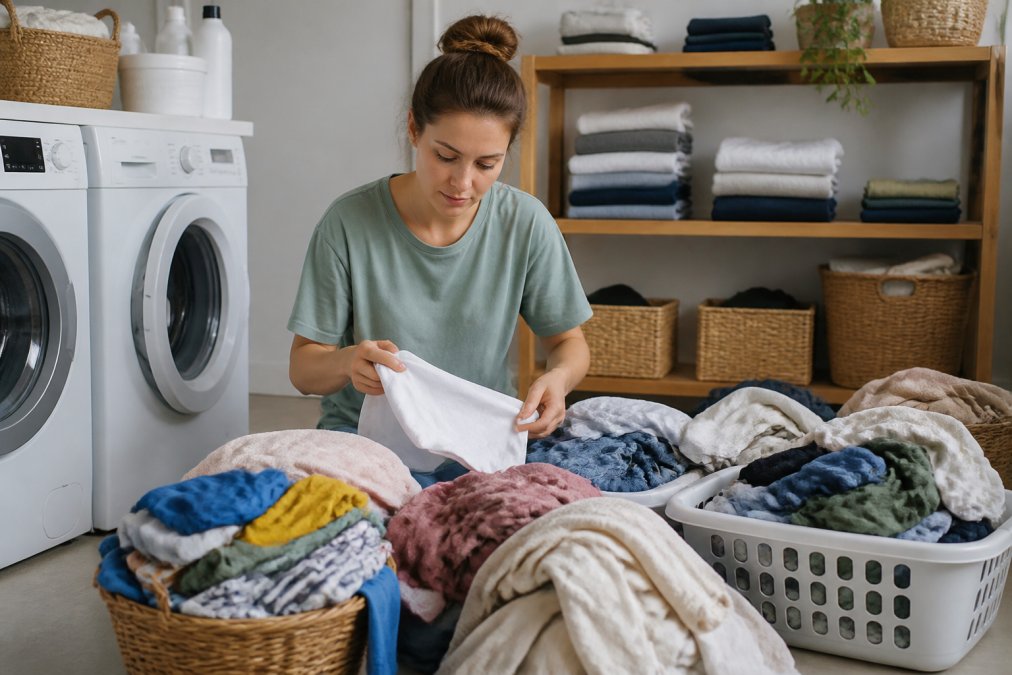
Sorting by color and fabric type
Start with basics: whites, darks, colors, and delicates. This prevents color bleeding and ensures you're using the right water temperature. Don't overthink fabric types, stick to color and temperature. Whites go in hot water, darks in cold, colors in cold (the FTC).
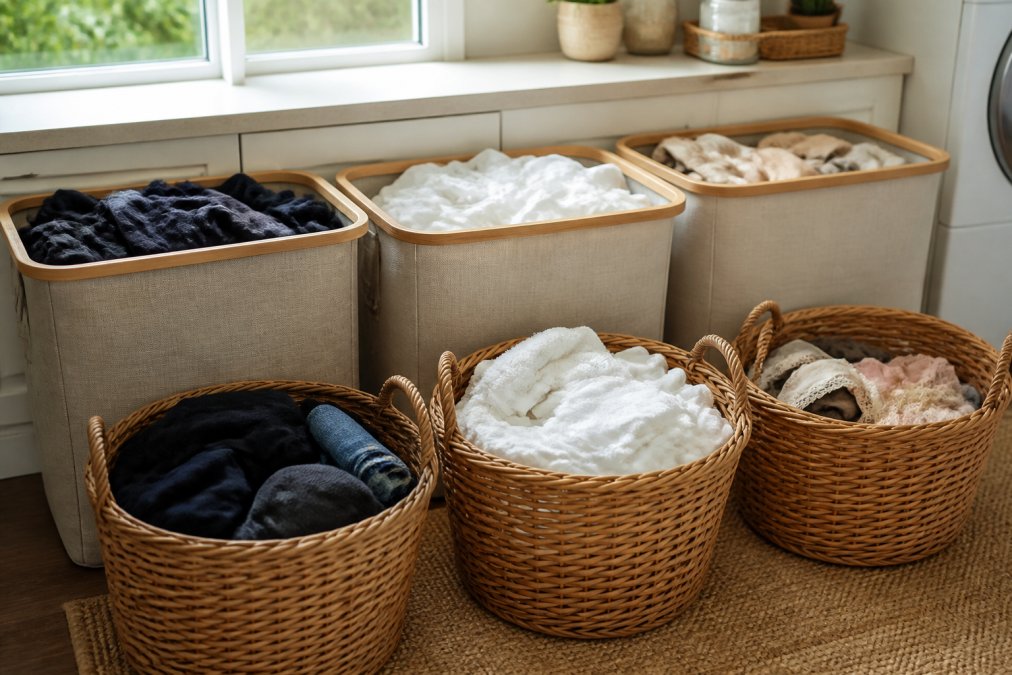
Make sorting automatic. Put dirty clothes directly into the right bin instead of a general hamper. This eliminates the sorting step entirely when wash day arrives.
Sorting by person in family households
In multi-person households, sorting by person changes everything. Instead of one massive pile, you have smaller, manageable loads tied to specific people. Create a laundry basket for each person and label them clearly. In Miami homes where space is tight, use vertical storage: wall-mounted hampers, over-the-door organizers, or hanging baskets.
This approach also prevents the "clean laundry pile" problem. When you wash and fold clothes for one person at a time, it's easier to get everything put away before moving to the next load.
Step 2: How to Create a Laundry Schedule That Actually Works
A laundry schedule only works if it matches your real life.
Daily habits that prevent pile-up
The most effective routine is one small load per day. A single load takes about 90 minutes total: 30 minutes to wash, 30 to dry, 30 to fold and put away (energy.gov). Spread across the day, this feels manageable.
The advantage is that laundry never becomes a crisis. Set a specific time and make it consistent. If you do laundry at 7 AM every weekday, your brain stops fighting it. It becomes automatic.
For unpredictable schedules, commit to at least three loads per week on fixed days: Monday, Wednesday, Friday at the same time.
Scheduling for small spaces and busy schedules
In Miami apartments with limited laundry access, do smaller loads more frequently. Instead of one large load that ties up the machine for hours, do two smaller loads. This keeps the laundry room free for other residents and prevents clothes from sitting wet in the washer.
For busy professionals, batch laundry on weekends but break it into smaller chunks: one load Saturday morning, one Saturday afternoon, one Sunday morning, one Sunday afternoon.
Use a laundry chart. Write down which days you do laundry and what you wash each day. Monday: bedding. Wednesday: towels. Friday: regular clothes. This removes decision-making and creates consistency.
Step 3: How to Fold Clothes Properly for Fast Storage
Folding is where most people lose momentum. Breaking this cycle means making folding quick and putting away immediate.
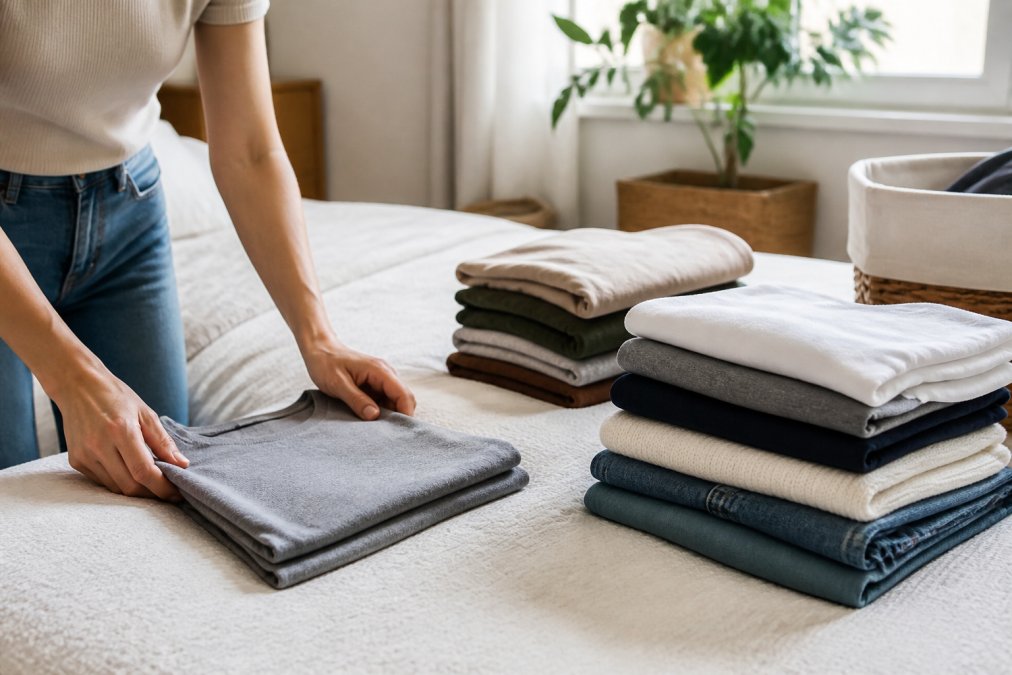
The KonMari method and other efficient folding techniques
The KonMari method emphasizes folding clothes so they stand upright in drawers, making it easier to see what you have. For busy professionals who just need clothes put away quickly, a simpler approach works better: fold into thirds and stack.
The real secret is doing it immediately. Fold clothes while they're warm from the dryer. Don't let them cool and wrinkle. Fold and put away in one session. This takes 20-30 minutes for a typical load and eliminates the "clean laundry pile" problem entirely.
For items that don't need folding, socks, underwear, some t-shirts, use drawer dividers or small baskets. The time you save lets you focus on things that actually benefit from being folded.
Putting away clothes immediately
Make putting away part of the folding process. As you fold each item, walk it directly to its drawer or closet. Don't create a "to be put away" pile. This adds minimal walking time but eliminates the mental burden of another task.
For families with children, involve kids in putting away their own clothes starting around age 4-5. It's not about perfection, it's about building the habit.
Laundry Organization Tips for Small Apartments
Space constraints in Miami apartments make laundry organization critical.
Choosing the right laundry hampers and baskets
Invest in hampers that fit your space and sorting system. If sorting by color, get three hampers labeled clearly. If sorting by person, get one hamper per person. Label them visibly so dirty clothes go in immediately.
For small apartments, vertical storage is essential. Wall-mounted hampers, over-the-door organizers, or stackable baskets save floor space. A rolling cart with three tiers can hold dirty laundry, clean laundry waiting to be folded, and folded clothes ready to be put away.
Avoid large hampers that create a "laundry pile" aesthetic. Smaller, designated containers create psychological boundaries. A full small basket signals "wash this now."
Vertical storage and compact solutions
Use closet doors. Install a tension rod and hang a small hamper or basket. Use the space above your washer and dryer for shelving. Store detergent and supplies vertically in clear containers.
For folded clothes, use drawer dividers to maximize vertical space. Stack clothes in drawers instead of laying them flat.
If you don't have a dedicated laundry room, create a small laundry station in your bedroom or closet using a rolling cart or compact shelving unit.
Do smaller loads more frequently. Instead of accumulating a week's worth of laundry, do two loads per week. This keeps the volume manageable.
Managing Laundry for Families and High-Volume Households
A family of four might produce 10-15 loads per week (the EPA). Without a system designed for high volume, laundry becomes a constant crisis.
Load size and wash cycle consistency
Wash the same types of items on the same days using the same settings. Monday: bedding and towels. Tuesday: whites. Wednesday: darks. Thursday: colors. Friday: delicates. This rhythm becomes predictable and automatic.
Don't overstuff loads. Run smaller loads more frequently instead. For a family, this might mean one load in the morning, one at lunch, and one in the evening on weekdays. That's three loads per day during the week, which prevents weekend laundry marathons.
Use the same wash cycle for similar items. This removes decision-making and ensures consistent results.
Assigning laundry tasks to household members
Distribute laundry responsibility. Teenagers can wash and dry their own loads. Younger children can help fold. Parents coordinate the overall system.
Create a laundry chart showing who does what on which days. Post it visibly. This removes ambiguity about whose responsibility it is.
Overcoming the Mental Block of Laundry Overwhelm
The psychology of laundry matters as much as the logistics. If you have ADHD or executive dysfunction, break "do laundry" into smaller, concrete steps: "put dirty clothes in the washer," "move clothes to dryer," "fold clothes," "put away clothes." Each step takes 10-20 minutes and is manageable.
Set a timer. Knowing you only have to fold clothes for 20 minutes removes the "this could take forever" anxiety.
If perfectionism is your barrier, give yourself permission to do laundry "good enough." Clothes don't need to be folded perfectly. They need to be clean and put away.
Create a laundry routine that doesn't require motivation. When laundry happens at the same time every day, you just do it because it's Tuesday at 7 AM.
The mental shift is crucial: laundry isn't a project to complete. It's a maintenance task like brushing your teeth. Do it every day as part of your routine.
When to Outsource: Professional Laundry Services as a Solution
If you're spending 5+ hours per week on laundry, or if laundry is a constant source of stress despite having a system in place, outsourcing makes financial and emotional sense.
Professional laundry services handle the entire process: pickup, washing, drying, folding, and delivery. For busy professionals and families in Miami who value their time, this eliminates the entire laundry burden.
LaundrPro offers door-to-door pickup and delivery with a 24-48 hour turnaround. Flat-rate pricing means no surprises or hidden fees.
The decision to outsource isn't laziness. It's recognizing that your time has value.
For families with young children, professional laundry services free up time for parenting instead of chores. For professionals with demanding work schedules, it removes a source of household stress.
Laundry doesn't have to be overwhelming. The system you build determines whether it becomes a manageable routine or an endless source of stress. Start small: commit to one daily load for two weeks. Notice how different your life feels when laundry piles don't exist.
If managing laundry yourself isn't working despite having a system in place, LaundrPro provides professional laundry and dry cleaning services in Miami with transparent, flat-rate pricing, no hidden fees, and fast turnaround. Our door-to-door pickup and delivery service handles everything from everyday garments to delicate items and bulky household textiles. Place Your Order and reclaim your time.
Frequently Asked Questions
How can I avoid laundry piling up in a busy household?
The key is consistency. Wash one load per day on a fixed schedule, fold and put away immediately after the dry cycle completes, and assign sorting duties to household members. Even 15 minutes daily prevents piles from forming. Using separate hampers for each person or clothing type also makes sorting faster and keeps laundry from accumulating in one overwhelming heap.
What's the best way to create a laundry schedule that actually works?
Pick one day per week as your primary laundry day, then add a second small load mid-week if needed. Write the schedule on your calendar and set phone reminders for wash and dry cycles. For families, assign one person per load or rotate daily. The schedule must fit your life, not the other way around. Even a Monday-Thursday routine beats sporadic washing that leads to pile-up.
Why does laundry feel so overwhelming to manage?
Laundry overwhelm often stems from perfectionism (waiting for a full load) or decision fatigue (how to sort). Breaking it into small daily tasks removes the mental burden. Neurodivergent individuals may struggle with time blindness or task initiation; setting phone alarms and using visual sorting systems helps. Accepting 'good enough' folding and storage also reduces the emotional weight of the chore.
How do professional laundry services help with laundry piles?
Services like LaundrPro eliminate the washing, drying, and folding steps entirely. You drop off dirty laundry and receive spotless, folded garments within 24-48 hours. This frees up valuable time and removes the mental burden of scheduling and sorting. For busy professionals and families managing high laundry volumes, outsourcing prevents piles from forming in the first place and ensures consistent, premium care for all garments.
This article was written using GrandRanker