 how-to
How to Choose a Quality Suit Tailor: 7 Checks That Matter
Last Updated: October 29, 2026
Quick Summary
To choose a quality suit tailor, first define how you will wear the suit, then inspect finished work in person and ask detailed questions before booking. Check stitching, canvas, lapels and pattern matching, and insist on an itemized written estimate.
- Tell the tailor how and where you will wear the suit before discussing fabric or fit.
- Turn finished garments inside out and check for small, even stitches with no puckering.
- Ask whether alterations are done in-house or sent to an off-site workroom.
- Request an itemized estimate that separates consultation fees, labor and materials.
- Confirm the tailor's policy if the fit is still wrong after the final fitting.
Table of Contents
- Start With What Your Suit Needs to Do
- Check Workmanship in Person Before You Commit
- Questions to Ask a Suit Tailor Before You Book
- Suit Fitting Checklist for Your Consultation and Fittings
- Understanding Suit Alteration Cost and Realistic Limits
- How Long Suit Alterations Take and How to Plan Rush Work
- Book Your First Fitting With a Tailor You Trust
- Frequently Asked Questions
Start With What Your Suit Needs to Do
Learning how to choose a quality suit tailor starts with knowing what the suit is for. A suit worn to boardrooms, weddings and summer events has different needs than one kept for funerals. Tell your tailor the job first, because it shapes the fabric, weight and fit they recommend.
Think about how and where you will wear the suit:
- Daily office wear: Needs a lighter, breathable wool or wool blend that handles warm weather.
- Events and formal occasions: Can use a richer fabric and a more structured cut.
- Travel: Benefits from wrinkle-resistant fabric and a jacket that folds without creasing badly.
- Frequent wear: Needs a fit that allows comfort when sitting, reaching and driving.
Be specific about your body and habits too. Mention if your shoulders are narrow, your posture is forward, or you carry things in one pocket. A good tailor adjusts for these details rather than forcing a standard fit onto you.
Check Workmanship in Person Before You Commit
Photos and reviews only tell part of the story. Visit the shop, ask to see finished garments, and look closely before you hand over a deposit.
Bring one of your own well-fitting jackets or trousers so you can compare the work side by side. Notice how the garment hangs on a hanger, how the shoulders sit, and whether the fabric looks clean and even.
Inspect Stitching, Seams, and Canvas
Turn garments inside out and check the seams. Stitches should be small, even and consistent, with no loose threads or puckering. Ask about the canvas or interlining inside the front of the jacket. Hand-sewn canvas helps the jacket keep its shape and mold to your body over time, while fused construction tends to feel stiffer and wear less gracefully.
Look at Lapels, Buttonholes, and Pattern Matching
Lapels should lie flat and roll smoothly, without wrinkling or bubbling. Buttonholes should be neat and firmly stitched, with no fraying at the edges. On striped or checked fabric, check that the pattern lines up across seams and pockets. Poor pattern matching is a common sign of rushed work.
Questions to Ask a Suit Tailor Before You Book
A short conversation before booking reveals how a tailor actually works, and the answers matter more than the storefront. Ask these questions in person or on the phone, and listen for specifics rather than reassurances.
About the work itself:
- Do you do the alterations in-house, or do you send garments to an off-site workroom? If work is sent out, who does the final fitting and who is accountable if the fit is wrong?
- How many suits do you alter or make in a typical month, and how many fittings does a jacket usually require?
- Can you show me a finished jacket and a finished pair of trousers, inside and out, that you completed recently?
- What is your policy if the fit is still wrong after the final fitting, do you re-cut, refund, or credit?
About pricing and timing:
- Is the estimate itemized, and does it include pressing, pick-stitching, and a second fitting?
- Is there a consultation or fitting fee, and is it credited toward the alteration if I proceed?
- What is the realistic turnaround for my garment, and what does rush service cost and change about the process?
About local logistics:
- Where do you fit clients, and what are your appointment hours?
- Do you pick up and deliver, and if so, which areas do you cover?
- How do you handle a garment that needs a second correction after I take it home?
Use the answers to verify workmanship in person. Ask to see a finished jacket on a hanger and check these points:
- Seams: turn the jacket inside out and look for small, even stitches with no puckering, loose threads, or skipped stitches.
- Canvas: press the front panel gently; a hand-sewn canvas floats and molds, while a fused front feels stiff and can bubble over time.
- Lapels: the roll should be smooth and lie flat, with no wrinkling or bubbling at the edge.
- Buttonholes: neat, firmly stitched, and free of fraying; working buttonholes on the sleeve are a sign of higher-level finishing.
- Pattern matching: on striped or checked fabric, the lines should align across the center seam, pockets, and sleeve head.
- Pressing: the finished garment should look clean and evenly pressed, with no shine or scorch marks on the wool.
Pay attention to how the tailor responds. Clear answers, a willingness to show finished work, and an itemized estimate are good signs. Vague answers about who does the work, or reluctance to show a finished garment, are reasons to keep looking.
Suit Fitting Checklist for Your Consultation and Fittings
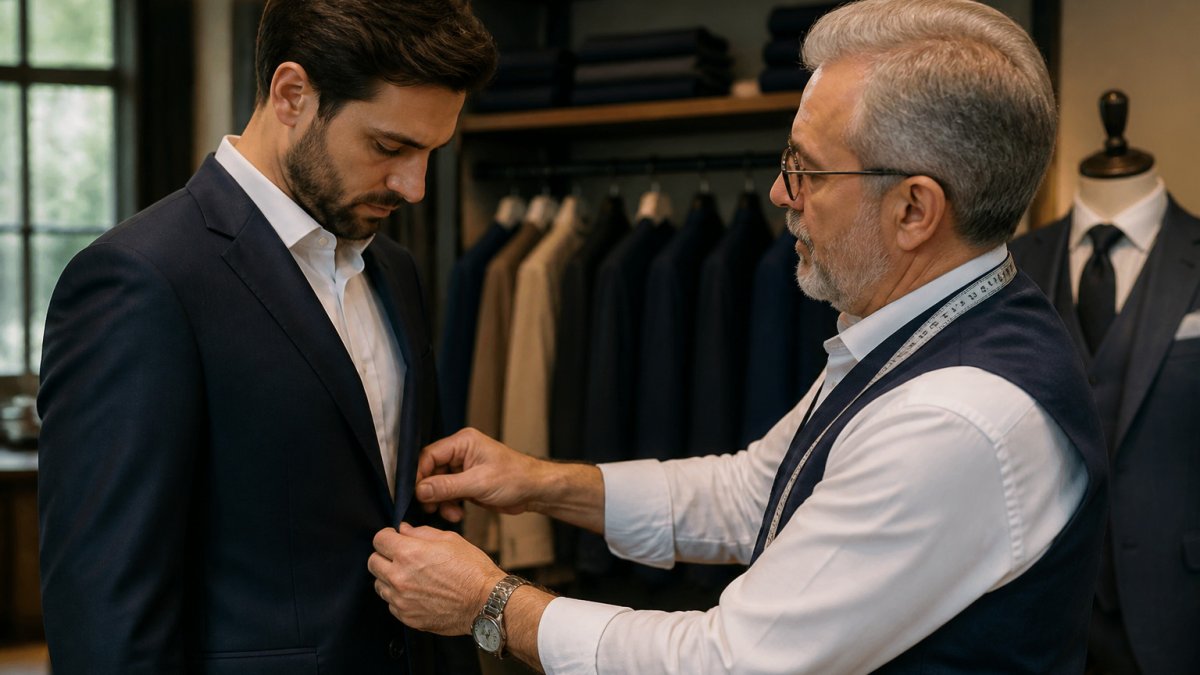
Bring the shoes you plan to wear with the suit, and wear similar underwear to your fittings. Stand naturally, then move around so the tailor can see how the jacket and trousers behave.
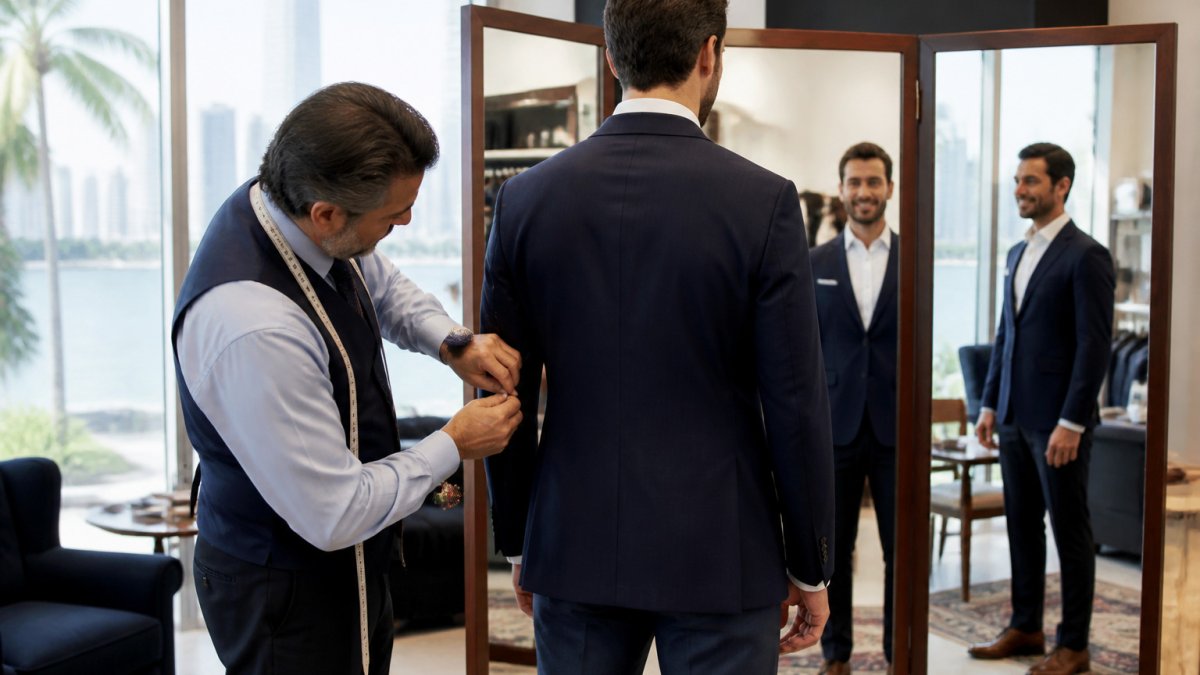
Use this checklist at each fitting:
- Shoulders sit flat and end at the edge of your natural shoulder.
- The jacket closes without pulling or creasing across the button.
- Sleeves show about a quarter to half inch of shirt cuff.
- The collar sits close to the neck without gaps.
- Trousers break lightly over the shoe, with no bunching.
- You can sit, reach and raise your arms comfortably.
If something feels wrong, say so before the tailor finishes the work. Changes are far easier and cheaper at the fitting stage.
Understanding Suit Alteration Cost and Realistic Limits
Alteration pricing is where tailors often differ, so treat the estimate as a test of the tailor's process, not just a number. A written estimate should separate three things: the consultation or fitting fee (if any), the alteration labor, and any materials such as lining, buttons, or canvas. Ask for that breakdown in writing before you leave a deposit, and ask what happens to the price if a fitting reveals a second correction.
A common pattern in tailoring shops is a flat hem-and-waist quote for trousers and a separate per-operation quote for jackets, because jacket work is where the labor concentrates. When you compare two estimates, compare the same scope line by line: hem, waist, seat, sleeve length, sleeve taper, jacket waist suppression, and any shoulder work. A quote that looks lower often excludes pressing, pick-stitching, or a second fitting, and those omissions are where the final bill grows.
Not every fit problem is fixable, and a good tailor will tell you so before you pay. Use this feasibility guide during the consultation:
- Usually straightforward: hemming trousers, taking in or letting out the waist and seat within the seam allowance, shortening sleeves from the cuff, tapering the jacket waist, and shortening a jacket hem within limits.
- Possible but costly: shortening sleeves from the shoulder (needed when working buttonholes prevent cuff shortening), taking in the center back, and adjusting the collar to close a gap at the neck.
- Difficult or reconstruction-level: narrowing shoulders, changing the jacket length substantially, and correcting a jacket that pulls across the chest because the chest measurement is too small.
- Usually a poor candidate: a jacket that is too small through the chest or shoulders, a fused jacket whose interlining has bubbled, and any garment where the needed seam allowance has already been trimmed away.
A practical rule many tailors use: if the fix requires opening the shoulder or the collar, the labor can approach the cost of a new garment, and the result may still not match a suit cut to your measurements. Ask the tailor to point to the seam allowance inside the garment and show you how much fabric is available to let out. If they cannot show you, treat the estimate as optimistic.
Finally, separate alteration cost from purchase value. Compare total cost of ownership, not sticker price.
How Long Suit Alterations Take and How to Plan Rush Work
Build in extra time before an important event, and confirm the timeline when you book.
If you need rush work, ask about the extra cost and whether the tailor can keep the same quality under pressure. A reputable shop will tell you honestly if a deadline is too tight for the garment you need fixed.
Book Your First Fitting With a Tailor You Trust
Use these checks to narrow your list, then book a consultation with two or three tailors. Compare their workmanship, their answers to your questions, and their written estimates. The right tailor explains each step and fits your suit to your body and your plans.
For help caring for the wool suits you buy, read our guide on how to keep wool garments fresh between wears. Once you have a suit that fits well, a clean, well-kept jacket will serve you for years.
Frequently Asked Questions
How do I know if a suit tailor is good?
Look at the work itself. Inspect stitching for even, straight lines, check that seams lie flat and that the canvas in the chest feels structured but not stiff, and confirm that lapels and buttonholes are cleanly finished. Ask to see finished garments and alterations, not just a portfolio photo. Clear explanations and a written estimate before any work begins help you know what you are paying for.
How many fittings should a quality suit tailor provide?
Most tailored or made-to-measure suits involve at least two fittings: an initial fitting to check the basic cut and proportions, and a final fitting to confirm the finished shape, sleeve length, and trouser break. Alterations on a ready-to-wear suit often need only one fitting, though a second is useful if the first reveals a problem. Ask the tailor how many fittings are included in the quoted price before you commit, since additional visits may be billed separately.
What should I bring to a suit fitting?
Bring the shoes you plan to wear with the suit, since heel height changes trouser length and break. Wear or bring the shirt and belt you will use most often, and bring any tie or accessory that affects how the jacket sits. If you are altering an existing suit, bring it along so the tailor can see the original fit. Note any fit complaints you already have, such as tight shoulders or a sleeve that rides up, so you can raise them at the consultation.
How long does suit tailoring usually take?
Timelines vary by tailor, season, and scope of work. Timelines depend on the scope of work. Confirm the expected completion date with the tailor before you agree to a schedule. Confirm the completion date, the number of fittings, and what happens if a fitting reveals an issue before you agree to a schedule.