 how-to
Can You Wash Clothes at Night? A Miami Guide
Table of Contents
- Can You Wash Clothes at Night? The Short Answer
- Understanding FPL Time of Use Rates and Off-Peak Hours
- Energy Savings and Your Electricity Bill
- How to Prevent Mold in Your Washing Machine
- Safety Concerns: Fire Hazards and Appliance Risks
- Noise Ordinances and Apartment Living in Miami
- How to Fold Clothes Properly After Night Washing
- Why Professional Laundry Services Solve the Night-Washing Problem
Last Updated: August 30, 2026
Can You Wash Clothes at Night? The Short Answer
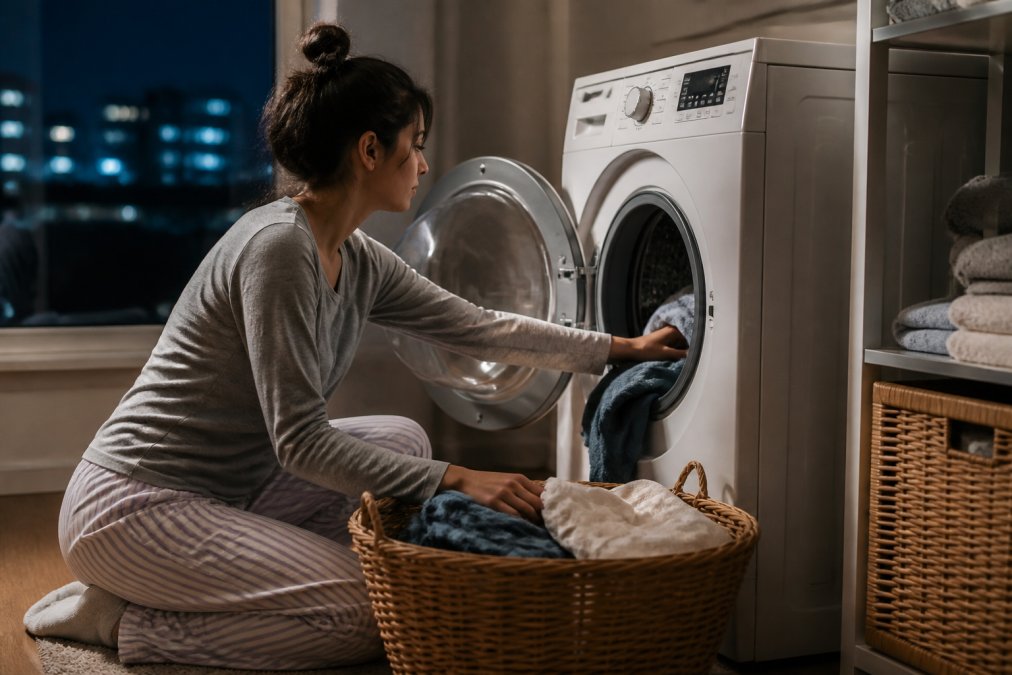
Yes, you can wash clothes at night. It's perfectly safe to run your washing machine after hours, and many households do it routinely. The real question isn't whether you can, it's whether you should, given the specific challenges that come with nighttime laundry in Miami's tropical climate.
Washing clothes at night offers genuine advantages: lower electricity rates during off-peak hours, quieter household routines, and the ability to fit laundry around demanding work schedules. But it also carries real risks. Leaving damp clothes in your machine overnight invites mold growth in Miami's humid environment. Noise ordinances in apartment buildings can be violated. And if something goes wrong with your appliance, you won't notice until morning.
This guide from LaundrPro breaks down exactly when nighttime laundry makes sense, what precautions matter most, and when outsourcing to a professional service becomes the smarter choice for busy Miami families and professionals.
Understanding FPL Time of Use Rates and Off-Peak Hours
Your electricity provider in the Miami area structures rates to encourage consumption during low-demand periods. Off-peak hours are the times when the electrical grid experiences less pressure, and utility companies like FPL (Florida Power & Light) charge lower rates to incentivize usage during these windows.
Time-of-use rates vary by your specific plan and location, but the general pattern is consistent: peak demand hours, typically late afternoon through early evening, carry the highest rates. Off-peak hours usually fall between 9 p.m. and 6 a.m., though exact windows depend on your utility plan. Understanding your FPL rate structure is the first step in determining whether nighttime laundry actually saves you money.
To find your specific off-peak hours, log into your FPL account online or call their customer service line. Many Miami residents are on standard tiered plans that don't vary by time, but if you've opted into a time-of-use plan, running your washing machine during off-peak hours can reduce your per-load cost. The savings aren't dramatic, typically a few cents per load, but they compound across dozens of loads per month for busy families.
The catch: off-peak rates only matter if your utility plan includes them. Before committing to a nighttime laundry routine based on cost savings, verify that your specific plan actually rewards you for shifting load to evening hours. Many Miami households on older plans see no difference between peak and off-peak rates.
Energy Savings and Your Electricity Bill
Washing clothes at night during off-peak hours can reduce your electricity consumption costs, but the actual savings depend on three variables: your utility rate structure, your appliance's energy efficiency, and how frequently you run loads.
A standard washing machine uses between 0.5 and 2 kilowatt-hours per cycle, depending on the machine's age and the cycle selected (energy.gov). If you're on a time-of-use plan with a meaningful rate difference between peak and off-peak hours, shifting one daily load to nighttime could save a few dollars per month. For a household running three or four loads daily, the cumulative savings become more meaningful, potentially enough to justify rearranging your routine.
Energy conservation matters beyond just your bill. Running appliances during off-peak hours reduces overall pressure on the electrical grid during peak demand periods. This load shifting helps utilities avoid firing up less-efficient backup generation and reduces carbon emissions across the regional power system. When thousands of Miami households shift laundry to night hours, the collective impact on grid stability and environmental footprint becomes measurable.
However, energy savings should never be your only consideration. The risks of leaving wet clothes in a machine overnight, mold growth, appliance damage, musty odors, often outweigh the few dollars saved monthly. For most busy professionals and families in Miami, the real value of nighttime laundry is scheduling flexibility, not energy cost reduction.
How to Prevent Mold in Your Washing Machine
This is where nighttime laundry gets complicated in Miami's climate. Mold and mildew thrive in warm, damp environments, and leaving wet clothes sitting in your machine overnight creates the perfect conditions for fungal growth.
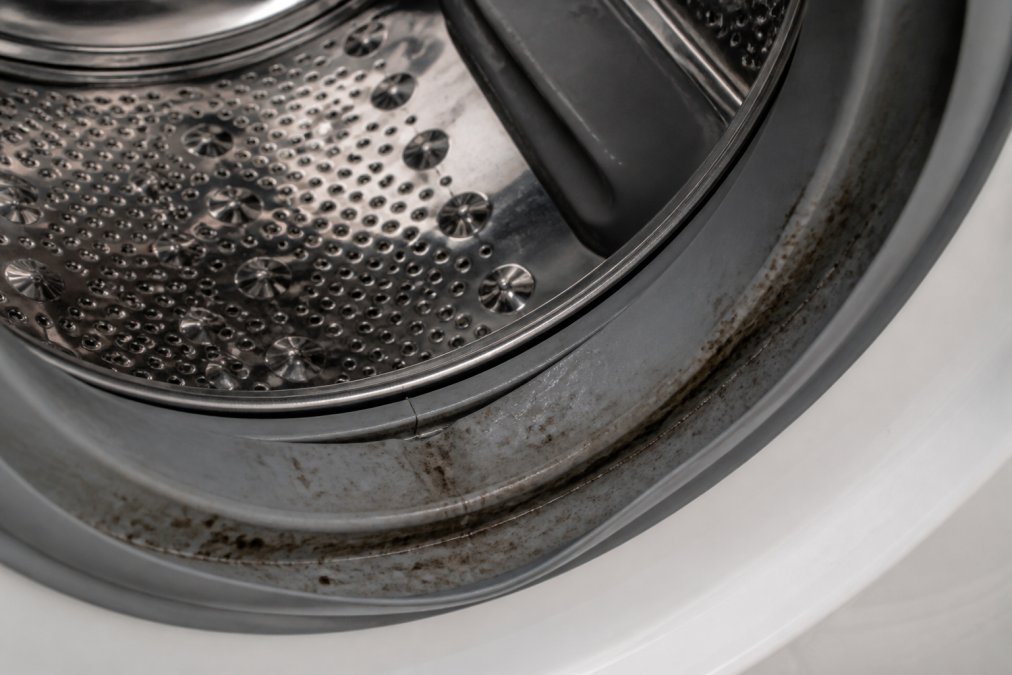
The mold problem is real. Mildew growth begins within 8-12 hours in humid conditions (the CDC). Miami's tropical climate, with average humidity levels above 70 percent year-round, accelerates this process. A load of wet laundry left in your machine from 11 p.m. until morning will almost certainly develop a musty odor, and repeated cycles of this behavior will colonize your machine with mold that spreads to your clothes.
Here's how to prevent it if you're committed to nighttime laundry:
Remove clothes immediately after the cycle ends. This is non-negotiable. Set a phone reminder for when your wash cycle will finish, even if it's 2 a.m. Get the clothes out and into a dryer or drying rack within 30 minutes of the cycle completing. This single step eliminates 90 percent of mold risk.
Use the delay-start timer strategically. Instead of starting your wash at 11 p.m. and leaving clothes sitting until morning, program your machine to finish its cycle during off-peak hours. If off-peak rates run until 6 a.m., set your delay-start timer so the wash cycle completes at 5:45 a.m., not starts at 5:45 a.m. You'll be awake to remove the clothes immediately.
Run a cleaning cycle weekly. Even with perfect habits, moisture and detergent residue accumulate in your machine. Run an empty hot-water cycle with white vinegar or a commercial washing machine cleaner once weekly. This prevents mold from establishing itself in the machine itself, a problem that's far harder to solve than preventing it in your laundry.
Leave the door open between cycles. After each load, prop your washing machine door open to allow the drum and rubber gasket to air dry. This reduces the baseline moisture that encourages mold growth.
Safety Concerns: Fire Hazards and Appliance Risks
Running appliances at night raises legitimate safety questions. Is there a fire risk? Could something go wrong while you're asleep?
Fire hazard from washers is extremely rare. Modern washing machines have multiple safety cutoffs and are tested extensively for electrical safety. The actual risk of a washing machine fire is negligible, far lower than the risk from a clothes dryer, which generates heat and lint accumulation. Your washing machine running at 2 a.m. poses essentially the same fire risk as running it at 2 p.m.
Appliance failure is the real concern. If your washing machine develops a leak, overflows, or malfunctions, you won't discover it for hours. A small leak at midnight becomes a water damage problem by 6 a.m. For renters in apartment buildings, this creates liability issues. For homeowners, it risks damage to flooring, subflooring, and adjacent spaces.
Older machines (10+ years) carry higher failure risk. If your washing machine is past its expected lifespan, nighttime operation increases the window for undetected problems. Newer machines with automatic shutoff valves and leak detection are safer for nighttime use.
Best practice: If you run your washing machine at night, inspect it before bed. Check hoses for cracks, ensure the drain is clear, and verify the machine is level and stable. Listen for unusual sounds during the cycle if you're awake. If your machine is older than 8 years, consider whether the risk justifies any cost savings.
Noise Ordinances and Apartment Living in Miami
This is where many Miami residents discover a hard constraint on nighttime laundry: local noise ordinances.
Miami-Dade County and the City of Miami both enforce noise ordinances that restrict loud activities during evening and night hours (miamidade.gov). The specific rules vary by municipality and residential zoning, but most ordinances prohibit excessive noise between 10 p.m. and 7 a.m. "Excessive" is defined contextually, but a washing machine running in an apartment building at 2 a.m. could reasonably be considered a violation if neighbors complain.
Older washing machines are particularly noisy. If your machine rattles, vibrates, or emits high-pitched sounds during the spin cycle, running it at night in an apartment setting is asking for a noise complaint. Neighbors have the right to call non-emergency police for noise violations, and repeated violations can result in fines.
Check your lease or condo association rules as well. Many Miami residential buildings have internal noise policies stricter than city ordinances. Some explicitly prohibit running major appliances between certain hours. Violating these rules can result in fines from your landlord or HOA, independent of city ordinances.
If you live in an apartment: Run your washing machine only during daylight hours, or invest in a newer, quieter machine designed for low-noise operation. The cost of a quiet machine pays for itself quickly if it prevents noise complaints and fines.
If you own a home: Check your city's specific noise ordinance, but generally, nighttime laundry is acceptable as long as your machine operates quietly. Older machines may violate ordinances simply by being loud.
How to Fold Clothes Properly After Night Washing
If you do wash clothes at night and remove them immediately after the cycle, proper folding matters for storage and garment longevity.
The goal of proper folding is twofold: preserve garment shape and minimize wrinkles. Clothes folded correctly take up less space, stack neatly, and require less ironing when you retrieve them.
Start with the basics. Lay the garment flat on a clean surface, a bed, table, or dedicated folding board. For t-shirts and casual tops, fold vertically: bring one shoulder toward the center, then the other, creating a rectangle. Fold in half widthwise. This method prevents shoulder creases and creates compact, stackable folds.
For pants, fold lengthwise along the inseam, then fold in half or thirds depending on your storage space. For button-up shirts, button them first, then fold as you would a t-shirt. This prevents button stress and maintains the shirt's shape.
Delicate items, blouses, dresses, anything with embellishment, should be folded more loosely or hung immediately. Don't leave delicate garments compressed in a pile for days; they develop permanent creases that are difficult to remove.
The critical step many people skip: fold immediately after removing clothes from the machine, while they're still slightly damp. Damp fabric is more pliable and resists creasing. Once clothes dry in a wrinkled state, those creases set permanently and require ironing to remove.
Why Professional Laundry Services Solve the Night-Washing Problem
Here's the reality: for busy professionals and families in Miami, the complications of nighttime laundry often exceed the benefits.

You have to manage the timing precisely. You have to remove clothes immediately. You have to prevent mold in a humid climate. You have to navigate noise ordinances if you're in an apartment. You have to fold everything properly. And you save a few dollars per month.
A professional laundry service eliminates every complication. You don't manage the timing, we do. You don't worry about mold or mildew, we handle machine maintenance and immediate garment removal. You don't violate noise ordinances, our operations run during business hours. You don't fold anything, we return your clothes ready to wear or hang.
For LaundrPro customers across Miami, the value isn't just cleaner clothes and premium product care. It's reclaiming the time and mental energy you spend managing laundry. A busy professional working irregular hours doesn't have the flexibility to remove clothes from a machine at 6 a.m. A family with young children can't reliably stay on top of nighttime laundry cycles. A Miami resident in a tight apartment can't risk noise complaints.
Professional laundry services operate with the efficiency and reliability that nighttime laundry routines can't match. Your clothes are picked up on your schedule, cleaned with professional-grade care, and delivered back ready to use. No mold risk. No noise complaints. No folding. No guessing whether you're saving money.
For most busy Miami professionals and families, the question isn't whether you can wash clothes at night, it's whether managing that complexity is worth the minimal savings. For many, the answer is no.
Nighttime laundry works for some households, but it demands precision and creates genuine risks in Miami's humid climate. If you're washing at night to save time, you're adding complexity instead. If you're doing it to save money, the savings are minimal unless you're on a specific time-of-use rate plan.
LaundrPro solves the entire problem. We handle your laundry with professional care, fast turnaround, and transparent flat-rate pricing, no subscriptions, no hidden fees, no complications. Your clothes come back spotless and ready to wear. Place your order and reclaim the hours you're spending on laundry management.
Frequently Asked Questions
Q: What time is considered off-peak for electricity in Miami, Florida?
A: Off-peak hours vary by utility plan, but FPL time-of-use rates typically offer lower electricity rates during late evening and early morning hours. Off-peak periods often run from 9 PM to 6 AM or similar windows, depending on your specific plan. Contact FPL directly or check your bill to confirm your plan's exact off-peak hours, as rates and timing can change seasonally.
Q: Can leaving wet clothes in the washer overnight cause mold?
A: Yes. Wet clothes left in a warm, humid washing machine create ideal conditions for mold and mildew growth within 8-12 hours. Miami's tropical climate accelerates this process due to high humidity levels. Mold produces musty odors, stains fabrics, and can trigger allergies. To prevent mold, remove clothes immediately after the cycle ends or use a delay start timer to finish washing in the morning.
Q: Is it cheaper to do laundry after 10 PM?
A: Potentially, yes, if your utility provider offers time-of-use rates and 10 PM falls within their off-peak hours. However, savings depend on your specific FPL plan and local electricity rates. You may save on kilowatt-hours used during off-peak times, but actual dollar savings depend on your plan details. Check your utility bill or contact FPL for your exact rate structure and potential savings.
Q: What are the benefits of professional laundry services for busy schedules?
A: Professional laundry services eliminate the need to time your washing around off-peak hours, worry about mold growth, or handle folding and organization yourself. Services like LaundrPro offer door-to-door pickup and delivery, fast turnaround times, and expert care for delicate items and bulky household goods. This frees up hours each week and ensures your clothes are handled properly without the safety or humidity concerns of overnight washing.
This article was written using GrandRanker