 how-to
Avoiding Hidden Fees in Laundry Services: A Smart Guide
Table of Contents
- Understanding Laundry Service Pricing Models
- Common Hidden Fees You Need to Know About
- Transparent Laundry Pricing: What to Look For
- Laundry Pickup and Delivery Costs Explained
- Special Garment Care and Hidden Surcharges
- Red Flags: Spotting Laundry Service Scams
- How to Save Money on Laundry Services Without Sacrificing Quality
- Conclusion
Avoiding Hidden Fees in Laundry Services: A Smart Guide
Last Updated: July 31, 2026
Avoiding hidden fees in laundry services is one of the biggest challenges busy professionals and families face when outsourcing their laundry. What looks like a straightforward $2 per pound quote can quickly balloon into unexpected charges for delivery zones, rush services, delicate item handling, and fuel surcharges that weren't mentioned upfront. At LaundrPro, we've seen firsthand how confusing laundry service pricing can be, and we've built our entire model around transparent, flat-rate pricing with no hidden fees or subscriptions. Below, we'll show you exactly how to spot predatory pricing practices, understand what you're actually paying for, and choose a service that won't surprise you with unexpected charges.
Understanding Laundry Service Pricing Models
When evaluating laundry services, the pricing structure determines everything about your final bill. Many services hide costs within their model itself, making it impossible to compare fairly. The two dominant approaches, per-pound billing and flat-rate pricing, create vastly different experiences for customers.
Per-pound pricing seems straightforward on the surface. You pay based on the weight of your clean laundry, typically ranging from $1.70 to $2.65 per pound depending on the service. The problem emerges when you realize that weight fluctuates dramatically based on fabric type, moisture content, and how the laundry is processed. A load that weighs 10 pounds when dry might weigh 12 pounds if items retain moisture. Some services deliberately use higher weights to inflate charges.
Flat-rate pricing eliminates this guesswork entirely. You pay one price per load, regardless of weight or item count. This model works best for services that understand their operational costs precisely and can afford to absorb variation. It also builds trust, customers know exactly what they'll pay before pickup.
Common Hidden Fees You Need to Know About
The real cost of laundry services extends far beyond the base service charge. Understanding these hidden fees is essential to avoiding sticker shock.
Service fees and convenience charges appear on nearly every laundry service invoice. These are markups labeled as "health and safety fees," "processing fees," or "convenience charges", essentially taxes on your service that aren't included in the advertised price. Some services charge these on a per-order basis, others per pound. A service advertising "$1.95 per pound" might actually charge you $1.95 plus a $3.50 service fee per order, which dramatically changes the math on small loads.
Fuel surcharges and delivery zone markups are where many services extract additional revenue. If you live outside the primary service zone, expect to pay 15-30% more. Some services charge fuel surcharges that fluctuate monthly, passing gas price volatility directly to customers. The worst offenders don't disclose these until after you've placed an order. Distance-based pricing should be transparent upfront, ask for a delivery zone map and exact charges for your address before committing.
Rush service and expedited turnaround premiums can triple your cost. Standard turnaround is typically 3-5 business days. Need your clothes back in 24 hours? Expect to pay 50-100% more. Same-day service costs even more. These premiums are reasonable for genuine rush situations, but some services use them as the default option, burying standard service in fine print.
Special garment care surcharges target customers with delicate items, formal wear, or specialty fabrics. Dry cleaning, hand washing, or "premium care" for silk and wool items adds $0.50-$1.50 per item. If your wardrobe includes professional clothing, these charges accumulate quickly. Some services charge per-garment surcharges for items requiring special handling, turning a load of dress shirts into an expensive proposition.
Transparent Laundry Pricing: What to Look For
Transparent billing starts with itemized invoices that break down every charge. When you receive your cleaned laundry, the invoice should show base service cost, any applicable surcharges, delivery fees, and total amount due. If the invoice is vague or combines multiple charges into one line item, you can't verify accuracy or plan future costs.
Service agreements matter more than most customers realize. Before signing up, request a written service agreement that specifies pricing, what's included, turnaround times, damage liability, and cancellation terms. Red flags include agreements that allow unilateral price increases without notice, clauses limiting liability for lost or damaged items, or vague language about what constitutes "standard" service.
Read the fine print carefully. Look for minimum order requirements, some services charge extra if your load is under a certain weight threshold. Check whether delivery is truly free or if it's included in a higher per-pound rate. Understand what happens if items are damaged during cleaning. Many services include liability caps that limit reimbursement to $5-$10 per item, which won't cover a $200 blazer.
Laundry Pickup and Delivery Costs Explained
Pickup and delivery represent the convenience premium you pay for not doing laundry yourself. These costs vary wildly and are often where services hide the true cost of their service.
Distance-based charges mean you pay more the farther you live from the service's hub. A service might offer free delivery within a 2-mile radius but charge $3-$5 for every mile beyond that. If you live 5 miles away, that's an additional $15-$25 per order. Over a month of weekly service, that's $60-$100 in distance charges alone.
Minimum order requirements force you to accumulate a certain weight or number of items before ordering. A $15 minimum order means you can't order a single load of dress shirts, you need to wait until you have 8-10 pounds of laundry. This creates friction and forces customers to hold dirty clothes longer than they'd like, defeating the purpose of a convenient service.
Same-day and expedited turnaround pricing adds significant cost for speed. Standard service takes 3-5 business days. Next-day service typically costs 30-50% more. Same-day service costs 75-150% more. These premiums are legitimate, faster turnaround requires different logistics, but they should be clearly stated before you order.
Special Garment Care and Hidden Surcharges
Not all laundry is created equal, and services know this. Delicate items, formal wear, and specialty fabrics trigger additional charges that can transform a routine laundry order into an expensive service call.
Dry cleaning versus wash and fold represents the biggest cost jump. Wash and fold service typically costs $1.70-$2.65 per pound. Dry cleaning costs $2-$5 per item depending on the garment type. A blazer might cost $4-$7 to dry clean, while a simple dress shirt costs $2-$3. Some services bundle dry cleaning with wash and fold but charge per-item rates that add up quickly.
Delicate item handling, hand washing, and eco-friendly options all carry surcharges. If you specify that your silk blouse needs hand washing, expect an additional $0.50-$1.50 per item. Eco-friendly detergent options, hypoallergenic cleaning, or special stain treatment add more. These charges are often presented as optional upgrades but are automatically applied if you note special instructions.
Red Flags: Spotting Laundry Service Scams
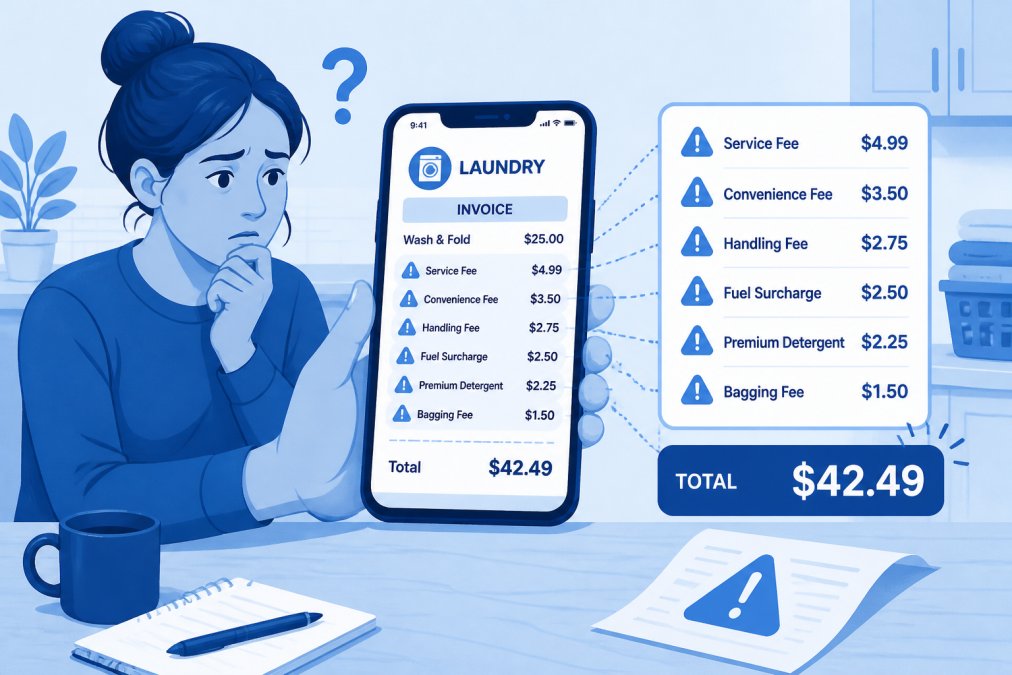
Vague pricing is the number one red flag. If a service won't quote a specific price per pound, per load, or per item before you use them, they're hiding something. Legitimate services have transparent pricing because it builds trust and reduces customer service complaints about unexpected charges.
Missing service agreements or refusal to provide written terms is a serious warning sign. A company that won't put their promises in writing can change terms whenever they want. This is especially concerning for damage liability, if your favorite blazer gets damaged, you need written documentation of what the service will reimburse.
Unreliable pickup schedules and inconsistent service create problems beyond just inconvenience. If a service misses pickups regularly, you can't plan your wardrobe or manage your laundry needs. This also suggests operational chaos, which often correlates with quality issues like lost items or damage.
Damage liability issues deserve careful attention. Some services include broad liability waivers that essentially exempt them from responsibility if items are damaged, lost, or stained during cleaning. A service that won't guarantee basic care of your belongings isn't worth the convenience. Ask specifically: "What happens if an item is damaged or lost during cleaning, and what will you reimburse?"
No recourse for disputes indicates a service that doesn't stand behind its work. If there's no clear process for disputing charges or requesting reimbursement for damaged items, you have no protection. Legitimate services have dispute resolution processes because they're confident in their work.
How to Save Money on Laundry Services Without Sacrificing Quality
Choosing between subscription and pay-as-you-go models requires understanding your actual laundry volume. Subscription services often waive certain fees, delivery charges, service fees, or rush premiums, but lock you into a minimum monthly spend. Pay-as-you-go services charge higher per-unit rates but give you flexibility. Calculate your typical monthly spending under both models before deciding.
| Service Model | Best For | Typical Cost | Hidden Fees |
|---|---|---|---|
| Pay-as-you-go | Variable laundry volume, testing service | Higher per-load, more transparent | Service fees, delivery zones, rush premiums |
| Flat-rate subscription | Consistent weekly service | Fixed monthly cost | Rarely, if transparent service |
| Per-pound billing | Predictable loads | Lowest advertised rate | Weight inflation, surcharges, minimums |
| Hybrid (flat base + surcharges) | Most services | Medium cost | All categories above |
Negotiating service agreements works when you commit to regular, consistent service. If you're willing to schedule weekly pickups for 3-6 months, many services will negotiate lower rates or waive certain fees. Bundle options, combining wash and fold with dry cleaning, for example, sometimes offer discounts that per-item pricing doesn't.
Ask about loyalty programs or volume discounts. Some services reward customers who use them consistently with lower rates or waived fees. If you're a regular customer, this use can save 10-15% monthly.
Compare total cost, not just per-pound rates. A service charging $1.95 per pound with a $5 service fee and $3 delivery charge is more expensive than a service charging $2.25 per pound with no surcharges, even though the per-pound rate looks higher. Request sample invoices for a typical order from each service and calculate the total you'd actually pay.
Conclusion
Avoiding hidden fees in laundry services requires vigilance, but it's entirely possible when you know what to look for. The most important step is requesting written pricing quotes before using any service and carefully reviewing every invoice for unexpected charges. Services that won't provide transparent pricing upfront are signaling that they'll surprise you with fees later.
LaundrPro eliminates this entire problem with flat-rate pricing, no subscriptions, and no hidden fees. Every charge is transparent before pickup, with door-to-door service in Miami's service areas and a commitment to spotless results with fast turnaround. Get started with LaundrPro today and reclaim the time you spend managing laundry without worrying about surprise charges on your invoice.
According to the Federal Trade Commission's guidance on pricing transparency, businesses must disclose all material terms and conditions before purchase. This principle applies directly to laundry services, any charges not disclosed upfront violate basic consumer protection standards.
Research from the Better Business Bureau's consumer complaint database shows that hidden fees are among the top complaints against laundry and dry cleaning services, particularly around delivery charges and surcharges not disclosed at the time of service.
The Super Kleen Laundry cost calculator provides a practical example of how transparent pricing should work, showing customers exactly how charges accumulate based on garment type, service speed, and delivery options before they commit.
Frequently Asked Questions
What are the most common hidden fees in laundry services?
Common hidden fees include service charges, convenience fees, fuel surcharges, pickup and delivery zone markups, rush service premiums, and special garment handling charges. Many services advertise low per-pound rates but add fees for next-day delivery, minimum order requirements, or delicate item care. Always request an itemized invoice upfront to understand the true cost before committing to a service.
How can I find a laundry service with transparent laundry pricing?
Look for services that provide itemized invoices, clearly state all fees upfront, and offer flat-rate pricing with no hidden surcharges. Request a sample invoice or quote before signing a service agreement. Avoid services with vague pricing, hidden minimum orders, or fees that only appear after you've committed. Legitimate services should explain their billing model in writing and allow you to review the service agreement before starting.
What questions should I ask about laundry pickup and delivery costs?
Ask about distance-based charges, whether pickup and delivery are included in the quoted price, minimum order requirements, and surcharges for rush turnaround. Inquire if fees vary by delivery zone or time of day. Confirm whether same-day or 24-48 hour service costs extra. Get these details in writing before your first order to avoid unexpected charges on your invoice.
How do I protect myself from laundry service scams?
Verify the service is legitimate by checking reviews, confirming their physical address, and reviewing their service agreement carefully. Ask about damage liability and what happens if items are lost or stained. Ensure they provide itemized invoices and have a clear dispute resolution process. Start with a small order to test reliability before committing to recurring service, especially for valuable items like work blazers.
Is per-pound or per-item billing better for avoiding hidden fees?
Per-pound billing can be more transparent if the service clearly states the rate and weighs items accurately, but it hides the actual cost until after washing. Per-item billing may seem clearer upfront, but services often add surcharges for delicate items or special care. Flat-rate pricing with no surcharges offers the most predictability. Compare all three models and request written confirmation of your total cost before service begins.
This article was written using GrandRanker