 ultimate-guide
How to Fold Clothes Properly: A Step-by-Step Guide
Table of Contents
- Why Proper Folding Matters for Your Wardrobe
- How to Fold T-Shirts Fast Without Wrinkles
- Folding Pants and Trousers for Drawer Organization
- The KonMari Folding Method for Maximum Space Efficiency
- How to Fold Fitted Sheets and Delicate Items
- Space-Saving Folding Techniques for Small Closets
- Fabric-Specific Care and Long-Term Storage
- Common Mistakes to Avoid When Folding Clothes
- Frequently Asked Questions
Last Updated: August 10, 2026
Why Proper Folding Matters for Your Wardrobe
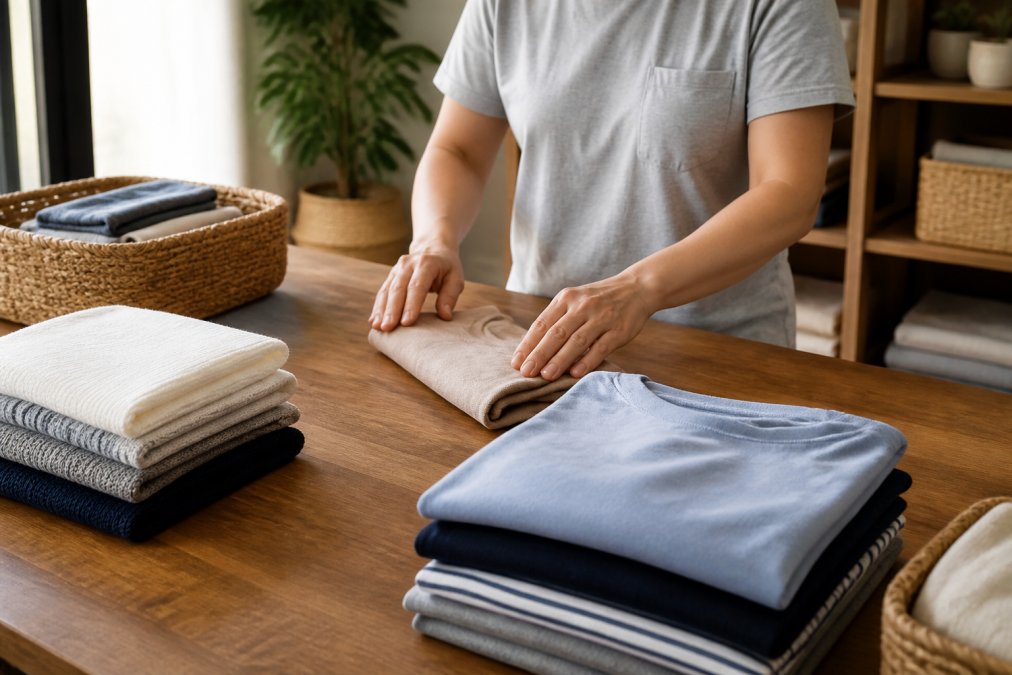
Folding clothes correctly preserves your garments, maximizes storage space, and reduces wrinkles and ironing time. When your clothes are organized logically, you spend less time searching and more time living. For busy professionals and families managing high volumes of laundry, these efficiencies compound quickly. At LaundrPro, we've developed this comprehensive guide to help you master garment care fundamentals at home.
Proper folding techniques maximize drawer and closet space, reduce ironing needs, protect delicate fabrics, and make it easier to see what you own. The methods covered range from basic techniques for everyday wear to specialized approaches for delicate items and travel packing.
How to Fold T-Shirts Fast Without Wrinkles
Master the t-shirt fold, and you'll fold faster with fewer wrinkles. The key is working methodically while keeping the garment flat throughout.
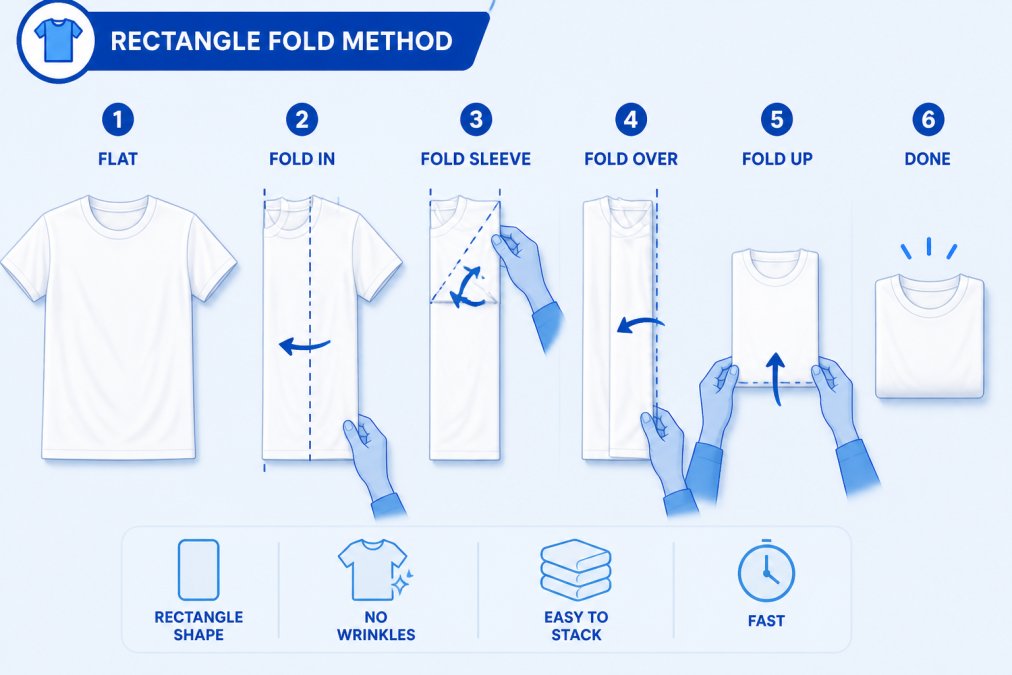
The Basic Rectangle Method
Lay your t-shirt flat on a clean surface with the front facing up. Smooth out wrinkles with your hands, then fold one side toward the center, bringing the sleeve inward. Do the same with the other side, creating a vertical line down the middle. Fold the bottom third up toward the neckline, then fold the top third down to meet it. Keep your hands flat and smooth as you fold, bunching creates wrinkles that set during storage. Work deliberately, taking 15-20 seconds per shirt.
The Vertical Filing Method for Easy Access
File folding stores t-shirts upright in your drawer like files in a cabinet. Fold your t-shirt using the rectangle method, then stand it on its folded edge in your drawer. Arrange multiple shirts side by side, creating rows. This method uses vertical space efficiently and makes every shirt visible at a glance.
File folding works best for t-shirts, casual tops, and lightweight sweaters. It requires a drawer with adequate depth (at least 6-8 inches) and lets you scan your entire collection in seconds each morning.
Folding Pants and Trousers for Drawer Organization
Lay your pants flat with the front facing up. Align the legs so they're perfectly straight and parallel. Fold one leg over the other lengthwise, so the inseam of one leg meets the inseam of the other. Fold the pants in half widthwise, bringing the waistband down toward the cuffs. For shallow drawers, fold this rectangle in half one more time.
Keep fabric smooth during each fold to avoid wrinkles. For formal trousers that need to maintain their crease, hang them instead of folding. If you must fold formal pants, keep the original crease line intact throughout the folding process.
The KonMari Folding Method for Maximum Space Efficiency
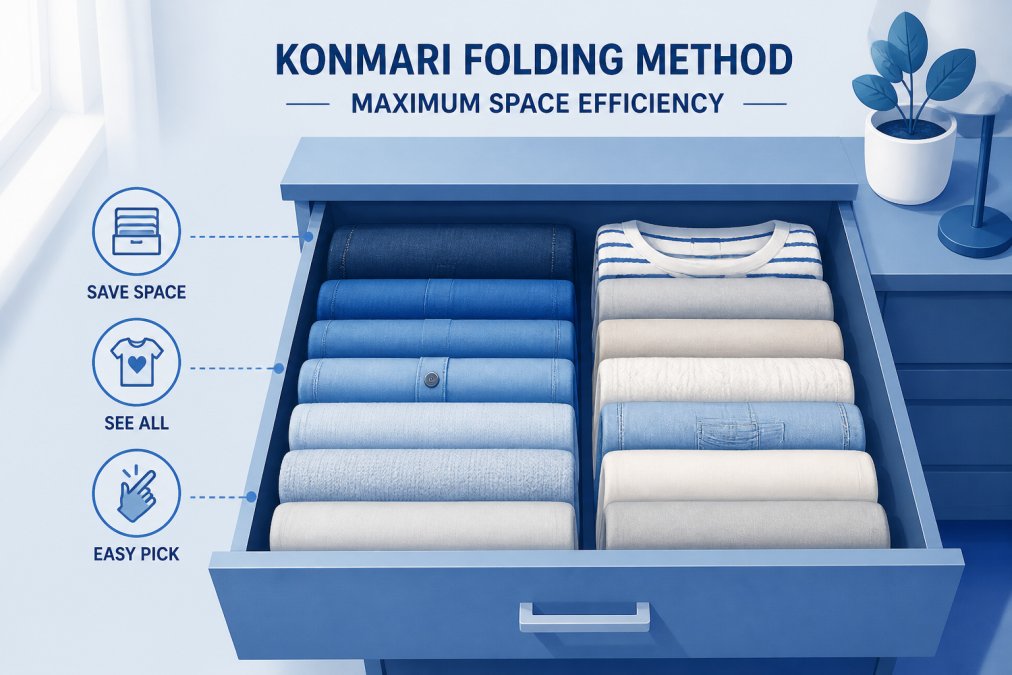
The KonMari method maximizes space while keeping all items visible and accessible, reducing storage space by 30-40% compared to traditional stacking.
Core Principles of KonMari Folding
Every fold should result in a compact rectangle or square that stands upright, exposing the front of the garment so you can see it at a glance. For a t-shirt, fold it in thirds lengthwise, then fold it in half or thirds widthwise, creating a compact rectangle roughly 4-6 inches wide and 6-8 inches tall.
The critical difference from traditional folding: aim for uniformity. Every t-shirt should be the same size when folded. This uniformity allows you to stack items vertically in rows, maximizing every inch of drawer space.
Applying KonMari to Your Daily Routine
Implementing KonMari requires an initial time investment of 2-3 hours to fold your entire wardrobe correctly. After that, maintenance is straightforward. Because everything is visible, you actually wear more of what you own and stop buying duplicates.
Start with one category of clothing and master the fold before moving to the next. After you've folded one complete category using the KonMari method, the rest becomes intuitive.
How to Fold Fitted Sheets and Delicate Items
Mastering Fitted Sheet Folding
Hold the fitted sheet inside-out with your hands inside two adjacent corners. Tuck one corner into the other, creating a pocket. Move to the next corner and repeat, creating a nested corner system. Once all four corners are nested, lay the sheet flat and fold it into a rectangle using the same method as a regular sheet.
Store fitted sheets inside a matching pillowcase along with the flat sheet and pillowcases. This keeps your sheet sets together and saves time when changing beds.
Caring for Sweaters and Jumpers
Lay your sweater flat with the front facing up. Fold it in half lengthwise, bringing one shoulder over the other. Fold the sleeves back toward the center, creating a rectangle. Finally, fold the sweater in half widthwise. Store sweaters flat in drawers rather than hanging them, as hanging stretches the shoulders over time.
For cashmere, merino wool, and other premium knits, consider folding with acid-free tissue paper between the folds. This prevents creasing during long-term storage and protects the fibers from dust and moisture.
Space-Saving Folding Techniques for Small Closets
Compact Stacking and Layering
Fold items slightly smaller than standard size so more items fit in the same drawer. Instead of folding a t-shirt into a 4x6 rectangle, fold it into a 3x5 rectangle, reducing the footprint by about 25%.
Layering works best for lightweight items like t-shirts and tank tops. Stack them in uniform piles with the heaviest items on the bottom. Use dividers between layers to prevent the bottom items from getting crushed. For families managing multiple people's wardrobes, color-code folded items by person to help everyone find their clothes quickly.
Folding for Travel and Packing Efficiency
Use the compact rectangle method for t-shirts, but fold them slightly smaller to maximize luggage space. Roll lightweight items like tank tops instead of folding them, rolling reduces wrinkles and saves 15-20% space compared to folding.
For pants, fold them in half lengthwise, then roll them tightly. Use packing cubes to organize items by category. This prevents items from shifting during travel and makes it easy to find what you need. Packing cubes compress items, reducing overall luggage volume by 20-30%.
Pack heavier items first, then layer lighter items on top. For business travel, hang garments immediately upon arrival to allow wrinkles to relax naturally.
Fabric-Specific Care and Long-Term Storage
Protecting Delicate Fabrics During Storage
Silk, linen, and other delicate fabrics need special attention. Store delicate items in cool, dry locations away from windows. For silk items, fold using the rectangle method but handle the fabric gently to avoid snagging. Store silk in breathable cotton bags rather than plastic, as plastic traps moisture and can lead to mildew.
Linen wrinkles easily, but this is normal and expected. Store linen items flat and accept that they'll have some creases. These creases disappear when you wear and move in the garment.
For vintage or heirloom garments, use acid-free tissue paper throughout the storage process. Store in a cool closet or drawer away from light. Check these items every 6-12 months to ensure they're not developing mold, mildew, or insect damage.
Maintaining Wrinkle-Free Garments Over Time
Garments stored correctly remain wrinkle-free for months. Wash and dry garments completely before folding, as any residual moisture can set wrinkles during storage. Store items in a cool environment (60-70°F is ideal) with moderate humidity (40-50%).
Rotate stored items periodically by pulling out items you haven't worn in a few months and refolding them. This prevents permanent creases from setting in. Refold every 3-6 months for long-term storage.
Common Mistakes to Avoid When Folding Clothes
The first common mistake is folding damp or slightly damp garments. Moisture sets wrinkles permanently. Always ensure garments are completely dry before folding.
The second mistake is bunching fabric during folding. Work slowly and deliberately, keeping fabric smooth throughout each fold.
A third mistake is stacking folded items too high. Stack folded items no more than 8-10 inches high to avoid compression wrinkles.
The fourth mistake is storing items in plastic bags or airtight containers. These trap moisture and can cause mildew or musty odors. Use breathable storage solutions like cotton bags or cardboard boxes.
For busy professionals managing high volumes of laundry, consider whether home folding is the best use of your time. Services like LaundrPro handle folding and organization as part of professional laundry care, delivering spotless results with proper folding and storage ready for immediate use.
Proper folding is a skill that pays dividends every time you open your closet. It saves time, preserves your garments, and makes your space feel more organized and functional. Whether you're using the basic rectangle method for everyday items or the KonMari technique for maximum space efficiency, the principles remain the same: work deliberately, keep fabric smooth, and store items in conditions that prevent wrinkles and damage.
For families and professionals in Miami managing significant laundry volumes, mastering these techniques at home is valuable. However, if folding feels like a burden rather than a routine, professional services offer an alternative. LaundrPro provides door-to-door laundry and dry cleaning with expert folding and organization included, delivering garments ready to wear without the time investment. With flat-rate pricing and no hidden fees, you get spotless results and fast turnaround, allowing you to reclaim hours each week. Place Your Order and experience the difference professional care makes.
Frequently Asked Questions
What is the best way to fold clothes to save the most space?
The vertical filing method and KonMari folding technique are the most space-efficient approaches. Instead of stacking clothes horizontally, fold them into thirds widthwise and store them upright in drawers like files. This method maximizes drawer space, prevents wrinkles from weight, and makes every garment visible and accessible. For bulky items like sweaters, fold them lengthwise first, then thirds, to create compact rectangles that stack neatly without taking up excessive room.
How do you fold clothes to avoid wrinkles?
Smooth out wrinkles as you fold by laying garments flat on a clean surface and aligning seams and hems carefully. Fold in thirds rather than halves to create sharper creases that hold better. Store folded clothes immediately rather than leaving them in piles, and avoid overstuffing drawers, which creates pressure that causes new wrinkles. For formal wear and delicate items, consider professional dry cleaning services that handle garment care with specialized techniques to maintain wrinkle-free results.
Is there a right or wrong way to fold clothes?
There are several proven methods, and the right way depends on your storage space and daily access needs. The KonMari folding method works best for drawer organization and visibility. The vertical filing method is ideal for small closets. The basic rectangle method works for everyday t-shirts and tops. The wrong way typically involves creating deep creases that become permanent, folding without smoothing out wrinkles first, or stacking folded items so tightly that they crush and wrinkle under pressure.
Should you hang or fold your clothes?
Hanging works best for delicate fabrics, formal wear like blazers, and items prone to wrinkling. Folding is ideal for t-shirts, sweaters, jeans, and everyday basics that benefit from space savings. Many professionals use both methods: hang work clothes that need to stay wrinkle-free and ready to wear, and fold casual items and basics to maximize drawer space. For busy professionals managing high volumes of laundry, a professional laundry service can handle both storage methods and ensure your work wardrobe stays in pristine condition with fast turnaround times.
This article was written using GrandRanker