 ultimate-guide
How to Clean Expensive Work Clothes: A Complete Guide
Table of Contents
- Why Expensive Work Clothes Need Different Care
- Understanding Fabric Care Labels Explained
- How to Remove Stains from Clothes Before Washing
- Hand Washing vs. Machine Washing Expensive Garments
- Professional Dry Cleaning vs. Home Care: Cost-Benefit Analysis
- Laundry Pickup and Delivery Miami: When Professional Help Makes Sense
- Storage and Preservation Tips for Workwear Between Wearings
- Common Mistakes to Avoid When Cleaning Expensive Work Clothes
- Frequently Asked Questions
Last Updated: August 17, 2026
Why Expensive Work Clothes Need Different Care
Expensive work clothes demand specialized care because their premium materials, merino wool blends, high-thread-count cotton, and technical fabrics, require different handling than mass-produced alternatives. A single washing mistake can shrink a garment by an entire size, fade colors permanently, or damage delicate seams. Replacing a damaged blazer or professional jacket often costs far more than professional cleaning services.
At LaundrPro, we work with Miami professionals who understand that protecting their investment in quality workwear is more cost-effective than replacing damaged pieces. The difference between home care and professional textile maintenance is about preservation, not just cleanliness.
Understanding Fabric Care Labels Explained
Your garment's care label is a legally required guide based on testing specific to that item's construction and materials. The symbols represent the manufacturer's assessment of what the fabric can safely withstand. Ignoring these instructions can cause irreversible damage.
Care labels use standardized symbols: a washtub indicates water-based washing is safe, with numbers showing maximum temperature. An X through any symbol means that method is prohibited. A circle indicates dry cleaning is acceptable, with specific letters (P or F) specifying which solvents professional cleaners should use.
The distinction between "dry clean only" and "dry clean recommended" matters significantly. "Dry clean only" means water-based washing will damage the fabric. "Dry clean recommended" suggests water washing carries some risk but may be possible with careful technique. Expensive work clothes often carry "dry clean only" labels because their construction, lining, or finish requires solvent-based cleaning to prevent shrinkage or color bleeding.
Temperature guidance on care labels is absolute. If a label specifies warm water maximum, using hot water will damage the fabric. The temperature threshold exists because heat accelerates dye migration, fiber relaxation, and shrinkage in that specific material blend.
How to Remove Stains from Clothes Before Washing
Stain removal timing and technique determine whether a stain becomes permanent or disappears completely. Acting quickly, within hours rather than days, dramatically increases the likelihood of complete removal. Fresh stains sit on the surface; aged stains have begun penetrating fiber structure.
Identifying Common Work Stains
Work environments create predictable stain types. Professional office settings generate ink stains from pens, coffee or tea marks, and food spills. Field-based work produces grass, mud, and oil stains. Healthcare and service industry professionals encounter blood and bodily fluids. Manufacturing generates grease, paint, and industrial residues.
Each stain type requires different removal chemistry. Protein-based stains like blood need cold water and enzymatic treatment; hot water sets these stains permanently. Oil-based stains like grease need solvent treatment before water washing. Tannin stains from coffee or tea need oxidizing agents to break the stain molecule's color bonds.
Identifying the stain type prevents common mistakes. Applying hot water to blood, using water on grease, or treating tannin stains with vinegar alone will worsen the stain rather than remove it.
Stain Removal for Expensive Workwear
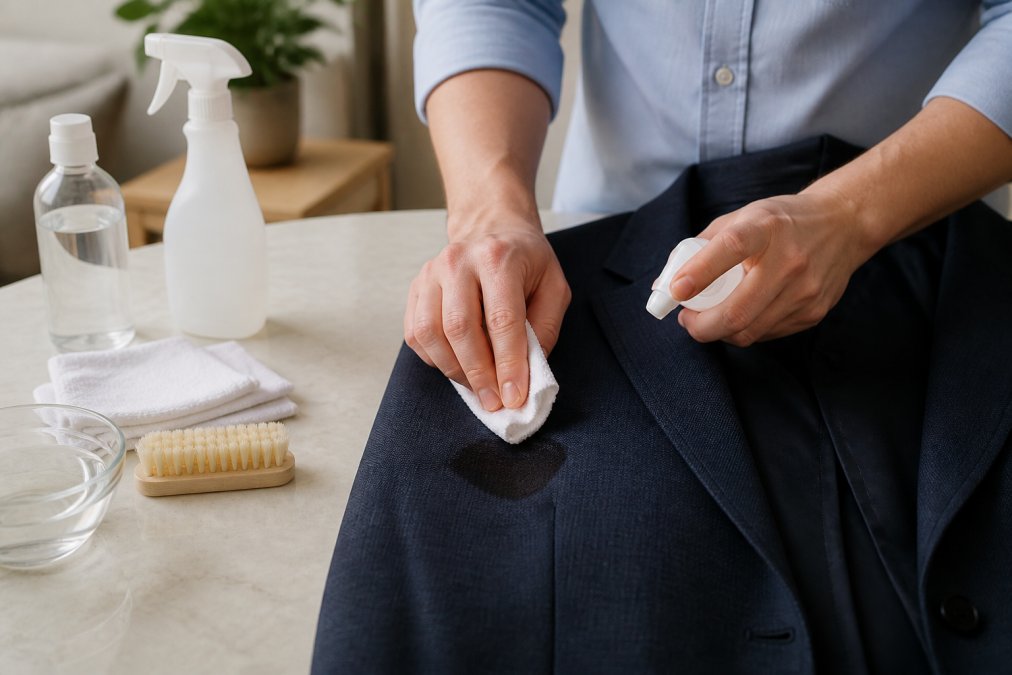
For expensive work clothes, treat gently first and escalate only if necessary. Begin by blotting, never rubbing, the stain with a clean white cloth to remove excess material without forcing the stain deeper into fibers.
Test any stain removal solution on an inconspicuous area first, inside a seam, under a collar, or on the back hem. Wait five minutes to ensure no color change, shrinkage, or fabric weakening occurs.
For most work stains on expensive garments, cold water and a white cloth should be your first step. Soak the stain area with cold water for 15-30 minutes, then blot repeatedly. Many fresh stains will release with this simple treatment. Never apply heat or hot water at this stage; heat sets most stains permanently.
For stubborn stains, create a solution of cold water with a small amount of mild detergent designed for delicate fabrics. Apply this to the stain, let it sit for 10 minutes, then blot repeatedly. Rinse the area with cold water to remove all detergent residue.
Oil-based stains require different initial treatment. Apply a small amount of dry-cleaning solvent or specialized stain remover designed for oil stains to the affected area. Let it sit for 5-10 minutes, then blot with a clean cloth. Follow this with the cold water and mild detergent treatment.
Hand Washing vs. Machine Washing Expensive Garments
The decision between hand washing and machine washing depends on the fabric type, garment construction, and care label instructions. Hand washing provides maximum control over water temperature, agitation level, and duration, making it safer for delicate or expensive items.
Hand washing is mandatory for garments labeled "hand wash only" or "wash separately." These instructions indicate the fabric cannot tolerate machine agitation, even on the gentlest setting.
To hand wash expensive work clothes, fill a basin with cool water and add a small amount of mild detergent formulated for delicate fabrics. Submerge the garment and gently agitate the water with your hands for 3-5 minutes, focusing on areas that contact skin or accumulate soils. Avoid twisting, wringing, or scrubbing. Drain the soapy water and refill the basin with clean cool water. Rinse by gently agitating in clean water 2-3 times until all soap residue is gone.
Machine washing on the delicate cycle with cold water can work for some expensive garments if the care label explicitly permits it. Use a mesh laundry bag for additional protection and select detergent formulated for delicate fabrics. Never use regular laundry detergent. Set the machine to the shortest delicate cycle and skip the spin cycle if possible.
Air drying is essential for expensive work clothes regardless of washing method. Machine drying's heat causes shrinkage, fading, and fiber damage. Lay the garment flat on a clean towel or hang it on a padded hanger in a well-ventilated area away from direct sunlight.
Professional Dry Cleaning vs. Home Care: Cost-Benefit Analysis
For work clothes worn daily or multiple times weekly, professional care may prove more economical than replacing damaged items through improper home washing.
Professional dry cleaners use specialized equipment and solvents that remove soil and stains without water, making it the safest option for fabrics labeled "dry clean only." The process uses perchloroethylene or hydrocarbon solvents that dissolve oils and stains while minimizing shrinkage and color bleeding. Professional pressing and finishing restore the garment's original appearance in ways home methods cannot replicate.
Home care costs only detergent and water but carries significant risk. A single washing mistake can permanently damage a garment worth hundreds of dollars. For work clothes you wear frequently and depend on professionally, the cost of professional cleaning is insurance against this risk.
The break-even calculation is straightforward: if a garment costs $300 and professional dry cleaning costs $8-12 per cleaning, you need approximately 25-30 cleanings before professional care costs equal the garment's replacement cost. If you wear that blazer twice weekly for work, you'll reach 25 cleanings within 3-4 months. Protecting that garment through professional care for $10 per cleaning is economically rational.
Professional dry cleaning also provides specialized services that home methods cannot: professional hand finishing, skilled pressing and shaping, and professional stain removal targeting specific stains with specialized techniques.
Laundry Pickup and Delivery Miami: When Professional Help Makes Sense
Professional laundry pickup and delivery services solve the fundamental problem facing busy professionals: the time cost of managing laundry logistics. A round trip to a dry cleaner takes 30-45 minutes including driving time. If you visit weekly, that's 2-3 hours per month spent solely on laundry logistics. For someone earning $40-80+ per hour, this time cost alone justifies professional service.
Pickup and delivery services also solve the storage problem. When you use a service that collects garments from your home, you don't need to maintain separate closet space for items awaiting cleaning. This is particularly valuable in Miami's compact urban environments where closet space is limited.
The reliability of professional service matters for work clothes. For professionals requiring 24-48 hour turnaround on work clothes, professional services with fast processing guarantee you'll have clean garments when you need them.
Storage and Preservation Tips for Workwear Between Wearings
How you store expensive work clothes between wearings determines how long they maintain their appearance and structural integrity. Improper storage causes wrinkles that won't release, color fading, and damage from moisture, insects, or mold.
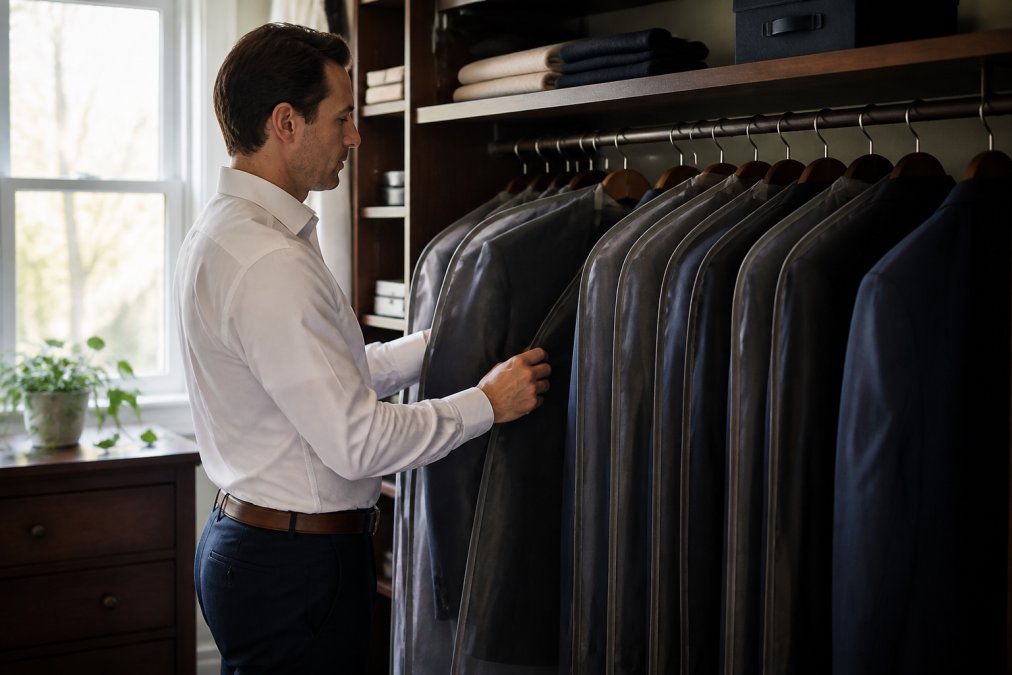
Use padded or wooden hangers for work clothes rather than thin wire hangers, which create permanent creases and distort shoulder seams. Padded hangers distribute weight evenly across the shoulder area, maintaining the garment's original shape. Space hangers at least one inch apart to allow air circulation.
Garment bags protect expensive work clothes from dust, sunlight, and environmental contaminants. Use breathable garment bags made from cotton or specialized fabric rather than plastic, which traps moisture and promotes mold growth. Never store garments in plastic dry cleaning bags long-term.
Cedar blocks or cedar-lined storage spaces naturally repel moths and other insects without chemical pesticides. Place cedar blocks in your closet or use cedar hangers for additional protection. Replace cedar blocks annually as their potency diminishes.
Store work clothes in spaces maintained between 65-70°F and 45-55% relative humidity. Excess heat accelerates fiber degradation and fading. Excess humidity promotes mold and mildew growth. Closets inside climate-controlled living spaces are ideal.
Rotate your work clothes regularly to distribute wear evenly and allow fibers to rest between wearings. Wearing the same blazer three days in a row compresses fibers and accelerates wear. Professional dry cleaning between wearings also extends lifespan by removing accumulated soil before it embeds in fibers.
Common Mistakes to Avoid When Cleaning Expensive Work Clothes
The most common mistake professionals make is treating expensive work clothes like everyday garments. Standard laundry detergent, hot water, and machine drying work fine for casual clothes but damage premium fabrics.
Using regular detergent on expensive work clothes introduces harsh surfactants and optical brighteners that fade colors and damage delicate fibers. Detergent designed for delicate fabrics uses gentler surfactants that clean effectively without fiber damage.
Ignoring care label instructions is the second most common mistake. The care label exists because manufacturers tested that specific garment and determined what it can safely withstand.
Washing stained garments without pre-treating stains sets stains permanently. Washing actually sets most stains by distributing stain molecules throughout the garment and using heat that bonds stains to fibers.
Machine drying expensive work clothes causes shrinkage, fading, and permanent creasing that air drying prevents. Even on low heat settings, machine drying introduces enough heat to damage premium fabrics.
Storing damp or slightly damp garments promotes mold and mildew growth. Always ensure garments are completely dry before storing them.
Mixing expensive work clothes with regular laundry exposes them to dirt, lint, and dyes from other garments. Wash expensive work clothes separately, ideally with other similar items.
Protecting expensive work clothes requires understanding that premium fabrics demand different care than everyday garments. The investment you've made in quality workwear deserves protection through proper cleaning, storage, and handling techniques. For professionals in Miami managing demanding work schedules, professional laundry pickup and delivery services provide the expertise and convenience that home methods cannot match. LaundrPro offers flat-rate pricing with no hidden fees, ensuring your expensive work clothes receive premium care without guesswork about costs. Place Your Order with LaundrPro today and reclaim the time you spend managing laundry logistics while protecting your professional wardrobe investment.
Frequently Asked Questions
How do you clean expensive work clothes without damaging the fabric?
Start by checking the care label on every garment, it specifies the safest cleaning method for that fabric. For delicate materials like silk or wool blends, hand washing in cool water with a gentle detergent is safest. Always test stain removers on a hidden seam first. Air-dry most expensive pieces flat or on a hanger rather than using high heat. When in doubt, professional dry cleaning protects your investment by using specialized solvents and techniques designed for luxury garments.
What's the difference between dry cleaning and washing expensive work clothes at home?
Dry cleaning uses professional-grade solvents that dissolve oils and tough stains without shrinking or fading delicate fabrics. Home washing with water-based detergent works for many work clothes but risks damage to structured garments like blazers or fine wool. For $300+ pieces, dry cleaning preserves shape, color, and longevity. Home care suits everyday cottons and blends. Consider cost-benefit: one damaged $400 blazer costs more than multiple professional cleanings over the garment's lifetime.
How often should you dry clean expensive work clothes?
Frequency depends on wear and visibility of dirt. Blazers and dress pants worn 1-2 times per week can go 4-6 wearings between cleanings if spot-cleaned. Dress shirts and blouses worn daily should be washed after 2-3 wearings. Heavy-use workwear like uniforms may need weekly cleaning. Always clean before visible stains set, as old stains are harder to remove and can damage fibers. Professional cleaning every 4-8 weeks for regular rotation pieces keeps them fresh without over-cleaning, which shortens garment life.
Is laundry pickup and delivery Miami service worth the cost for work clothes?
For busy professionals, pickup and delivery saves 3-5 hours per week on laundry tasks. The time value often exceeds the service cost, especially when you factor in transportation to a dry cleaner. Professional cleaning also extends garment life by using proper techniques and solvents, protecting expensive pieces. Services with flat-rate pricing and no hidden fees, like LaundrPro, offer predictable costs. If you have multiple expensive work garments rotating weekly, professional service prevents damage that would cost far more than cleaning fees.
This article was written using GrandRanker