 listicle
9 Garment Bag Choices for Storing Winter Coats Safely
Quick Summary
The best garment bags for storing winter coats in Miami are breathable cotton or canvas bags with a full-length zipper, because they let moisture escape while blocking dust and light. Clear plastic bags trap humidity and can encourage mildew, so they suit only short-term dust cover.
- Choose a cotton or canvas bag that is labeled breathable, rather than assuming it from its appearance.
- Store only a fully dry, cleaned coat on a wide, padded hanger.
- Measure the coat and match the bag length to avoid creasing the hem.
- Use a gusseted bag for down or faux fur so the loft is not compressed.
- Run a dehumidifier in the closet, since breathable bags cannot dry a damp coat.
Table of Contents
- Why Winter Coats Need a Garment Bag in Miami's Humidity
- How to Store Winter Coats Without Damaging Them
- Breathable Garment Bags for Clothes: Cotton and Canvas Options
- Top Garment Bags for Storing Winter Coats Compared
- How to Prevent Mildew on Stored Clothes in a Humid Closet
- Dry Cleaning Winter Coats Before Storage
- Book Your Winter Coat Cleaning and Storage Prep With LaundrPro
- Frequently Asked Questions
9 Garment Bag Choices for Storing Winter Coats Safely
Last Updated: October 31, 2026
Why Winter Coats Need a Garment Bag in Miami's Humidity
Winter coats are easy to forget once the season ends, and Miami's humidity makes that a costly mistake. A good garment bag keeps dust, light and moisture off the fabric while the coat rests in the closet.
Miami stays humid for most of the year, so the closet air is rarely dry. Wool and down hold moisture more readily than synthetics, which is why the bag you choose matters. The right garment bag for storing winter coats protects both the shell and the insulation.
Plastic might look like the safe choice, but it traps moisture against the fabric. That can encourage mildew over several months. Breathable fabric lets air move around the coat while still keeping out dust.
How to Store Winter Coats Without Damaging Them
Clean the coat before it goes into storage, and make sure it is fully dry. Store it on a wide, padded hanger so the shoulders keep their shape. Avoid wire hangers, which leave bumps and can stretch the fabric.
Empty every pocket, and check for lint, receipts or loose items. Button or zip the coat so it hangs evenly. Give the coat room in the closet so it does not press against other clothes.
Keep the storage spot cool and dark when you can. Light and heat both fade dyes and weaken fibers over time.
Breathable Garment Bags for Clothes: Cotton and Canvas Options
Every competitor says "choose breathable fabric." Few explain why it matters more in Miami than in a dry climate, or when breathable fabric is not enough. That is the gap this section fills.
Why breathability matters more in Miami
Miami stays humid for most of the year, and a closet on an exterior wall or near a bathroom can hold even more moisture than the room average. When a coat goes into storage, any moisture left in the fabric, from body heat, a damp day, or incomplete drying, has to go somewhere. A breathable cotton or canvas bag lets that moisture escape; a sealed plastic bag holds it against the fabric for months, which is how musty smells and mildew spots start.
Breathable fabric is not a dehumidifier, though. It slows moisture buildup and lets air exchange, but it cannot dry a coat that went in damp. The bag is one part of the system; the dry coat and the closet airflow are the other two.
Cotton versus canvas: what actually differs
- Cotton is lighter and cheaper, and it folds or packs easily for travel. It blocks dust and light but offers little structure, so a heavy coat can pull the bag out of shape on the rod.
- Canvas is denser and sturdier. It handles the weight of a heavy wool or down coat better and resists tearing at the hanger opening. The trade-off is that dense canvas breathes less than thin cotton, so it is a better pick for a climate-controlled closet than for a humid one.
- Nonwoven breathable fabric (often sold as "breathable" garment bags) sits between the two on cost and airflow. Check the listing for the word "breathable" rather than assuming from the look.
When breathable fabric is not enough
A breathable bag will not save a coat stored in a closet with standing humidity. If your closet feels damp, or you see condensation on the window or mirror, add airflow and moisture control:
- Run a dehumidifier in the room or closet, and empty it regularly.
- Leave space between bags on the rod so air can move.
- Check stored coats every few weeks, and air them out on a dry day.
- Avoid storing coats against an exterior wall, where condensation is more likely.
Practical buying notes
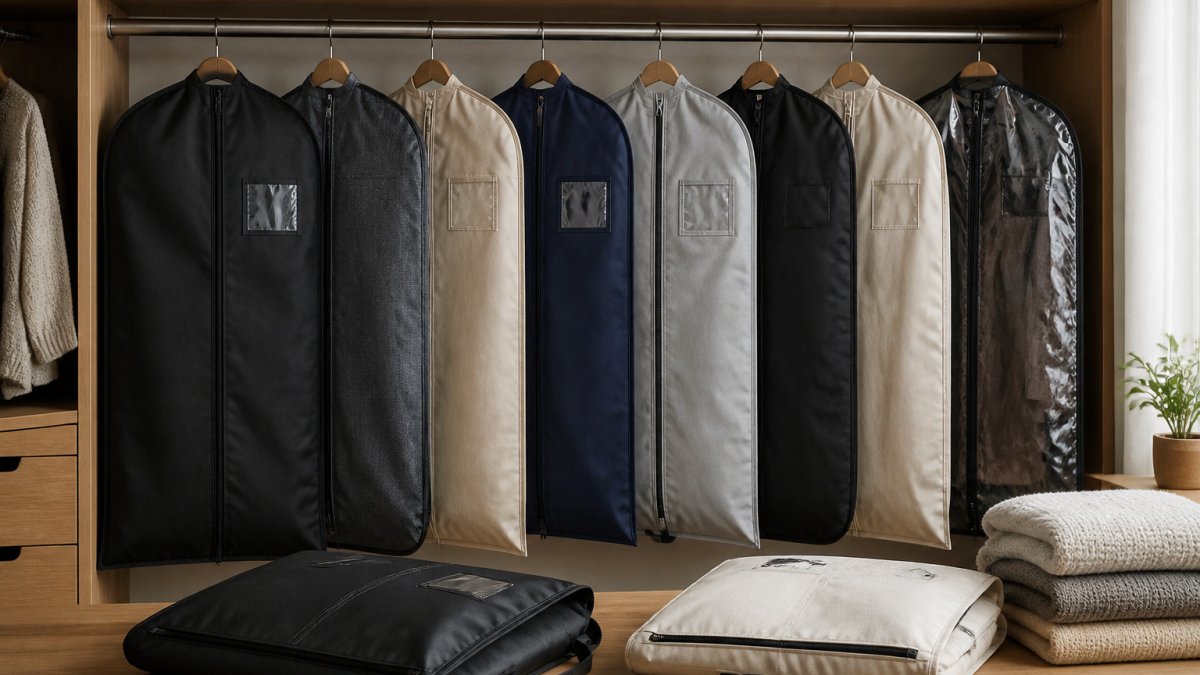
Look for a full-length zipper, a hanger opening that closes around the hook, and a length that matches your coat. A bag with a clear window or label pocket saves time when you store several coats. Prices vary widely by seller and by fabric weight, so compare current listings rather than relying on a single quoted price.
Top Garment Bags for Storing Winter Coats Compared
This section explains the criteria to consider when judging a bag for Miami coat storage, then applies them to the bag types and named products we could verify. Where a spec could not be confirmed, it is noted rather than guessed.
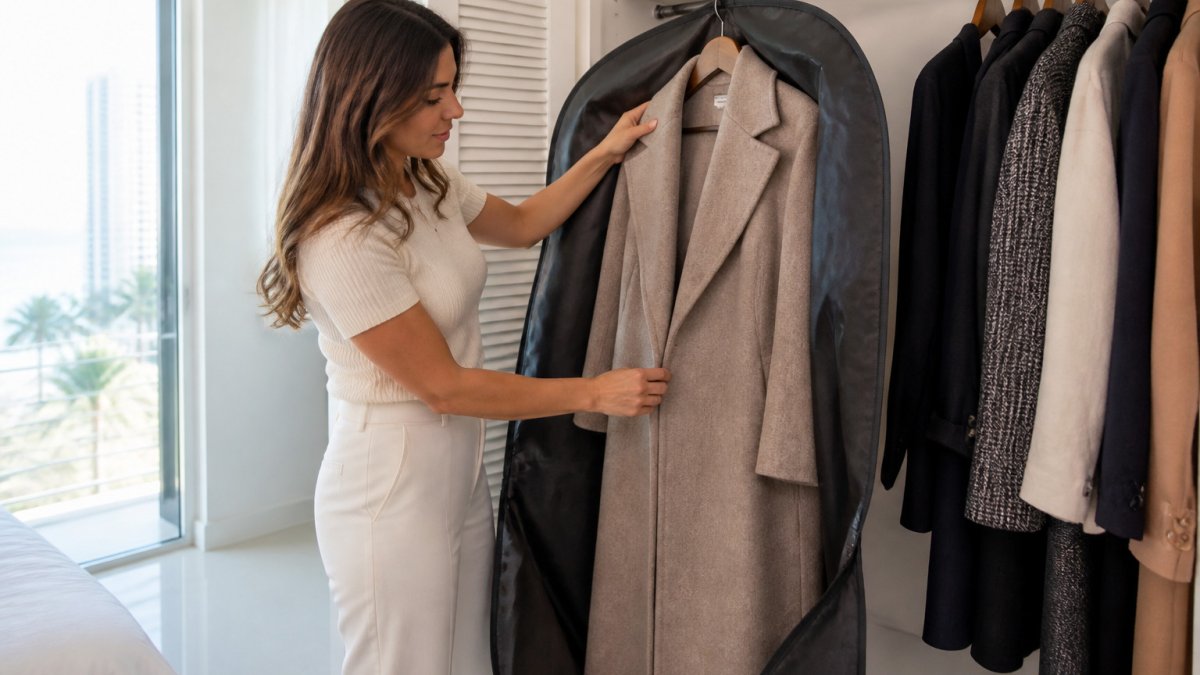
The five criteria that matter for winter coats in Miami
- Breathability of the bag body. In a humid closet, a non-breathable bag traps moisture against wool and down. Look for cotton, canvas, or a breathable nonwoven. Clear plastic is for short-term dust cover only, not a full South Florida summer.
- Length versus coat length. Measure your coat from the shoulder seam to the hem. A 43-inch bag fits most men's overcoats and long women's coats; a 40-inch bag is fine for hip-length jackets but will crease a full-length wool coat at the hem. Mid-length covers (roughly 36-40 inches) suit shorter jackets and travel.
- Zipper and closure quality. A full-length zipper that runs past the hem lets you load the coat without forcing the shoulders. Metal zippers outlast plastic coils over years of seasonal use; a zipper guard protects fabric from snags.
- Gusset and structure. A gusseted bag (side panels that add depth) holds a bulky down or faux fur coat without compressing the loft. Flat bags are fine for suits and light wool.
- Visibility and labeling. A clear window or a label pocket lets you identify the coat without unzipping every bag, practical when you store several coats in one closet.
What we could verify about named bags
| Bag | Length | Material | Best for | Notes on verification |
|---|---|---|---|---|
| Briggs & Riley Classic Garment Bag | Not confirmed in our research | Synthetic | General use and long-term clothing storage | Wirecutter names it a best all-purpose pick; breathability not confirmed |
| Delsey Mid-Length Garment Cover | Mid-length | Not confirmed in our research | Lightweight covers with room for garments | Forbes Vetted top pick; long-term coat suitability not confirmed |
| Lazebox 43-Inch Travel Garment Bag | 43 inches | Not confirmed in our research | Coats, gowns and tuxedos | Coats are an explicitly listed use; price and breathability not confirmed |
Match the bag to the coat material
- Wool and wool blends: a breathable cotton or canvas bag with a full-length zipper. Wool holds moisture and attracts moths, so breathability and a tight closure matter more than padding.
- Down: a gusseted breathable bag that does not compress the loft. Avoid vacuum bags for long-term storage; compression weakens down over a season.
- Leather: a breathable bag, never sealed plastic. Leather needs airflow to avoid mildew and cracking; a cotton bag with a loose closure is safer than a zippered plastic cover.
- Faux fur: a gusseted bag that keeps the pile from flattening, stored away from direct light.
- Delicate or embellished coats: a bag with a smooth interior lining and a zipper guard so beads and sequins do not snag.
Forbes Vetted best garment bags
How to Prevent Mildew on Stored Clothes in a Humid Closet
Mildew needs moisture, warmth and still air. Start with a dry coat, then give the closet some airflow. Do not pack clothes so tightly that air cannot move between them.
Run a dehumidifier in the closet or the room if humidity stays high. Check stored items every few weeks, and air them out on a dry day. If you see musty smells or spots, treat them early.
Dry Cleaning Winter Coats Before Storage
Cleaning before storage can help remove body oils, sweat and food residue that may attract pests or set over time. Learn more about specialized garment care for expensive clothes before you decide. Tell your cleaner about any stains so they can be treated properly.
Professional garment care is worth considering for expensive coats. Ask about the cleaning process for your fabric, especially for wool and down. You can book dry cleaning pickup with LaundrPro if you prefer to hand off the work.
Pricing depends on quantity, dates and delivery. For current rates, check LaundrPro's laundry prices and turnaround in Miami.
Book Your Winter Coat Cleaning and Storage Prep With LaundrPro
LaundrPro offers door-to-door laundry and dry cleaning, which can take the trip out of coat prep. Pickup and delivery can be arranged through the website. Visit our website to place your order or request a quote.
Frequently Asked Questions
What is the best way to store winter coats in a Miami home?
Clean the coat first, let it dry fully, then hang it on a wide wooden or padded hanger inside a breathable garment bag. Keep the closet dry and avoid packing coats tightly, since humidity in Miami can cause mildew and odor. Check stored coats every few months, and consider placing moisture absorbers in the closet. Pricing for LaundrPro cleaning and prep depends on quantity, dates and delivery, so check the LaundrPro website for current rates or a quote before booking.
Are breathable garment bags better than plastic bags for winter coats?
Breathable garment bags, usually made of cotton or canvas, allow air to circulate, which helps reduce trapped moisture. Plastic bags can hold humidity against the fabric, which raises the risk of mildew over long storage periods. Some bags combine a water-resistant outer layer with a breathable interior, which can suit humid climates. Choose a bag that is long enough for the full coat so the hem does not press against the bottom.
Should winter coats be dry-cleaned before long-term storage?
Yes, cleaning before storage is recommended because body oils, perspiration and food residue can attract pests and discolor fabric over time. Wool and down coats often need professional care, so check the care label and follow its instructions. Make sure the coat is completely dry before bagging it, since any remaining moisture can cause mildew. LaundrPro offers door-to-door cleaning, and pricing depends on quantity, dates and delivery, so request a quote through the LaundrPro website.
Can you store wool coats in a garment bag?
Yes, wool coats store well in breathable garment bags. Cotton or canvas bags let the fibers breathe while protecting them from dust and light. Avoid sealed plastic bags for wool, because trapped moisture can attract moths and cause mildew. Add cedar or lavender sachets to deter pests, but keep them outside direct contact with the fabric.