 ultimate-guide
Alternatives to Using a Dryer for Clothes
Table of Contents
- Why Consider Alternatives to Using a Dryer for Clothes
- How to Air Dry Clothes Indoors
- How Long Does It Take for Clothes to Air Dry
- How to Prevent Musty Smell When Air Drying
- Heated Clothes Airers and Drying Racks
- Dehumidifiers for Indoor Drying
- Energy Efficiency and Cost Savings
- When to Use Professional Laundry Services Instead
- Frequently Asked Questions
Last Updated: September 3, 2026
Why Consider Alternatives to Using a Dryer for Clothes
Tumble dryers are among the largest energy consumers in most households. For Miami residents, high humidity, year-round heat, and rising utility costs make alternatives increasingly practical. Air circulation, dehumidifiers, and passive drying methods deliver spotless results without the energy drain.
Alternatives extend garment lifespan significantly. Heat degrades delicate fabrics, elastic fibers, and dyed materials permanently. Air drying, line drying, and heated racks preserve fabric integrity while cutting electricity consumption. Miami's consistent heat and airflow mean clothes dry faster indoors than in cooler regions, though managing tropical humidity remains the challenge. This guide explores every practical alternative, from simple indoor air-drying setups to dehumidifier systems and professional laundry services.
How to Air Dry Clothes Indoors
Air drying indoors is the simplest alternative to using a dryer for clothes. It requires no equipment investment and works reliably when you control for air circulation and humidity.
Setting Up for Success with Air Circulation
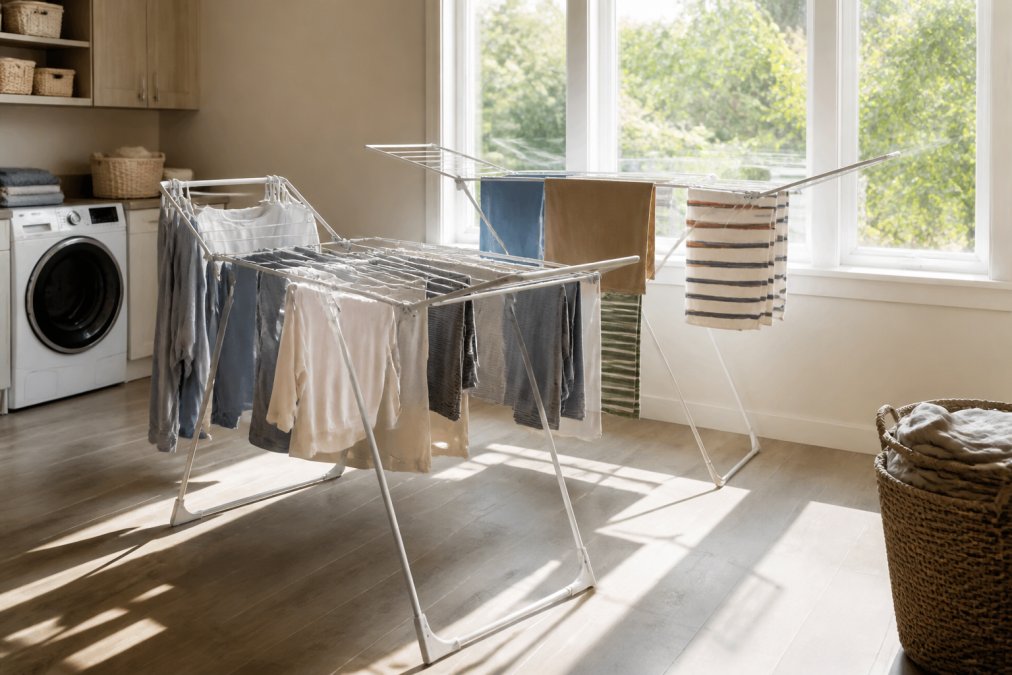
Air circulation determines drying speed. Stagnant air means moisture lingers and creates musty smells. Position drying racks or hanging lines in areas with natural air movement, ideally near windows that provide both light and cross-ventilation. In Miami, open windows during early morning or late evening when outdoor humidity dips.
A small portable fan directed across drying garments accelerates the process dramatically. Fans consume minimal electricity compared to dryers. Space clothes with visible gaps between items, bunched garments trap moisture between layers. Hanging clothes vertically allows air to circulate on both sides of fabric. Space thicker items like towels or jeans at least two inches apart.
Best Practices for Indoor Air Drying
Moisture from wet clothes raises indoor humidity. Monitor humidity levels in your drying area; if they climb above 60%, you're slowing drying and risking mildew growth (the CDC).
Separate heavy items from lightweight ones. Wet jeans, towels, and bed linens release substantial moisture and take longer to dry. Pre-spin clothes in the washing machine before hanging, a full spin cycle removes significant water weight, cutting drying time by 30-40% (peer-reviewed research). Rotate garments halfway through the cycle to expose previously shaded areas to airflow.
How Long Does It Take for Clothes to Air Dry
Indoor air drying in Miami typically takes 4-8 hours for lightweight garments under favorable conditions. Heavier items like towels and jeans require 12-24 hours. Lightweight cotton shirts and underwear dry fastest, usually within 4-6 hours with good airflow.
Miami's heat accelerates drying compared to cooler climates. Summer temperatures in the 85-95°F range create ideal conditions. Winter months see slower drying because temperatures drop and humidity remains high. The key variable is humidity, on days when outdoor humidity sits below 50%, indoor drying moves quickly. When humidity climbs above 70%, moisture evaporates more slowly. This is why dehumidifiers become valuable in Miami.
How to Prevent Musty Smell When Air Drying
Musty odors develop when clothes remain damp too long or when moisture combines with stagnant air. Ensure complete dryness before folding, check seams and thick areas where water lingers longest. Hang garments for an extra 2-4 hours beyond when they feel dry.
Air circulation prevents musty smells more effectively than any product. Keep fans running throughout the drying cycle and crack windows if outdoor humidity is lower than indoor levels. Sunlight acts as a natural deodorizer, position drying racks near windows where direct sunlight reaches clothes for 2-3 hours. Wash clothes in cooler water and rinse thoroughly with cool water as the final cycle to remove all detergent residue.
Heated Clothes Airers and Drying Racks
Heated airers combine air circulation with gentle warmth, accelerating drying without the energy intensity of tumble dryers. These devices are particularly effective in Miami's humid climate because they warm fabric slightly, increasing moisture evaporation rates.
The Meaco DD8L Desiccant Dehumidifier removes moisture from the air itself rather than heating fabric, creating an environment where clothes dry faster naturally. Its dedicated "Laundry Mode" directs dry air toward hanging garments. At around $379.99, it represents a significant upfront investment but delivers consistent results across seasons.
Heated airers typically consume 200-400 watts during operation, compared to 3,000-5,000 watts for a tumble dryer. Running a heated airer for 8 hours uses roughly the same electricity as running a dryer for 1-2 hours.
Retractable Indoor Washing Lines
Retractable lines mount between two walls and extend when needed, then retract into compact housing. The Brabantia Retractable Indoor Washing Line provides up to 72 feet of drying space when fully extended, maximizing capacity without consuming permanent floor space. Installation requires drilling into wall studs or using heavy-duty anchors. When properly installed, retractable lines hold approximately 2.5 kg of wet laundry per line. Starting prices range from $40-$50.
Freestanding Drying Racks
Freestanding racks offer flexibility without installation. The Honey-Can-Do Heavy Duty Gullwing Drying Rack features six adjustable positions, a mesh shelf for sweaters, and hooks for shoes. The gullwing design folds flat to just 3 inches wide for storage. At $48, freestanding racks deliver multi-functional drying for most household needs.
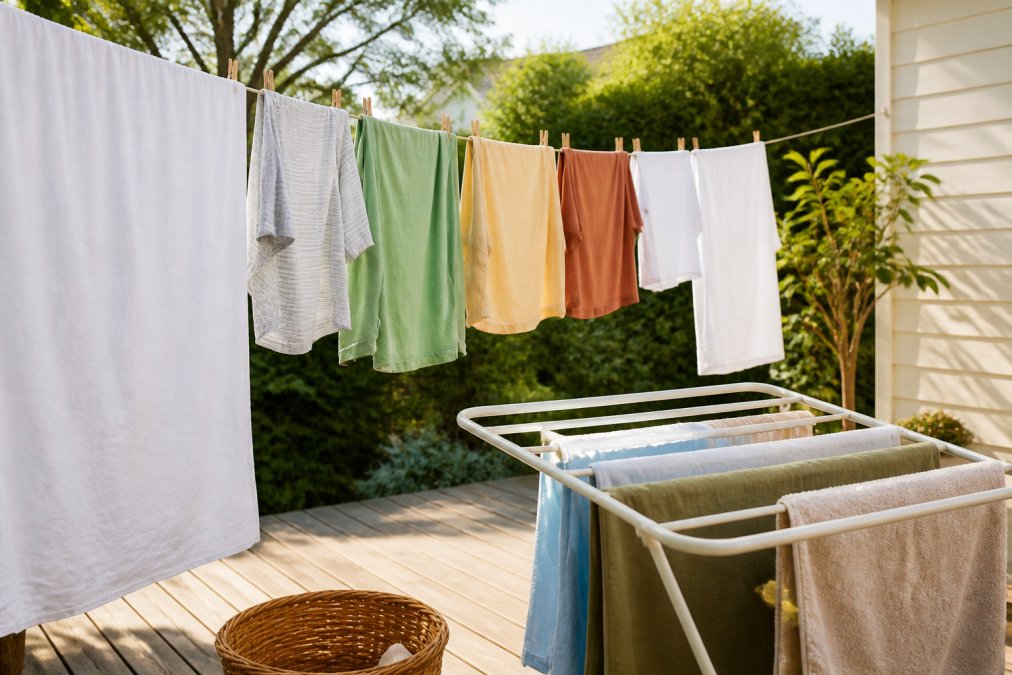
Quality racks typically hold 50-75 pounds of wet laundry. Distribute weight evenly to prevent tipping. Position racks in high-traffic areas with natural air circulation, kitchens, laundry rooms, or living spaces near windows work well.
Dehumidifiers for Indoor Drying
Dehumidifiers address the core challenge of air drying in Miami: excess moisture in the air. By removing humidity, they create an environment where clothes dry faster and musty smells don't develop. Compressor dehumidifiers work well in warm environments and are ideal for Miami's climate. Desiccant dehumidifiers operate effectively at any temperature.
The Meaco DD8L uses desiccant technology optimized for laundry drying with a movable louvre to aim airflow precisely. Operating costs are moderate, desiccant units typically consume 300-600 watts, less than half what a tumble dryer uses.
Position a dehumidifier in the room where clothes are drying. Close windows and doors to contain dehumidified air. Set humidity targets between 40-50% for optimal drying speed. Empty the collection tank regularly or set up continuous drainage to a sink or floor drain.
Energy Efficiency and Cost Savings
Tumble dryers rank among the highest-consuming household appliances, using 3,000-5,000 watts per cycle (energy.gov). A family running the dryer five times weekly consumes substantial electricity. Air drying costs essentially nothing beyond initial equipment purchase. Heated airers use 200-400 watts. Dehumidifiers use 300-600 watts. Fans use 50-100 watts.
In Miami, eliminating dryer heat reduces cooling load. Dryers release 3,000+ BTUs of heat into living spaces, forcing air conditioning to work harder. Switching to air drying lowers both direct dryer costs and indirect cooling costs. If your electricity rate is $0.15 per kilowatt-hour and you run a dryer five times weekly at 5,000 watts for 45 minutes per cycle, you're spending roughly $75 monthly on dryer electricity alone. Switching to air drying and a $50 drying rack pays for itself in less than a month.
Professional laundry services like LaundrPro eliminate the energy question entirely. You pay a flat rate for spotless results and premium fabric care with no equipment investment or electricity consumption.
When to Use Professional Laundry Services Instead
Some situations make professional services more practical than home alternatives. High-volume laundry, families with multiple children, professionals with extensive work wardrobes, or households managing bulky items like comforters benefit from outsourcing.
Professional services handle delicate fabrics, formal wear, and specialty items with expertise that home methods can't match. For professionals in Miami who need work blazers and dress shirts ready for Thursday morning meetings, waiting 24 hours for air drying isn't realistic.
LaundrPro offers door-to-door pickup and delivery with a fast 24-48 hour turnaround. Clothes are collected from your home, cleaned to spotless results with premium product care, and returned fresh and ready to wear. Flat-rate pricing with no subscriptions or hidden fees removes uncertainty. For families managing bulky household items, professional services solve the space and time problem, a queen-size comforter returns ready to use within two days.
The decision between home alternatives and professional services depends on your priorities. Time-conscious professionals and families with high laundry volume find professional services eliminate friction. Those prioritizing cost savings benefit from air drying, heated racks, and dehumidifiers. Most households find a hybrid approach works best, using home alternatives for everyday clothing while outsourcing formal wear and bulky items.
Finding alternatives to using a dryer for clothes transforms your laundry routine while reducing energy costs and extending garment lifespan. Whether you choose air drying with proper airflow, heated racks, dehumidifiers, or professional services, match your approach to your lifestyle and Miami's humid climate. For busy professionals managing demanding schedules and high-volume laundry, LaundrPro delivers spotless results with a fast turnaround and transparent flat-rate pricing. Place your order today and reclaim the time you spend managing laundry at home.
Frequently Asked Questions
What is the best way to dry clothes without using a dryer?
The best method depends on your space and climate. Air drying on racks or lines works well with good ventilation and air circulation. In humid environments, combining air drying with a dehumidifier speeds up the process significantly. For delicate fabrics, air drying preserves quality better than machine drying. Heated airers offer a middle ground, reducing drying time while remaining energy-efficient compared to tumble dryers.
How long does it take for clothes to air dry indoors?
Indoor air drying typically takes 24-48 hours depending on fabric type, humidity levels, and air circulation. Lightweight items like t-shirts and underwear dry faster, while heavier fabrics like jeans and towels can take 2-3 days. In high-humidity climates, drying times extend significantly. Using a dehumidifier can cut drying time in half by actively removing moisture from the air.
How do you prevent musty smell when air drying clothes?
Musty odors occur when moisture lingers too long. Ensure good air circulation by opening windows, using fans, or running a dehumidifier. Don't let damp clothes sit in a pile before hanging. Wash clothes with quality detergent to eliminate bacteria. In humid climates, a dehumidifier removes excess moisture that causes mildew. Hang clothes in a well-ventilated space away from walls, and consider adding a small fan to improve airflow around garments.
Can you use a drying rack indoors in a small apartment?
Yes, drying racks work well in apartments when positioned strategically. Retractable washing lines mount between walls and fold away when not in use, saving floor space. Freestanding racks can fold flat for storage. Place racks near windows for natural light and airflow, or position them in front of a fan. Ensure adequate ventilation to prevent humidity buildup. For very small spaces, vertical solutions like wall-mounted lines maximize drying capacity without consuming floor area.
Are alternatives to dryers really more cost-effective?
Yes, air drying and heated racks save significantly on electricity compared to tumble dryers, which are among the most energy-intensive household appliances. Drying racks and lines have minimal operating costs after initial purchase. Dehumidifiers require electricity but still cost less than running a dryer regularly. Over time, these alternatives reduce utility bills substantially. Additionally, air drying extends fabric lifespan by reducing heat damage, saving money on replacement clothing.
This article was written using GrandRanker