 ultimate-guide
Care for Expensive Suits: A Complete Guide
Table of Contents
- Why Proper Suit Care Matters for Your Investment
- How Often to Dry Clean a Suit Without Damaging Fibers
- Best Suit Hangers for Expensive Suits: Wooden and Wide Options
- How to Steam a Suit at Home: Wrinkle Release Techniques
- How to Remove Wrinkles from a Suit Without Professional Help
- Protecting Your Suit Collection: Rotation and Moth Prevention
- Fabric-Specific Care for Bespoke and Luxury Suits
- Travel-Specific Suit Care: Maintaining Sharp Lines On the Go
- Frequently Asked Questions
Care for Expensive Suits: A Complete Guide
Last Updated: July 12, 2026
Protecting a significant investment in quality tailoring requires understanding how to care for expensive suits properly. A bespoke suit or luxury garment represents a long-term wardrobe asset that can last decades when maintained correctly. The difference between a suit that looks sharp for five years and one that maintains its natural lustre for fifteen comes down to intentional, consistent care practices.
Most people treat expensive suits the same way they treat off-the-rack clothing, which accelerates deterioration significantly. This guide covers the specific maintenance strategies that preserve fabric integrity, prevent common damage, and extend your suit's lifespan.
Why Proper Suit Care Matters for Your Investment
A quality suit represents a substantial financial commitment. The real cost isn't what you paid initially, it's the cost per year of wear. A $3,000 suit worn for five years costs $600 annually. The same suit maintained properly and worn for fifteen years costs $200 annually. The difference is entirely preventative maintenance.
Expensive suits use natural fibers, wool, silk, and linen, that respond to proper handling but deteriorate quickly under stress. Understanding the specific needs of your suit's fabric composition is the foundation of effective long-term care.
How Often to Dry Clean a Suit Without Damaging Fibers
The most common mistake professionals make is dry cleaning suits too frequently. Each cleaning cycle subjects fabric to chemical stress and mechanical agitation. A well-maintained suit should be dry cleaned only 2-3 times per year for regular business wear. For suits worn less frequently, dry cleaning once annually may be sufficient.
Between professional cleanings, spot cleaning and steaming handle most day-to-day maintenance needs, reducing chemical exposure while keeping your suit looking fresh.
Spot Cleaning vs. Full Dry Cleaning
Spot cleaning addresses localized stains without subjecting the entire garment to the dry cleaning process. Blot (never rub) the affected area with a clean, damp cloth using cool water. For protein-based stains like food or blood, use cool water. For oil-based stains, a small amount of mild detergent mixed with water works better. Allow the area to air dry completely before wearing.
Full dry cleaning becomes necessary when spot cleaning can't address widespread soiling or when the suit has accumulated general grime that steaming won't remove.
Seasonal Cleaning Guidelines
Spring and fall transitions are natural times to assess your suit collection. Before storing suits for seasonal changes, consider a professional cleaning if the suit has been worn regularly during that season. This prevents insects and mold from colonizing fabric during months of storage.
However, this doesn't mean every suit needs cleaning with each season change. A suit worn twice monthly during fall and winter might need one professional cleaning in spring.
Best Suit Hangers for Expensive Suits: Wooden and Wide Options
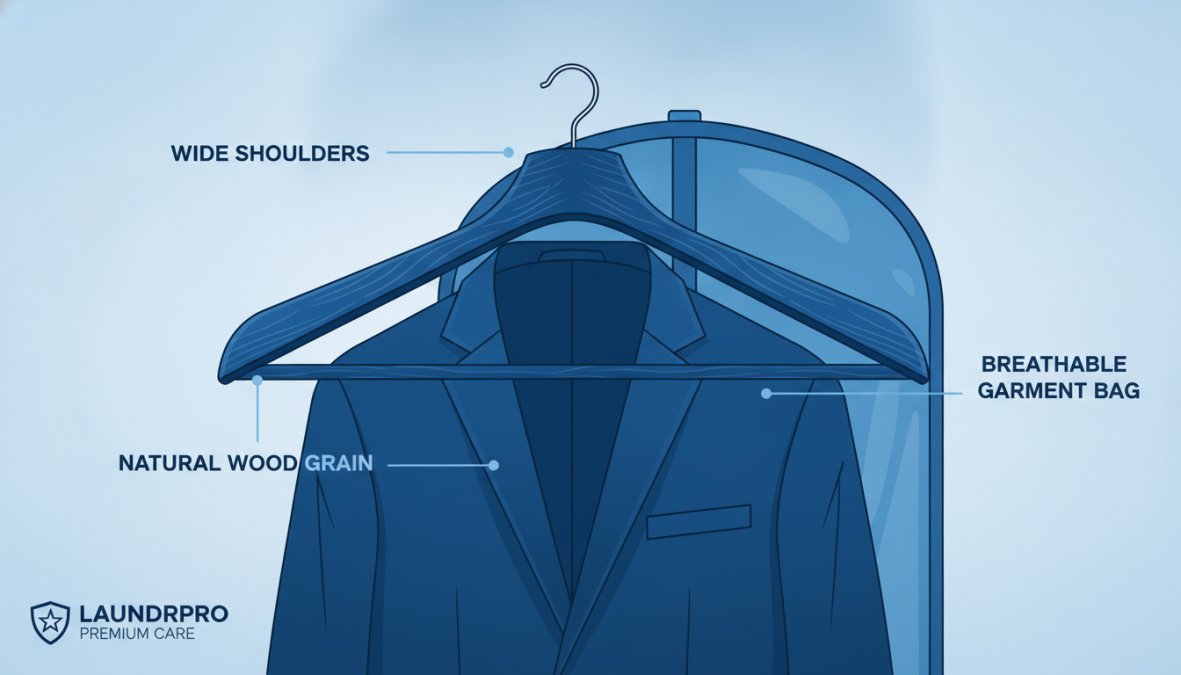
The hanger you choose affects how your suit maintains its shape between wearings. A flimsy wire or narrow plastic hanger concentrates pressure on the shoulder seams, creating permanent creases and distorting the jacket's silhouette. Wooden hangers with wide shoulders (at least 17-18 inches) distribute weight evenly across the entire shoulder structure.
Why Wooden Hangers Preserve Shoulder Shape
Expensive suits are built with specific shoulder architecture. A narrow hanger compresses this structure, creating a visible dent that becomes permanent with time. Wooden hangers with curved shoulders, not straight ones, preserve the three-dimensional shape by mirroring the natural contour of the human shoulder.
Weight distribution matters too. A quality wooden hanger weighs enough to keep the jacket hanging straight without sagging, while remaining light enough that the hanger itself doesn't stress the shoulder seams.
Storage Environment and Breathable Garment Bags
A cool, dry closet with good air circulation is ideal. Basements and attics experience moisture fluctuations that encourage mold and mildew. Direct sunlight fades fabric and weakens fibers over time.
Breathable garment bags protect suits from dust and insects while allowing air circulation. Cotton or linen garment bags, or breathable synthetic alternatives, keep your suit protected without creating humidity problems.
How to Steam a Suit at Home: Wrinkle Release Techniques
Steaming is the preferred method for refreshing a suit between wearings. Unlike ironing, which applies direct heat and pressure to fabric, steaming uses moist heat to relax wrinkles without flattening the natural texture of wool. A quality garment steamer costs $50-150 and pays for itself within a few uses compared to professional pressing.
Hang the suit on a wooden hanger, hold the steamer nozzle 6-8 inches from the fabric, and move slowly across the surface from top to bottom. Allow the suit to air dry completely after steaming before wearing it.
Steaming vs. Ironing: Which Method Protects Wool Fibers
Ironing applies direct heat and pressure simultaneously, which flattens the natural nap of wool fabric and creates a shiny, worn appearance. The pressure also compresses fibers, making them more prone to pilling and matting. If you must iron a suit, use the lowest heat setting, place a pressing cloth between the iron and fabric, and move quickly without applying pressure.
Steaming achieves wrinkle release without these risks. The moist heat is gentler on fibers, and the lack of pressure means the fabric's natural texture is preserved. For expensive suits, steaming should be your default method.
How to Remove Wrinkles from a Suit Without Professional Help
Beyond steaming, several techniques help manage wrinkles between professional pressing. The simplest is the bathroom steam method: hang your suit in the bathroom while you shower. The steam from hot water relaxes wrinkles naturally, working well for light wrinkles from storage or travel.
Another option is the damp cloth method: lightly dampen a clean cloth with water, place it over the wrinkled area, and let it sit for 15-20 minutes. The moisture allows fibers to relax.
DIY Stain Removal and Preventative Maintenance
Most stains respond well to immediate treatment before they set. Protein-based stains (blood, egg, milk) need cool water; hot water sets them permanently. Oil-based stains (grease, sauce) benefit from a small amount of mild detergent.
Blot stains rather than rubbing. Rubbing pushes the stain deeper into fibers and spreads it across a larger area. Use a clean white cloth and work from the outside edges toward the center.
Protecting Your Suit Collection: Rotation and Moth Prevention
Wearing the same suit repeatedly without rest accelerates wear. Fibers don't have time to recover their shape, and body oils accumulate faster. Rotating suits extends the lifespan of each piece significantly. A professional who wears suits daily ideally has 4-5 suits in rotation, meaning each suit is worn once every 4-5 days.
Moths and other insects are attracted to natural fibers, particularly in dark, undisturbed storage areas. Prevention is far easier than dealing with moth damage.
Cedar Blocks and Deodorizing Strategies
Cedar blocks and cedar-lined closets are effective natural moth deterrents. Place cedar blocks in your closet or storage area, particularly in corners where moths might nest. Replace cedar blocks every 1-2 years as the scent fades. Lavender sachets also repel moths without harsh chemicals.
Deodorizing is important for suits worn regularly. Body odors accumulate in the underarm area and collar. Between wearings, hang suits in an open space where air circulates freely. A spray-on fabric refresher designed for suits can help, but it's not a substitute for air drying.
Suit Rotation to Reduce Fabric Fatigue
Fabric fatigue occurs when fibers are stressed repeatedly without recovery time. A suit worn once weekly shows less fatigue than one worn three times weekly, even if total annual wear is similar. For professionals with limited suit budgets, even three suits in rotation significantly improves longevity compared to one or two suits worn constantly.
Fabric-Specific Care for Bespoke and Luxury Suits
Different fabric compositions require slightly different maintenance approaches.
Wool, Silk Lining, and Natural Fibers
Wool is the most common suit fabric, prized for its durability, wrinkle resistance, and natural temperature regulation. High-quality wool fibers are resilient and recover from wrinkles naturally when given time. Merino wool and other premium wool blends are even more resilient and actually improve with age as natural oils create a subtle sheen.
Silk linings add luxury and comfort but require gentle handling. Avoid rough contact with the lining. When reaching into pockets, do so gently to prevent tears.
Lining Maintenance and Moisture Control
The lining protects the interior structure of the jacket and provides comfort. Silk linings can develop small tears from rough handling; these are easy to repair if caught early. If the suit gets wet, hang it to dry slowly in a well-ventilated area. Never use direct heat to dry a wet suit, as this can shrink the lining and damage the structure.
Sweat accumulation in linings accelerates deterioration. Wearing an undershirt reduces moisture transfer to the lining. After wearing a suit in warm weather, hang it in a well-ventilated space to allow sweat to evaporate before storing.
Travel-Specific Suit Care: Maintaining Sharp Lines On the Go
Traveling with suits presents unique challenges. Luggage compression creates wrinkles, temperature and humidity fluctuations stress fabric, and limited access to care tools makes maintenance difficult.
Packing Techniques and Garment Brush Use
The garment bag method is superior to folding suits into luggage. A suit travel bag keeps the jacket and trousers relatively flat and protected from compression. If using a standard garment bag without a hanger, fold the jacket inside out to protect the exterior from wrinkles and dust.
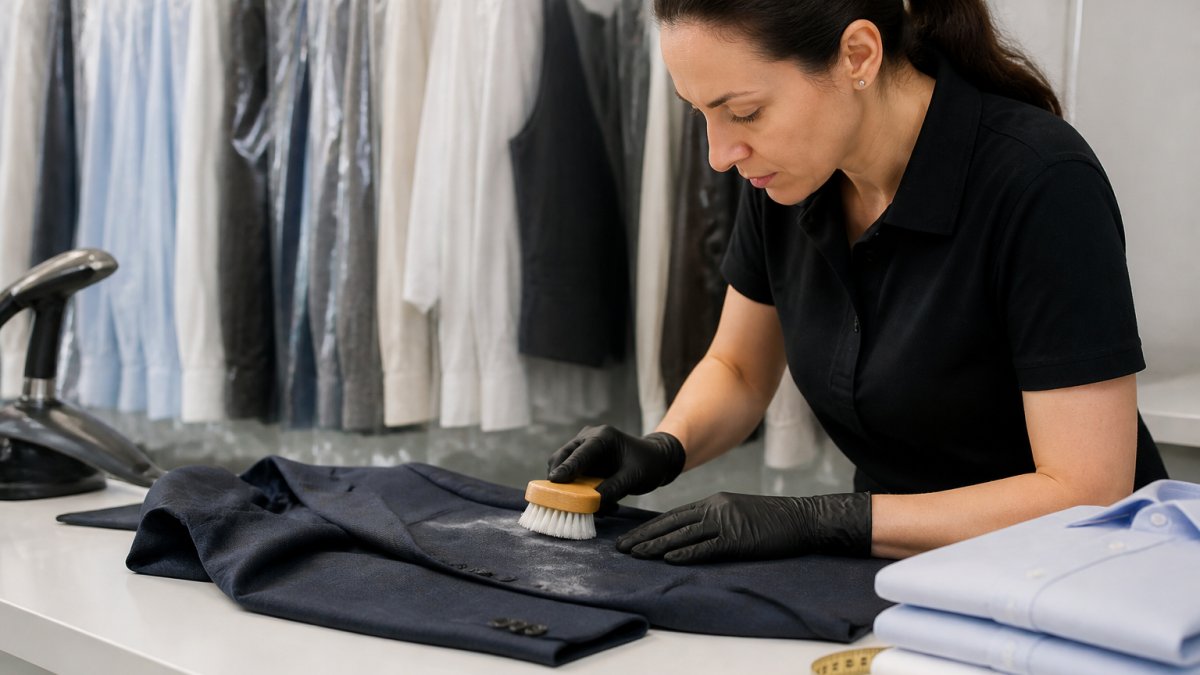
A garment brush is an essential travel tool. This soft-bristled brush removes dust and surface debris without stressing fabric. Brush the suit gently in the direction of the nap to remove dust while restoring the natural texture. Regular gentle brushing also helps prevent pilling.
Hotel Room Recovery and Quick Wrinkle Release
Upon arrival at a hotel, hang the suit immediately in a well-ventilated space. Most wrinkles from packing will release naturally over 12-24 hours if the suit hangs freely.
If you need the suit sharp immediately, the bathroom steam method works in hotels. Hang the suit in the bathroom while you shower, allowing steam to relax wrinkles. Close the bathroom door to contain steam. This takes 20-30 minutes and requires no special equipment.
A small handheld steamer is worthwhile for frequent travelers. These devices are compact, heat quickly, and effectively remove travel wrinkles.
| Situation | Method | Time Required | Equipment |
|---|---|---|---|
| Light wrinkles from storage | Steaming | 15-20 minutes | Garment steamer |
| Travel wrinkles (immediate) | Bathroom steam | 20-30 minutes | Hot shower |
| Isolated wrinkles | Damp cloth | 15-20 minutes | Clean cloth + water |
| Heavy creasing | Professional pressing | 24-48 hours | Professional service |
| Dust and surface debris | Garment brush | 5-10 minutes | Soft-bristled brush |
Caring for expensive suits is an investment in longevity that pays clear dividends. Proper storage, strategic cleaning, appropriate steaming, and rotation extend suit lifespan dramatically while maintaining the sharp appearance that justified the initial investment. Professional care remains important for deep cleaning and complex repairs, but the maintenance you do between professional services determines long-term success.
Frequently Asked Questions
How often should you dry clean an expensive suit?
Most expensive suits benefit from dry cleaning every 5-7 wears, or once or twice per season. However, spot cleaning between full cleanings extends your suit's lifespan and reduces fabric stress. Professional dry cleaning uses solvents that, while effective, can gradually wear wool fibers and diminish natural lustre. Rotate your suit collection to allow fibers to recover between wears, and reserve full dry cleaning for visible stains or end-of-season maintenance.
What is the best way to store an expensive suit?
Store your suit on a wooden hanger with wide shoulders to maintain proper shoulder shape and prevent fabric stress. Use a breathable garment bag to protect against dust and moths without trapping moisture. Keep suits in a cool, dry closet away from direct sunlight. Add cedar blocks or natural deodorizing options to prevent moth damage. Ensure adequate space between hangers so suits don't wrinkle from pressure, and rotate your collection regularly to reduce fabric fatigue.
Can you steam an expensive suit at home?
Yes, steaming is gentler on wool fibers than ironing and is an excellent way to release wrinkles from expensive suits. Use a garment steamer on low to medium heat, holding it 6-8 inches from the fabric. Steam the jacket, trousers, and lining separately, moving the steamer slowly to allow heat to penetrate fibers. Steaming also helps deodorize and restore natural lustre without the harsh pressing that can flatten wool. Always test on a hidden area first, and avoid direct contact with delicate fabrics.
How do you remove stains from a wool suit without professional help?
For fresh stains, blot immediately with a clean, dry cloth, never rub. For light stains, use a soft garment brush to gently lift dirt. For oil or food stains, apply a small amount of dry-cleaning solvent to a cloth and dab the affected area. Always work from the outside of the stain inward to prevent spreading. For stubborn or set-in stains, professional dry cleaning is recommended to avoid permanent damage to wool fibers. Test any cleaning solution on an inconspicuous area first.
What should you do to care for an expensive suit while traveling?
Pack your suit carefully by laying it flat or rolling it gently to minimize wrinkles. Use a garment bag designed for travel. Upon arrival, hang the suit immediately on a wooden hanger in your hotel room and use a garment steamer or hang it in a steamy bathroom to release travel wrinkles. A portable garment brush helps restore the fabric's nap and remove dust. Avoid folding or sitting in your suit for extended periods. Allow the suit to air out between wears to manage moisture and maintain its sharp lines.
How do you prevent moth damage in your suit collection?
Moths are attracted to wool fibers, especially in dark, undisturbed areas. Use cedar blocks, cedar-lined closets, or natural moth repellents like lavender sachets in your closet. Ensure suits are clean before storage, as moths are attracted to food residue and sweat. Store suits in breathable garment bags to block moth access while allowing air circulation. Regularly inspect your collection and rotate suits so they're not left undisturbed for long periods. Professional dry cleaning also eliminates moth larvae if present.
When should you take an expensive suit to a tailor instead of DIY repair?
Professional tailors are essential for structural repairs like seam reinforcement, shoulder adjustments, or lining replacement, these require expertise to avoid damaging wool fibers. Handle minor maintenance yourself: use a garment brush for dust removal, spot-clean small stains, and steam wrinkles at home. However, for tears, significant wear, or alterations that affect the suit's fit and longevity, invest in professional repair. A skilled tailor can extend your suit's lifespan significantly and maintain its bespoke quality.
This article was written using GrandRanker