 blog
Can Fabric Softener Prevent Fiber Damage?
Last Updated: October 26, 2026
Quick Summary
Fabric softener fiber damage is often caused by misuse rather than the product itself. The relationship between fabric softener and fiber health depends on how you use it and what you're treating. Used correctly with proper dosing and the right dispenser, fabric softener can reduce static and make fabrics feel softer without damaging fibers.
- Start with the smallest dose the label allows and scale up only if you still feel stiffness or static.
- Always use the machine's dispenser during the rinse cycle, never pour undiluted softener directly onto dry clothes.
- Skip fabric softener on bath towels, hand towels, and washcloths to preserve absorbency.
- White vinegar in the rinse cycle is the closest drop-in softener replacement for cotton, linen, and towels.
- Skip softener every third or fourth wash on everyday items to let fibers shed accumulated coating.
Table of Contents
- Does Fabric Softener Actually Prevent Fiber Damage?
- How to Use Fabric Softener Without Damaging Clothes
- Fabric Softener and Towels: When to Use It
- Fabric Softener for Delicate Clothes
- Fabric Softener Alternatives That Protect Fibers
- Protect Your Investment With Professional Laundry Care
- Frequently Asked Questions
Does Fabric Softener Actually Prevent Fiber Damage?
The short answer is complicated. Fabric softener doesn't prevent fiber damage the way most people assume it does, and fabric softener fiber damage is often caused by misuse rather than the product itself.
Fabric softener can affect different materials in different ways, depending on how you use it and what you're treating.
Consumer Reports' guidance on fabric softener warns that softener deposits a layer of chemical compounds on fabric. Yet the American Cleaning Institute's resource on fabric care notes that softeners can reduce static cling in synthetic fibers and make fabrics feel softer and fluffier when used correctly.
The real question isn't whether fabric softener prevents damage, it's whether you're using it on the right fabrics in the right way.
How to Use Fabric Softener Without Damaging Clothes
Using fabric softener safely is less about the product and more about the dose, the dispenser, and the water. Most fiber problems traced to softener come from over-dosing, pouring concentrate directly onto fabric, or using it on the wrong material, not from the softener itself.
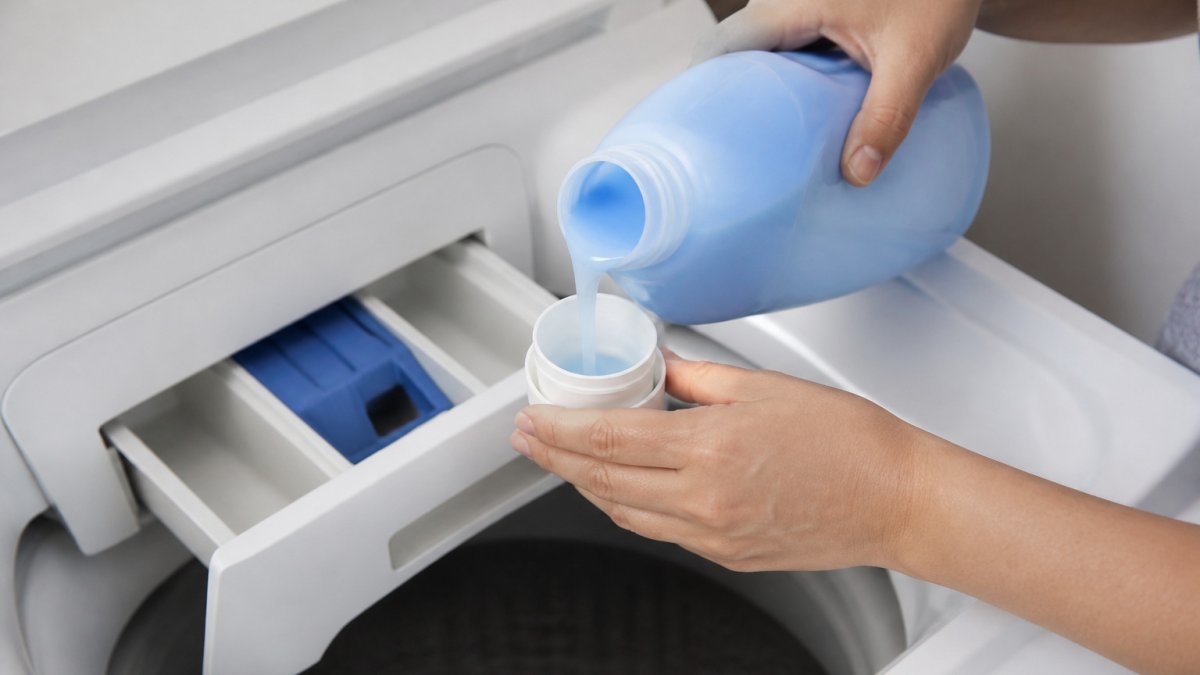
Dose by Load Size, Not by Habit
Start with the smallest dose the label allows and scale up only if you still feel stiffness or static. A practical starting framework for a concentrated liquid softener:
- Small load (about 4-6 lb of dry laundry): 1 tablespoon or less.
- Medium load (about 6-10 lb): 1 to 2 tablespoons.
- Large or heavily loaded drum (10+ lb): follow the cap markings, but stop at the lower line rather than the top line.
Most practitioners find that the cap is sized for a full, heavily soiled load in hard water, not for a typical mixed load. If you are washing in a high-efficiency (HE) machine, use the HE-marked dose; HE machines use less water, so the same amount of softener becomes a much higher concentration against the fabric.
Adjust for Water Hardness
Water hardness changes how softener behaves. In soft water, the active ingredients disperse easily and a little goes a long way; using a full cap in soft water is a common cause of waxy buildup.
If you do not know your water hardness, your municipal water utility publishes an annual water quality report, and most report hardness in grains per gallon or milligrams per liter as calcium carbonate.
Use the Dispenser, and Understand How It Works
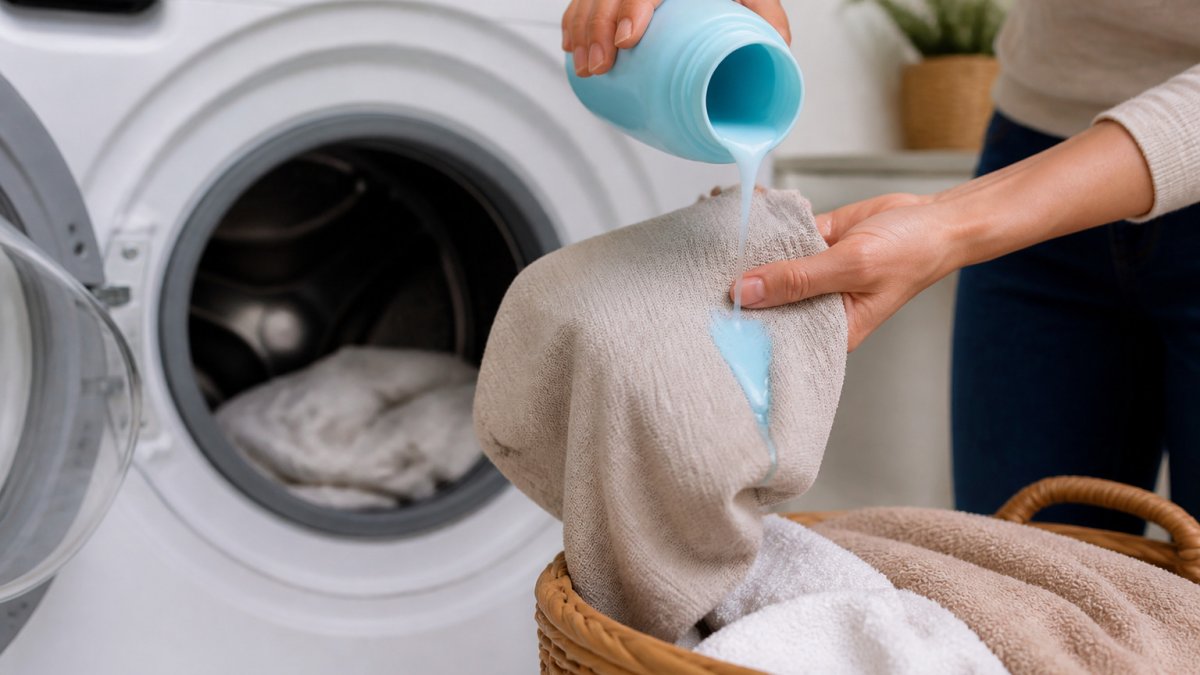
The fabric softener dispenser releases product during the rinse cycle, after the detergent has done its work. That timing matters: softener that mixes with detergent in the wash cycle can be partly neutralized, and softener poured directly onto dry fabric can leave oily spots that are hard to rinse out.
- Top-load machines with a center agitator dispenser: add softener to the dispenser cup, not the drum. If your machine lacks a dispenser, dilute the dose in a cup of water and add it during the rinse fill.
- Front-load HE machines: use the softener compartment only. Do not exceed the max line; overfilling causes the compartment to siphon early, dumping softener into the wash.
- Hand-washing: dilute at roughly one part softener to four parts water, soak for five to ten minutes, then rinse until the water runs clear.
Recognize and Prevent Residue Buildup
Residue shows up as stiffness that returns as soon as fabric dries, a waxy hand-feel on towels, gray or white streaks on dark clothing, or reduced absorbency. Once you see those signs, the fabric is already coated.
- Skip softener every third or fourth wash on everyday items to let fibers shed accumulated coating.
- Run an extra rinse on heavily soiled loads or when you switch detergents; extra water flushes residual softener and detergent.
- Wash softener-treated towels and activewear with a half-cup of white vinegar in the rinse (no softener) every few weeks to strip buildup.
Match the Product Form to the Fabric
Liquid softener in the rinse is the most controllable form for mixed loads because you can dose by load size. Dryer sheets deposit softener throughout the dryer cycle and are harder to dose precisely; they are also a poor choice for towels and activewear for the same absorbency reasons liquid softener is. For anything you are unsure about, test on a single garment you care least about before treating a whole load.
Fabric Softener and Towels: When to Use It
Towels present a classic softener dilemma. Softener makes them feel fluffy initially, but it reduces absorbency, the exact quality that makes towels useful.
Skip fabric softener on bath towels, hand towels, and washcloths. These items need maximum absorbency to function properly.
Decorative towels or guest towels that rarely get wet can handle occasional softener use.
For kitchen towels, avoid softener entirely. These need strong absorbency to handle spills and drying dishes.
Fabric Softener for Delicate Clothes
Delicate fabrics require a different approach to fabric softener. Items like silk, lace, and fine knits are more vulnerable to chemical damage and fiber weakening than sturdy cottons.
Use fabric softener on delicate clothes only when necessary, and always in diluted form. Never use the washing machine dispenser for delicate items, hand-dilute softener instead.
Soak delicate items in diluted softener for just three to five minutes, then rinse multiple times. Over-soaking or using concentrated softener can weaken elastic fibers and cause permanent damage to delicate construction.
Consider skipping softener entirely on expensive delicate pieces. The risk of residue buildup or fiber weakening isn't worth the minor softness benefit.
Fabric Softener Alternatives That Protect Fibers
Most alternatives roundups treat vinegar, dryer balls, and skipping softener as universally safe. Explore practical laundry care advice and guides to learn which alternatives work best for your fabrics. Each alternative has a fiber profile, a static-control profile, and a trade-off, and the right choice depends on what is in the load. Virginia Tech research on fabric treatments and fiber performance examined how different treatments affect fabric durability over repeated use, which is the right lens for comparing alternatives.
White Vinegar
A half-cup of distilled white vinegar in the rinse cycle is the closest thing to a drop-in softener replacement. The acetic acid helps dissolve detergent and mineral residue, which is why fabrics often feel softer after a vinegar rinse even though vinegar does not deposit a conditioning film.
- Best for: cotton, linen, towels, and everyday blends where residue is the main problem.
- Static control: modest. Vinegar helps in the rinse but does not match the anti-static effect of a softener or dryer sheet on synthetics.
- Fiber risk: low for most cottons and blends. Avoid routine vinegar soaks on elastane (spandex), acetate, and some rayons; repeated acid exposure can degrade elastic fibers and certain regenerated cellulose fibers over time. Do not mix vinegar and chlorine bleach in the same load, it releases chlorine gas.
Wool Dryer Balls
Wool dryer balls work mechanically: they lift and separate fabrics in the dryer, which reduces drying time and helps control static through friction rather than chemistry. There is no coating, so there is no residue and no absorbency loss.
- Best for: synthetics and blends where static is the main complaint, and for towels where you want softness without losing absorbency.
- Static control: good in the dryer, but only if you do not over-dry. Over-drying is the single biggest static driver, and dryer balls cannot fix a load that runs 20 minutes too long.
- Fiber risk: low for sturdy fabrics. Use caution with fine-gauge knits, lace, and anything with loose construction, the mechanical action can accelerate pilling and snags. Wool-sensitive households should confirm the balls are felted and do not shed.
Baking Soda
A half-cup of baking soda in the wash cycle softens water and raises pH slightly, which helps detergent work in hard-water areas. It is a water conditioner more than a softener.
- Best for: hard-water households and heavily soiled loads.
- Static control: minimal. Baking soda does not address static in the dryer.
- Fiber risk: low at normal doses. Do not combine with vinegar in the same cycle, they neutralize each other and you lose the benefit of both.
Skipping Softener and Air-Drying
The most fiber-safe option is often no softener at all, paired with air-drying for items that tolerate it. Line-drying eliminates the tumble friction that drives static and pilling, and it avoids heat exposure that can stress elastane and synthetic fibers.
- Best for: delicates, wool, athletic wear, and anything with elastane.
- Static control: good outdoors; indoor drying racks can leave fabrics stiff, especially in humid conditions.
- Fiber risk: very low, but air-dried cotton and linen can feel stiff without a brief tumble on low heat or a shake-out before hanging.
Fiber-by-Fiber Comparison
| Alternative | Cotton & Linen | Towels | Athletic Wear / Elastane | Wool & Delicates | Static Control |
|---|---|---|---|---|---|
| White vinegar (½ cup, rinse) | Good | Good | Caution, avoid routine use | Caution on silk and acetate | Modest |
| Wool dryer balls | Good | Good | Good | Caution, pilling risk on fine knits | Good in dryer |
| Baking soda (½ cup, wash) | Good in hard water | Good | Neutral | Neutral | Minimal |
| Skip softener + air-dry | Good | Good | Best | Best | Good outdoors |
What About 'Natural' Liquid Softeners?
Plant-based and fragrance-free liquid softeners are still cationic surfactants; they deposit a film just like conventional softeners. They may be preferable for sensitive skin or scent preferences, but they do not eliminate the absorbency and buildup trade-offs described above. Judge them by the same fiber rules, not by the 'natural' label.
Protect Your Investment With Professional Laundry Care
When you handle laundry yourself, you're responsible for knowing which fabrics can tolerate softener, how much to use, and how to prevent buildup.
Professional laundry services like commercial laundry services in Miami use industry-grade equipment and expertise to protect your investment.
LaundrPro offers flat-rate pricing with no hidden fees or subscriptions.
For high-value pieces, specialty fabrics, or simply the peace of mind that comes with professional handling, professional laundry care is an option.
Frequently Asked Questions
Can fabric softener damage clothing fibers?
Fabric softener can damage fibers if overused or applied incorrectly. The American Cleaning Institute notes that softeners deposit a chemical coating on fabric; Consumer Reports warns this layer can reduce absorbency and elasticity. However, when diluted properly and used at recommended dosages, fabric softener can reduce static in synthetic fibers without harming most garments. The risk increases with delicate fabrics, towels, and athletic wear that rely on absorbency or breathability.
Which fabric softener is safest for delicate fabrics?
Fragrance-free and hypoallergenic softeners are safest for delicate clothes. Downy Free & Gentle is formulated for sensitive skin and delicate items. Always dilute softener in the rinse cycle rather than pouring directly on fabric, and use half the recommended amount for silk, wool, or lace. Test on a hidden area first. Skip softener entirely on microfiber, performance fabrics, or garments with special finishes unless the manufacturer explicitly approves it.
Should you use fabric softener on towels or athletic wear?
No, avoid fabric softener on towels and athletic wear. Softener coats fibers and reduces absorbency, making towels less effective at drying and athletic wear less breathable. It also traps moisture and odor in performance fabrics. For towels, use white vinegar in the rinse cycle instead; for activewear, skip softener entirely and use a sports-specific detergent. This preserves both fabric performance and garment longevity.
How can you soften clothes without damaging them?
Use alternatives that don't coat fibers: white vinegar (one-half cup in the rinse cycle), wool dryer balls, or dryer sheets designed for delicate fabrics. These reduce static and add softness without chemical residue. For professional care, services like LaundrPro use premium products selected for fabric compatibility and employ proper dilution and rinse techniques to soften garments safely while preserving fiber integrity and garment durability.
The choice to use fabric softener comes down to your priorities. If you want maximum softness and don't mind replacing items sooner, softener works fine. If you want clothes to last longer and maintain their original performance, use it sparingly or skip it entirely on items where durability matters most. For valuable pieces and specialty fabrics, professional care takes the decision out of your hands and protects your investment.