 blog
Eco-Friendly Laundry Pickup Services: 2026 Comparison
Table of Contents
- What Makes a Laundry Service Truly Eco-Friendly
- Eco-Friendly Laundry Service in Miami: What to Expect
- Green Dry Cleaning in Miami: Methods and Safety Standards
- Same-Day Laundry Delivery in Miami: Speed Without Compromise
- Laundry Service Pricing in Miami: Flat Rates vs. Subscription Models
- Reliability and Garment Protection: What Separates the Best Services
- How to Choose the Right Eco-Friendly Laundry Pickup Service
- Frequently Asked Questions
Last Updated: October 21, 2026
What Makes a Laundry Service Truly Eco-Friendly
An eco-friendly laundry pickup service combines professional cleaning with measurable environmental responsibility: sustainable methods, reduced water and chemical waste, and transparent practices.
Most services claim to be "green" without backing it up.
Specificity separates genuine sustainability from marketing: "we use wet cleaning methods that reduce chemical use by 60% compared to traditional dry cleaning" beats "we care about the environment."
The key indicators of true eco-friendly commitment include:
- Certified green cleaning methods with documented chemical safety
- Water-saving technologies in washing and rinsing processes
- Plastic-free or compostable packaging for delivered items
- Carbon-neutral or low-emission delivery logistics
- Third-party environmental certifications or verifiable partnerships
Eco-Friendly Laundry Service in Miami: What to Expect
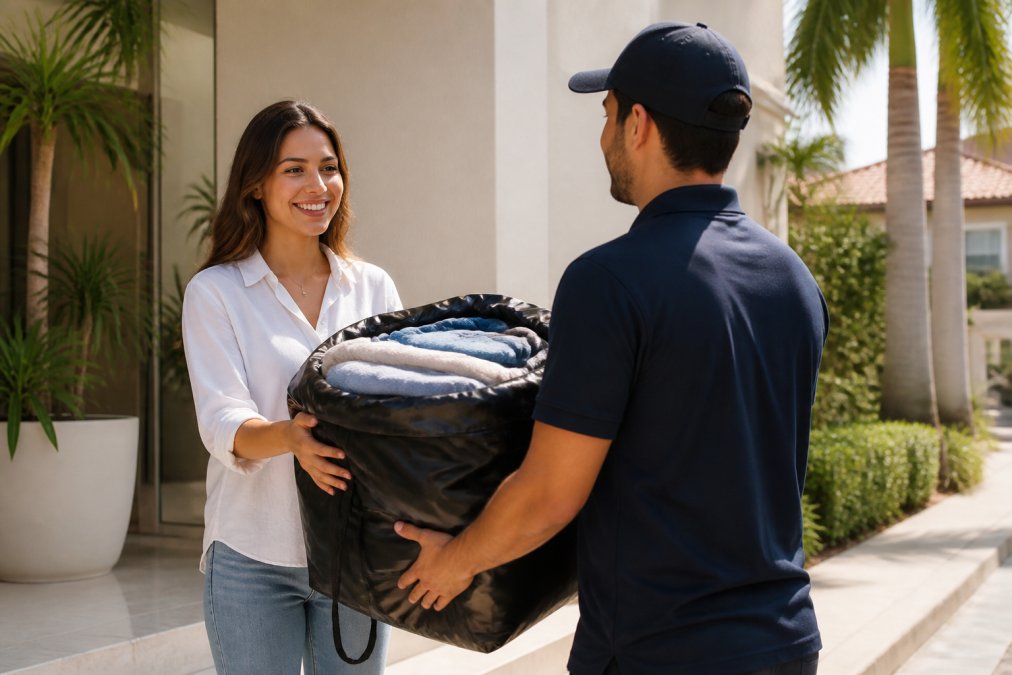
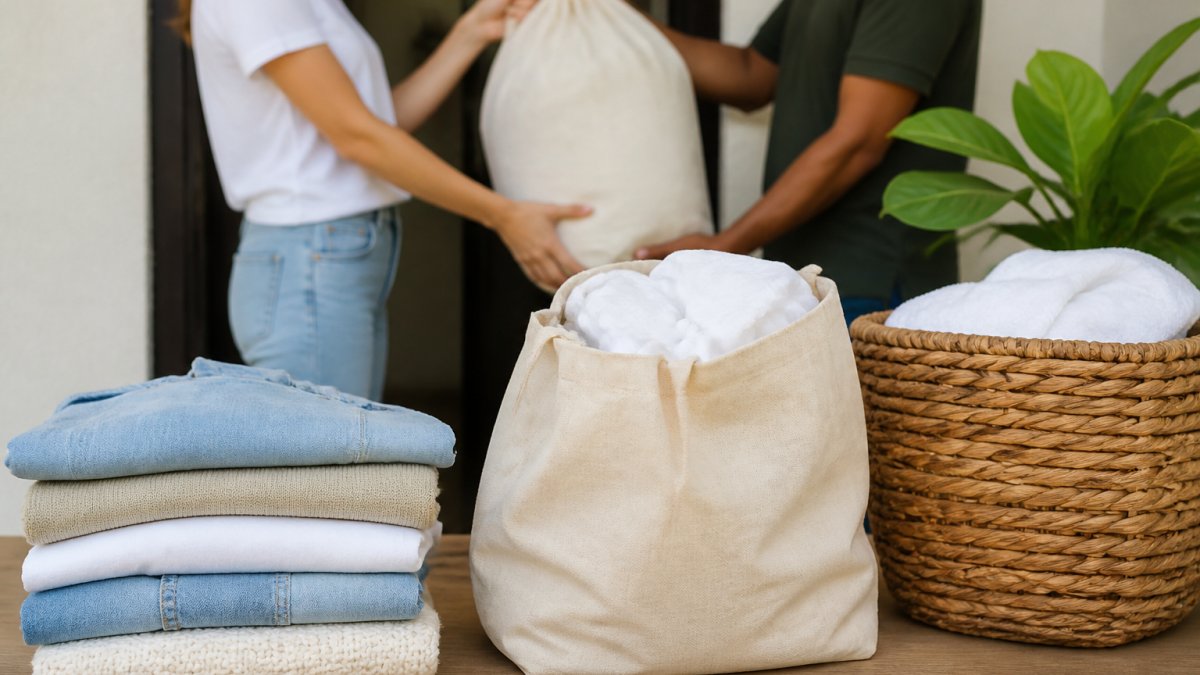
Pickup typically happens within your scheduled window, often within 24 hours of booking, and clothes arrive in sustainable packaging (compostable or reusable containers, not plastic bags).
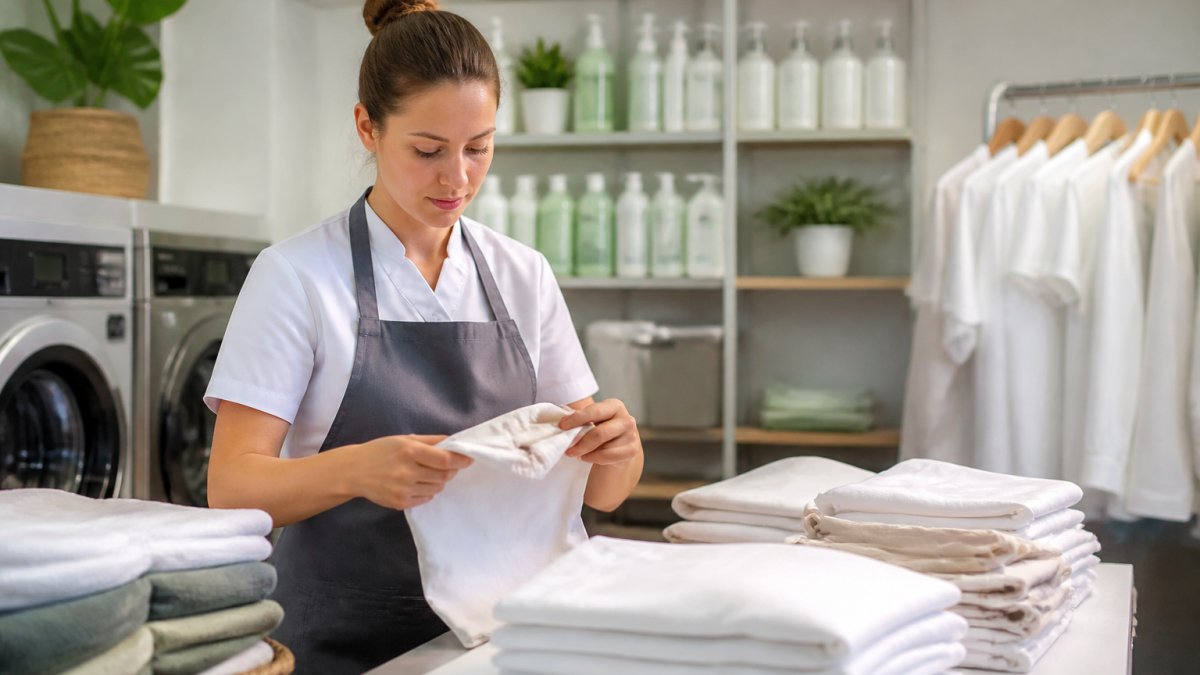
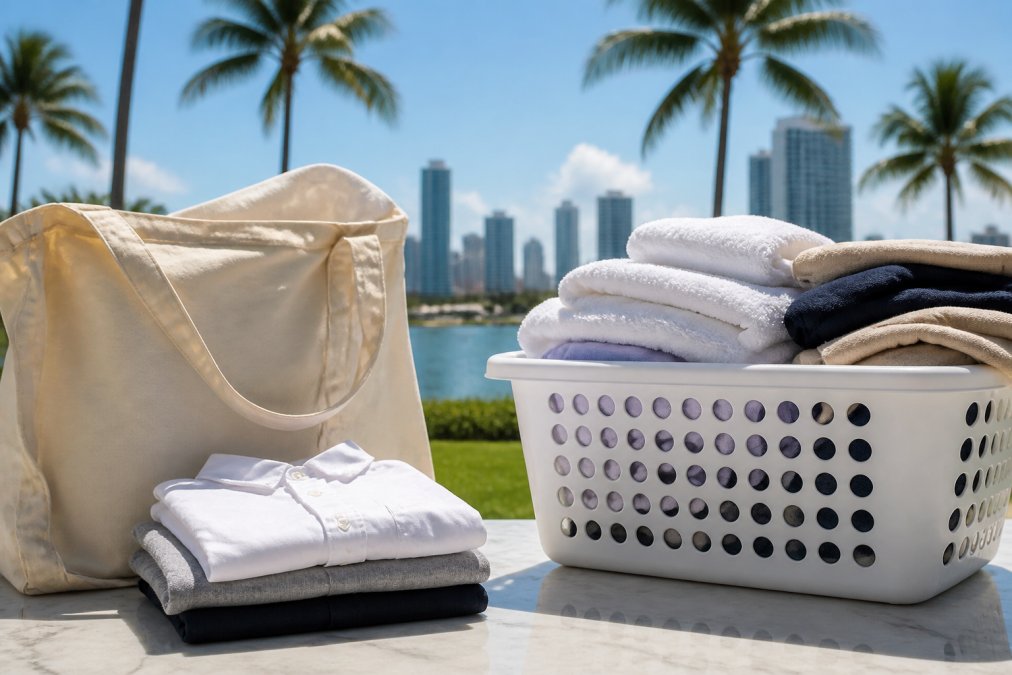
In Miami, high humidity and salt air demand specialized care.
Miami's market emphasizes speed without waste: the best services pair same-day or 24-hour delivery with genuinely sustainable practices that limit water usage and chemical runoff into local waterways.
Most services offer customizable care instructions, fabric preferences, fragrance-free cleaning, gentle handling of delicates, so you can maintain your garment standards.
Green Dry Cleaning in Miami: Methods and Safety Standards
"Green dry cleaning" is an umbrella term, not a single process. Its methods differ in how they clean, which fabrics they suit, and what environmental claim they can support, understanding the differences lets you compare providers on substance.
The main alternative methods
Professional wet cleaning. A water-based process using specialized detergents, controlled temperature, and gentle mechanical action instead of solvent.
Liquid carbon dioxide (CO2) cleaning. Uses pressurized CO2 as the cleaning medium.
Hydrocarbon and siloxane solvents. Often marketed as "green" because they avoid PERC, but they are still solvents.
PERC. Perchloroethylene remains the traditional dry cleaning solvent and is the one most associated with health and environmental concerns.
Matching method to garment
| Garment type | Usually suitable for wet cleaning | Usually needs solvent |
|---|---|---|
| Cotton shirts, trousers | Yes | No |
| Wool suits, blazers | Often, with cycle adjustment | Sometimes |
| Silk blouses | Sometimes, with care | Often |
| Beaded or embellished pieces | Rarely | Usually |
| Leather and suede | No | Specialty care |
| Down comforters | Yes, with large-capacity equipment | Sometimes |
Use this as a starting question, not a final answer, the operator should inspect the garment and explain the method and why.
What certifications actually verify
Certifications are only useful if you know what they cover. The most relevant in the U.S. include:
- EPA Safer Choice. Verifies that a cleaning product's ingredients meet the EPA's safer-chemistry criteria. It applies to detergents and cleaning products, not the cleaning process itself, so a service using Safer Choice detergents is making a product-level claim, not a facility-level one.
- Green Business Bureau. A membership and assessment program that reviews operational practices such as waste, energy, and water use. It signals operational commitment, but it is not a government regulator and review depth varies.
- Green Seal. An independent standards body that certifies products and services against published environmental criteria. Ask which specific standard the provider is certified against.
- Local and state programs. Some utilities and state environmental agencies run voluntary recognition programs for cleaners that reduce solvent use. These are worth asking about because they usually require documented practices.
A provider that names a certification should be able to tell you the certifying body, the standard, and the date of the most recent review. "Eco-certified" without a named certifier is marketing language, not verification.
How to audit a green claim in five questions
- Which cleaning method do you use for this garment, and why? A specific answer signals real capability; "we use eco-friendly methods" does not.
- What solvent or detergent do you use, and is it disclosed on your website or on request? Look for an ingredient list or Safety Data Sheet availability.
- Do you clean in-house or ship garments to another facility? If they ship out, the environmental practices that matter are at the other facility.
- What happens to packaging and hangers? Reusable garment bags and hanger take-back programs are concrete; "eco packaging" alone is not.
- Which certifications do you hold, and who certifies you? Then verify the certifier exists and the standard is real.
Miami-specific care considerations
Miami's humidity and salt air matter for method choice. Wool and silk stored in humidity are vulnerable to mildew, so prompt cleaning and climate-controlled storage between pickup and delivery matter as much as the method. Salt air accelerates corrosion on metal trim and weakens fibers, so local providers often recommend more frequent cleaning of workwear and outerwear than a northern-climate care label suggests. Ask how garments are stored between pickup and delivery, climate-controlled storage is verifiable; "gentle care" is not.
What this means for your comparison
When comparing eco-friendly providers, put the method, solvent disclosure, certification, and storage practice side by side. A provider using in-house wet cleaning, disclosing detergents, holding a named certification, and storing garments in climate-controlled conditions makes a verifiable claim; one using the word "green" without those specifics does not.
Same-Day Laundry Delivery in Miami: Speed Without Compromise
Speed and sustainability aren't mutually exclusive, same-day or 24-hour laundry delivery in Miami works when eco-friendly services optimize logistics.
The key is route planning. Consolidating pickups and deliveries in geographic clusters reduces miles and emissions per load. That efficiency enables fast turnaround without wasteful driving.
Same-day service requires coordination: schedule pickup by early morning for same-day delivery.
In Miami's climate, fast turnaround is beneficial: high humidity means clothes left in bags can develop odor or mildew.
Delivery logistics matter environmentally too.
Laundry Service Pricing in Miami: Flat Rates vs. Subscription Models
Pricing is where eco-friendly laundry pickup services are hardest to compare: most Miami providers publish per-pound rates but bury minimums, delivery fees, and rush surcharges in checkout. Two services advertising the same headline rate can differ by $20-$40 on a typical order. Here's how the structures work and how to calculate a real monthly cost.
The three pricing structures you will see
Per-pound wash-and-fold. The most common model for everyday laundry, charged by dry weight with a minimum order. Typical eco-friendly rates run per pound, with minimums.
Per-item dry cleaning. Dry and wet cleaning are priced per garment, not per pound, because handling and finishing time vary. Ask for the per-item list before booking, "starting at" quotes usually hide the higher-ticket items.
Subscription or membership plans. A fixed monthly fee for a set number of pounds or loads.
The fees that change the total
Advertised per-pound rates rarely include the following, so confirm each one before booking:
- Pickup and delivery fee. Some services bundle it; others charge $5-$15 per trip. A "free pickup and delivery" offer usually means the cost is built into the per-pound rate, so compare the all-in number.
- Minimum order. A 10-pound minimum means a small load still costs the 10-pound price. If you generate less than the minimum most weeks, a subscription or a larger biweekly order is usually cheaper.
- Rush or same-day surcharge. Same-day turnaround typically carries a premium, often 20%-50% above standard turnaround. Confirm whether the surcharge applies to the whole order or only the rushed items.
- Specialty item surcharges. Wedding dresses, leather, down comforters, and heavily stained items are usually quoted separately. Get the quote in writing before pickup.
- Distance or zone fees. Services that cover all of Miami-Dade may add a fee for addresses outside their core route. Confirm your ZIP code is in the standard zone, not the extended one.
How to calculate a real monthly cost
Use this four-step method so you are comparing all-in numbers rather than headline rates:
- Weigh one week of laundry. A typical single adult generates 7-10 pounds per week; a couple generates 15-20 pounds; a family of four often generates 30-40 pounds.
- Multiply by the per-pound rate at each candidate service, then apply the minimum order if your weekly weight falls below it.
- Add pickup and delivery fees per trip, and decide whether you will schedule weekly or biweekly, biweekly usually halves the delivery fees.
- Add any subscription fee and divide by the pounds included to get the effective per-pound rate, then compare that to the pay-as-you-go rate.
What "eco-friendly" does to the price
Sustainable methods can carry a modest premium, but the premium is usually smaller than the delivery-fee spread between providers. Wet cleaning, plant-based detergents, and reusable or compostable packaging add operating cost, and some services pass that through as a per-order sustainability fee. Ask whether the fee is itemized or built into the per-pound rate, either is fine, but you should know which.
Red flags in a pricing sheet
- A per-pound rate with no published minimum order.
- "Free pickup and delivery" with no per-pound rate shown.
- A subscription with no stated pound allowance or overage rate.
- Rush fees disclosed only at checkout.
- No written quote available before the first pickup.
A transparent eco-friendly provider will give you the per-pound rate, the minimum, the delivery fee, the rush surcharge, and the specialty-item list in one place. If any of those are missing, assume the total will be higher than advertised and price accordingly.
Reliability and Garment Protection: What Separates the Best Services
Reliability is where eco-friendly laundry services prove their worth.
Garment protection starts with how items are handled: appropriate sorting, gentle washing temperatures, and careful drying.
In Miami's humid climate, proper storage matters too. Items should be stored in climate-controlled facilities, not damp warehouses where mildew can develop.
Ask potential services about their damage policy: replacement or refund, liability insurance, and complaint process.
Reputation tells you whether a service actually delivers on promises.
How to Choose the Right Eco-Friendly Laundry Pickup Service
Start by defining what matters most: Do you need same-day or next-day service? Will you pay more for verified eco-friendly practices?
Research the service's environmental claims specifically.
Check service area coverage.
Test the booking and communication systems. Can you schedule easily through their app or website? Do they send confirmation and tracking updates?
Compare pricing clearly.
Ask about guarantees. What happens if they damage an item? Can you cancel without penalty if you're unsatisfied?
Finally, start with a small order.
Choosing an eco-friendly laundry pickup service in Miami means finding a provider that balances convenience with genuine environmental responsibility. LaundrPro delivers spotless results with fast turnaround and flat-rate pricing, no subscriptions or hidden fees. Learn more about sustainable laundry practices and how they benefit both your garments and your community.
Frequently Asked Questions
What makes an eco-friendly laundry pickup service different from standard laundry services?
Eco-friendly laundry pickup services use plant-based or biodegradable detergents, reduce water waste through efficient cleaning cycles, and minimize chemical runoff that harms aquatic ecosystems. They also often use renewable energy and sustainable packaging. The key difference is measurable environmental impact: standard services prioritize speed and cost, while green services balance cleanliness with ecological responsibility. Many also offer wet cleaning, a water-based alternative to traditional dry cleaning solvents.
How much does an eco-friendly laundry service cost compared to regular pickup and delivery?
Pricing depends on quantity, garment type, delivery frequency, and turnaround time. Eco-friendly services may cost slightly more due to sustainable materials and careful handling, but many offer flat-rate pricing with no hidden fees or subscriptions. Visit the pricing page to get a quote based on your specific needs. Transparent pricing lets you compare actual costs without surprises.
Can eco-friendly laundry services handle delicate and expensive garments safely?
Yes, reputable eco-friendly services use gentle cleaning methods specifically designed for delicate fabrics. Wet cleaning and plant-based detergents are actually gentler on delicate items than conventional dry cleaning chemicals. Services that prioritize garment care include detailed intake forms, inspect items before cleaning, and offer damage protection or replacement guarantees. Always confirm their garment care policies and damage liability before sending valuable pieces.
How fast is same-day laundry delivery in Miami, and is it reliable?
Same-day or 24-48 hour delivery depends on pickup time, service area, and current volume. Reliability comes down to consistent scheduling, clear communication, and accountability for missed pickups. Look for services with real-time tracking, confirmed pickup windows that fit your schedule, and a track record of on-time delivery. Local services with smaller service areas typically offer more predictable turnaround than national apps.