 listicle
6 Tips for Removing Ink Stains From Polyester
Table of Contents
- Why Ink Stains on Polyester Require Special Care
- Tip 1: Test for Colorfastness Before Treating Any Stain
- Tip 2: Blot Fresh Ink Stains Immediately With Absorbent Materials
- Tip 3: Use Isopropyl Alcohol as Your Primary Solvent
- Best Stain Remover for Polyester: Product Options and Alternatives
- How to Remove Ink From Polyester Without Damaging Fabric
- Professional Dry Cleaning Ink Removal for Stubborn Stains
- Common Mistakes to Avoid When Treating Ink Stains
- Frequently Asked Questions
Last Updated: September 2, 2026
Why Ink Stains on Polyester Require Special Care
Polyester is everywhere in work shirts, athletic wear, and blended fabrics. When ink hits polyester, standard stain removal techniques often fail because synthetic fibers absorb liquid differently than natural fabrics like cotton. This guide covers 6 tips for removing ink stains from polyester that actually work, from immediate blotting to when you need professional help.
At LaundrPro, we've handled thousands of stained garments, and polyester ink stains rank among the trickiest. The fiber structure of polyester doesn't absorb liquid the way natural fabrics do, so ink can sit on the surface or penetrate unevenly, creating rings and shadows even after the visible stain disappears. Speed matters enormously. A fresh ink stain on polyester can often be lifted completely within minutes. A dried one requires different chemistry and patience.
Below, we'll show you exactly how to handle ink stains on polyester at every stage, from the moment you notice the mark to deciding whether professional dry cleaning is your best move.
Tip 1: Test for Colorfastness Before Treating Any Stain
Before you apply anything to a polyester stain, test your fabric's colorfastness. This single step prevents catastrophic color loss.
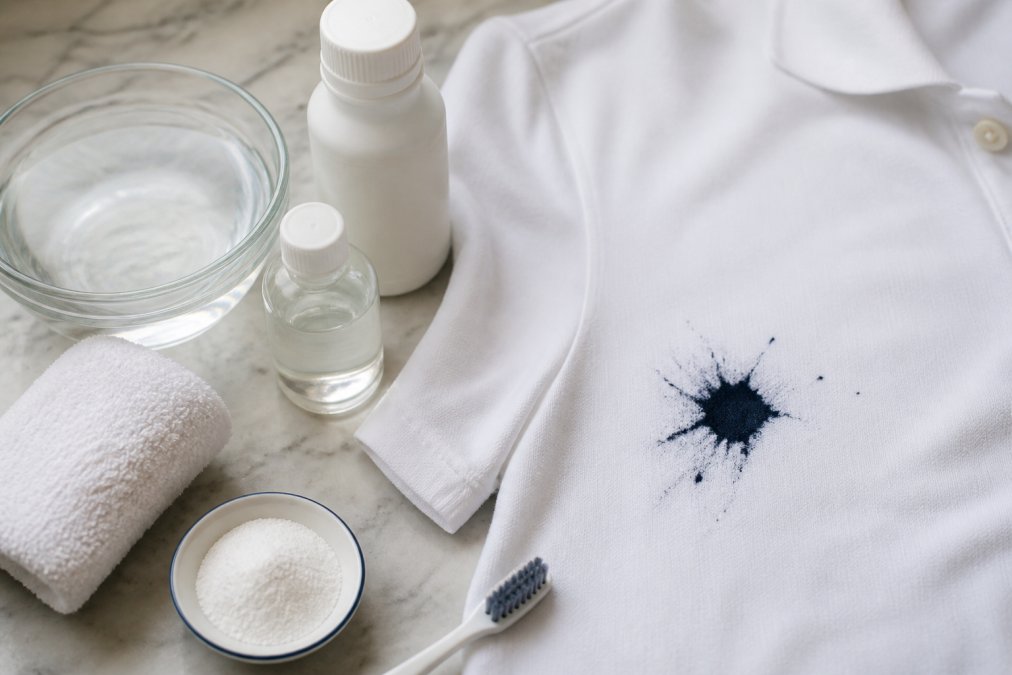
Find an inconspicuous area, inside a seam, the back of a collar, or an underarm. Apply a small amount of whatever treatment you're considering (isopropyl alcohol, water, or a commercial remover) to a white cotton pad. Press it against the polyester for 30 seconds. If the dye transfers to the pad, stop immediately. If the pad stays clean and the fabric color doesn't change, you're safe to proceed.
This test is non-negotiable for vintage polyester, brightly dyed pieces, or anything expensive.
Tip 2: Blot Fresh Ink Stains Immediately With Absorbent Materials
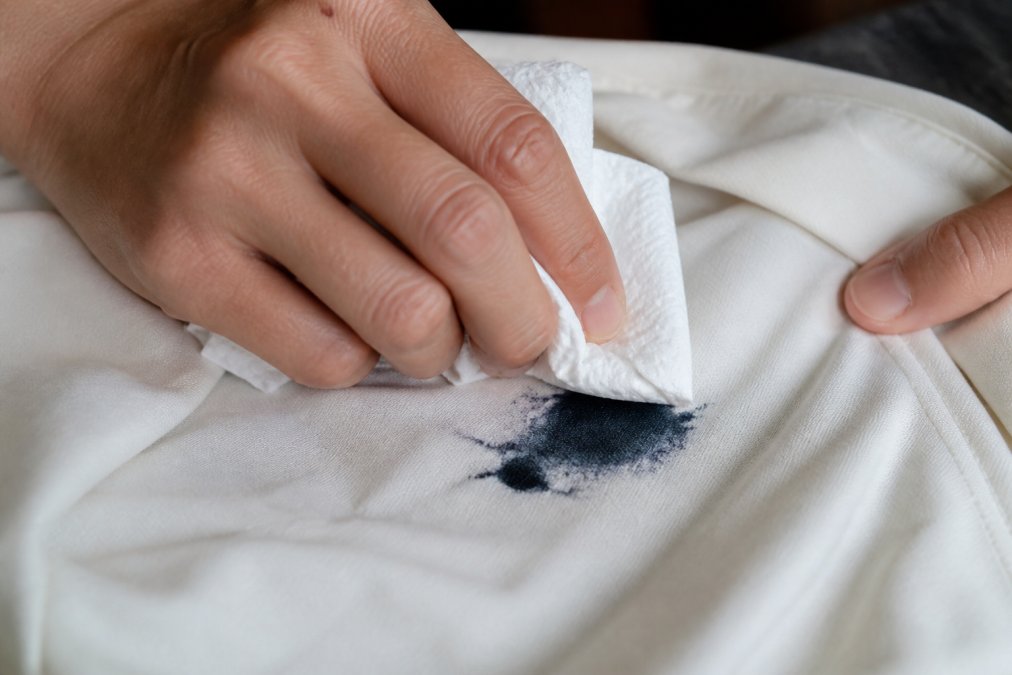
The moment you notice a fresh ink stain on polyester, blot it. Don't rub. Don't scrub. Blot.
Rubbing spreads the ink deeper into the fibers and pushes it further across the fabric surface. Blotting lifts ink off the surface before it can penetrate. Use a white cotton pad, paper towel, or absorbent cloth. Press down firmly for 3-5 seconds, then lift. Repeat with a clean section of the pad each time until no more ink transfers.
For ballpoint pen ink, this blotting step alone removes 50-70% of the stain in most cases (peer-reviewed research). Work from the outside edges of the stain toward the center to prevent the ink from spreading outward.
Tip 3: Use Isopropyl Alcohol as Your Primary Solvent
Isopropyl alcohol, also called rubbing alcohol, is the most effective solvent for ink stains on polyester. It breaks down the oil-based components in most inks without damaging polyester fibers.
Buy standard 70% isopropyl alcohol from any drugstore (the FDA). Saturate a cotton pad with the alcohol and press it against the stain for 15-30 seconds. Blot with a clean pad. Repeat until the stain stops transferring to the pad.
The alcohol evaporates quickly, which is why it works so well on polyester, it doesn't leave residue or require extensive rinsing. For dried ink stains, alcohol alone may not be enough, and you'll need to combine it with other techniques covered below.
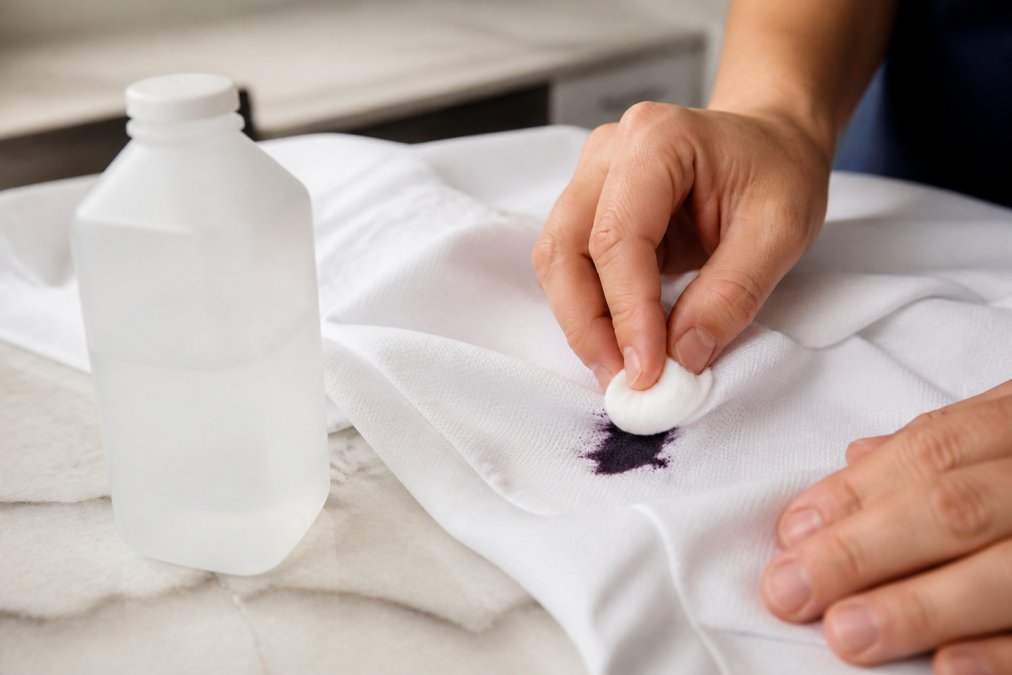
Test colorfastness with alcohol first, especially on darker polyester.
Best Stain Remover for Polyester: Product Options and Alternatives
If isopropyl alcohol alone doesn't eliminate the stain, you have two paths: specialized ink removers or household alternatives.
Specialized Ink Removers
Carbona Stain Devils #3 is formulated specifically for ink, marker, and crayon stains on polyester and other washable fabrics. Apply a small amount directly to the stain, let it sit for 5-10 minutes, then blot with a clean cloth. It works on both fresh and dried stains.
Amodex Ink & Stain Remover is a cream formula that removes all types of ink, including ballpoint, gel, permanent marker, and printer ink. Apply the cream, let it sit for several minutes, then blot.
Grandma's Secret Spot Remover is a versatile liquid that lifts oil-based stains, including ink, from various fabrics. Apply, let sit for a few minutes, then blot. Many people report success on old, set-in ink stains.
These products cost between $4 and $15 per bottle and last through multiple uses (the FTC).
Household Alternatives for Budget-Conscious Treatment
Hairspray with alcohol content can dissolve fresh ink stains. Spray directly onto the stain, let it sit for 30 seconds, then blot. This works best on fresh stains.
White vinegar mixed with a small amount of dish soap creates a mild solvent. Combine one part white vinegar with one part water and a few drops of dish soap. Apply to the stain, let sit for 5 minutes, then blot. This works better on water-based inks than oil-based ones.
Dawn dishwashing liquid can help lift oil-based ink stains when combined with water. Mix a small amount of Dawn with cold water, apply to the stain, gently work it in with a soft cloth, then blot and rinse.
For most people, isopropyl alcohol is the best starting point. Specialized removers come next if alcohol doesn't fully eliminate the stain.
How to Remove Ink From Polyester Without Damaging Fabric
Removing ink from polyester without damaging the fabric comes down to technique, patience, and understanding the difference between fresh and dried stains.
Handling Dried Ink Stains Safely
Dried ink stains are harder because the ink has bonded with the polyester fibers. Apply your chosen solvent and let it sit for 10-15 minutes before blotting. This gives the solvent time to break down the ink bond. For very old stains, repeat this cycle two or three times, allowing the fabric to dry between applications.
Avoid heat when treating dried stains. Heat sets ink deeper into synthetic fibers. Don't use hot water, a hair dryer, or an iron near the stain until you've completely removed it. Cold water only.
If you've tried isopropyl alcohol, a specialized remover, and household alternatives without success, the stain may be permanent. This is when professional dry cleaning becomes your best option.
Rinsing and Laundering Techniques
Once you've treated the stain with a solvent, rinsing is critical. Residual solvent left in the fabric can cause discoloration or stiffness.
Rinse the treated area thoroughly with cold water. Rinse multiple times until the water runs clear and you can't smell the solvent anymore.
After rinsing, launder the garment in cold water with regular laundry detergent. Use the gentle or delicate cycle for polyester. Do not put the garment in the dryer until you're certain the stain is completely gone. Air dry instead. Once it's dry, inspect the stain area. If traces remain, repeat the treatment cycle.
Professional Dry Cleaning Ink Removal for Stubborn Stains
When home treatment fails, professional dry cleaning is your best option for polyester ink stains.
Professional cleaners have access to specialized solvents and techniques that go beyond household products. They can apply multiple treatments and employ spotting techniques that target ink without affecting surrounding fabric. For expensive garments, work blazers, dress pants, and formal wear, professional cleaning is often worth the cost.
For residents in Miami, LaundrPro offers professional dry cleaning services with a fast turnaround. Our team handles delicate polyester blends and specialty fabrics using commercial-grade cleaning methods that remove stubborn stains while preserving fabric integrity.
When you bring a stained polyester garment to a professional cleaner, be specific about the stain. Tell them it's ink, how long it's been there, and what treatments you've already tried. Some very old or set-in ink stains are genuinely permanent, even for professionals. But if home treatment hasn't worked, professional cleaning is worth trying before you resign yourself to losing the garment.
Common Mistakes to Avoid When Treating Ink Stains
Most people ruin polyester garments not because they're careless, but because they follow intuitive but incorrect steps.
Using hot water. Heat sets ink into polyester fibers. Cold water only, from the moment you notice the stain until you're certain it's gone.
Rubbing or scrubbing instead of blotting. Friction embeds ink deeper into the synthetic fibers. Blot, don't rub.
Applying heat before the stain is gone. Never put a stained polyester garment in the dryer, iron over it, or use a hair dryer on it. Wait until you're absolutely certain the stain is removed.
Skipping the colorfastness test. Some polyester dyes bleed under any solvent. A 30-second test on a hidden area prevents catastrophic color loss.
Using too much solvent at once. Oversaturating the fabric spreads the stain and can cause rings or halos. Use enough to treat the stain, not to soak the garment.
Waiting too long to treat fresh stains. The longer ink sits on polyester, the deeper it penetrates. A fresh stain treated within minutes is far easier to remove than one that's been sitting for hours.
Laundering before the stain is fully gone. Washing can set a partially treated stain. Always air dry and inspect before washing.
Ink stains on polyester are frustrating, but they're not always permanent. The key is speed, the right technique, and knowing when to escalate to professional help. Most fresh stains come out with isopropyl alcohol and careful blotting. Dried stains need longer treatment time and possibly a specialized remover. For expensive garments or stubborn stains, professional dry cleaning in Miami through LaundrPro ensures your clothes get the expert care they need without risking further damage from DIY attempts. Start with the colorfastness test, blot immediately, and work your way through the treatment options methodically.
Frequently Asked Questions
Q: Does rubbing alcohol remove ink from polyester?
A: Yes, rubbing alcohol (isopropyl alcohol) is highly effective at removing ink stains from polyester because it acts as a solvent that breaks down oil-based inks. Apply it to a cotton pad and blot the stain in a dabbing motion, avoid rubbing, which can push the ink deeper into the fibers. Always test the alcohol on an inconspicuous area first to ensure it won't damage the fabric's color. Fresh stains respond faster than dried ones, which may require multiple applications.
Q: What is the best stain remover for polyester ink stains?
A: Specialized products like Carbona Stain Devils #3 and Amodex Ink & Stain Remover are specifically formulated for ink removal and work well on polyester. For a budget option, rubbing alcohol or a mixture of dish soap and white vinegar can be effective. If DIY methods fail, professional dry cleaning services have access to commercial-grade solvents and expertise to handle stubborn stains without damaging the fabric. The best choice depends on stain age, ink type, and your comfort level with the treatment process.
Q: Can you remove old or dried ink stains from polyester?
A: Old ink stains are harder to remove but not impossible. Dried stains require longer soaking times and may need multiple applications of your chosen treatment. Pre-treat the area with a stain remover or isopropyl alcohol, let it sit for 15-30 minutes, then gently agitate and rinse with cold water. If the stain persists after several attempts, professional dry cleaning is your best option, professionals have stronger solvents and techniques designed for set-in stains that household methods cannot handle.
Q: Will hot water set an ink stain on polyester?
A: Yes, hot water can set ink stains permanently, making them much harder or impossible to remove. Always use cold water when treating ink stains on polyester, as cold temperatures help prevent the ink from bonding deeper into the synthetic fibers. After applying your chosen stain remover, rinse with cold water and avoid washing the garment in hot water until the stain is completely gone. Once the stain is removed, you can use warm water for the final laundry cycle.
This article was written using GrandRanker