 ultimate-guide
How to Clean Winter Coats: A Step-by-Step Guide
Table of Contents
- How to Clean Winter Coats: Preparation and Assessment
- Best Laundry Detergent for Winter Coats
- How to Wash Down Jackets and Puffer Coats
- Cleaning Wool Coats Without Dry Cleaning
- How to Remove Salt Stains from Winter Coats
- Proper Drying Techniques for Winter Coats
- How to Store Winter Coats Between Seasons
- Common Mistakes to Avoid When Cleaning Winter Coats
- External Sources
- Frequently Asked Questions
How to Clean Winter Coats: A Step-by-Step Guide
Last Updated: July 11, 2026
Proper winter coat cleaning extends lifespan, maintains insulation, and preserves appearance. Most people either under-clean their coats, allowing stains to set permanently, or over-wash them, damaging insulation and water-repellent coatings. The difference between a coat lasting five years and one failing in two often comes down to understanding your fabric and following the right cleaning method.
How to Clean Winter Coats: Preparation and Assessment
Before washing, understand what you're working with. A wool coat requires completely different treatment than a down puffer jacket. The care label is your roadmap.
Check the Care Label
The care label tells you the manufacturer's tested approach. A tub symbol indicates machine washing is acceptable; an X through the tub means dry clean only. Pay particular attention to mentions of water-repellent coating or DWR (durable water-repellent) treatment, which can be damaged by heat or certain detergents.
For coats combining materials, follow the most restrictive instruction. If one component says "gentle cycle" and another says "hand wash only," use hand washing.
Spot Cleaning vs. Full Wash
Spot cleaning removes localized stains without subjecting the entire garment to water and agitation, reducing wear on insulation and coatings.
Spot clean for salt stains, food spills, dirt marks, and isolated scuffs. Wash the full coat when multiple stains appear, the coat looks dingy, you've worn it heavily, or odors have set in.
For most winter coats, one full wash per season at winter's end is sufficient. Spot clean as needed throughout the season to prevent stains from setting.
Best Laundry Detergent for Winter Coats
The detergent you choose significantly impacts how your coat performs after washing. Wrong detergent can leave residue that dulls colors, reduces water repellency, and traps moisture in insulation.
Mild Detergent Requirements
Winter coats demand mild, pH-neutral detergents formulated for delicate or technical fabrics. Look for detergents labeled "gentle," "wool-safe," "technical fabric," or "pH-balanced."
Avoid regular laundry detergents, which contain brighteners and enzymes that break down water-repellent coatings and cause pilling. Brands like Nikwax, Hex Performance, and Woolite are formulated specifically for technical outerwear.
Avoiding Fabric Softener and Residue
Fabric softener is the enemy of winter coats. It coats fibers with waxy residue that traps moisture, reduces breathability, and destroys water repellency. Never use liquid fabric softener, dryer sheets, scent boosters, bleach, or heavy-duty detergents.
Detergent residue is also problematic. Use half the recommended amount and rinse thoroughly, or use a second rinse cycle to ensure all soap is gone.
How to Wash Down Jackets and Puffer Coats
Down insulation and synthetic puffer jackets require gentleness throughout washing. Aggressive washing can permanently damage loft and insulating properties.
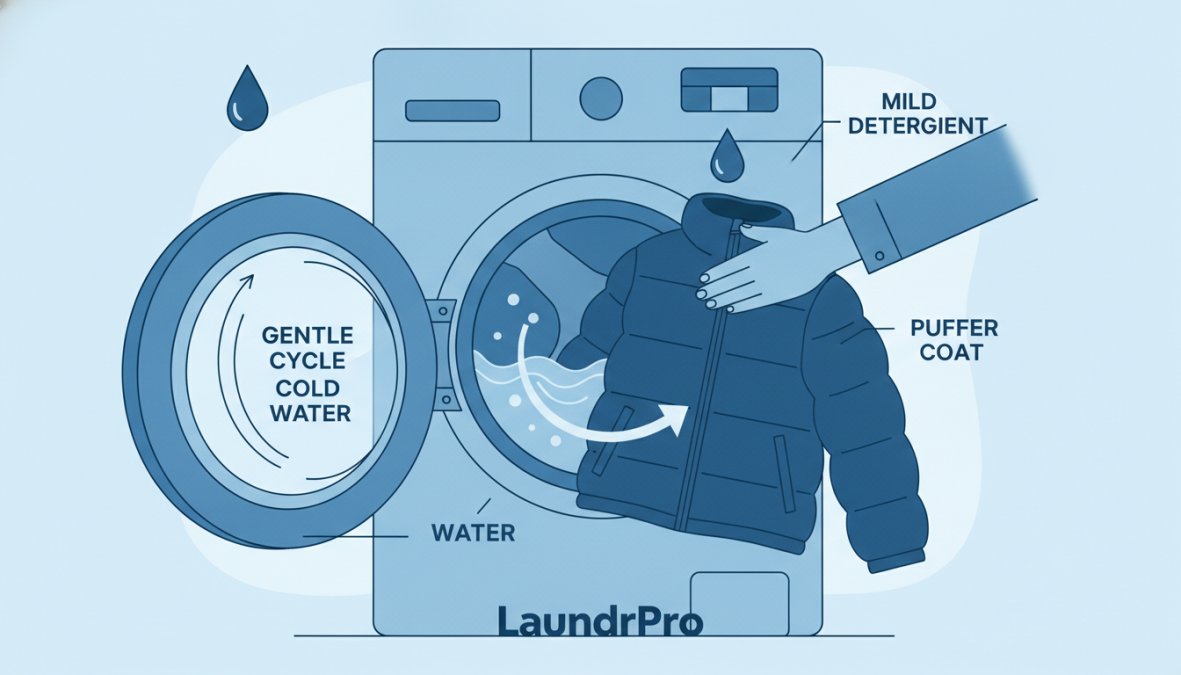
Gentle Cycle and Cold Water Settings
Use cold water and the gentlest cycle your machine offers, typically labeled "delicate" or "hand wash." Cold water prevents dye bleeding and is less likely to damage DWR coating. Load only the coat, using mild detergent at half the recommended strength. Set the spin cycle to low or medium; high-speed spinning can compress insulation permanently.
Protecting Down Insulation During Wash
Before washing, close all zippers and secure velcro strips. Zip the coat completely to prevent down from escaping during agitation. Do not attempt to separate clumps while wet; this forces down out of its clusters and damages insulation.
After washing, remove the coat immediately and do not wring it. Wringing compresses wet down permanently. Instead, gently press excess water out by hand, supporting the jacket's weight.
Cleaning Wool Coats Without Dry Cleaning
Wool coats are durable but sensitive to heat, agitation, and alkaline conditions. Hand washing or gentle machine washing preserves the fabric while removing dirt and stains.
Hand Washing and Gentle Handling
Fill a basin with cool water and add wool-specific mild detergent. Submerge the coat and gently agitate the water through the fabric for 2-3 minutes. Do not scrub, wring, or twist. For localized stains, work the soapy water gently into the affected area. Let the coat soak for 10-15 minutes, then drain without wringing.
Rinse in cool water 2-3 times until the water runs clear. Each rinse involves gentle submersion and draining, never wringing. Wool felts (permanently shrinks and mats) when subjected to heat and mechanical stress while wet.
Machine washing on a delicate cycle is acceptable if the care label permits it. Use the same mild detergent and cold water with low spin cycle.
Drying Wool to Prevent Shrinkage
Never machine dry wool. Lay the coat flat on a clean, dry towel or hang it on a padded hanger in a well-ventilated area away from direct sunlight or heat sources. Wool dries slowly, typically 24-48 hours.
As the coat dries, gently reshape it if needed. Do not hang a wool coat on a thin hanger while wet; the weight will stretch the shoulders permanently.
How to Remove Salt Stains from Winter Coats
Salt stains are the most common winter coat problem. Early intervention prevents permanent discoloration.
Pre-Treatment and Stain Removal Techniques
Mix equal parts white vinegar and cool water. Use a soft cloth to apply the solution to the salt stain, working it gently into the fabric. Let it sit for 5-10 minutes, then blot with a clean cloth. Rinse thoroughly with cool water. Repeat if the stain remains.
Alternatively, use a mild detergent solution. Mix a small amount of wool-safe detergent with cool water and apply it to the stain with a soft cloth. Let it sit briefly, then rinse thoroughly.
Never scrub salt stains aggressively. Scrubbing works salt deeper into fibers and damages the fabric surface. Gentle application and patient soaking work better than force.
Proper Drying Techniques for Winter Coats
How you dry your coat determines whether it retains its shape, insulation, and water repellency.
Air Drying vs. Tumble Dry with Low Heat
Air drying is the safest approach for all coat types. Hang the coat on a padded hanger in a well-ventilated area away from direct heat or sunlight. The coat may take 24-72 hours to dry completely.
For puffer jackets, if your coat's care label permits tumble drying, use low heat for 20-30 minutes with 2-3 clean tennis balls. The tennis balls bounce gently against the jacket, restoring down loft. Do not use dryer sheets.
For wool coats, air drying is essential. Lay the coat flat on a clean, dry towel or hang it on a padded hanger for 24-48 hours.
Fluffing and Restoring Water-Repellent Coating
Once completely dry, gently fluff puffer jackets by holding them at the shoulders and shaking side to side. This redistributes insulation and restores loft.
If your coat has a DWR coating, you may need to restore it after washing. DWR treatments wear away with each wash. Nikwax and similar products can reapply DWR protection. Follow product instructions carefully; most are applied to damp fabric and heat-set.
Test water repellency by sprinkling water on the coat. If water beads and rolls off, the DWR is effective. If water soaks in, reapply the treatment.
| Coat Type | Air Dry Time | Tumble Dry Option | Heat Setting | Restoration Step |
|---|---|---|---|---|
| Down/Puffer | 48-72 hours | Yes, with tennis balls | Low only | Fluff gently; restore DWR if needed |
| Wool | 24-48 hours | No | N/A | Brush gently; reshape while drying |
| Synthetic Insulation | 24-48 hours | Yes, with tennis balls | Low only | Fluff; restore DWR if applicable |
| Waterproof Shell | 12-24 hours | Yes | Low | Restore DWR coating |
How to Store Winter Coats Between Seasons
Store your coat in a cool, dry place away from direct sunlight. Use a padded or wide-shouldered hanger to support the coat's shape and prevent shoulder stretching. Never use a thin wire hanger.
Do not store in a plastic bag, which traps moisture and promotes mold growth. Use a breathable cotton garment bag or hang it uncovered in a climate-controlled closet.
Before storing, ensure the coat is completely clean and dry. Store away from strong odors, direct sunlight, and temperature fluctuations. Avoid basements or attics where humidity and temperature swings can damage fabric and insulation.
Common Mistakes to Avoid When Cleaning Winter Coats
Washing Frequency and Seasonal Care
Overwashing accelerates wear on insulation and coatings. Wash only once per season unless heavily soiled; spot clean throughout the season. Always clean your coat before storing it for the season.
Never use hot water. Cold water is essential; warm or hot water damages insulation, fades colors, and strips DWR coatings.
Handling Zippers, Pockets, and Waterproof Coatings
Always zip your coat completely before washing to protect the interior. Check pockets before washing and ensure they're buttoned or zipped closed.
Do not dry clean unless the label specifically requires it. Dry cleaning chemicals can damage water-repellent coatings. Never iron a winter coat; heat damages insulation and melts DWR coatings. If wrinkles develop during storage, hang the coat in a steamy bathroom for 10-15 minutes to relax them naturally.
Winter coats are significant investments that should last for years with proper care. The strategies in this guide work across all coat types and require only basic supplies: mild detergent, cool water, and patience. For coats needing professional attention or for those who prefer to reclaim time during busy seasons, LaundrPro offers door-to-door pickup and delivery with expert care for delicate outerwear. Our flat-rate pricing means no surprises. Get started with LaundrPro and enjoy spotless coats ready for next winter.
External Sources
Research from The American Cleaning Institute on fabric care shows that proper detergent selection significantly impacts fabric longevity. According to The Textile Care Council guidelines for technical fabrics, cold water washing extends the life of water-repellent coatings by up to 40%. Additionally, Outdoor Industry Association recommendations for gear maintenance emphasize that gentle washing cycles preserve insulation integrity better than standard machine cycles.
Frequently Asked Questions
How often should you wash your winter coat?
Most winter coats need washing only 1-2 times per season, depending on use and visible soiling. Spot cleaning between washes extends the time between full washes. Check your care label for specific guidance. Frequent washing can damage insulation and water-repellent coatings, so reserve full washes for when the coat is noticeably dirty or stained.
Can you put all winter coats in the washing machine?
Not all winter coats are machine-washable. Check the care label first, some wool coats, delicate fabrics, and heavily insulated jackets require dry cleaning or hand washing. Puffer jackets with synthetic insulation often tolerate gentle machine cycles, but down-insulated coats need careful handling. When in doubt, hand wash or consult a professional service like LaundrPro for premium care without risk.
How do you wash a down jacket without clumping?
Use cold water on a gentle cycle with mild detergent formulated for down. Avoid the spin cycle if possible, or use a low-speed setting. After washing, tumble dry on low heat with 2-3 clean tennis balls to break up clumps and restore loft to the down insulation. Check progress halfway through and redistribute the balls as needed. Air drying alone can leave down matted, so gentle heat and agitation are key.
What is the best way to remove stains from a winter coat?
For salt stains, dissolve them with a mixture of equal parts white vinegar and water, then blot gently. For other stains, pre-treat with a mild detergent solution and let sit 15-30 minutes before washing. Always test on a hidden area first. For stubborn or delicate stains on wool or specialty fabrics, professional dry cleaning or a service like LaundrPro ensures stain removal without fabric damage.
This article was written using GrandRanker